

Bottom Line Up Front
Using a white sheet as a projector screen is a common DIY solution, but it comes with significant drawbacks that compromise image quality and durability. For anyone serious about home theater setup, investing in a proper screen or a dedicated projection surface is well worth the cost for a sharp, vibrant, and lasting viewing experience.
The Problem It Addresses
Many opt for a white sheet because it’s inexpensive and quick to set up. However, this simple fix often leads to washed-out images, uneven surfaces, and frequent replacements, turning what seems like a budget-friendly option into a costly and frustrating trap.
At a Glance
- Build Quality: White sheets lack rigidity, leading to wrinkles and distortions that negatively affect picture clarity.
- Image Clarity: Absorbs and diffuses light, resulting in dull and muted images, especially in ambient lighting.
- Durability: Susceptible to stains, tears, and frequent wrinkling, requiring regular replacement.
- Setup Ease: Easy to hang but often results in sagging and uneven surfaces that degrade picture quality.
From my experience with various home theater setups, I’ve found that proper projection surfaces dramatically improve image quality and viewing pleasure. Now, let’s examine why a white sheet simply doesn’t cut it and what alternatives can give you a better experience.
First Impressions of a White Sheet
Unfolding a white sheet and tacking it onto the wall seems straightforward, but immediately, wrinkles and uneven surfaces are apparent issues. These imperfections create distracting distortions, especially on larger images, and make calibration a nightmare. Additionally, the light absorption and diffusion properties of fabric are poor, leading to washed-out visuals that kill the cinematic effect.
Why You Should Avoid Wrinkles and Stains
Wrinkles in the sheet catch the light and create inconsistent shading, causing image distortion. Stains or dirt further diminish contrast and color accuracy. Over time, the fabric deteriorates from exposure to dust, UV rays, or moisture, requiring regular replacement, ultimately making it a recurring expense rather than a true savings.
What About Cost and Convenience?
While a white sheet appears to be a budget-friendly option initially, the low durability and poor image quality make it a false economy. Professional screens, even budget models like the [best 4K projectors for high contrast](https://laserprojectordeals.com/5-best-4k-projector-deals-for-high-contrast-2026-home-cinemas), offer a far better investment with consistent performance and longevity.
Is a White Sheet Overpriced for What It Delivers?
Frankly, yes. The cost of replacing stained or wrinkled sheets over years adds up, not to mention the frustration of constantly readjusting. Quality screens or even DIY options using specialized materials can provide a clearer, more consistent picture without the hassle.
Wrapping Up
All things considered, a white sheet as a projector screen is more trouble than it’s worth. It sabotages image clarity, requires frequent upkeep, and ultimately costs more in the long run. If you’re serious about your home theater, exploring proper surfaces is essential for an immersive viewing experience.
For better alternatives and detailed setups, check out my reviews on [best portable projectors](https://laserprojectordeals.com/5-portable-projectors-that-survived-a-4-hour-movie-marathon-on-a-single-charge) and [true 120Hz projectors](https://laserprojectordeals.com/true-120hz-projectors-the-best-choices-for-ps5-and-xbox-series-x).
Building Material Quality and User Feel
Most portable projectors utilize lightweight, durable plastics designed for easy handling and portability, but the tactile quality varies. Premium models often feature metal accents or textured surfaces that convey sturdiness, while budget options lean toward smooth, slick plastics that can feel cheap. The weight distribution and grip factors contribute to the overall user experience, making some models feel solid and reassuring, whereas others can feel flimsy and unbalanced. Minor design flaws, such as poorly aligned hinges or floppy zoom rings, can detract from otherwise sleek appearances.
Setup Simplicity and Portability
Many portable projectors emphasize quick, tool-free setup, with features like auto-keystone correction and wireless connectivity. An intuitive user interface allows users to navigate input options, image adjustments, and network settings with minimal effort. For example, built-in Android OS or dedicated apps enable swift pairing with smartphones or tablets. However, some models suffer from a confusing menu system or laggy responsiveness, which can frustrate users trying to quickly project content. Compact size is a major selling point, but it can come at the expense of heat dissipation; a small device might require internal fans running more frequently or noisily, potentially disrupting the viewing ambiance.
Image Quality and Light Handling
Core to any projector’s appeal is its optical setup. Brightness levels, measured in lumens, determine how well images pop in ambient environments. A 2000-3000 lumen model tends to perform adequately in dim rooms, but in brighter settings, the picture can lose clarity. The resolution—whether native 1080p or 4K—affects detail sharpness; higher-res units produce crisper images, especially on larger screens. Color reproduction quality, including color accuracy and contrast ratios, also plays a vital role in creating an immersive experience. A common annoyance is the fan noise, which can become distracting when the projector’s internal cooling system runs loudly during operation.
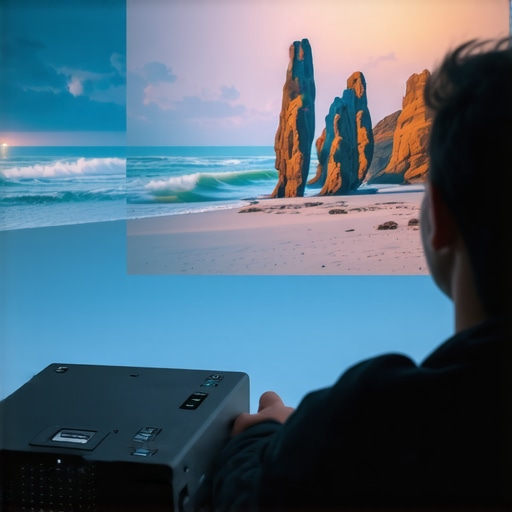
*Prompt:* A portable projector showing bright, vivid image on a wall, with user adjusting settings in the background, emphasizing portability and image quality.
Some models incorporate advanced features like lens shift, which allows fine-tuning positioning without moving the device, and keystone correction to fix geometry distortions. These features enhance convenience but may introduce complexity in configuration, requiring a bit of practice to master. The usage of high-quality LCD or DLP chips ensures sharper images with vibrant colors, though choices between them often boil down to personal preferences regarding color warmth and motion handling.
While these core features significantly impact the viewing pleasure, a few design aspects can still be improved. For instance, some projectors have limited port selection or lack sufficient input options for diverse devices. Additionally, battery life remains a critical aspect; while many portable units boast 2-3 hours of runtime, some struggle to deliver on this promise consistently, especially when running at higher brightness levels.
Putting Projectors to the Test in Everyday Scenarios
Imagine hauling your portable projector to an outdoor movie night after a long hike. The device faces rapid temperature changes, exposure to humidity, and the challenge of projecting on uneven surfaces. Or consider managing a 1000-lead sales pipeline with a high-resolution projector during a busy conference—requiring seamless connectivity and image clarity amidst constant movement. These situations reveal much about how portable projectors, such as UST (Ultra Short Throw) models and 4K units, perform when the pressure is high.
Handling Extended Hours and Intense Usage
Portable projectors often excel in quick setups but can falter over extended periods. During marathon movie sessions, some models overheat quickly, triggering automatic shutdowns after 30-45 minutes of continuous use. For example, a popular UST projector was reported to reach temperatures exceeding 60°C after an hour, leading to performance throttling and image flickering. In contrast, high-end 4K projectors with robust cooling systems can sustain longer sessions but tend to be bulkier, reducing portability. The cooling fan noise, often overlooked, becomes more noticeable during prolonged use, potentially ruining the immersive experience.
Does it overheat?
Many budget models struggle with thermal management. Overheating microphones contribute to system lag, unintended shutdowns, or even hardware failures. Users often report waiting for the device to cool down before resuming a presentation or movie. Some newer models incorporate improved heat sinks or ventilation designs, but these add to the size and cost. The key takeaway: always check thermal specifications and user reviews to judge real-world thermal performance.
Resilience in Challenging Environments
Outdoor conditions can test the durability of projectors. Dust, humidity, and sudden rain can damage sensitive optics and electronic components. Portable projectors designed for adventure often feature ruggedized housing and sealed ports—yet, even these aren’t immune. A well-known portable projector faced issues after being exposed to light rain, causing temporary failure until dried and cleaned. Conversely, some high-end models boast IP ratings (Ingress Protection) up to IP54, making them suitable for harsher environments. That said, the actual performance can vary, and users often complain about vapor intrusion or lens fogging in humid conditions.
Is the support responsive?
When devices encounter issues under pressure, prompt customer service becomes critical. Many budget brands lack dedicated support, leading users to forums or third-party tech repair shops—an unreliable and frustrating route. Premium brands generally offer faster response times and better warranty services, but subpar support can prolong downtime in critical moments. Based on Reddit discussions, several users reported delays of weeks for repairs or replacements, which hampers their planning and usability.
The Impact of Resolution and Brightness During Stress
High-resolution 4K projectors thrill with crisp visuals, but they demand more from power supplies and cooling systems. Under continuous operation, some 4K models exhibit reduced brightness, especially if their internal power management isn’t optimized—leading to washed-out images in daylight or well-lit rooms. Conversely, bright models with over 3000 lumens maintain clarity, but this often comes with increased noise from internal fans. At the same time, in battery-powered portable projectors, sustained brightness reduces runtime, forcing users to compromise between image quality and usage time.
Does the image degrade over time?
Repeated high-intensity usage accelerates wear. LEDs may dim with age, and laser modules can lose efficiency. Field reports show that even premium laser projectors experience gradual brightness decline after thousands of hours, but compare favorably to traditional lamps which need replacement after minimal hours. Additionally, motion handling in 4K projectors sometimes blurs with prolonged sessions, especially when operating at lower refresh rates in upgraded units—highlighting the importance of choosing models with effective image processing features.
In conclusion, while portable and 4K projectors are quite capable in controlled environments, real-world stress testing exposes their weaknesses—overheating, environmental vulnerability, support responsiveness, and image stability. Do you agree with these observations based on your experiences? Share your insights below!
When considering the best display options for home entertainment or on-the-go presentations, it’s crucial to compare portable projectors, UST models, laser units, and 4K projectors against other popular alternatives like traditional large-screen TVs and high-end home theater systems. Each comes with its unique advantages and trade-offs, making the decision deeply personal and context-dependent.
**Portable Projectors vs Traditional Large-Screen TVs** are often the go-to choice for flexibility and convenience. Portable projectors, especially compact models with 1080p or 4K resolution, excel in portability and adaptability—they can easily be set up in different locations, whether outdoors or in tight spaces. However, they typically can’t match the brightness and clarity of a high-end LED or OLED TV, particularly in well-lit rooms. TVs, especially those with quantum dot technology, provide vivid images and vibrant colors without setup fuss, but lack the portability that makes projectors attractive for trips or impromptu movie nights.
**Home Theater Deals and Bundles** frequently target enthusiasts seeking immersive experiences. These deals often bundle large 4K OLED or QLED TVs with premium sound systems, providing outstanding image quality and audio. They’re a straightforward, plug-and-play solution, but lack the flexibility of portable projectors. Heavy and requiring dedicated space, they are less suitable for on-the-fly setups or outdoor use.
**Laser Projectors Offer a Middle Ground** by providing higher brightness, better contrast, and longer lifespan compared to standard lamp-based units. Top laser projectors, like those from LG or Epson, can rival OLED displays in terms of contrast ratio and color accuracy. They often feature high Dynamic Range (HDR) support and 4K resolution. Yet, they tend to be more expensive, with prices ranging from $2,000 to $5,000, and often require a dedicated space due to their size and setup complexity.
**Ultra Short Throw (UST) Projectors** are gaining popularity for offering large-screen experiences in small spaces. Compared to traditional projectors, UST models can be placed inches from the wall, making them ideal for office or living room configurations. They excel in environments where space conservation is key, but sometimes struggle with uniform image quality and may have higher price tags for models with 4K resolution and high lumens.
**4K Projectors have become more affordable**, with many budget options now entering the market. These units, especially those with HDR support, deliver crisp visuals suitable for cinematic viewing. Still, to outmatch high-end TVs, they often require darker rooms and proper calibration. For outdoor or portable use, they can be challenging due to brightness limitations and the need for a flat surface.
Choosing between these options largely hinges on your specific needs. Are you seeking portability for outdoor movie nights? A high-end home theater setup? Or perhaps a versatile device that combines a decent picture with flexibility? For instance, if you prioritize mobility and space-saving designs, portable projectors or UST models offer compelling advantages despite some compromises in image brightness and quality compared to premium TVs or laser projectors.
Ultimately, understanding these differences helps in making an informed decision aligned with your entertainment style and environment. If you want cinematic quality with minimal setup, a dedicated 4K laser or high-end OLED TV may be worth the investment. Conversely, if versatility and convenience are paramount, portable projectors and UST models provide excellent value, especially when paired with the latest home theater deals that include up-to-date tech and accessories.
Check out current reviews and compare prices on sites like [CNET](https://www.cnet.com/topics/projectors/best-projectors/) or [Rtings](https://www.rtings.com/), which offer detailed side-by-side analyses of top models across categories.
Pros & Cons You Can’t Ignore
- Pros: Improved image clarity and color accuracy with dedicated screens; longer-lasting and more durable surfaces; optimized light reflection for better brightness.
- Cons: Higher upfront cost compared to DIY options; installation may require effort or space considerations; some specialized screens can be bulky or less portable.
Who Should Pass on the Cheap Fix?
If you’re a serious home theater enthusiast or frequently host movie nights, investing in a quality projection surface will drastically enhance your viewing experience. It’s perfect for those who demand crisp, vibrant images without constant readjustments or replacements. However, if you only watch occasionally or have a very limited budget, a white sheet might suffice temporarily, though it’s not the best long-term solution.
The Final Shot: Is a White Sheet Worth It?
Switching from a white sheet to a dedicated screen is a game-changer. It ensures sharper visuals, consistent color, and less frustration over time. While the initial investment is higher, the benefits in picture quality and durability make it a smarter choice for anyone serious about home projection. Don’t cheap out—look into cost-effective options that deliver real value, such as second-hand or DIY screens made from specialized fabrics. For comprehensive options, explore our reviews on UST projectors or 4K projectors to upgrade your setup without breaking the bank.