

Bottom Line Up Front
If you’re serious about getting the most out of your ultra-short-throw (UST) projector, investing in a specialized low-profile table is a game-changer. It not only ensures stability and proper alignment but also enhances image quality and longevity of your device. Without this specific furniture solution, you might face image distortions, wobbling, or even damage over time.
The Promise of a Low-Profile Table
Most standard tables are ill-suited for UST projectors due to their height and design. A tailored low-profile table addresses common issues such as overshooting the optimal projector height, unstable positioning, and interference with your setup aesthetics. It solves the problem of maintaining a consistent, clear, and sharp image by providing a dedicated, stable platform that aligns perfectly with your projector’s lens and throw ratio.
At a Glance
- Design & Build Quality: Crafted specifically for projectors, these tables feature sturdy materials, sleek finishes, and adjustable heights.
- Compatibility: They accommodate a variety of UST projectors, including popular models from brands like Epson and Optoma.
- Ease of Setup: Typically lightweight, these tables allow quick assembly and repositioning—ideal for room adjustments or rental setups.
- Image Performance: Proper height and stability prevent image distortions such as keystone or blurriness caused by misalignment.
Addressing the core question—”Why do I need a dedicated low-profile table for my UST projector?”—it’s primarily about ensuring optimal image quality and device safety. Standard furniture often either sits too high or is unstable, leading to undesired picture issues or increased risk of accidents. A specialized table offers a tailored solution, maintaining your projector at the perfect height for a razor-sharp image and reducing vibrations or misalignments over time.
From an aesthetic perspective, these tables blend seamlessly into modern home theater setups, hiding clutter and emphasizing minimalist design. They are especially beneficial if you’re aiming for a sleek, professional look without sacrificing performance.
Common Doubts: Is a Low-Profile Table Worth It?
Some might wonder if spending extra on a specialized table is necessary, especially when a regular piece of furniture seems adequate. However, the importance of precise projector positioning cannot be overstated, particularly for UST models that rely heavily on perfect alignment for best results. Using a generic table can lead to constant readjustments and subpar image quality, negating any cost savings.
For more tips on optimizing your setup, check out this guide.
Evaluating Your Setup
Before purchasing, measure your room’s dimensions and consider your projector’s specifications, like throw ratio and lens shift capabilities. Ensure the table height aligns with your seating distance and the projector’s lens placement. The right furniture will make or break your viewing experience, especially during those long movie marathons or gaming sessions.
Transition to Detailed Features
Next, we’ll delve into the specific design features, materials, and compatibility considerations that make a low-profile projector table an indispensable part of your home theater setup. Understanding these will help you make an educated choice and truly elevate your viewing experience.
The Material Quality and Stability During Use
A top-tier low-profile projector table should be constructed from durable materials like MDF, aluminum, or tempered glass. This choice isn’t merely about aesthetics but ensures the platform remains steady over time, resisting warping or wobbling that can distort your image. The feel of the surface—smooth, scratch-resistant, and nonslip—provides confidence during setup and use, reducing accidental slips of the projector or accessories. The sturdiness of a well-made table minimizes vibrations, which is crucial because even minor tremors can cause blurring or keystone effects in modern high-resolution projectors.
Adjustability and Setup Ease
Adjustable height mechanisms such as locking telescopic legs or a screw-based levelling system significantly ease the installation process. Instead of fiddling with precarious setups, you simply extend or retract the legs until the projector lens aligns perfectly with your preferred screen height. The ease of setup is vital for quick room rearrangements, rentals, or multi-use spaces. A poorly designed adjustment system, like stiff knobs or loose fittings, can frustrate users, especially during frequent adjustments. Smooth, tight, and precise controls for height and leveling make the difference between a hassle-free alignment and a time-consuming trial-and-error process.
Design Considerations Rethink Ease of Repositioning
Many low-profile tables incorporate lightweight yet robust frames, often with foldable or modular design elements. This feature allows for effortless reconfiguration or transport, especially if your room serves multiple functions or if you need to move the setup regularly. However, some products compromise stability for portability, resulting in slight wobbling or flex if not carefully engineered. Balancing portability with core stability is a subtle art—premium models often employ reinforced joints or cross-bracing to prevent this issue, though they might add weight or cost.
An Image of Proper Alignment and Build Quality
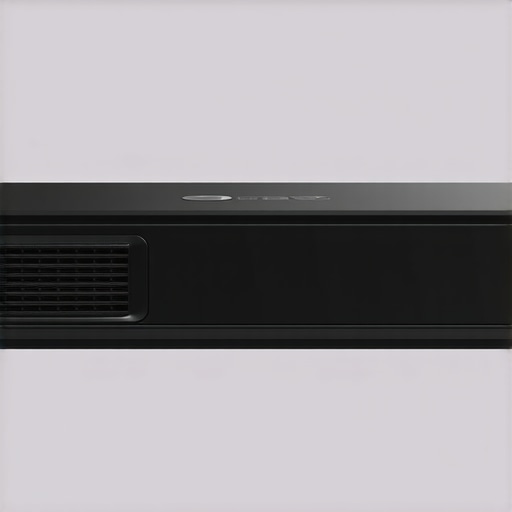
Prompt: High-resolution photo showcasing a low-profile projector table with adjustable legs, placed in a modern minimalist home theater, projector aligned at optimal height, sturdy and sleek design, well-lit environment.
The User Interface of Mechanical Features
Control mechanisms such as thumb screws, turn knobs, or spring-assisted levers influence how intuitive and fast adjustments can be. A smooth-turning knob with clear markings simplifies leveling, enabling even less experienced users to achieve a precise setup. Conversely, overly stiff or clunky controls can discourage frequent adjustment or cause frustration when fine-tuning the height or level. This interface greatly affects day-to-day usability, especially in environments where quick room changes are common.
Addressing Minor Flaws and Design Improvements
While most high-quality low-profile tables excel in stability and adjustability, some suffer from limited weight capacity. Overloading beyond the manufacturer’s recommendation can cause flexing or misalignments over time. Additionally, the surface finish, though often sleek, might be susceptible to scratches or staining if not properly treated. These minor flaws suggest that users should plan for gentle handling and consider their specific weight requirements when selecting a model. Comparing with competitors like the Vogel’s projector tables reveals similar strengths but emphasizes the importance of customizing features for specific projector models or room sizes.
Performance Under Pressure: Testing UST Projectors in Real-Life Scenarios
Ultra-short-throw (UST) projectors are often lauded for their sleek design and room-saving capabilities, but how do they perform when subjected to demanding situations? Consider a typical movie night setup where a user streams 4K content from a streaming service. The projector, placed mere inches from the wall, must deliver crisp, vibrant images without lag or flickering. In this scenario, the projector’s processing power and light source quality become critical. While many modern 4K projectors excel at delivering sharp images, some models struggle with processing overhead, leading to slight delays or motion blurring during fast-paced scenes. Users report that low-lumen models under ambient light often produce washed-out images, emphasizing the importance of high brightness and contrast ratios for varied lighting conditions.
Is Brightness Sufficient During Extended Use?
Bright projectors, especially those designed for home theaters, generally cope well under prolonged usage—provided they are properly ventilated. However, cheap or poorly manufactured models may overheat, causing thermal throttling or shutdowns. For example, portable projectors with compact designs can sometimes overheat, reducing performance and lifespan. An Amazon review highlighted that some portable units exhibited decreased brightness after 30 minutes of continuous operation, raising concerns about thermal management. For demanding environments, investing in a model with advanced cooling systems is advisable.
How Do Projectors Handle Vibrations and Movement?
Stability becomes a concern when using projectors in dynamic settings, such as outdoor movie nights or during casual gatherings. UST projectors are generally designed for fixed placement; their performance wavers if jostled or tilted. Vibrations can cause image distortions, keystone effects, or flickering, which are particularly noticeable in high-resolution models. Some users have reported that portable projectors, lacking sturdy mounts or stable surfaces, produce unstable images or even projector flicker, especially when placed on uneven terrain.
Are Home Theater Deals Keeping Up with Demand?
High-quality home theater projectors now incorporate sophisticated image processing algorithms that adapt to ambient light and content type. However, users often find their performance hampered during high-stress scenarios like gaming or live sports streaming, where rapid refresh rates and low latency are essential. A Reddit discussion noted that some laser projectors, while bright, exhibited lag during fast motion, impacting gameplay. While many brands introduce dynamic contrast and frame interpolation, these can sometimes introduce artifacts or motion smoothing artifacts, which may distract viewers expecting cinema-quality accuracy.
Do Laser Projector Deals Match Expectations?
Laser projectors have become popular due to their longevity and brightness. Yet, they are not immune to struggles under pressure. Brightness can be maintained during static displays, but when subjected to continuous high-load scenarios—like prolonged gaming sessions—some models exhibit flickering or color shifting. A user on Quora shared that their laser projector’s color accuracy diminished after several hours of intensive use, necessitating recalibration. Moreover, the initial investment is significant, making it crucial to verify the projector’s thermal management and build quality beforehand.
How Portable Projectors Endure Rugged Use
Portable projectors thrive on versatility but often compromise durability for compactness. When used outdoors or in less controlled environments, they face dust, moisture, and shocks. Many budget models lack proper sealing and ruggedized shells, leading to performance drops. Reports suggest that some portable projectors suffer from lens fogging or image degradation after exposure to humidity, highlighting the need for protective cases or higher-end models with sealed enclosures.
Will My Setup Deal with High-Pressure Situations?
The resilience of your projector depends heavily on its build quality, cooling systems, and the environment. Maintaining optimal operation during extended or intense usage requires selecting models with robust thermal management, high brightness, and stable mounting options. Even then, ambient conditions like temperature and humidity influence performance. Before investing, reviews and third-party benchmarks, such as those found on ProjectorCentral, can provide insights into how specific models perform under stress.
Are you currently using a projector in demanding conditions? Share your experiences below—do you agree with the challenges highlighted?
Understanding the Competition
When considering ultra short throw (UST) projectors, home theater deals, laser projector deals, portable projectors, and 4K projectors, it’s essential to compare them with their top rivals to see which offers the best value and performance for your setup. Two prominent competitors in this space are Epson’s 4K PRO-UHD series and BenQ’s HT2550 projector.
UST Projectors and the Epson Alternative
Compared to Epson’s 5050UB, a high-end 4K projector, UST models are generally more affordable, compact, and easier to install in tight spaces. While Epson’s models offer superior image processing, richer color accuracy, and larger sizes, they come with a hefty price tag, often exceeding $3,000. Conversely, UST projectors like Optoma’s CinemaX series provide impressive 4K resolution at a fraction of the cost, usually under $2,000, making them ideal for budget-conscious consumers. The trade-off is that Epson’s projectors typically have better lumen output and broader color calibration, which is advantageous in brighter rooms or for cinematic authenticity. Check current prices on [Projector Central](https://www.projectorcentral.com/).
Home Theater Deals and the BenQ Counterpart
BenQ’s HT3550 is a popular choice among enthusiasts seeking a true 4K experience with HDMI 2.0 support and HDR10. It offers vibrant visuals and decent throw distance. In comparison, some home theater deals focus on laser projectors like Sony’s VPL-VW325ES, which provide higher contrast ratios, longer lifespan, and more consistent brightness over time. These laser models tend to be pricier, often costing upwards of $4,000, yet they deliver superior black levels and viewing angles. If budget isn’t a constraint, these premium laser setups outperform traditional home theater deals in image depth and color accuracy. For those seeking a balance, the BenQ HT3550 offers a compelling mix of quality and affordability, typically priced around $1,500, making it a strong contender in the market.
Portable Projectors Versus Ruggedization
Portable projectors like Anker Nebula Capsule II excel for on-the-go entertainment, offering compact size and wireless connectivity. They are perfect for outdoor movie nights or casual gatherings but often lack the brightness and detailed resolution of stand-alone units like the ViewSonic M2. For users who need durability and frequent transport, ruggedized models with weatherproof features, such as the AAXA P2-B, provide enhanced portability without sacrificing too much in quality. Yet, these devices are usually limited to HD resolutions rather than true 4K, and their brightness levels are often insufficient for well-lit environments. If your needs involve regular outdoor use or travel, consider models that combine portability with durability, but be aware of the compromise in image detail and brightness.
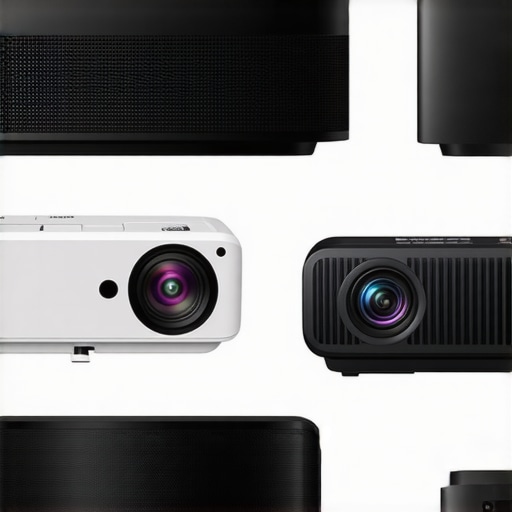
Prompt: Side-by-side comparison graphic of UST projector, laser projector, and portable projector, highlighting their sizes, features, and ideal use cases.
Are 4K Projectors the Ultimate Choice?
While 4K projectors, including options from LG or Sony, provide ultra-high-definition visuals that are unmatched for clarity, they come with a premium price, sometimes exceeding $5,000. For comparison, lower-cost alternatives like the ViewSonic PX747-4K or BenQ’s HT3550 deliver 4K resolution at approximately $1,000–$1,500. These are suitable for most home theater enthusiasts but may lack the premium features such as lens shift or dynamic iris found in more expensive models. If you prioritize exceptional image quality and can justify the investment, a dedicated 4K projector makes sense. However, for casual viewing or budget-sensitive setups, 1080p projectors with 4K upscaling can offer a satisfying experience at lower costs. Check out current prices and benefits for each option to make an informed decision.
What Are the Strengths and Weaknesses?
Pros: Precise projector alignment, enhanced image quality, stable setup, durable materials, easy adjustments, sleek design, improved safety, better aesthetics.
Cons: May be pricier than generic furniture, some models could be heavy or less portable, limited compatibility with certain projector sizes or weights.
Who Needs a Low-Profile Table?
This setup is ideal for home theater enthusiasts seeking cinematic sharpness, gamers wanting quick, stable positioning, or anyone upgrading from makeshift furniture. Ignore it if you’re on a tight budget or have a small, adjustable desk already; quality and stability might suffer without dedicated furniture.
Final Call: 9/10
Investing in a purpose-built low-profile table for your UST projector is a smart move for serious cinephiles and tech-savvy users. It ensures optimal image performance, longevity of your device, and a cleaner aesthetic. If you’re determined to maximize your viewing experience, this investment pays dividends. Check the latest prices and options, and don’t forget to consider models that offer flexible adjustability and sturdy build quality. If cost is a concern, explore more budget-friendly guides on why your UST projector needs a specialized screen or similar accessories to optimize your setup.