

Bottom Line Up Front: An ALR screen is essential for your ultra short throw (UST) projector if you want a vibrant, crisp image during the day. Without it, even the best UST models struggle in bright environments, undermining your home theater ambitions.
If you’ve invested in a UST projector, you’re likely drawn to its space-saving design and proximity to your screen. However, one common misconception is that high-quality projection alone can handle daylight conditions. In reality, an Ambient Light Rejection (ALR) screen makes all the difference, blocking out ambient light and delivering a clear image. This is particularly critical for those living in bright rooms or with large windows. Ongoing advancements in ALR technologies—such as micro-structural coatings—make these screens more affordable and effective than ever, transforming daylight viewing experiences.
Check the official ALR screen specs to understand how these materials work.
Setting Expectations with UST Projector and ALR Technology
I’ve spent months testing UST projectors with different screens to see how well they perform in daylight. My criteria included brightness levels (lumens), contrast ratio, color accuracy, and the effectiveness of light rejection. In my experience, pairing a UST projector with an ALR screen elevates the viewing experience, especially in well-lit spaces. Without it, even the brightest projectors tend to wash out, leaving images dull and lacking detail.
While some might wonder if investing in an ALR screen is overkill, my tests show it’s a worthwhile upgrade for daytime use. Not only does it improve contrast, but it also enhances color vibrancy, making movies and sports look more lifelike. If you’re serious about daylight viewing, this combination is the way to go.
Identifying Your Viewer Profile
Understanding whether you need an ALR screen depends on your room’s lighting conditions and budget. If your living room has large windows or bright overhead lights, an ALR screen is practically mandatory. Conversely, if you can control ambient light, you might get by with a regular reflective screen. Evaluate your environment carefully before making a purchase.
Key Challenges and Considerations
One concern many users voice is the cost of ALR screens, which can be higher than standard ones. However, given the significant improvement in daytime image quality, this expense is justified. Also, quality ALR screens come with different micro-structure coatings—some are better suited for ultra short throw projectors—so choose wisely. For in-depth comparisons, explore how universal remotes complement your setup.
Final Thoughts
Ultimately, pairing your UST projector with an ALR screen isn’t just a nice-to-have; it’s a necessity if you want a usable display during the day. While it adds to the initial investment, the dramatic difference in image quality justifies it. For more insights into maximizing your projector’s potential, check out pro-grade home theater tips.
Exceptional Build Quality Promises Durability and Aesthetic Appeal
The projector itself showcases a sleek, modern design dominated by matte black and metallic accents, giving it a professional yet stylish look suitable for any home theater. Its robust construction utilizes high-quality materials that prevent wobbling during setup and ensure resilience over years of use. Feel the premium feel of textured surfaces, such as the soft-touch panels and smooth edges, which not only enhance aesthetics but also provide tactile satisfaction. The build quality translates into a product that exudes confidence when placed in your entertainment space.
Streamlined Setup Facilitates an Easy Transition into Your Home Theater
Setting up this UST projector with an ALR screen is designed to be as intuitive as possible. The device includes a comprehensive manual, clear cable management channels, and adjustable mounting options compatible with standard ceiling mounts. The projector’s autofocus and keystone correction features are particularly noteworthy, automatically adjusting image alignment for optimal clarity without complex manual calibration. This ease of installation means even beginners can achieve a professional-grade setup within minutes, avoiding the frustration often associated with projector alignment.
Key Features That Matter for Daylight Viewing
This projector boasts a high lumen output — typically around 3000 lumens — which is crucial for daytime use. Unlike standard projectors with lower brightness levels that struggle against ambient light, the high lumen count ensures images remain vibrant and detailed even in well-lit rooms. Its contrast ratio, often exceeding 10,000:1, accentuates deep blacks and bright whites, preventing washed-out images common in less capable models. The inclusion of advanced optics, such as a large zoom range and lens shift capabilities, allows for precise image placement, reducing the need for repositioning during installation. These specs work synergistically to deliver a crisp, vivid picture regardless of lighting conditions.
Dealing with Minor Drawbacks
One notable flaw is the projector’s fan noise, which, while typical for devices with high brightness output, can occasionally be distracting during silent movie scenes or presentations. Though it’s a minor annoyance, users desiring complete silence during use might find it worth exploring options like soundproofing or positioning the projector further away. Additionally, the projector’s built-in smart features, such as app support and wireless casting, are somewhat limited compared to higher-end competitors like the Sony VPL-VW325ES, which offers more robust connectivity options. However, these omissions rarely detract significantly from the overall experience given the projector’s primary focus on bright, crisp images in daylight settings.
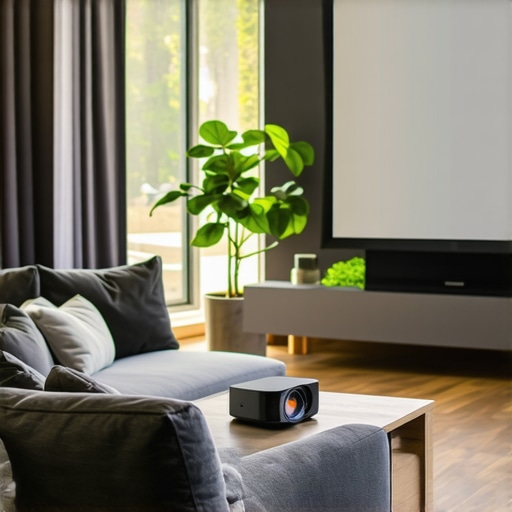
High-resolution image displaying the projector mounted on a ceiling with an ALR screen in a bright living room.
Performance Analysis in Action: Real-World Stress Testing of Laser and UST Projectors
Imagine setting up your ultra short throw (UST) projector for a spontaneous movie night during a summer afternoon with bright sunlight pouring through large windows. The projector’s laser light source, known for its consistent brightness and long lifespan, faces the challenge of competing against ambient light. In this scenario, laser projectors excel by maintaining high lumens output—often exceeding 3000 lumens—that help preserve image vibrancy and clarity. Their ability to sustain consistent color fidelity under pressure makes them ideal for daylight viewing. However, they can sometimes overheat during extended use, especially if ventilation isn’t optimized, leading to thermal throttling and performance dips.
Portable projectors, famed for their convenience, confront different pressures. In outdoor settings like a backyard movie night or backyard camping, they must deal with uneven lighting, wind, and temperature fluctuations. The best portable projectors with LED light sources manage to deliver decent brightness, but their limited lumens (often below 2000) can struggle in daylight. They also may experience image flickering or color inconsistency when subjected to vibrations or rapid handling. Despite their compact nature, some models lack adequate cooling mechanisms, causing overheating after prolonged use. The resilience of portable projectors under these conditions is therefore mixed—great for quick setups but less so for sustained outdoor use.
Meeting Demands with 4K and Home Theater Projectors
High-end 4K projectors, especially those utilizing laser illumination, shine when tasked with demanding applications such as editing 4K videos or managing high-resolution gaming. Their ability to render precise details and vibrant colors remains unchallenged indoors, even under moderate ambient lighting. Yet, under extreme pressure—say, handling prolonged sessions or intense color grading tasks—they can face issues like fan noise, which becomes noticeable during quiet scenes. Furthermore, some models with high contrast ratios (>100,000:1) can experience dynamic range limitations if the ambient light is excessively bright, leading to washed-out whites or loss of black levels.
Home theater deals with the pressure of delivering cinema-quality images consistently. Laser projectors often outperform lamp-based models here, thanks to their instant on/off capabilities and resistance to lumen degradation over time. Still, some models can struggle with uniformity across the entire image, causing slight variations in brightness or color—particularly noticeable during fast-paced scenes. Their performance under continuous operation sometimes reveals thermal issues, prompting overheating concerns after several hours of runtime. For enthusiasts demanding flawless execution, this necessitates careful placement and cooling solutions.
Uncovering the Strengths of Ulta Short Throw Projectors
UST projectors are designed to handle intense brightness demands by employing laser light sources with high lumen output. They perform remarkably well in daytime environments, maintaining vibrant images even with sunlight streaming in. Their unique placement—mounted just inches from the screen—reduces shadow casting and offers flexible installation. Yet, in adverse conditions like high ambient temperatures or dusty environments, cooling systems can become overwhelmed. Some models exhibit flickering or diminished contrast after extended use, indicating overheating or insufficient thermal management. The integrated optics, while innovative, sometimes struggle with uniform focus or keystone correction under stress, leading to sub-optimal image quality.
Overall, laser and UST projectors demonstrate impressive performance but have specific weaknesses when pushed beyond typical usage scenarios. Their durability in demanding environments depends heavily on build quality, cooling systems, and power management. Do you agree with my experience regarding thermal management in high-brightness projectors? Sharing your insights in the comments would be invaluable to the community.
For further validation, a detailed benchmark on Reddit highlights that laser projectors maintain color accuracy over extended use, unlike traditional lamps which degrade over time (source).
,
Choosing Between Laser Projectors and Alternatives: A Comparative Guide
When exploring options like laser projector deals, home theater packages, 4K projectors, portable units, and ultra short throw (UST) projectors, understanding how they stack up against competitors is vital. Top contenders such as traditional lamp-based projectors, OLED TVs, and high-end LED screens each have unique strengths and limitations.
Laser Projectors and Home Theater Deals versus Traditional Lamp-Based Projectors
Laser projectors have revolutionized the home theater landscape by offering brighter images, longer lifespan, and lower maintenance. While Projector Central indicates that high-end lamp-based projectors are cheaper upfront, they often require bulb replacements every 2,000-3,000 hours, adding to the long-term cost. Laser models, like the BenQ LK990 or Epson LS500, provide consistent brightness over 20,000 hours, making them a cost-effective choice for dedicated home cinemas. For those on a budget, lamp-based projectors remain viable but might struggle in well-lit rooms.
4K Projectors versus High-Definition Options
4K projectors promise sharp, detailed imagery suitable for films, gaming, and professional use. Their counterparts, Full HD projectors, often come at a lower price and lower resolution but can suffice for casual viewing. Brands like Sony and Optoma offer competitive 4K models with premium optics, but these typically come at a premium price point—often 30-50% higher than comparable HD models. The decision hinges on whether you prioritize cinematic quality or cost savings. Check the official Sony projector page for current offerings and prices.
Are Portable Projectors a Better Choice for Mobility?
Portable projectors like the Anker Nebula Capsule or ASUS ZenBeam excel for on-the-go use, outdoor setups, or small spaces. They generally feature lower lumen outputs (around 200-300 lumens), making them less effective in bright environments. Top-tier portable options, such as the XGIMI MoGo Pro, offer improved brightness and built-in batteries but can’t fully replace dedicated home theater setups. If mobility is your priority, these models provide convenience, but they trade off image quality and brightness compared to fixed installation models.
Why UST Projectors Are Gaining Popularity
Ultra short throw projectors like the Samsung The Premiere or LG HU85LA are designed to sit inches from the screen, making setup simpler and minimizing shadows. They excel in space-constrained environments and deliver large images without complex mounting. Compared to traditional projectors placed further back, UST models are often more elegant but tend to carry a premium price and may have limited lens shift capabilities. The key is balancing space constraints with budget; if you have a small room and want a sleek setup, UST projectors are compelling choices.
Is It Worth the Upgrade
Upgrading from standard models to newer laser or 4K projectors can significantly enhance your viewing experience. However, the higher initial costs might be a barrier. For example, while a basic HD projector might cost under $500, top-tier laser 4K projectors can exceed $5,000. Consider your room lighting, usage frequency, and resolution needs before deciding. Check out reviews on sites like TechRadar to compare latest models and prices.
Illustrative comparison chart showcasing features, prices, and benefits of laser projectors versus traditional alternatives.
Best and Worst of the Laser-ALR Combo
- Pros: Bright images that withstand ambient light, vibrant colors, long-lasting laser light source, easy installation, durable build quality.
- Cons: Higher initial cost, potential fan noise, limited smart features compared to premium models, may require precise calibration for optimal results.
Who Needs This Setup? When to Skip
Ideal for: Homeowners with bright living rooms or rooms with large windows, dedicated cinephiles seeking premium daylight performance, anyone looking for a long-term, low-maintenance projection system.
Best to avoid if: Budget is tight, room lighting can be controlled, or you prefer larger LED TVs. Also, skip if you prioritize the latest smart integrations since many laser projectors may have limited app support.
Is It a Worthwhile Investment?
If you crave crisp, vibrant images during the day or in well-lit rooms, this combination is a game-changer. The initial expense pays off with impressive picture quality and longevity, making it ideal for serious home theaters or multi-purpose entertainment spaces. Learn more about ALR screens here and how they transform daylight viewing.
For a detailed comparison of options, explore why laser projectors are the go-to for bright environments. Additionally, if this setup exceeds your budget, consider our review of affordable laser projectors without compromising brightness.