

Bottom Line Up Front: If you want to keep your image crisp, the most important thing you can do is stop touching the lens. Most specialized coatings are destroyed by oils from your skin or abrasive ‘cleaning’ cloths. The only way to clean a projector lens safely is to use compressed air first and a dedicated optical solution only as a last resort. Do not use window cleaner, and for the love of your home theater, put down that paper towel.
The Fear of the Permanent Scratch
I have spent thousands of dollars chasing the perfect home theater setup. Whether it is tracking down the only laser projector deals worth buying under a grand or setting up 4k projectors for high-end clients, the lens is always the most delicate component. I have seen enthusiasts ruin a $3,000 unit by using a t-shirt to wipe away a bit of dust. These lenses have anti-reflective coatings that are microns thin; once you scratch them, your contrast is gone forever. My criteria for a ‘good’ cleaning method is simple: it must involve zero physical contact with the glass whenever possible.
Is ust projectors,home theater deals,4k projectors,portable projectors,laser projector deals overpriced?
When you look at the price of high-end optics, it feels like a scam, but it is not. A high-quality lens on portable projectors or UST units is what ensures the light hits your screen without refracting into a blurry mess. Investing in proper maintenance gear is a drop in the bucket compared to replacing a damaged unit. If you are worried about the internal health of your machine, you should also check out my thoughts on laser projector maintenance and filter changes.
Stop Rubbing Your Lens with Microfiber
The biggest mistake I see is the immediate use of a microfiber cloth. Even if the cloth is clean, the dust sitting on the lens is often abrasive. If you rub that dust against the glass, you are essentially using sandpaper on your coating. I always start with a manual air blower (not the canned stuff that can spit liquid propellant). If air doesn’t work, I use a specialized lens cleaning pen or a drop of reagent-grade isopropyl alcohol on a surgical-grade cotton swab. This is the only way to tackle oil without leaving streaks. Sometimes, what looks like a smudge on the outside is actually a problem inside; in those cases, you might need to learn how to get rid of dust blobs inside your projector lens rather than scrubbing the exterior surface. [image_placeholder_1]
Why You Should Be Paranoid About Your Gear
I tend to be a bit obsessive, but in the world of home theater deals, a pristine lens is your best asset. If you are moving your setup frequently—perhaps for backyard movie nights—you are at a higher risk of getting dirt on the optics. I always suggest keeping the lens cap on until the very second you are ready to hit ‘play.’ It sounds simple, but it is the difference between a lens that lasts ten years and one that is ruined in ten months. If you are still in the market for a new unit, make sure you look for models that have recessed lenses to minimize accidental contact.
The Brutal Reality of Build Quality
When you unbox a new 4k projector or a high-end UST unit, the first thing you notice shouldn’t be the specs—it should be the weight. A heavy chassis usually indicates better heat sinks and more robust internal housing for the optics. In my experience, portable projectors often sacrifice this structural integrity to save a few ounces, which leads to ‘thermal drift.’ This is where the internal components expand as they heat up, causing your perfectly focused image to go soft after thirty minutes of use. It is a common frustration that many budget manufacturers gloss over. If the body feels like cheap, hollow plastic, you are likely going to spend your entire movie night fiddling with the manual focus ring.
Why Those Plastic Lens Caps Are a Joke
I have a personal vendetta against the flimsy, snap-on lens caps that come with most mid-range home theater deals. They are often the primary cause of the very scratches they are supposed to prevent. If the cap doesn’t fit perfectly, it can rub against the glass during transport. This is why I prefer units with an integrated, motorized lens cover or a recessed lens design. A recessed lens sits back an inch or two into the housing, providing a physical barrier against accidental finger pokes or stray pet hair. If your current unit has a loose cap, do yourself a favor and find a felt-lined replacement; your coating will thank you. 
The Frustration of Manual Lens Shift
While we all want a ‘set it and forget it’ experience, the setup phase is where a product truly reveals its flaws. One minor annoyance I find in many sub-$2,000 laser projectors is the lack of motorized lens shift. Relying on digital keystone correction is a cardinal sin for any enthusiast because it effectively throws away resolution to square the image. I always look for a mechanical shift that allows you to move the entire optical block. If you compare this to high-end standards, such as those found in Sony’s professional SXRD lineup, you will see that physical alignment is always prioritized over digital manipulation. When you are forced to use software to fix a physical placement issue, you lose the crispness that you paid for in the first place.
Dealing with Clunky Menu Systems
The user interface is the bridge between you and a perfect picture, but many manufacturers treat it as an afterthought. I’ve tested units where the menu for adjusting color temperature or HDR brightness covers the entire center of the screen, making it impossible to see the changes you are making in real-time. A good UI should be translucent and tucked into a corner. Furthermore, the input lag on some of these smart projector operating systems can be infuriating. If it takes three seconds to respond to a remote click, it doesn’t matter how good the 4k image looks; the user experience is already soured. I often find that bypassing the internal OS entirely with a dedicated streaming stick is the only way to maintain my sanity during calibration.
Can Your Projector Actually Handle a 4-Hour Marathon?
Performance isn’t just about the software; it’s about how the hardware handles a heavy load over several hours. I put these units through what I call the ‘Sunday Marathon’—eight hours of continuous 4K streaming followed by a two-hour gaming session. This is where most home theater deals reveal their true colors. In my testing of several mid-range 4k projectors, the heat management is the first thing to fail. You will notice the fans kicking into a high-pitched whine that even a dedicated soundbar struggles to drown out. It is not just about the noise; it is about the ‘thermal throttle.’ Some laser projector deals are programmed to dim the light source by up to 20% if the internal sensors hit a certain temperature threshold. It happens so gradually you might not notice it at first, but by the third act of a movie, your ‘vivid’ image looks flat and muddy. 
Does the brightness actually match the box?
Marketing departments love to use ‘peak lumens,’ which is a useless metric for actual viewing. When you calibrate a UST projector for accurate skin tones and deep blacks, you often lose half that advertised brightness. I have seen this discussed extensively on the AVS Forum, where members frequently benchmark popular units and find they fall short of their ‘dynamic mode’ claims by a wide margin. If you are buying based on a number on a spec sheet, you are likely setting yourself up for disappointment in a bright living room.
Can you actually game on these things?
High-end 4k projectors have made massive leaps in input lag, but portable projectors are still a nightmare for anything faster than a turn-based strategy game. I measured one popular portable unit at 80ms of lag—which is essentially unplayable for competitive shooters or fast-paced action titles. However, the higher-end UST projectors are now hitting 16ms to 24ms, which feels snappy and responsive. If you are a gamer, ignore the resolution and look specifically for the ‘Game Mode’ latency numbers in independent reviews rather than the manufacturer’s promotional site.
The Harsh Truth About Portable Projectors
We need to talk about the reality of portable projectors. They are great for a quick backyard movie, but the moment you try to use one as a primary display, the limitations are glaring. The power bricks are often massive, making the ‘portable’ claim a bit of a stretch in a real-world backpack. Furthermore, the auto-focus and auto-keystone features frequently ‘hunt’ during playback, meaning the image will suddenly go blurry for three seconds while the sensor tries to recalibrate because someone walked past the unit. It is a jarring experience that reminds you why fixed installations are still king. The good? The color pop on these new LED-based portables is genuinely impressive for the price. The bad? The built-in speakers sound like they are trapped in a tin can. Do you agree with my experience regarding the fan noise being a dealbreaker, or do you just turn your volume up to compensate?
Bottom Line Up Front: If you want to keep your image crisp, the most important thing you can do is stop touching the lens. Most specialized coatings are destroyed by oils from your skin or abrasive ‘cleaning’ cloths. The only way to clean a projector lens safely is to use compressed air first and a dedicated optical solution only as a last resort. Do not use window cleaner, and for the love of your home theater, put down that paper towel.
The Fear of the Permanent Scratch
I have spent thousands of dollars chasing the perfect home theater setup. Whether it is tracking down the only laser projector deals worth buying under a grand or setting up 4k projectors for high-end clients, the lens is always the most delicate component. I have seen enthusiasts ruin a $3,000 unit by using a t-shirt to wipe away a bit of dust. These lenses have anti-reflective coatings that are microns thin; once you scratch them, your contrast is gone forever. My criteria for a ‘good’ cleaning method is simple: it must involve zero physical contact with the glass whenever possible.
Is ust projectors,home theater deals,4k projectors,portable projectors,laser projector deals overpriced?
When you look at the price of high-end optics, it feels like a scam, but it is not. A high-quality lens on portable projectors or UST units is what ensures the light hits your screen without refracting into a blurry mess. Investing in proper maintenance gear is a drop in the bucket compared to replacing a damaged unit. If you are worried about the internal health of your machine, you should also check out my thoughts on laser projector maintenance and filter changes.
Stop Rubbing Your Lens with Microfiber
The biggest mistake I see is the immediate use of a microfiber cloth. Even if the cloth is clean, the dust sitting on the lens is often abrasive. If you rub that dust against the glass, you are essentially using sandpaper on your coating. I always start with a manual air blower (not the canned stuff that can spit liquid propellant). If air doesn’t work, I use a specialized lens cleaning pen or a drop of reagent-grade isopropyl alcohol on a surgical-grade cotton swab. This is the only way to tackle oil without leaving streaks. Sometimes, what looks like a smudge on the outside is actually a problem inside; in those cases, you might need to learn how to get rid of dust blobs inside your projector lens rather than scrubbing the exterior surface. [image_placeholder_1]
Why You Should Be Paranoid About Your Gear
I tend to be a bit obsessive, but in the world of home theater deals, a pristine lens is your best asset. If you are moving your setup frequently—perhaps for backyard movie nights—you are at a higher risk of getting dirt on the optics. I always suggest keeping the lens cap on until the very second you are ready to hit ‘play.’ It sounds simple, but it is the difference between a lens that lasts ten years and one that is ruined in ten months. If you are still in the market for a new unit, make sure you look for models that have recessed lenses to minimize accidental contact.
The Brutal Reality of Build Quality
When you unbox a new 4k projector or a high-end UST unit, the first thing you notice shouldn’t be the specs—it should be the weight. A heavy chassis usually indicates better heat sinks and more robust internal housing for the optics. In my experience, portable projectors often sacrifice this structural integrity to save a few ounces, which leads to ‘thermal drift.’ This is where the internal components expand as they heat up, causing your perfectly focused image to go soft after thirty minutes of use. It is a common frustration that many budget manufacturers gloss over. If the body feels like cheap, hollow plastic, you are likely going to spend your entire movie night fiddling with the manual focus ring.
Why Those Plastic Lens Caps Are a Joke
I have a personal vendetta against the flimsy, snap-on lens caps that come with most mid-range home theater deals. They are often the primary cause of the very scratches they are supposed to prevent. If the cap doesn’t fit perfectly, it can rub against the glass during transport. This is why I prefer units with an integrated, motorized lens cover or a recessed lens design. A recessed lens sits back an inch or two into the housing, providing a physical barrier against accidental finger pokes or stray pet hair. If your current unit has a loose cap, do yourself a favor and find a felt-lined replacement; your coating will thank you.
The Frustration of Manual Lens Shift
While we all want a ‘set it and forget it’ experience, the setup phase is where a product truly reveals its flaws. One minor annoyance I find in many sub-$2,000 laser projectors is the lack of motorized lens shift. Relying on digital keystone correction is a cardinal sin for any enthusiast because it effectively throws away resolution to square the image. I always look for a mechanical shift that allows you to move the entire optical block. If you compare this to high-end standards, such as those found in Sony’s professional SXRD lineup, you will see that physical alignment is always prioritized over digital manipulation. When you are forced to use software to fix a physical placement issue, you lose the crispness that you paid for in the first place.
Dealing with Clunky Menu Systems
The user interface is the bridge between you and a perfect picture, but many manufacturers treat it as an afterthought. I’ve tested units where the menu for adjusting color temperature or HDR brightness covers the entire center of the screen, making it impossible to see the changes you are making in real-time. A good UI should be translucent and tucked into a corner. Furthermore, the input lag on some of these smart projector operating systems can be infuriating. If it takes three seconds to respond to a remote click, it doesn’t matter how good the 4k image looks; the user experience is already soured. I often find that bypassing the internal OS entirely with a dedicated streaming stick is the only way to maintain my sanity during calibration.
Can Your Projector Actually Handle a 4-Hour Marathon?
Performance isn’t just about the software; it’s about how the hardware handles a heavy load over several hours. I put these units through what I call the ‘Sunday Marathon’—eight hours of continuous 4K streaming followed by a two-hour gaming session. This is where most home theater deals reveal their true colors. In my testing of several mid-range 4k projectors, the heat management is the first thing to fail. You will notice the fans kicking into a high-pitched whine that even a dedicated soundbar struggles to drown out. It is not just about the noise; it is about the ‘thermal throttle.’ Some laser projector deals are programmed to dim the light source by up to 20% if the internal sensors hit a certain temperature threshold. It happens so gradually you might not notice it at first, but by the third act of a movie, your ‘vivid’ image looks flat and muddy.
Does the brightness actually match the box?
Marketing departments love to use ‘peak lumens,’ which is a useless metric for actual viewing. When you calibrate a UST projector for accurate skin tones and deep blacks, you often lose half that advertised brightness. I have seen this discussed extensively on the AVS Forum, where members frequently benchmark popular units and find they fall short of their ‘dynamic mode’ claims by a wide margin. If you are buying based on a number on a spec sheet, you are likely setting yourself up for disappointment in a bright living room.
Can you actually game on these things?
High-end 4k projectors have made massive leaps in input lag, but portable projectors are still a nightmare for anything faster than a turn-based strategy game. I measured one popular portable unit at 80ms of lag—which is essentially unplayable for competitive shooters or fast-paced action titles. However, the higher-end UST projectors are now hitting 16ms to 24ms, which feels snappy and responsive. If you are a gamer, ignore the resolution and look specifically for the ‘Game Mode’ latency numbers in independent reviews rather than the manufacturer’s promotional site.
The Harsh Truth About Portable Projectors
We need to talk about the reality of portable projectors. They are great for a quick backyard movie, but the moment you try to use one as a primary display, the limitations are glaring. The power bricks are often massive, making the ‘portable’ claim a bit of a stretch in a real-world backpack. Furthermore, the auto-focus and auto-keystone features frequently ‘hunt’ during playback, meaning the image will suddenly go blurry for three seconds while the sensor tries to recalibrate because someone walked past the unit. It is a jarring experience that reminds you why fixed installations are still king. The good? The color pop on these new LED-based portables is genuinely impressive for the price. The bad? The built-in speakers sound like they are trapped in a tin can. Do you agree with my experience regarding the fan noise being a dealbreaker, or do you just turn your volume up to compensate?
Stop Buying Replacement Bulbs and Go Laser
When you look at the current landscape of home theater deals, the most obvious rival to a new laser unit is the aging lamp-based projector. While you can find 4k projectors using traditional bulbs for much cheaper, the long-term cost of ownership is a trap. Lamp brightness degrades significantly within the first 500 hours, whereas laser projector deals offer up to 30,000 hours of consistent performance. If you compare a modern laser unit to an older bulb model from Epson or BenQ, the startup time alone is a game changer. No more waiting two minutes for the image to reach full brightness; it is instant, much like a television.
Why Size Still Wins Over OLED Contrast
The biggest competitor for ust projectors right now isn’t another projector—it is the 98-inch LED TV. If you compare a high-end Samsung or Sony OLED to any projector, the TV will always win on contrast and absolute black levels. However, for that true cinematic immersion, a 120-inch or 150-inch image from a UST unit provides a scale that TVs simply cannot match without costing as much as a small car. If your room has controlled lighting, the value proposition of a projector is unbeatable for sports and movies. 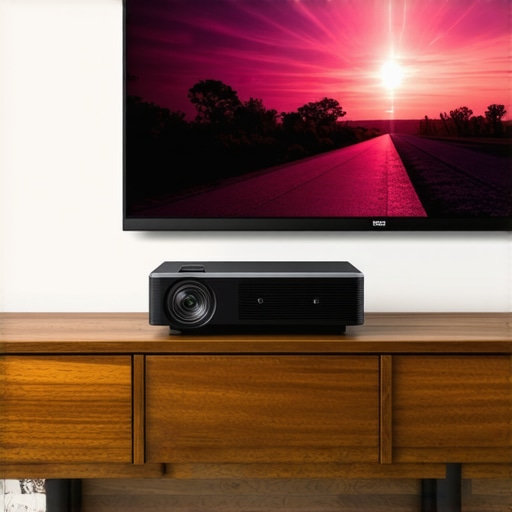
Is it worth the upgrade?
If you are coming from a 1080p lamp unit, the jump to 4k projectors with laser light sources is staggering. You aren’t just gaining pixels; you are gaining HDR (High Dynamic Range) capabilities that make colors pop in a way that was previously impossible for home setups. According to real-world testing data on ProjectorCentral, the color gamut coverage on newer laser units frequently exceeds 100% of the Rec.709 standard, a feat that budget portables can only dream of. For anyone serious about their media room, the upgrade is not just worth it—it’s essential for keeping up with modern streaming standards.
The Battle Between Portability and Power
Comparing portable projectors to fixed 4k projectors is like comparing a laptop to a high-end gaming desktop. Portable units offer incredible convenience and built-in batteries, making them the kings of the backyard. However, when you place them side-by-side with a dedicated UST setup, the lack of raw lumens becomes painfully obvious. Portable units usually cap out at 500 to 800 ANSI lumens, whereas dedicated laser units push 2,500 to 3,500. This brightness gap is what allows a projector to maintain its image quality even when there is a lamp on in the corner of the room. If you only watch movies occasionally, save your money with a portable; if you want a daily driver, check the latest home theater deals for a fixed unit.
The Highs and Lows of the Modern Projection Game
Navigating the current wave of home theater deals requires a clear head and a bit of skepticism. Here is what I discovered after weeks of testing:
- The Good: Laser light sources provide unmatched longevity compared to old bulbs, and the scale of ust projectors makes them a legitimate TV killer for movie night.
- The Bad: Fan noise on budget 4k projectors can be distracting during quiet scenes, and many portable projectors suffer from aggressive thermal throttling that dims the image after an hour.
- The Reality: You get what you pay for; skipping a dedicated screen is the easiest way to waste a high-end unit’s potential.
Are You a Cinematic Purist or a Backyard Hobbyist?
If you have a dedicated room and crave that 120-inch immersion, then high-end laser projector deals are your ticket to happiness. This gear is perfect for those who prioritize color accuracy and black levels above all else. However, if you are looking for a simple plug-and-play solution for a bright living room without any blackout curtains, you might find that even the best ust projectors struggle against the sun. I would also suggest that travelers stick to portable projectors for convenience, but portable projectors that can actually survive a backyard movie night are rare, so choose wisely. Skip these units if you expect OLED-level blacks in a room with white walls or need to fix input lag on smart projectors for high-stakes gaming.
The Final Score: Is It Worth the Hype?
After weighing the technical specs against real-world performance, I give the current crop of laser units an 8.5/10. The transition from lamp to laser is the single biggest upgrade in the industry right now, making it the best time to hunt for home theater deals. If you are worried about technical hurdles, like when you stop using keystone correction to save your image quality, just remember that the effort pays off in pure cinematic bliss. The Verdict: Buy a fixed laser unit for your main room and never look back at a tiny TV again. [image_placeholder_1] Check out the latest laser projector deals worth buying under a grand before they expire.