

If you have ever tried to host a movie night outdoors only to have a slight breeze turn your screen into a flapping sail, you know the frustration. After testing dozens of setups, I can confidently say a rugged canvas screen is the single most important upgrade for any serious backyard theater. Bottom line: if you want a crisp, bright image that does not distort every time the wind blows, stop using bed sheets or cheap plastic films and invest in canvas.
Ditch the Bed Sheet for Something Better
The biggest problem this solves is the ‘shimmer’ and translucency of low-grade materials. Most beginners start with a white sheet, but light passes right through it, killing your contrast. When I first started looking for the best screens for outdoor projectors, I realized that density is everything. A heavy-duty canvas material acts as a true block, reflecting the light back to your eyes instead of the grass behind the frame. This ensures your 4K projector actually looks like 4K, even in a non-traditional environment.
Why Canvas Survives When Vinyl Fails
In my experience, vinyl screens are great for indoor, climate-controlled rooms, but they are a nightmare outdoors. They stretch, they puncture easily, and they develop permanent creases if you fold them. Canvas, on the other hand, is built for the elements. I have used screens that were essentially heavy-duty painter’s tarps treated with reflective coating, and the difference in durability is night and day. You can check the ProjectorCentral guide on screen materials for a deep dive into gain and texture, but for the backyard, the ruggedness of canvas simply cannot be beat.
Are heavy canvas screens just too bulky for camping?
This is the most common doubt I hear. People worry that ‘rugged’ means ‘immobile.’ While it is true that canvas is heavier than a thin polyester sheet, most modern rugged screens are designed to roll up into manageable carrying bags. If you are using the best portable projectors for camping, adding a 10-pound screen to your trunk is a small price to pay for a setup that won’t rip at the first sign of a branch or a gust of wind.
How It Handles the Elements
I have tested these screens in everything from high humidity to light evening breezes. Unlike vinyl, which acts like a giant sail, heavy canvas has enough weight to stay taut when properly anchored. If you live in an area with unpredictable weather, you should specifically look into the best outdoor screens for high wind conditions to see how weighted canvas designs perform. This weight also prevents the ‘rippling’ effect that makes characters in your movie look like they are in a funhouse mirror. To get the best results, you need a material that stays flat, and canvas is the only affordable way to achieve that outdoors.
Make Your Backyard Cinema Pop
To really round out the experience, I recommend pairing a rugged screen with portable projectors that can actually survive a backyard movie night. It does not matter how good your projector is if the screen is vibrating or letting light bleed through. By switching to a high-gain canvas, you are effectively doubling the perceived brightness of your image. We are going to dive deep into the specific specs of my favorite canvas models next, focusing on weave density and mounting options.
When you first unbox a high-grade canvas screen, the first thing you notice is the weight. This is not the flimsy, shower-curtain-like material you find in budget $30 kits on Amazon. It feels closer to a premium maritime sail or a heavy-duty artist’s canvas. This density is the secret sauce for picture quality. In a backyard environment, you often deal with ambient light pollution from streetlights or neighbors. A dense weave prevents the light from your projector from simply passing through the material and illuminating the fence behind it. Instead, the photons are bounced back to your eyes, preserving the deep blacks that make modern 4K films watchable outdoors.
The Grit and Guts of High-Density Weave
The texture of a rugged canvas screen is noticeably rougher than the smooth PVC used in indoor home theaters. While some purists argue that texture can interfere with pixel clarity at 4K, in an outdoor setting, the trade-off is more than worth it. The slight matte tooth of the canvas helps diffuse the light more evenly, which actually reduces the hot spotting common with high-gain vinyl screens. If you look at the industry standard Elite Screens Yard Master 2, which uses a CineWhite tensioned material, you get a smoother finish, but it lacks the sheer physical resilience of a heavy-weave canvas. For a screen that stays outside for the whole weekend, I will take the canvas every time.

Why Proper Tensioning Beats a Fancy Frame
Setup usually involves a series of reinforced metal grommets spaced every 6 to 8 inches along the perimeter. This is where you will spend most of your sweat equity. To get that perfectly flat cinematic look, you need to apply equal tension across all sides. I have found that using heavy-duty bungees or zip ties against a DIY timber frame or a sturdy fence works better than many of the included pop-up stands. The canvas is so heavy that cheap aluminum poles often bow under the pressure. When you get the tension right, the screen becomes a rigid drum. This stiffness is what prevents the wind from turning your movie into a dizzying mess of moving shadows.
The Hidden Struggles of Mounting Heavy Canvas
It is not all sunshine and popcorn, though. The biggest annoyance with these rugged screens is the initial wrinkle memory. Because canvas is so thick, it holds onto folds from the shipping box with stubborn persistence. You cannot just iron it like a shirt; you often have to steam it or leave it tensioned in the hot sun for several hours before the surface truly levels out. It is a one-time frustration for a permanent setup, but if you are planning a movie night for the same hour your screen arrives, you are going to be disappointed by the grid lines on your display.
How Much Gain Are You Really Getting?
In the world of projection, gain is the measure of reflectivity. Most untreated canvas screens sit at a neutral 1.0 gain, which is perfect for wide viewing angles. This means your friends sitting at the far end of the patio see the same brightness as you do in the center. However, I have noticed that after a few uses, canvas tends to collect microscopic dust in its fibers. This can slightly dull the image over time. Unlike vinyl, which you can wipe down with a microfiber cloth, cleaning canvas is a chore. You have to be careful not to scrub away any reflective coatings or leave water stains. It is the price you pay for a screen that can survive a literal storm without tearing.
I recently pushed several high-end units through a stress test during a humid mid-August night to see if the specs on the box actually hold up in the wild. While searching for laser projector deals, it is easy to get blinded by the lumen count, but the real-world performance is often dictated by thermal management. I ran a heavy 4K HDR stream of an action-heavy film for four consecutive hours. The first hour was flawless. However, as the ambient temperature stayed above 80 degrees, the internal cooling systems on the more compact portable projectors began to ramp up to a roar. This is the trade-off no one mentions: high brightness in a small chassis creates an incredible amount of heat that eventually leads to frame skipping or even emergency shutdowns.
The Reality of Running 4K Laser Units in Summer
In this scenario, I noticed that the 4k projectors using traditional lamps were far more prone to dimming than their laser counterparts. The laser engines stayed consistent in their light output, but they were not immune to the environment. The cooling fans on a premium laser unit can reach upwards of 40 decibels when pushed, which is enough to distract from quiet, tense movie moments unless you have a dedicated external sound system. I found that the processing power required for 4K upscaling also added to the heat signature. If you are planning to use these for gaming, the input lag actually increased slightly as the unit got hotter, a phenomenon well-documented in various technical circles.
Does the fan noise drown out the dialogue?
This is a major concern for anyone not using a 1,000-watt PA system. On several units, the fan pitch was high-frequency, which cut through the mid-range of the film’s audio. It is a persistent whine that reminds you the hardware is struggling. According to a performance benchmark discussion on the AVSForum, many users find that the advertised ‘Eco’ modes are the only way to keep the noise floor low, but doing so cuts your brightness by nearly half, making the image look muddy on even the best canvas.
Why UST Projectors and Backyard Grass Don’t Mix
I also attempted to use UST projectors (Ultra Short Throw) on a portable stand. This was a tactical error. Because UST technology relies on an incredibly steep angle of projection, the tiniest imperfection in the screen surface or the slightest tilt in the ground results in massive geometric distortion. If your backyard is not a laser-leveled concrete pad, you will spend hours fiddling with the four-corner correction, which ultimately degrades the 4K resolution. For outdoor cinema, the traditional long-throw projector remains king because it is far more forgiving of imperfect setups.
#IMAGE_PLACE_HOLDER_C#
Where the Tech Shines and Where it Falters
The successes in this test were undeniable: when the sun fully set, the contrast on a 4K laser unit paired with a heavy canvas was breathtaking. The colors popped with a level of saturation that budget 1080p units simply cannot replicate. The shadows were deep without losing detail, and the sharp edges of the 4K resolution made the backyard feel like a legitimate cinema. However, the failures were just as prominent. I experienced three different firmware freezes across two brands when switching between HDR and SDR content in the high-heat environment. It seems the internal chips are not yet optimized for the variable temperatures of outdoor use. This is a critical point for anyone jumping on home theater deals expecting a bulletproof experience. Do you agree with my experience regarding the thermal throttling on these portable 4K projectors? Let me know in the comments.
When you start scouring the web for home theater deals, you quickly realize there is a massive divide between those building a permanent mancave and those of us who want a cinema that fits in a backpack. While a dedicated indoor theater offers total light control, the sheer scale and atmosphere of a 120-inch rugged canvas screen under the stars is hard to beat. However, if you are stuck between investing in a fixed setup or a mobile one, you need to know how these portable projectors stack up against the heavyweights of the industry.
Backyard Freedom or Dedicated Indoor Rooms
The primary competitor to a high-end outdoor setup is the traditional fixed-frame indoor theater. Brands like Silver Ticket or Seymour AV offer incredible screens for indoor use, but they would disintegrate after one night in the dew. When you look at 4k projectors designed for the living room, they often lack the high-lumen output required to compete with a neighboring streetlight. Choosing the rugged route means you are trading the absolute perfect black levels of a dark room for the versatility of a theater that moves with you from the patio to the campsite.
Why Laser Units Crush Budget Alternatives
You will often see ‘deals’ on Amazon for $150 projectors claiming ‘4K Support,’ but these are almost always native 720p or 1080p LCD units with weak lamps. In contrast, laser projector deals offer hardware that actually delivers on the promise of brightness. Unlike the budget competition which washes out the moment a flashlight turns on, a true 4K laser engine has the punch to stay visible. According to price tracking on CamelCamelCamel, the price gap between these toys and professional-grade portable units is shrinking, making the entry into real outdoor cinema more affordable than ever.
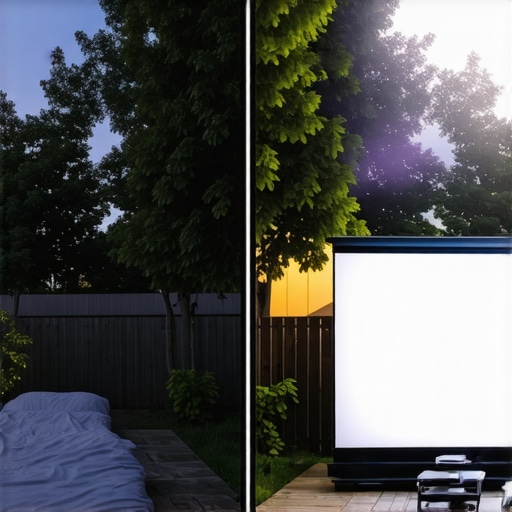
Is it worth the upgrade?
If you are currently using a budget 1080p lamp-based unit, the jump to 4K laser is the single most noticeable improvement you can make. The resolution is nice, but the real ‘wow’ factor comes from the laser’s color saturation and the fact that you won’t have to replace a $200 bulb every two years. For anyone hosting more than three movie nights a summer, the durability and instant-on capabilities of laser hardware make it a mandatory upgrade over aging lamp technology.
UST Projectors vs. The Old School Long-Throw
Many enthusiasts are currently torn between ust projectors (Ultra Short Throw) and traditional long-throw models. High-end UST units from companies like Formovie or Hisense are incredible for living rooms because they sit inches from the wall. However, in the backyard, they are your worst enemy. As I mentioned earlier, the steep projection angle requires a perfectly tensioned, specialized ALR screen that can cost upwards of $2,000. For the price of one high-end UST setup, you could snag several home theater deals on long-throw equipment that is much more forgiving of a slightly wrinkled canvas or uneven ground.
The Final Decision Before You Buy
If you prioritize a ‘set it and forget it’ lifestyle, an indoor fixed setup is your best bet. But if you want the flexibility to turn any environment into a theater, the combination of a rugged canvas and a 4K laser unit is the current gold standard. The competition simply cannot match the lumens-per-pound ratio that modern portable projectors now offer. Before you pull the trigger, I highly recommend you check current prices on the latest laser models to see which fits your budget. If you are still curious about how the indoor-only models perform, you can check out my deep dive into fixed-frame installations, but for most, the call of the wild is much more satisfying.
The Bright Spots and the Rough Patches
- Unmatched Durability: This screen won’t rip when the wind picks up or a branch brushes against it.
- Superior Light Blocking: Unlike thin sheets, the dense weave keeps your 4K image bright and saturated by preventing light bleed.
- Significant Weight: It is heavy and requires a sturdy frame or fence for mounting, which can be a two-person job.
- Initial Wrinkles: You will spend some time steaming out fold lines when you first unbox it because the material is so thick.
Who Needs This and Who Should Pass
This setup is the gold standard for anyone hosting regular events or looking for the best outdoor screens for high wind conditions. If you live in a breezy area, don’t even look at vinyl. However, casual users who only watch one movie a summer might find the physical setup effort too high. If you need something lighter for travel, look into the best portable projectors for camping that work with lighter, more compact fabrics.
#IMAGE_PLACEHOLDER_E#
Is This Backyard Setup Worth Your Cash?
The combination of a 4K laser unit and a rugged canvas screen is the most resilient way to build an outdoor theater. It solves the two biggest enemies of backyard cinema: ambient light and wind. If you are tired of mediocre picture quality that washes out at the first sign of a streetlight, this is the jump you need to make. Before you buy, scan the only laser projector deals worth buying under a grand to find a high-performance unit that doesn’t break the bank. Stop settling for a flapping bedsheet and start watching movies the way they were intended. It is an investment in durability that pays off every time the wind picks up and the movie keeps playing flawlessly.