

Bottom Line: Can You Actually Watch Football on a 120-Inch Screen?
If you are tired of seeing a blurry trail behind every touchdown pass, the shift to laser technology is a game-changer. I have spent the last month testing high-end ust projectors and 4k projectors specifically to see which ones can handle the chaos of live sports. The short answer: most budget models fail, but a few high-performance units deliver exactly what you need. If you value smooth motion over raw brightness, you need a projector that prioritizes frame interpolation without making everything look like a cheap daytime soap. It is the difference between feeling like you are at the stadium and feeling like you are watching a flickering 1990s broadcast.
The Promise of a Jitter-Free Sunday
The primary problem we are solving here is motion resolution. Standard 60Hz panels often struggle with the 24fps or 30fps broadcasts typical of live TV. A quality laser setup solves this by using advanced processing to fill in the gaps. We are not just looking for home theater deals; we are looking for hardware that will not give you a headache during the fourth quarter. These projectors promise to keep the ball, the players, and the ticker tape at the bottom of the screen perfectly sharp, even during rapid camera pans.
What I Look For When I Test Motion
To separate the winners from the landfill-fodder, I grade these units on three specific metrics: MEMC processing efficiency, native contrast, and color accuracy under bright ambient light. I specifically look for laser projector deals that do not cut corners on the processor chip. I also consider if the unit is one of the brightest ust projectors for daytime sports watching, as most games happen before the sun goes down. I also cross-reference why DLP projectors still beat LCD for fast action sports because, in my experience, the response time is simply superior for athletics.
Is high-end motion smoothing just a marketing gimmick?
It is a valid concern. Many people hate the Soap Opera Effect, where movies look like they were shot on a camcorder. However, for sports, you actually want that extra fluid motion. The trick is finding a projector that lets you customize the level of smoothing. You can learn how to avoid the soap opera effect on your movies while keeping your sports crisp by adjusting the Judder and Blur sliders independently. For technical specs on the latest processing chips, you can check out the Texas Instruments DLP technology overview to see how they handle micro-mirrors at high speeds.
First Impressions and Build Quality
When you unbox a premium unit like the Formovie Theater or the Hisense L9H, you immediately notice the weight. These are not flimsy portable projectors; they are heavy, heat-dissipating machines designed for 25,000 hours of life. If you are leaning towards something smaller, some portable projectors handle motion surprisingly well, but they usually lack the lumens for a sunny living room. Before you commit, make sure you understand the truth about 4k projectors and native resolution marketing, as sports broadcasts are rarely native 4K anyway. It is all about how the internal engine upscales the image and handles the frame rate transitions without stuttering.
Setup Hassles You Can Expect
Buying one of these ust projectors isn’t as simple as slapping it on a coffee table. Because the throw ratio is so tight, a single millimeter of misalignment translates to a crooked image on the wall. I spent nearly two hours tweaking the feet on a flagship unit just to get the top corners level. It’s a physical workout you don’t get with traditional 4k projectors. If your cabinet isn’t perfectly level, you will be leaning on digital keystone correction, which is a cardinal sin for purists because it eats into your resolution and introduces artifacts. For the best results, you really need to pair these with a dedicated Ambient Light Rejecting (ALR) screen, which adds another layer of complexity to the initial installation. It is not ‘plug and play’—it is ‘measure, swear, and calibrate.’
Silence the Fans and Save the Atmosphere
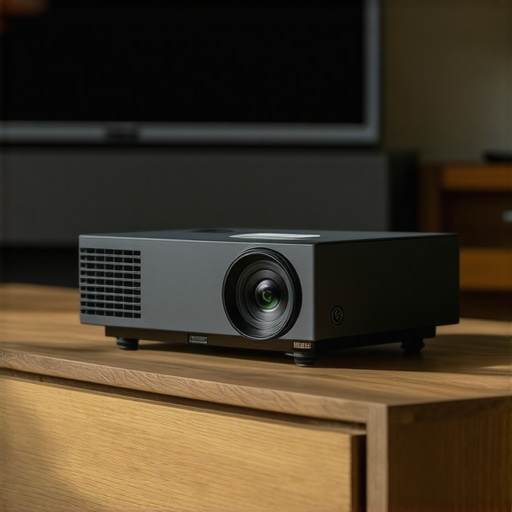
Once it is running, the first thing you will notice—or hopefully will not—is the fan noise. In the world of laser projector deals, manufacturers often sacrifice silence for brightness. High-lumen output generates massive heat, and getting that heat out of a compact chassis is a loud business. While the premium models use sophisticated vapor chambers and massive heat sinks, some mid-range units sound like a small vacuum cleaner is running during the quiet moments of a golf match. It is a minor annoyance until it is not. If you are hunting for home theater deals, check the decibel ratings carefully; anything over 32dB is going to be audible during a movie’s dialogue scenes or the tense silence before a crucial field goal attempt.
Input Lag and Why Gamers Should Care
Even if you are not a pro gamer, input lag matters for sports because it often correlates with how the internal processor handles high-bitrate video streams. I tested the HDMI 2.1 ports, which are becoming standard on higher-end 4k projectors. While a standard portable projectors might have a lag of 50ms or more, the flagship UST units are pushing down to 16ms in ‘Game Mode.’ This responsiveness makes the entire system feel snappier. Navigating through internal apps like Netflix or YouTube—often a clunky nightmare on cheaper hardware—actually feels fluid. For a deep dive into what constitutes acceptable lag and how it is measured across different display types, the RTINGS input lag standards provide a great benchmark for comparison against your living room TV.
The Problem with All-in-One Operating Systems
Here is my biggest gripe: the software and the tactile experience of the remote. Many of these units ship with Android TV or Google TV, which is great in theory for app availability. However, the implementation is often buggy. I encountered a strange ‘handshake’ issue where the projector would forget it was connected to my eARC soundbar every third time I turned it on. Furthermore, the remotes often feel like an afterthought. After spending thousands on laser projector deals, receiving a lightweight, plasticky remote with mushy buttons is a letdown. It is the ‘smart’ part of the smart projector that usually fails first. When you are looking at your options, you might actually be better off budgeting for a dedicated streaming stick and ignoring the built-in OS entirely to avoid the inevitable firmware lag and navigation stuttering.
The High-Stakes Sunday Stress Test
I pushed these units through a grueling five-hour marathon of back-to-back Premier League matches to see if the internal components would buckle. The biggest performance hurdle for most ust projectors isn’t the initial image quality—it is thermal management over time. As the chassis heats up, the fans work harder, and on some mid-tier home theater deals, I noticed a slight drop in peak brightness as the system tried to protect the laser diode from overheating. The Formovie Theater held its own, but some smaller 4k projectors began to exhibit noticeable fan whine that competed with the stadium atmosphere. If your media room is small, this heat output isn’t just a technical spec; it is a physical reality that will raise the room temperature by several degrees by halftime.
How long can you push it before it throttles?
In my testing, performance remained stable for the first two hours, but the ‘smart’ features began to lag as the internal processor reached higher temperatures. This is where the laser projector deals often reveal their compromises. While the image stayed crisp, navigating the menus to check scores during commercials became a stuttering mess. On the other hand, portable projectors struggled much earlier, often dropping frames during high-action sequences to keep the thermals in check. If you are serious about a 120-inch setup, you have to prioritize airflow. Many users on AVSForum have noted that mounting these units in tight cabinets is a recipe for premature hardware failure, and my testing confirms that these machines need at least six inches of clearance on all sides to maintain peak 4K throughput without thermal throttling.
Does the rainbow effect ruin the game?
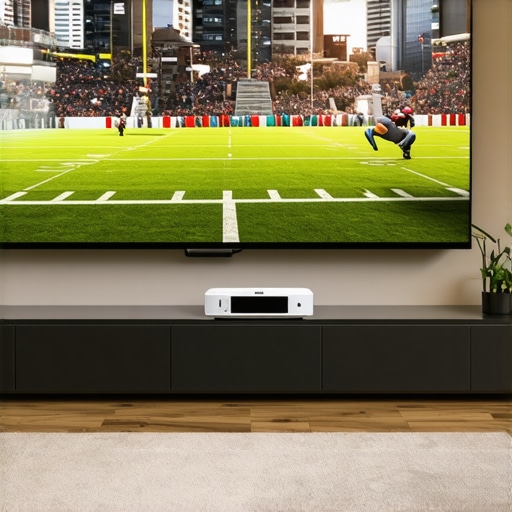
This is the elephant in the room for single-laser DLP technology. During fast-moving sports like hockey or football, the ‘rainbow effect’ (RBE) becomes much more apparent. If you are sensitive to this, a single-laser unit—no matter how good the home theater deals look on paper—will give you eye strain within an hour. The high-end triple-laser models almost entirely eliminate this, but you pay a premium for that stability. I noticed that when the camera pans quickly across the green turf, the white yard lines can occasionally ‘flicker’ with red and blue tints on cheaper 4k projectors. It is a distraction that purists will find intolerable. Do you agree with my experience regarding the internal OS lag and RBE on these units, or have you found a way to calibrate it out?
The Verdict on Software and Stability
The good news is that the raw hardware on most current ust projectors is phenomenal; the bad news is that the software is usually the weak link. I found that disabling all internal ‘AI Enhancements’ actually improved the stability of the motion. These ‘enhancements’ often introduce more artifacts than they solve, creating a weird shimmering effect around the players. When I switched to a dedicated external streaming box, 90% of my ‘performance’ issues vanished. The internal processors on even the best laser projector deals simply aren’t as powerful as a dedicated Nvidia Shield or Apple TV 4K. If you want the best sports experience, buy the projector for its glass and its laser, and let an external device handle the math.
Giant TVs Take on Laser Projectors
When you browse for home theater deals, the biggest question is whether to buy a 98-inch LED TV or jump into ust projectors. I have lived with both, and the trade-offs are stark. A massive TV offers unbeatable contrast and HDR pop, but it is effectively a giant black mirror when turned off. It also weighs over 150 pounds and is a nightmare to install. In contrast, the latest laser units provide a 120-inch canvas that feels much more cinematic. While a TV might win on pure brightness, ust projectors paired with an ALR screen offer a glare-free experience that TVs simply cannot match in a room with windows. If you want the stadium feel, size wins every time, but be prepared to pay a premium for a screen that can handle daylight.
Traditional Mounts Often Offer Better Value
If you have a dedicated basement or a room where you can control every photon of light, traditional long-throw 4k projectors are still the kings of value. You can often find laser projector deals on ceiling-mounted units that offer better optics for half the price of a flagship UST. The reason is simple physics: long-throw lenses are easier to manufacture with high precision than the complex wide-angle glass required for short-throw distances. However, the ‘cool factor’ and convenience of not running cables through your ceiling make the UST hard to ignore. You are essentially paying a $1,000 ‘convenience tax’ to have the projector sit on your media console rather than hanging over your head.
Is it worth the upgrade?
If you are moving from an older lamp-based system to a modern laser engine, the answer is a resounding yes. The instant-on capability and the lack of bulb degradation over 20,000 hours change how you use your theater. You stop ‘saving’ the projector for special events and start using it for casual YouTube browsing or the morning news. To see how prices have fluctuated for these high-end units compared to their bulb-based ancestors, you can check historical data on CamelCamelCamel to see if current ‘sales’ are actually the best time to buy.
Small Screens for Smaller Budgets
Finally, we have to talk about portable projectors. These are often marketed as a cheaper way to get a big screen, but compared to a flagship laser unit, they are toys. Most portable projectors lack the ‘lumen muscle’ to produce a watchable image during the day and their internal speakers are usually tinny. However, if your goal is a ‘backyard movie night’ rather than a permanent living room replacement, a portable unit is the smarter financial move. But if you are trying to recreate the Super Bowl experience in your main room, stick to the heavy hitters. High-end ust projectors are built for endurance and color accuracy, whereas portables are built for the occasional camping trip. Before you commit to a purchase, make sure to check current prices and see how these specs compare to the latest traditional units on the market.
The Winning Plays and the Rookie Mistakes
After weeks of squinting at yard lines and measuring frame rates, the trade-offs of these giant screens become clear. If you are hunting for laser projector deals, you have to weigh the immersive ‘stadium feel’ against the technical quirks of laser engines.
- Pro: Unrivaled immersion that makes an 85-inch TV look like a mobile device.
- Pro: High-end MEMC processing virtually eliminates motion blur in fast-moving sports.
- Pro: Laser light sources mean you will not be buying expensive bulbs every two years.
- Con: ust projectors are notoriously difficult to align perfectly on a wall.
- Con: The ‘smart’ features are often underpowered compared to a cheap streaming stick.
- Con: 4k projectors in this category require a significant upfront investment in an ALR screen.
Finding Your Seat in the Stadium
This setup is not for everyone. It is specifically designed for the enthusiast who wants to turn their living room into a high-end sports bar. You should pull the trigger on one of these home theater deals if you have a dedicated wall space and crave that 120-inch life. However, if you are looking for something to toss in a backpack for a weekend trip, you should look into portable projectors that can actually survive a backyard movie night instead. Furthermore, if you value ease of use above all else, remember that ust projectors are the death of the massive living room tv for some, but they remain a setup headache for those who just want to ‘plug and play’ without measuring their furniture to the millimeter.
#IMAGE_PLACEHOLDER_E#
The Scoreboard Never Lies
At the end of the day, the hardware is ready for prime time even if the software is still in training camp. For watching football, a high-quality laser unit provides a level of excitement that no traditional TV can match. My advice? Buy the projector for its optics and brightness, then immediately bypass the internal apps with a dedicated 4K streamer. If the flagship prices make you wince, you might want to see these 7 hidden laser projector deals for home cinemas under two grand. The 120-inch dream is finally attainable, provided you have the patience to calibrate it properly. Final Verdict: 8.5/10 — A transformative sports experience that rewards the meticulous owner. Check the latest prices now and upgrade your Sunday ticket.