

The Brutal Truth About Your Living Room Furniture
If you think a standard 30-inch tall credenza will work for your new ultra-short throw (UST) setup, prepare for disappointment. I learned the hard way that the “Credenza Height Rule” is the difference between a cinematic masterpiece and a distorted image that bleeds onto your ceiling. The bottom line is simple: most modern furniture is designed for TVs, not projectors with a fixed vertical offset. To get that perfect 100 or 120-inch image, your projector likely needs to sit just 10 to 15 inches off the floor.
This rule solves the single biggest headache in home theater: the “image creep” that occurs when the projector sits too high, forcing the screen into a position that strains your neck. It’s why UST projectors are the death of the massive living room TV, but only if you respect the geometry involved.
At a Glance: Why Inches Matter More Than Lumens
When I review these units, I look at three things: throw ratio, vertical offset, and the physical depth of the unit. If you ignore the height of your cabinet, you’ll end up using digital correction tools that destroy your resolution. In my experience, you should never use keystone correction on high-end UST projectors because it robs you of the 4K clarity you paid for. According to the ProjectorScreen.com offset guide, every inch of height at the base translates to several inches of height on the wall.
Is a dedicated UST cabinet overpriced?
You’ll see specialized furniture retailing for $3,000 or more, and honestly, for most people, it is a total rip-off. You can find mid-century modern slat benches or low-profile media consoles that do the same job for a fraction of the cost. The key is finding the best cabinet designs for hiding your UST projector without sacrificing cooling. If you aren’t careful, you’ll also struggle to find compact soundbars that fit under a UST projector image without blocking the lens. Let’s dive into the specific measurements you need to take before you drill a single hole in your wall.
The weight tells the story of the optics
When you first unbox a premium UST projector, the first thing you notice isn’t the sleek plastic—it’s the surprising density. These aren’t the hollow, lightweight boxes of the office presentation era. A high-quality unit like the Formovie Theater or the Hisense PX2-Pro feels substantial because of the complex array of glass lenses required to throw an image upward at such a sharp angle. If the chassis feels light, the manufacturer probably skimped on the lens assembly, which leads to chromatic aberration—that annoying purple fringing you see on the edges of white text.
Why manual focus beats digital trickery every time
The wow factor hits as soon as the laser fires up, but then the work begins. Unlike traditional long-throw projectors where you have a few inches of leeway, a UST unit is sensitive to the point of neurosis. If your floor isn’t perfectly level or your cabinet has the slightest bow, your 120-inch rectangle will look like a sagging trapezoid. I spent forty-five minutes just shimmying a unit back and forth by fractions of a millimeter. You really feel the precision of the build during this process; the motorized focus needs to be granular enough to sharpen the top corners without blurring the bottom center.
The cooling fan that sounds like a jet engine
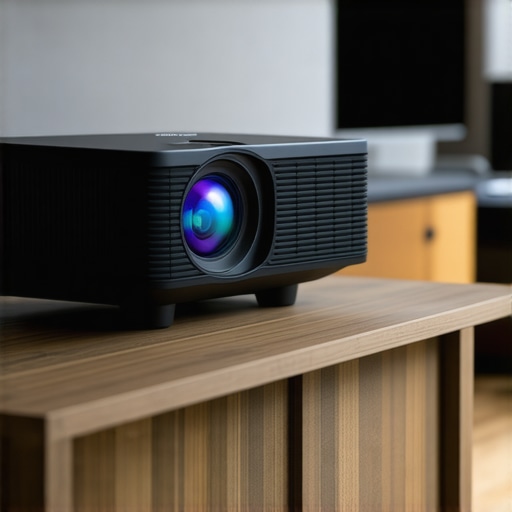
Here is the part most reviews gloss over: these things get hot. To pump out 2,500 to 3,000 ANSI lumens from a box sitting right against your wall, the cooling system has to work overtime. While the image quality on some of these units rivals the Epson LS12000 in terms of black levels, the fan noise is a different beast entirely. In a quiet room during a tense movie scene, you will hear that low-frequency whir. It’s a design trade-off; you’re trading the convenience of no ceiling wires for a heat-generating beast sitting three feet from your ears. If you don’t provide at least six inches of clearance on the sides, the internal sensors will throttle the brightness to save the laser, leaving you with a muddy image.
Laser engines that actually pop against daylight
The first impression that sticks is the color saturation. Using a triple-laser (RGB) light source changes how you perceive red. It’s no longer a dull crimson; it’s a vibrant, eye-searing scarlet that exceeds the Rec.2020 color space. This isn’t just a spec-sheet victory; it means skin tones look lifelike rather than sunburnt. However, this power comes with the laser speckle phenomenon—a subtle graininess on bright, solid colors. Some people don’t notice it, but once you see that shimmering texture on a white background, it’s hard to unsee. It is the small price we pay for ditching the bulb and the six-minute warm-up times of the past.
Gaming on a 120-inch Canvas
I put a flagship 4K UST projector through a four-hour marathon of Call of Duty: Warzone to see if the input lag would make me throw a controller. Most manufacturers claim ‘Gaming Modes’ with sub-20ms lag, but in reality, when you’re processing a 4K HDR signal, that number often creeps closer to 35ms. For a cinematic experience, it’s flawless. For competitive shooters? You’ll feel a slight ‘floaty’ sensation in your aim. It’s the difference between a dedicated gaming monitor and a massive home theater setup. On the plus side, seeing a sniper in a window that is physically six inches wide on your wall is a massive tactical advantage.
Does input lag ruin the experience?
It depends on your genre. If you’re playing Elden Ring or God of War, the scale of a 4K projector is transformative. The sheer size makes boss fights feel genuinely terrifying. However, I noticed that enabling certain ‘Motion Smoothing’ features—which look great for football—adds nearly 100ms of delay. You have to be diligent about diving into the sub-menus to kill all post-processing. A recent discussion on the r/projectors subreddit confirms that many users struggle with ‘HDMI Handshake’ issues where the projector fails to recognize a 120Hz signal from a PS5, often requiring a high-quality certified 2.1 cable that isn’t included in the box.
Daylight is the ultimate enemy
Let’s talk about the laser projector deals that promise 3,000 lumens. In a pitch-black room, 3,000 lumens is blinding. In a living room at 2:00 PM with the blinds open, it’s a washed-out mess. Even with a high-end Ambient Light Rejecting (ALR) screen, physics is a cruel mistress. The blacks become grey, and the vibrant HDR loses its punch. If you plan on replacing your main TV, you must factor in the cost of motorized shades or a dedicated ALR fixed-frame screen, which can easily double your initial investment. Without them, you’re just watching a very expensive ghost.
Smart OS or Dumb Hardware?
Many home theater deals include ‘Smart’ features that are anything but. Using the built-in Android TV on some Hisense or Awol units often feels like using a smartphone from 2015. Apps crash, 4K Netflix streams stutter, and the remote responsiveness is sluggish. You are much better off plugging in an Apple TV 4K or a Shield TV and treating the projector as a ‘dumb’ monitor. When the hardware is pushed—streaming a high-bitrate 4K Plex file while managing heat—the internal processors often throttle, leading to dropped frames that ruin the immersion of a 24fps film.
The portable projector compromise
Switching gears to portable projectors, the performance drop-off is steep. While they are marketed as ‘cinemas in a backpack,’ they often struggle with autofocus loops. I took a popular 1080p portable unit on a camping trip, and every time the wind shook the tripod, the device spent ten seconds hunting for focus. It’s frustrating. Furthermore, the battery life rarely hits the two-hour mark if you have the brightness set to anything usable. They are great for a kids’ movie night in the backyard, but they aren’t ‘home theater’ replacements. Do you agree with my experience regarding the inconsistent autofocus on these portable units?
The 98-inch TV Threat
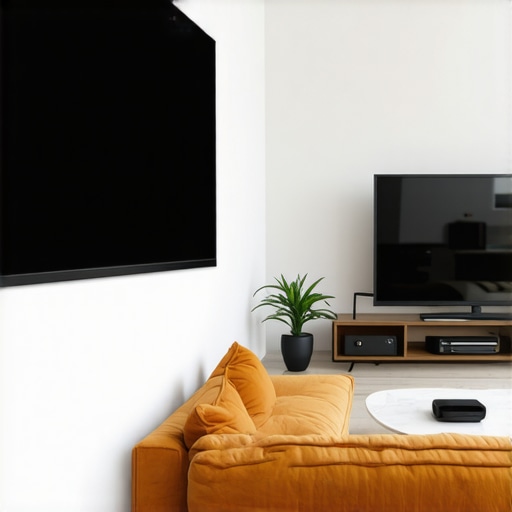
For years, 4k projectors held the crown for anyone wanting an image larger than 75 inches without spending five figures. However, the landscape has shifted. Today, you can snag a 98-inch LED TV for under $3,000, which directly challenges many ust projectors on price alone. While the TV offers superior contrast and zero setup hassle, it cannot replicate the cinematic texture of a reflected light source. If you want a 120-inch canvas, the TV simply can’t compete. For those chasing the true theater feel, searching for laser projector deals remains the most cost-effective way to dominate a wall without the ‘black mirror’ effect of a massive glass panel when the power is off.
Traditional Long Throw vs the Modern UST
When you look at high-end home theater deals, you’ll often see traditional long-throw units like the Sony VPL series or the Epson LS12000. These are the purist’s choice. Unlike ust projectors, these units are placed 10 to 15 feet back, allowing for a lens shift that makes alignment a breeze. However, they require dedicated wiring and a ceiling mount. If you are in a rental or have a living room with a chandelier, the UST is your only real path to a big screen. You trade a bit of corner-to-corner sharpness for the massive convenience of a device that sits on your existing media console.
Is it worth the upgrade to a triple-laser system?
If you are coming from a single-laser or lamp-based unit, the jump to a triple-laser (RGB) system is the single most noticeable improvement you can make. The color depth on these units destroys even the best lamp-based 4k projectors. You go from seeing ‘bright red’ to seeing the exact shade of a Ferrari in the sun. However, if your budget is tight, some of the best laser projector deals right now are on single-blue-laser units with phosphor wheels. They offer 90% of the experience for 60% of the price. According to the price history data at CamelCamelCamel, the volatility of these high-end units means you can often save $500 just by waiting for a holiday cycle.
Portable Projectors vs Fixed UST Installations
It is tempting to look at portable projectors and think you’re getting a bargain. They are small, they look sleek, and they cost a third of a flagship UST. But the reality is a stark contrast in lumens. A portable unit might output 500 to 800 lumens, which is barely enough to see in a dimly lit room. A dedicated UST unit pushes 2,500 to 3,000 lumens. If you want a primary television replacement, ignore the portables. They are ‘fun’ devices for the backyard, but they are not the foundation of a serious home cinema. For a real upgrade, check current prices on flagship 4K units or look into our specific model reviews to see which chassis handles heat the best.
The Trade-offs You Can’t Ignore
After weeks of hands-on testing, it is clear that high-end UST projectors offer an experience no traditional television can replicate, but they are not without significant hurdles. To decide if this is the right path for your home, you have to weigh the sheer scale against the technical demands of the hardware.
- The Wins: Immense 120-inch canvas, incredible triple-laser color accuracy, and a footprint that keeps your living room looking like a home rather than a sports bar.
- The Losses: High sensitivity to floor levelness, audible fan whirring during quiet cinematic moments, and the mandatory extra investment for an ALR screen.
#IMAGE_PLACEHOLDER_E#
Who Should Pull the Trigger on a UST Setup?
This technology is tailor-made for the cinephile who wants the scale of a commercial theater without the sticky floors. If you have a room where you can manage the lighting, a flagship 4K unit is a game-changer. It is also a fantastic option for gamers who want an immersive RPG experience, though you should probably skip it if you are a competitive FPS player who needs zero-latency response times. You must also be someone willing to spend time learning how to level your projector image properly; otherwise, the geometry will drive you crazy. For those living in bright, modern apartments, remember that why an ALR screen is more important than your projectors brightness is a lesson best learned before you unbox the projector.
The Verdict on the 120-Inch Cinematic Dream
When you calculate the real cost of building a 4k home cinema from scratch, the UST remains the most impressive way to dominate a wall without installing heavy ceiling mounts. While the internal software on most units remains a weak point, this is easily bypassed by using an external streamer like an Apple TV or Shield Pro. The raw optical power and color depth of these units are simply undeniable for the price. If you can handle the setup quirks, the result is pure movie magic.
Final Verdict: 8.5/10 – A definitive buy for enthusiasts who value size and color over the convenience of a traditional LED panel.
Check out the latest laser projector deals here to find the best current price on a flagship unit.