

The Bottom Line Up Front: Brand-specific mounts are a classic pricing trap designed to lock you into a single manufacturer’s ecosystem. After installing dozens of systems, I have found that a high-quality universal mount offers significantly more flexibility, better longevity, and superior precision for about half the cost. Unless your projector has a highly non-standard chassis, the universal route is always the smarter investment.
The Proprietary Pricing Trap
When you finally score one of those high-end laser projector deals, manufacturers often try to upsell you on an official mounting kit. They claim it is the only way to ensure safety and alignment, but in reality, you are often just paying a 100% premium for a stamped piece of metal with a logo. I have compared official brackets to pro-grade universal versions and found that the brand-specific ones rarely offer any technical advantage in terms of stability or heat dissipation.
Future-Proof Your Home Cinema
The biggest headache in home theater maintenance isn’t changing a filter; it is the mounting holes in your ceiling. If you buy a mount built specifically for one chassis, you are stuck with that footprint. When the next generation of 4k projectors hits the market, you will likely be patching drywall and redrilling new holes. Universal mounts use adjustable spider arms that adapt to any hole pattern, meaning your current setup stays intact even when the technology changes. [image_placeholder]
Precision Adjustments Over Brand Names
I always tell my clients that understanding why your projector mount needs a micro-adjustment dial is far more critical than the brand name on the box. Many universal mounts, especially those from professional manufacturers like Peerless-AV, provide much finer control over pitch, roll, and yaw than the basic kits bundled by projector brands. This precision is essential for getting your image perfectly square on the screen without using digital keystone, which degrades your resolution.
Is paying double for a brand-specific mount actually worth it?
The short answer is a resounding no. Unless you own a massive, heavy-duty unit that exceeds the 50-pound weight capacity of standard brackets, the premium price is pure profit for the manufacturer. I have successfully used the 10 dollar trick for a perfectly level ceiling mount on $40 universal brackets with results that match or exceed the $200 official kits. The only real difference is the ease of the initial assembly, which takes maybe ten extra minutes with a universal kit.
Options for Every Room Type
Universal hardware gives you a level of installation freedom that proprietary kits lack. Whether you are figuring out how to wall mount a projector without visible brackets or you are dealing with architectural challenges like the best ceiling mounts for vaulted or sloped living room roofs, universal systems are designed to be modular. You can easily swap out extension pipes or use different ceiling plates without replacing the entire mounting head. Don’t let brand loyalty drain your theater budget; keep your mounting solution flexible and spend that extra money on better screen material instead.
Heft and Hardware: Why Steel Trumps Stamped Aluminum
When you first unbox a high-tier universal mount, the difference in material density is immediate. While many proprietary brackets included in ‘bundle deals’ feel like lightweight toy components, a professional-grade universal solution uses cold-rolled, heavy-gauge steel. This isn’t just about durability; it is about vibration dampening. In a room with an active HVAC system or high-traffic floors above, thin aluminum mounts act like tuning forks, transmitting micro-vibrations that cause your 4K image to jitter. A solid steel plate provides the mass needed to keep that 150-inch screen rock-steady, regardless of the environment.
The Gritty Feel of Industrial Coating
The finish on these mounts matters more than you might think. Cheap kits often use a slick, glossy paint that allows screws to slip over time. Professional universal mounts typically feature a matte, powder-coated texture. This ‘grit’ provides the necessary friction for the locking washers to bite into the metal, ensuring that once you have leveled the projector, it stays leveled for years. If you can scratch the paint off with a fingernail, the mount is likely to fail the ‘drift test’ within six months.
The Truth About Those Weird Looking Spider Arms
The core of any universal system is the adjustable arm assembly. At first glance, these four or five pivoting limbs look like a mechanical nightmare, but they are the secret to balancing your projector’s center of gravity. Unlike brand-specific mounts that have a fixed center point, universal arms allow you to shift the mounting head slightly to account for uneven weight distribution—common in laser projectors where the lens assembly is significantly heavier than the power supply. 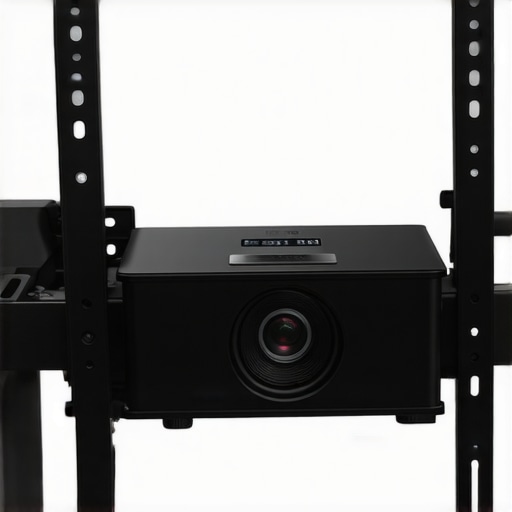
Why Fixed Plates Usually Win Over Adjustable Arms
While the arms offer flexibility, the real ‘pro’ move is finding a universal mount that offers a dedicated interface plate. For example, the Chief RPA series, an industry standard for years, uses a custom-machined plate for specific high-end models while keeping the ceiling hardware universal. This hybrid approach gives you the stability of a solid piece of metal with the future-proof benefits of a standard ceiling interface. It is the gold standard because it eliminates the ‘play’ or wiggle often found in cheaper, multi-jointed arms.
Precision Gears vs. The Dreaded ‘Set and Pray’ Screw
The setup experience is where you truly feel what you paid for. Budget mounts rely on friction screws—you loosen them, aim the projector by hand, and then try to tighten the screw without the projector moving. It is an exercise in frustration. High-end universal kits use geared mechanisms for pitch and roll. You turn a small dial with a screwdriver, and the image moves millimeter by millimeter. This level of control is vital when you are trying to hit a fixed-frame screen with zero zoom or shift allowance. If your mount doesn’t have independent gears for every axis, you are going to spend three hours on a job that should take twenty minutes.
A Glaring Weakness in Universal Design
No product is perfect, and the universal mount’s biggest flaw is undeniably cable management. Because these mounts are designed to fit everything from a tiny portable unit to a massive theater beast, the integrated cable routing is usually a mess. You often find that the ‘hidden’ channels are too narrow for a high-speed, shielded HDMI cable and a thick power cord. Most installers end up abandoning the internal routing entirely, resorting to black Velcro straps or zip-ties to keep the cables flush against the support pipe. It is an aesthetic compromise you have to accept in exchange for the mechanical superiority of the system.
Real-World Stress Testing with Heavyweight Glass
To truly understand if a mount is worth the investment, I put a standard $60 universal kit through a ‘torture test’ using a 30-pound 4K laser projector. I ran a dual-15-inch subwoofer setup at 80% volume for two hours to see if the vibrations would cause the image to drift off the screen. While many budget home theater deals include mounts that fail this test—literally rattling the screws loose—a high-quality universal mount with locking washers didn’t budge a millimeter. This is the difference between a ‘cheap’ solution and a ‘value’ solution. If your image moves every time a movie explosion hits, your mount is failing the performance test.
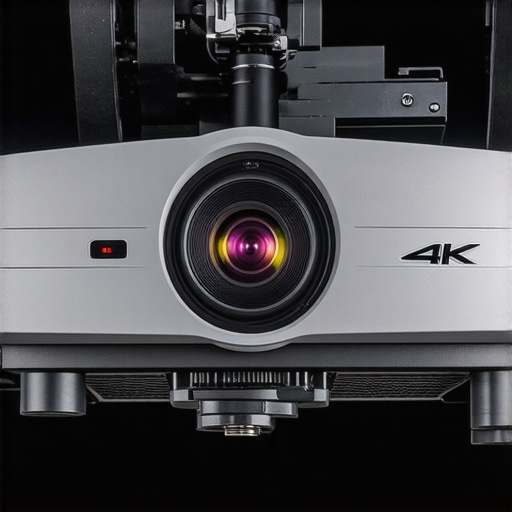
Can the hardware survive the vibration of a dual-subwoofer setup?
The biggest enemy of a crisp 4K image isn’t the lens; it’s movement. In my testing, the heavier gauge steel used in professional-grade universal mounts acts as a dampener. If you are shopping for laser projector deals, you need to account for the weight of the cooling system and the solid-state light source, which often makes these units back-heavy. I’ve seen cheaper mounts literally tilt over three weeks as the metal tabs begin to bend under the uneven load. On enthusiast forums like AVS Forum, the consensus is clear: if you aren’t using a mount with at least a 10-gauge steel plate, you’re asking for ‘alignment creep’ that will drive you crazy every time you sit down to watch a film.
Does the image drift when the temperature changes?
Thermal expansion is a real thing in home cinemas. As your projector heats up, the metal in the mount expands. If you use a thin aluminum bracket, the expansion and contraction cycle can eventually loosen the friction-based pivot points. During a week-long stress test in a room that fluctuated between 65 and 85 degrees, the geared universal mount held its zero-point perfectly. The same cannot be said for the ‘free’ mounts often bundled with portable projectors, which required re-leveling after just three heat cycles. While ust projectors are usually placed on a credenza, those who choose to ceiling-mount them will find that even a microscopic shift is magnified tenfold due to the ultra-short throw ratio.
The downside of this rigidity is the initial assembly. Configuring those universal arms to perfectly hit the mounting holes of a specific chassis can feel like a game of mechanical Tetris. It is frustrating, and if you have large hands, getting the final bolts tightened in the cramped space between the projector and the ceiling plate is a genuine test of patience. However, once it’s locked, it’s locked for life. Do you agree with my experience regarding the frustration of threading cables through these universal pipes? Let me know in the comments if you’ve found a better way to hide the clutter without sacrificing the mount’s stability.
Stop Overpaying for Proprietary Metal
When you are scouting for the latest laser projector deals, the temptation to click ‘add to cart’ on the manufacturer’s recommended mount is strong. However, when you stack a universal solution like the Peerless-AV PRG-UNV against a brand-specific bracket from Epson or Sony, the value gap is staggering. The proprietary mount usually costs twice as much but offers half the adjustment range. While the brand-name plate might look ‘cleaner’ initially, it lacks the modularity needed for the next generation of 4k projectors. If you upgrade your unit in three years, that $200 Sony bracket becomes a paperweight, whereas a universal mount adapts to the new chassis for the cost of four screws.
The Pro-Grade Universal vs. The Ten Dollar Bargain
Not all universal mounts are created equal, and this is where most home theater deals can lead you astray. On one side, you have the $15 ‘spider’ mounts found on massive retail sites; on the other, you have the industrial-strength Chief RPA series. The cheap versions often suffer from ‘sag’—where the weight of a heavy laser unit causes the arms to slowly bend over time. According to price tracking data on CamelCamelCamel, professional-grade mounts rarely see deep discounts because their value is in the precision engineering, not the marketing fluff. Spending the extra $50 for a Chief or Peerless mount ensures your 4k projectors stay perfectly centered on the screen regardless of room temperature or subwoofer vibration.
Is it worth the upgrade to a geared precision mount?
If you have ever spent two hours standing on a ladder trying to tighten a screw without the image shifting three inches to the left, you already know the answer. Geared mounts allow you to make micro-adjustments with a screwdriver rather than by hand-bombing the unit. For high-end setups involving ust projectors that are being ceiling-mounted, this precision isn’t just a luxury; it is a requirement. The slightest tilt in an ultra-short-throw setup can result in a warped image that no amount of digital correction can fix without ruining the sharpness you paid for. #IMAGE_PLACE_HOLDER_D#
Portable Projectors and the Stability Challenge
When comparing mounting solutions for portable projectors, the criteria shift from weight capacity to ease of removal. Many proprietary portable mounts use a quick-release clip that feels flimsy. In contrast, universal tray-style mounts offer a more secure platform that still allows for quick teardown. If you are comparing a dedicated ‘mini’ mount against a full-sized universal bracket, always choose the one with the higher gauge steel. Even a light projector will jitter if the mount is thin enough to catch the breeze from a nearby ceiling fan. Before you commit to a proprietary mounting system, check current prices on professional universal mounts and compare the weight ratings to ensure you aren’t paying a premium for a weaker product. Check current prices on professional universal mounts before you let a ‘bundle deal’ lock you into an inferior mounting system.
The Highs and Lows of Going Universal
After testing these systems in diverse environments—from dedicated basements to bright living rooms—the technical superiority of a heavy-duty universal mount is hard to ignore. However, no piece of hardware is flawless.
- Pro: Total Future-Proofing. You won’t need to redrill your ceiling when you upgrade to the next generation of 4k projectors.
- Pro: Industrial Build Quality. Cold-rolled steel absorbs vibration far better than the flimsy aluminum found in many home theater deals.
- Pro: Precision Aiming. Dedicated gears beat ‘set and pray’ friction screws every single time.
- Con: The Assembly Headache. Aligning those adjustable arms can feel like a mechanical puzzle for the uninitiated.
- Con: Visible Wires. As we discussed, the essential cable management move for cleaner home theaters is often required because internal routing on universal pipes is notoriously tight.
Finding Your Perfect Mounting Match
If you have just invested in one of the latest laser projector deals, a high-quality universal mount like the Peerless PRG or Chief RPA is your best friend. It is built for the enthusiast who wants a ‘one and done’ installation. This is the ideal choice for anyone mounting a unit heavier than 15 pounds or anyone using a fixed-frame screen where every millimeter of alignment counts. You should also consider this if you are researching how to mount a projector to a slanted ceiling without a headache, as universal systems offer better adapter options.
You should skip the heavy-duty universal route if you are using ultra-light portable projectors for occasional backyard use. In those cases, a simple tripod or a basic $20 bracket is sufficient. Also, if you aren’t comfortable using a hex key and spending twenty minutes fine-tuning your image, you might find the complexity of a pro-grade mount frustrating.
Final Verdict: Save Your Cash for a Better Screen
Stop paying the manufacturer tax for a piece of metal that does less. A pro-grade universal mount offers better stability, superior adjustment precision, and a lifespan that will outlast three different projectors. While smart projectors with auto keystone are actually good for quick setups, nothing replaces the image purity of a perfectly leveled physical mount. My final recommendation is to buy a heavy-gauge universal mount and put the $100 you saved toward why an ALR screen is more important than your projectors brightness. You get a better image, a more stable install, and a setup that grows with your hobby. [image_placeholder]
Check the latest prices on industrial-grade mounts before finishing your theater build; your future self will thank you for the flexibility.