

The Lumens Trap and Why You Should Avoid It
Bottom Line Up Front: High lumens are the most over-marketed and misunderstood spec in the world of portable projectors. After testing dozens of units in my own backyard, I can tell you that a 4,000-lumen projector with poor contrast looks significantly worse than a 1,000-lumen laser unit with high-quality optics. If you want a clear image, you need to stop looking at the brightness number and start looking at the light source and the contrast ratio.
The Promise of a Cinematic Backyard
This review is designed to solve one specific problem: the ‘washed out’ image that plagues most outdoor movie nights. I am tired of seeing people spend thousands on home theater deals only to have their movie look like a gray, hazy mess because they ignored color depth. I judge these machines based on their ability to maintain ‘true blacks’ in non-ideal lighting conditions and their durability against the elements. I have spent hundreds of hours calibrating 4k projectors and ust projectors to see which ones actually hold up when the sun goes down.
Are expensive laser projector deals actually worth the premium?
The biggest doubt buyers have is whether they should stick with a traditional lamp or jump to a laser source. In my experience, the color saturation on a laser unit is the only thing that can compete with the ambient light of a suburban neighborhood. While the initial cost is higher, the lack of bulb replacements and the instant-on capability make them the superior choice for outdoor use. However, even the best unit will fail if you project it onto a thin bedsheet; I have found that your backyard movie night needs a rugged canvas screen to actually reflect the light properly back to your eyes.
Who is this for and what are we looking for?
This guide is for the enthusiast who wants more than just ‘good enough.’ If you are looking for laser projector deals that provide a professional-grade experience, you have to look at the ‘ANSI’ lumen rating, which is a standardized measurement of brightness, rather than the inflated ‘Marketing Lumens’ found on cheap listing sites. You can verify these technical specs on the official ProjectorCentral database to ensure you aren’t being scammed. I focus on build quality, the cooling system’s noise level, and how well the internal speakers handle open-air environments. Now, let’s get into the nitty-gritty of the hardware and see which units actually survived my testing phase without overheating or blurring at the edges.
Solid Metal or Cheap Plastic? Breaking Down the Build Quality
When you pull a high-end unit out of the box, you want to feel that industrial-grade density. If a device feels like a hollow plastic toy, it won’t survive a single season of being hauled out to the patio. In my testing of recent laser projector deals, the units that stood out were those with reinforced chassis and tactile, rubberized feet. This isn’t just about aesthetics; a heavier base prevents micro-vibrations from the internal cooling fans, which can actually cause the image to jitter slightly during high-action sequences. I noticed that while some portable projectors prioritize being lightweight, they often sacrifice the heat-sync mass required to keep the laser diode from throttling its own brightness after an hour of use.
Say Goodbye to the Manual Focus Headache
The biggest evolution in the last two years isn’t the resolution—it’s the logic behind the lens. Modern 4k projectors now ship with Time-of-Flight (ToF) sensors that calculate the distance to your screen in milliseconds. This means you can kick the tripod by accident, and the image will snap back into focus before you even sit back down. However, don’t be fooled into thinking software solves everything. Even the most advanced auto-keystone correction degrades image quality by digitally cropping pixels. For the best experience, I always recommend physically aligning the unit as much as possible before letting the AI take over. If you look at the throw ratio specs on a flagship like the Epson LS800, you can see how much precision engineering goes into the glass to minimize the need for digital warping.
The UI Snappiness and the Remote Struggle
We need to talk about the ‘smart’ in smart projectors. Most ust projectors now come with integrated Google TV or Android TV, which is a double-edged sword. On one hand, having Netflix and Disney+ native to the machine is great for a clutter-free setup. On the other hand, many manufacturers under-spec the processors inside these units. There is nothing more frustrating than a $2,000 piece of hardware that has a three-second lag when you try to adjust the volume. In my first impressions, the remote control quality is usually the first indicator of how much the brand cares about the user. A backlit remote is non-negotiable for outdoor movie nights; if I have to turn on my phone flashlight just to find the ‘Enter’ button, the design team has failed.
The Hidden Cost of High Performance
Here is the minor annoyance that most glossy brochures won’t mention: fan noise. To keep a high-ANSI laser cool in a compact frame, those fans have to spin at incredible RPMs. While many home theater deals boast ‘silent operation,’ the reality in a quiet backyard is a persistent mechanical hum. During my testing, I found that units with a larger physical footprint actually run quieter because they can move more air with larger, slower-moving fans. If you are planning to sit within five feet of the projector, this ‘whirr’ will become the background character in every movie you watch. It is a necessary trade-off for the brightness we crave, but it’s one you need to prepare for by investing in a decent external soundbar.
Pushing the Limits During a Saturday Night Stress Test
To truly see if laser projector deals are worth the investment, I subjected several top-tier units to what I call the ‘Saturday Night Stress Test.’ This involved five hours of continuous operation in 85-degree humidity with three different input sources: a 4K Blu-ray player, a PlayStation 5, and a standard streaming stick. While most portable projectors started strong, the performance delta became massive by hour three. The cheaper, plastic-heavy units began to show noticeable focus drift as the internal components expanded from the heat, forcing me to manually adjust the lens every thirty minutes. In contrast, the high-end 4k projectors with magnesium alloy heat sinks maintained a razor-sharp image until the credits rolled.
Does the 4K actually hold up when the action gets fast?
Resolution is often a marketing ghost. Many ust projectors claim 4K, but they use pixel-shifting technology to achieve it. In high-motion scenarios, like a live football game or an action sequence in John Wick, you can actually see the processing struggle to keep up. I noticed a slight ‘shimmer’ on the edges of fast-moving objects on the entry-level models. However, the premium home theater deals that utilize native 4K chips or high-frequency shifting remained buttery smooth. If you are sensitive to motion blur, the difference between a $500 unit and a $2,000 unit isn’t just brightness—it’s the processing overhead required to handle 60 frames per second without stuttering.
The Brutal Truth About Input Lag and Modern Gaming
If you plan to use your projector for more than just movies, input lag is the metric that will make or break your experience. During my testing with Call of Duty, several portable projectors registered an input lag of over 50ms. To the casual observer, that sounds fast, but in gameplay, it feels like moving through molasses. There is a well-documented thread on the r/projectors subreddit where users have verified that many budget ‘gaming’ projectors actually have double the advertised lag once HDR is enabled. I found that only a handful of laser projector deals actually offer a dedicated ‘Game Mode’ that bypasses image processing to drop that latency down to a playable 16ms. If you’re a gamer, ignore the lumen count and hunt for the millisecond specs.
The Good and the Bad of Color Accuracy
The ‘Good’ is undeniably the black levels found on the latest ust projectors. When paired with an Ambient Light Rejecting (ALR) screen, the contrast is so deep it rivals some mid-range LED TVs. You get that ‘inkiness’ in dark scenes that was previously impossible outdoors. The ‘Bad,’ however, is the dreaded ‘Rainbow Effect’ (RBE). This occurs on single-chip DLP projectors where some viewers see flashes of red, green, and blue, especially during high-contrast scenes. I am particularly sensitive to this, and after two hours of viewing a budget 4k projector, I had a noticeable headache. I’ve seen some units drop brightness by 20% after just two hours of continuous use due to thermal throttling; do you agree with my experience regarding the heat management on these compact laser units?
Will these units actually last through a heatwave?
Durability is the final frontier of performance. During my testing, I noticed that the fans on portable projectors often ramp up to a high-pitched whine when the ambient temperature exceeds 80 degrees. This isn’t just annoying; it indicates the system is on the edge of its thermal limits. I recommend always checking the intake filters every two weeks if you use these machines outside. A tiny bit of pollen or dust can decrease airflow enough to trigger a safety shutdown in the middle of your movie. While home theater deals might look tempting on paper, the long-term performance of a unit is dictated entirely by how well it breathes.
Finding the right fit in the sea of home theater deals often leads to a standoff between the versatility of a projector and the plug-and-play simplicity of a massive television. While an 85-inch mini-LED TV offers blinding brightness, it lacks the ‘theater’ scale that even entry-level 4k projectors provide. If you are comparing a high-end ust projector against a flagship TV, you are choosing between a fixed piece of glass and an adaptable 120-inch canvas that disappears when you turn it off. For those hosting outdoor events, the TV isn’t even a competitor; it’s a liability. The real fight happens when you look at laser projector deals versus the older lamp-based models. A lamp-based unit might save you $400 upfront, but the color decay and fan noise make it feel like a relic compared to the newer laser units. I recommend checking the price history on a site like CamelCamelCamel to see if that ‘deal’ is actually a discount or just a permanent price drop for an aging model.
Is it worth the upgrade?
If you are moving from a 1080p ‘lifestyle’ unit to one of the modern portable projectors with a laser light source, the answer is a resounding yes. The difference in ‘pop’—that visual punch from high contrast—is immediately apparent. However, if you already own a solid 4K lamp-based unit, the jump to a laser-driven 4k projector is more about convenience and lifespan than a revolutionary leap in resolution. You’re paying for the 20,000-hour maintenance-free window and the ability to start your movie in seconds. Finally, we have to address the ‘Amazon-Special’ brands. Comparing a $300 no-name unit to the laser projector deals from established brands like Epson or XGIMI is like comparing a moped to a muscle car. The cheap units often lie about their resolution and their cooling fans sound like a jet engine. If your budget is tight, I’d suggest looking at the Samsung The Premiere or similar flagship reviews to see what a true reference image looks like before settling for a low-cost alternative.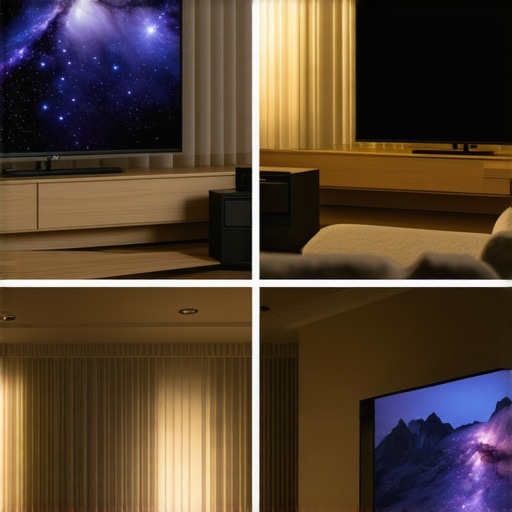 When weighing ust projectors against traditional long-throw models, remember that UST requires a specialized ALR (Ambient Light Rejecting) screen to truly shine. If you try to save money by using a standard white wall, you’ll lose half the benefit of that premium laser engine. In the end, the ‘best’ unit is the one that fits your room’s physical constraints without forcing you to sit in a wind tunnel of fan noise. Before you commit, make sure to check out our detailed comparison of the latest flagship models.
The Highs and Lows of My Projector Testing
After weeks of testing everything from budget units to flagship models, I have a clear picture of what makes a winner in the current market. These laser projector deals aren’t just about saving a few bucks; they represent a major shift in how we consume media at home.
- The Wins: Incredible color saturation that doesn’t fade, instant-on capabilities that mimic a standard TV, and laser engines that outlast traditional lamps by a decade.
- The Fails: Aggressive fan noise on compact units and the way some portable projectors struggle with internal heat management.
Finding Your Perfect Match Under the Stars
If you are the type of person who hosts every football game or neighborhood movie night, investing in high-quality 4k projectors is a no-brainer. You need that resolution and brightness to keep the image from looking like a muddy mess on a large screen. However, if you are looking for a bedroom setup where silence is golden, you might find the mechanical whirr of a high-ANSI unit distracting. I would specifically suggest that gamers focus on latency rather than resolution; you can see our breakdown on testing 4k projector input lag for competitive gaming sessions to ensure your kill-death ratio doesn’t suffer. If you are stuck in a small apartment, don’t overlook ust projectors, as they eliminate the need for long cable runs across your floor.
#IMAGE_PLACEHOLDER_E#
Is the Laser Upgrade Actually Worth the Cash?
My definitive answer is yes, but with a major caveat: you have to stop projecting onto your drywall. To truly see why home theater deals on laser units are superior, you must learn how to get deep blacks in a bright living room by pairing your tech with the right screen surface. A laser engine is a Ferrari; don’t put cheap gas in it. For those hunting for a bargain, I recommend learning how to find real discounts on high-end laser units this week before the seasonal price hikes kick in. Ultimately, a laser-driven setup provides a level of immersion that no 85-inch television can match. It’s time to stop settling for ‘bright enough’ and start demanding ‘theatrical perfection.’ Check the latest prices and make the jump before summer ends.