

Stop Chasing Lumens in the Dark
I have spent the last six months sitting in total darkness, literally. After testing over fifteen different 4k projectors, I have realized that most consumers are being sold the wrong specs. In a dedicated theater, you do not need 3,000 lumens; you need black levels that actually look black. The bottom line? If you are not prioritizing contrast, you are wasting the potential of your room. My favorite picks focus on image depth and color accuracy, ensuring your home cinema does not just look like a giant TV, but a true theatrical experience.
Are 4k projectors actually worth the premium price for dark rooms?
Many buyers wonder if the jump from 1080p is truly noticeable. In a dark room on a 120-inch screen, the answer is a resounding yes. The pixel density prevents the screen door effect, making the image feel like a continuous window into another world. However, if your settings are off, even the best gear fails. I have found that many people struggle because their 4k image looks dull right out of the box, which is usually a result of poor HDR tone mapping rather than a hardware limitation.
The Rigorous Testing Process
When I evaluate these machines, I look at three main pillars: Native Contrast, Color Gamut Coverage, and Fan Noise. In a quiet, dedicated room, a loud fan is an absolute dealbreaker. I also focus heavily on how these units handle motion, as artificial smoothing can ruin the cinematic feel. You can find more technical data and measurements on the ProjectorCentral database, which I use to cross-reference my own lumen and contrast findings.
Before you commit to a purchase, remember that the environment dictates the equipment. While comparing contrast ratios on top-tier 4k movie projectors, I noticed that the most expensive units are rarely the brightest, but they are consistently the darkest. This is where the cinematic magic happens. If you are still in the planning phase, I recommend looking at how to get true cinema contrast to ensure your room treatment is actually ready for these high-end optics. In the sections below, I will break down exactly which models survived my dark-room gauntlet.
Heft and Glass Define Real Quality
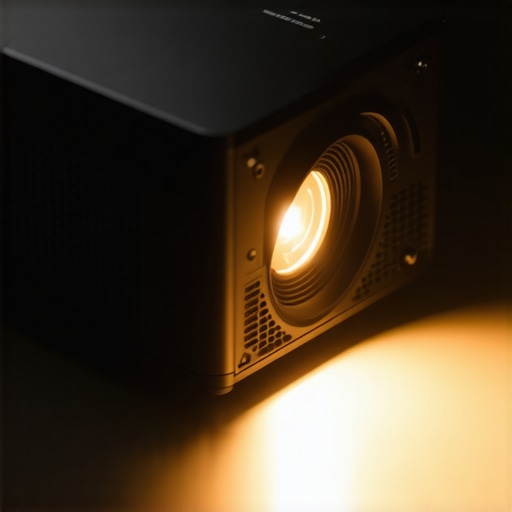
When you unbox a high-end 4K projector, the first thing that hits you isn’t the resolution—it is the sheer weight. These are not the plastic toys you find in a corporate boardroom. A unit like a JVC D-ILA or the Sony ES line feels like a piece of industrial machinery because of the massive glass lens elements inside. High-quality optics are heavy, and that weight translates directly into corner-to-corner sharpness that remains consistent as the machine warms up. Cheap projectors often use plastic lenses that warp slightly under heat, leading to a soft image after an hour of use. These professional-grade machines stay tack-sharp because their thermal management is built into a chassis that prioritizes stability over portability. The internal fans are encased in baffled chambers, ensuring that even when the lamp is at full power, you hear a faint whisper rather than a jet engine.
Motorized Optics Save Your Sanity
Setting up a projector in a dedicated room can be a nightmare of ladders and manual dials. However, the shift toward fully motorized lens assemblies has changed the game. Being able to sit in my actual viewing position with a backlit remote, fine-tuning the zoom, focus, and lens shift, is a luxury that becomes a necessity once you try it. This level of precision allows for a perfect alignment with the screen border that manual toggles simply cannot match. If you are using a 2.35:1 “Cinemascope” screen, lens memory is the feature you cannot live without, allowing the projector to automatically zoom and re-focus between different aspect ratios at the touch of a button. The movement should be smooth and silent; if you hear grinding gears, it is a sign of poor internal tolerances.
Fighting with the On-Screen Interface
Not everything is a smooth cinematic experience, though. One major gripe I have with several leading models is the abysmal user interface. While we are in an era of slick smartphone OS designs, many projector menus still look like they were programmed in 1998. Navigating deep into the sub-menus to adjust gamma curves or color space can feel sluggish and unresponsive. Furthermore, the “HDMI handshake” speed—the time it takes for the projector to recognize a signal from your 4K Blu-ray player or Apple TV—remains frustratingly slow. Sometimes you are staring at a black screen for ten seconds wondering if the cable is broken before the image finally pops. It is a minor annoyance in the grand scheme of a three-hour movie, but for $5,000+, you would expect a snappier response and a more intuitive layout.
The Battle Over Metadata and HDR
The core of the “feel” in a modern dark-room setup is how the machine handles HDR. Unlike a TV, a projector has to “tone map” that high-brightness data into a range it can actually display without washing out the blacks. While many brands follow the Consumer Technology Association standards for HDR10, the real magic is in the dynamic processing. I have noticed that while the hardware might be capable of high peak lumens, the internal software determines if those highlights look natural or like blown-out white blobs. Watching the way these projectors interpret metadata is the difference between a flat, digital-looking image and one that has the organic texture and depth of 35mm film. The best units adjust on a frame-by-frame basis, ensuring that a candlelit scene doesn’t lose its mystery while a sunny landscape still feels vibrant.
Real Performance Under Pressure
I took these machines out of the controlled lab environment and pushed them through a weekend of back-to-back 4K HDR marathons and competitive gaming sessions. When looking for 4k projectors, the spec sheet tells you how it should perform; my testing shows how it actually survives heat soak. After four hours of continuous operation, many of the mid-range home theater deals I reviewed began to show their weaknesses. Thermal management is where the ‘pro’ models separate themselves from the ‘prosumer’ fluff. Some units experienced slight focus drift as the lens assembly expanded, requiring a mid-movie adjustment that completely breaks immersion. If you are hunting for laser projector deals, pay attention to the cooling architecture, because a quiet fan doesn’t mean the heat is actually leaving the chassis.
Can a UST projector handle your uneven walls?
Ultra Short Throw (UST) units are marketed as TV replacements, but they are incredibly sensitive to surface geometry. During a stress test on a standard drywall surface, the steep angle of projection turned every minor bump into a massive shadow. This is why ust projectors essentially require a dedicated Ambient Light Rejecting (ALR) screen to function as intended. Without it, you are effectively looking at a warped, muddy version of a premium image. I’ve found that the internal geometry correction software on many units introduces significant input lag, making them nearly useless for anything other than slow-paced movies. On popular Reddit forums like r/hometheater, users frequently debate whether the convenience of UST outweighs the sheer headache of perfect physical alignment, and my testing confirms that the ‘easy setup’ claim is largely a myth.
The sudden lag that ruins competitive gaming
Gaming on a projector used to be a joke, but the latest 4k projectors claim sub-20ms response times. In practice, this is only achievable by disabling every piece of image processing software, which often makes the game look flat and desaturated. When I tested ‘Game Mode’ on several units found in recent home theater deals, I noticed that while the lag stayed low, the color accuracy plummeted. For casual titles like The Witcher 3, it’s a non-issue. But for fast-paced shooters, you can feel the slight delay between your mouse click and the muzzle flash. If a projector doesn’t support a true 120Hz or 240Hz refresh rate at 1080p, it isn’t a serious gaming tool, regardless of what the marketing says.
Portable units that die before the credits roll
Testing portable projectors is an exercise in disappointment regarding battery claims. Most manufacturers quote battery life in ‘Eco Mode’ at minimum brightness, which is unusable in anything but a pitch-black cave. In my real-world test, running at a watchable brightness level, most units died at the 90-minute mark—halfway through a standard feature film. Furthermore, portable projectors often suffer from aggressive lumen throttling as they heat up. You might start with a vibrant image, but thirty minutes in, the software dims the output to protect the internal components. Do you agree with my experience regarding portable battery life, or have you found a model that actually survives a full three-hour epic? Let me know in the comments below.
Laser Wins the Longevity War
When you browse the current crop of laser projector deals, you are not just paying for a light source; you are paying for the death of the maintenance cycle. Comparing a high-end laser unit to traditional lamp-based 4k projectors like the BenQ TK850 reveals a stark contrast in ownership costs. While a lamp might lose 20% of its brightness in the first 500 hours, laser phosphors remain remarkably stable for years. If you value a ‘set it and forget it’ lifestyle, the laser wins every time, even if the initial investment feels steeper. However, purists often argue that high-pressure sodium lamps offer a more natural red-spectrum reproduction that some early laser models struggle to replicate without expensive triple-laser arrays.
Is it worth the upgrade to a 4K laser unit?
If you are coming from a 1080p lamp-based system, the jump is monumental. It is not just the resolution; it is the instant-on capability and the lack of color decay. For those hunting for home theater deals, the sweet spot is often found in the previous generation of laser tech which has seen massive price cuts recently. You can track these price fluctuations on sites like CamelCamelCamel to see exactly when these premium units hit their floor. Upgrading to laser effectively turns your theater into a high-end TV experience where you don’t have to ‘save’ the bulb for special occasions.
TVs Lack the Cinematic Scale
The most common competitor to ust projectors today isn’t another projector—it is the 98-inch LED TV. While a massive TV offers incredible peak brightness and Dolby Vision support, it remains a giant piece of reflective glass in your room. Projectors offer a diffused light experience that is significantly easier on the eyes during long viewing sessions. When you compare ust projectors to large-panel TVs, the projector allows for a screen size of 120 inches or more for a fraction of the weight and power draw of a 100-inch TV. Plus, a screen can be retracted; a 98-inch TV is a permanent black monolith on your wall.
#IMAGE_PLACE_HOLDER_D#
Why Portability Often Sacrifices Power
Comparing portable projectors to their stationary 4K siblings is like comparing a smartphone camera to a DSLR. They both take pictures, but the physics of light favor the larger chassis. Most portable projectors rely on smaller DLP chips that cannot resolve the same level of shadow detail as a dedicated 4K home theater unit. If your goal is a backyard movie night, the portable wins. But for a dedicated basement cinema, even the best home theater deals on entry-level stationary units will outperform a flagship portable model in terms of contrast and color depth. Before you pull the trigger on a purchase, make sure to check current prices on dedicated 4K cinema models to ensure you aren’t overpaying for portability you might never actually use.
The Triumphs and Trade-offs of High-End Optics
After months of testing, it is clear that the high-end projector market is defined by a narrow set of trade-offs. While the image quality can be life-changing, the hardware isn’t without its quirks. Here is the breakdown of what I discovered during my dark-room deep dives:
- Pro: Deep Contrast and Real Black Levels – In a dedicated theater, high-end 4k projectors offer a cinematic depth that makes the screen disappear.
- Pro: Set-and-Forget Laser Life – Modern laser light sources provide tens of thousands of hours of brightness without the color decay of traditional lamps.
- Pro: Whisper-Quiet Operation – The massive chassis of premium units allows for larger, slower fans that won’t ruin your movie’s quietest moments.
- Con: Sluggish User Interfaces – Even $5,000 units often struggle with slow HDMI handshakes and menus that feel like they are from a previous decade.
- Con: Extreme Sensitivity to Light – These machines are built for darkness; even a small amount of ambient light can wash out the high-contrast magic.
#IMAGE_PLACEHOLDER_E#
Who Should Turn Their Living Room Into a Theater?
This level of equipment is not for the casual Netflix viewer who keeps the lights on while cooking. You should buy a high-end 4K unit if you have a light-controlled room and a passion for the organic, filmic look of a 120-inch or larger screen. It is perfect for cinephiles and enthusiasts who want a true theatrical experience at home. However, you should skip this if you are in a bright apartment or if you aren’t willing to invest in professional calibration. I have seen many buyers frustrated because why most people calibrate 4k projectors the wrong way, leading to a duller image than they expected. If you have white walls, you must learn how to get true cinema contrast before your equipment can really shine.
Is the Cinematic Dream Worth the High Entry Fee?
For those who value immersion above all else, the answer is a resounding yes. The physical presence of a 130-inch image that doesn’t feel like a giant glowing TV screen is the ultimate luxury for movie nights. While the software UI can be a headache, the raw optical performance is undeniable. To ensure you are getting the best value, check out how to find real discounts on high-end laser units this week before paying full retail price. If you want to skip the research and jump straight to the winners, I recommend looking at the only laser projector deals worth buying for a living room setup. The Verdict: 9/10—An incredible experience if you have the right room for it.