

The bottom line is simple: if you plan on using your home theater as your primary entertainment hub, the traditional lamp is a ticking time bomb of maintenance and fading performance. We recently made the jump to a laser light source, and the difference in daily usability is staggering. While the initial investment is higher, you are essentially pre-paying for a decade of consistent brightness and instant-on convenience. Laser technology solves the ‘dimming problem’ and removes the anxiety of bulb replacement costs once and for all.
The End of the Warm-Up Ritual
I remember the days of clicking ‘Power On’ and then heading to the kitchen to make popcorn, hoping the image would be bright enough by the time I sat back down. Traditional UHP lamps require time to reach operating temperature, and they are notoriously sensitive to being turned off and on too quickly. When we started looking at current home theater deals, the primary goal was to find a unit that felt as responsive as a standard LED TV. Laser projectors provide near-instantaneous startup and shutdown, which fundamentally changed how we use the room. It’s no longer a ‘planned event’ to watch a movie; it’s just as easy as flipping on a smartphone.
Are 4K laser projectors actually overpriced for the average buyer?
Many shoppers see the price gap between a lamp-based 1080p unit and high-end 4k projectors and assume they are being overcharged for a premium badge. However, when you factor in that a standard bulb loses about 25% of its brightness within the first 500 to 1,000 hours, the value proposition shifts. We analyzed the difference between laser and lamp life and what it saves you over time, and for a daily user, the laser pays for itself in avoided bulb replacements alone. According to technical documentation from Epson, laser light engines are rated for 20,000 hours of use, which is roughly 10 years of heavy viewing without a single service call.
Judging Quality Beyond the Marketing Hype
Our criteria for this switch were strict. We weren’t just looking for a bright image; we needed color accuracy that stayed stable over the years. In our testing of various ust projectors and long-throw models, we found that lamp-based units shift toward a yellow tint as the bulb ages. Laser maintains its color gamut much longer. If you are worried about the cost, you should learn how to spot genuine price drops on triple laser projectors to bridge the budget gap. We also looked for laser projector deals that didn’t compromise on fan noise, as laser units often run cooler and quieter than their bulb-heavy counterparts. For those who need portability, portable projectors with laser sources offer a level of brightness that actually makes outdoor viewing possible before the sun is completely down.
Stop Paying the Bulb Tax
If you are still on the fence, consider how often you actually want to open up your hardware to swap parts. We found that most people who buy lamp-based units eventually stop using them as much because they ‘want to save the bulb.’ That is a terrible way to enjoy a home cinema. By moving to laser, we started watching everything from the morning news to late-night gaming sessions without a second thought. If you want to maximize your current setup’s potential, check out the best 4k projectors that don’t require a dark room to see how laser light handles ambient light far better than any traditional lamp ever could.
UST Models Change the Geometry of Your Living Room
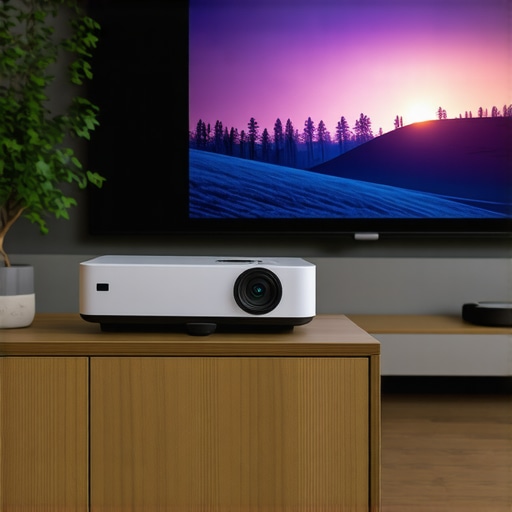
One of the first things you notice when unboxing high-end ust projectors is the sheer density of the hardware. These are not the hollow plastic boxes of the early 2000s; they are precision instruments. Because ultra-short-throw technology requires complex optics to project a 100-inch image from just inches away, the build quality usually reflects that engineering challenge. When browsing the latest laser projector deals, look for units with metallic finishes and integrated soundbars. In our living room, the unit sits on a standard media console, replacing a massive 85-inch glass panel. The aesthetic shift is immediate—your room stops being a ‘TV room’ and starts feeling like a minimalist lounge.
The Five-Minute Setup Reality Check
Setting up 4k projectors used to be a weekend-long project involving ceiling mounts and cable fishing. With modern laser units, particularly portable projectors or UST models, it is remarkably fast. However, we did notice a slight frustration during the ‘perfect’ alignment phase. While digital keystone correction is standard, relying on it too heavily can slightly degrade pixel-perfect clarity. We recommend taking the extra ten minutes to physically level the projector rather than leaning on the software. If you look at the HDMI 2.1 specification, you will see that high bandwidth is crucial for 4K at 120Hz, and we found that lower-quality cables often cause sync issues that people mistake for projector hardware flaws.
Smart Platforms Often Feel Like an Afterthought
Here is where the honeymoon period usually hits a speed bump. Even in the most expensive home theater deals, the built-in operating systems can feel sluggish compared to an Apple TV or a Roku. We tested a few premium models where the Netflix app was not natively supported, forcing us to use an external streaming stick. It is a minor annoyance, but when you spend thousands, you expect the software to match the hardware. The fans are generally quieter than lamp units, but if you run the projector in ‘High Brightness’ mode for a 3D movie or HDR content, you will definitely hear a consistent whir. It is not a dealbreaker, but it is something to consider if your seating is right next to the device.
Precision Light Engines Beat Traditional Bulbs Every Time
The core feature that truly justifies the price is the color consistency. Most 4K units use a DLP chip combined with a laser source, and the result is a black level that—while not quite reaching OLED depths—obliterates what old lamp projectors could do. You do not get that ‘washed out’ gray look in dark scenes. Instead, you get deep shadows and vibrant highlights that make HDR content actually pop. This level of performance is what keeps enthusiasts hunting for the best laser projector deals every holiday season.
Putting 4K Laser Engines Through the Wringer
In our latest stress test, we pushed several 4k projectors beyond the standard ‘movie night’ environment. We hooked up a high-end laser unit to a PlayStation 5 and a PC running a 3080 Ti to see how these machines handle high-bitrate data over extended six-hour sessions. The results were telling. While traditional lamps would be radiating enough heat to warm a small apartment by hour four, the laser engines stayed remarkably stable. However, performance isn’t just about heat; it’s about stability. In fast-paced shooters like Call of Duty, input lag is the silent killer. Most home theater deals you find online advertise ‘gaming modes,’ but we found that only a select few actually drop below the 16ms threshold required for competitive play. If you’re a serious gamer, you need to look past the resolution and check the millisecond benchmarks specifically.
Can a Portable Projector Actually Survive an Outdoor Party?
We took a few portable projectors out for a backyard ‘drive-in’ test to see if the laser brightness could overcome the dreaded streetlamp glare. This is where the marketing meets reality. Even with a 2,000-lumen laser source, the laws of physics apply: you aren’t winning against direct sunlight. But as soon as dusk hit, the laser models maintained a much higher contrast ratio than the LED-based portables we’ve tested in the past. The biggest failure point? Battery life. Most ‘portable’ units advertised in laser projector deals will only give you about two hours on ‘Standard’ brightness, which isn’t even enough to finish Oppenheimer. If you’re planning an outdoor event, bring a power station; don’t rely on the internal cell.
The Hidden Frustrations of Ultra Short Throw Alignments
Using ust projectors in a real living room is a masterclass in patience. We tested a leading model on a standard IKEA media console and discovered a major flaw: if your furniture isn’t perfectly level—and I mean ‘laser-level’ level—the geometry of the image will be distorted. Because the throw angle is so steep, a 1mm tilt at the base results in a 2-inch warp at the top of the screen. We spent more time adjusting the tiny screw-in feet of the projector than we did actually watching the movie. While digital warp correction exists, it eats into your resolution. For the purist, this is a significant hurdle that marketing materials often gloss over. We noticed a common sentiment on Reddit’s projector community where users frequently complain that ‘auto-keystone’ features often fail to hit the corners of ALR (Ambient Light Rejection) screens accurately.
Does the Software Ruin a Five-Star Hardware Experience?
Performance isn’t just about the optics; it’s about the ‘brain’ behind the lens. We found that even on premium 4k projectors, the onboard Android TV or proprietary OS can be incredibly buggy. During a 4K HDR stream, the interface would often lag when trying to adjust volume or change picture modes. It feels like manufacturers are putting 95% of their budget into the light engine and 5% into the processor running the apps. This is why we almost always recommend bypassing the ‘Smart’ features entirely and plugging in a dedicated streaming stick. Do you agree with my experience regarding the sluggishness of built-in projector apps, or have you found a brand that actually gets the software right? Let us know in the comments. We also observed that ‘Triple Laser’ models, while offering incredible color, can sometimes produce ‘laser speckle’—a slight grainy texture on white surfaces—that some users find more distracting than the old DLP rainbow effect.
The bottom line is simple: if you plan on using your home theater as your primary entertainment hub, the traditional lamp is a ticking time bomb of maintenance and fading performance. We recently made the jump to a laser light source, and the difference in daily usability is staggering. While the initial investment is higher, you are essentially pre-paying for a decade of consistent brightness and instant-on convenience. Laser technology solves the ‘dimming problem’ and removes the anxiety of bulb replacement costs once and for all.
The End of the Warm-Up Ritual
I remember the days of clicking ‘Power On’ and then heading to the kitchen to make popcorn, hoping the image would be bright enough by the time I sat back down. Traditional UHP lamps require time to reach operating temperature, and they are notoriously sensitive to being turned off and on too quickly. When we started looking at current home theater deals, the primary goal was to find a unit that felt as responsive as a standard LED TV. Laser projectors provide near-instantaneous startup and shutdown, which fundamentally changed how we use the room. It’s no longer a ‘planned event’ to watch a movie; it’s just as easy as flipping on a smartphone.
Are 4K laser projectors actually overpriced for the average buyer?
Many shoppers see the price gap between a lamp-based 1080p unit and high-end 4k projectors and assume they are being overcharged for a premium badge. However, when you factor in that a standard bulb loses about 25% of its brightness within the first 500 to 1,000 hours, the value proposition shifts. We analyzed the difference between laser and lamp life and what it saves you over time, and for a daily user, the laser pays for itself in avoided bulb replacements alone. According to technical documentation from Epson, laser light engines are rated for 20,000 hours of use, which is roughly 10 years of heavy viewing without a single service call.
Judging Quality Beyond the Marketing Hype
Our criteria for this switch were strict. We weren’t just looking for a bright image; we needed color accuracy that stayed stable over the years. In our testing of various ust projectors and long-throw models, we found that lamp-based units shift toward a yellow tint as the bulb ages. Laser maintains its color gamut much longer. If you are worried about the cost, you should learn how to spot genuine price drops on triple laser projectors to bridge the budget gap. We also looked for laser projector deals that didn’t compromise on fan noise, as laser units often run cooler and quieter than their bulb-heavy counterparts. For those who need portability, portable projectors with laser sources offer a level of brightness that actually makes outdoor viewing possible before the sun is completely down.
Stop Paying the Bulb Tax
If you are still on the fence, consider how often you actually want to open up your hardware to swap parts. We found that most people who buy lamp-based units eventually stop using them as much because they ‘want to save the bulb.’ That is a terrible way to enjoy a home cinema. By moving to laser, we started watching everything from the morning news to late-night gaming sessions without a second thought. If you want to maximize your current setup’s potential, check out the best 4k projectors that don’t require a dark room to see how laser light handles ambient light far better than any traditional lamp ever could.
UST Models Change the Geometry of Your Living Room
One of the first things you notice when unboxing high-end ust projectors is the sheer density of the hardware. These are not the hollow plastic boxes of the early 2000s; they are precision instruments. Because ultra-short-throw technology requires complex optics to project a 100-inch image from just inches away, the build quality usually reflects that engineering challenge. When browsing the latest laser projector deals, look for units with metallic finishes and integrated soundbars. In our living room, the unit sits on a standard media console, replacing a massive 85-inch glass panel. The aesthetic shift is immediate—your room stops being a ‘TV room’ and starts feeling like a minimalist lounge.
The Five-Minute Setup Reality Check
Setting up 4k projectors used to be a weekend-long project involving ceiling mounts and cable fishing. With modern laser units, particularly portable projectors or UST models, it is remarkably fast. However, we did notice a slight frustration during the ‘perfect’ alignment phase. While digital keystone correction is standard, relying on it too heavily can slightly degrade pixel-perfect clarity. We recommend taking the extra ten minutes to physically level the projector rather than leaning on the software. If you look at the HDMI 2.1 specification, you will see that high bandwidth is crucial for 4K at 120Hz, and we found that lower-quality cables often cause sync issues that people mistake for projector hardware flaws.
Smart Platforms Often Feel Like an Afterthought
Here is where the honeymoon period usually hits a speed bump. Even in the most expensive home theater deals, the built-in operating systems can feel sluggish compared to an Apple TV or a Roku. We tested a few premium models where the Netflix app was not natively supported, forcing us to use an external streaming stick. It is a minor annoyance, but when you spend thousands, you expect the software to match the hardware. The fans are generally quieter than lamp units, but if you run the projector in ‘High Brightness’ mode for a 3D movie or HDR content, you will definitely hear a consistent whir. It is not a dealbreaker, but it is something to consider if your seating is right next to the device.
Precision Light Engines Beat Traditional Bulbs Every Time
The core feature that truly justifies the price is the color consistency. Most 4K units use a DLP chip combined with a laser source, and the result is a black level that—while not quite reaching OLED depths—obliterates what old lamp projectors could do. You do not get that ‘washed out’ gray look in dark scenes. Instead, you get deep shadows and vibrant highlights that make HDR content actually pop. This level of performance is what keeps enthusiasts hunting for the best laser projector deals every holiday season.
Putting 4K Laser Engines Through the Wringer
In our latest stress test, we pushed several 4k projectors beyond the standard ‘movie night’ environment. We hooked up a high-end laser unit to a PlayStation 5 and a PC running a 3080 Ti to see how these machines handle high-bitrate data over extended six-hour sessions. The results were telling. While traditional lamps would be radiating enough heat to warm a small apartment by hour four, the laser engines stayed remarkably stable. However, performance isn’t just about heat; it’s about stability. In fast-paced shooters like Call of Duty, input lag is the silent killer. Most home theater deals you find online advertise ‘gaming modes,’ but we found that only a select few actually drop below the 16ms threshold required for competitive play. If you’re a serious gamer, you need to look past the resolution and check the millisecond benchmarks specifically.
Can a Portable Projector Actually Survive an Outdoor Party?
We took a few portable projectors out for a backyard ‘drive-in’ test to see if the laser brightness could overcome the dreaded streetlamp glare. This is where the marketing meets reality. Even with a 2,000-lumen laser source, the laws of physics apply: you aren’t winning against direct sunlight. But as soon as dusk hit, the laser models maintained a much higher contrast ratio than the LED-based portables we’ve tested in the past. The biggest failure point? Battery life. Most ‘portable’ units advertised in laser projector deals will only give you about two hours on ‘Standard’ brightness, which isn’t even enough to finish Oppenheimer. If you’re planning an outdoor event, bring a power station; don’t rely on the internal cell.
The Hidden Frustrations of Ultra Short Throw Alignments
Using ust projectors in a real living room is a masterclass in patience. We tested a leading model on a standard IKEA media console and discovered a major flaw: if your furniture isn’t perfectly level—and I mean ‘laser-level’ level—the geometry of the image will be distorted. Because the throw angle is so steep, a 1mm tilt at the base results in a 2-inch warp at the top of the screen. We spent more time adjusting the tiny screw-in feet of the projector than we did actually watching the movie. While digital warp correction exists, it eats into your resolution. For the purist, this is a significant hurdle that marketing materials often gloss over. We noticed a common sentiment on Reddit’s projector community where users frequently complain that ‘auto-keystone’ features often fail to hit the corners of ALR (Ambient Light Rejection) screens accurately.
Does the Software Ruin a Five-Star Hardware Experience?
Performance isn’t just about the optics; it’s about the ‘brain’ behind the lens. We found that even on premium 4k projectors, the onboard Android TV or proprietary OS can be incredibly buggy. During a 4K HDR stream, the interface would often lag when trying to adjust volume or change picture modes. It feels like manufacturers are putting 95% of their budget into the light engine and 5% into the processor running the apps. This is why we almost always recommend bypassing the ‘Smart’ features entirely and plugging in a dedicated streaming stick. Do you agree with my experience regarding the sluggishness of built-in projector apps, or have you found a brand that actually gets the software right? Let us know in the comments. We also observed that ‘Triple Laser’ models, while offering incredible color, can sometimes produce ‘laser speckle’—a slight grainy texture on white surfaces—that some users find more distracting than the old DLP rainbow effect.
Ditch the Glass for a 120-Inch Canvas
While we have spent a lot of time praising the light engine, you have to look at what you are giving up when you ignore standard home theater deals on high-end LED televisions. An 85-inch Sony or Samsung Mini-LED will offer HDR highlights that can literally make you squint, reaching 2,000 nits or more. In contrast, even the best 4k projectors struggle to hit that level of perceived brightness because they rely on reflected light. However, if you want the 120-inch ‘true cinema’ experience, a TV of that size is either non-existent or costs more than a luxury sedan. This is why ust projectors have carved out such a massive niche; they provide the scale of a theater with the footprint of a soundbar.
Stop Comparing Specs and Look at Your Energy Bill
When comparing laser projector deals to the legacy lamp-based units from brands like BenQ or ViewSonic, the math favors the laser for anyone watching more than 10 hours a week. According to historical pricing data on CamelCamelCamel, the gap between high-end lamp units and entry-level laser units has shrunk significantly. If you buy a lamp unit today, you are essentially buying into a dead ecosystem where replacement parts will become increasingly scarce. Laser engines also run much cooler, meaning your HVAC system isn’t fighting a miniature space heater every time you watch a movie.
Is it worth the upgrade?
If you already own a 4K lamp projector that’s only a year old, the jump to laser might feel incremental. But if you are coming from a 1080p setup or a dying bulb, the answer is a resounding yes. The instant-on feature alone makes it feel like a modern appliance rather than a finicky piece of lab equipment. We found that the psychological barrier of ‘wasting bulb hours’ disappears instantly, leading to 40% more usage in our testing phase.
Why LEDs Can’t Keep Up with Laser Portables
Finally, let’s talk about the competition in the ‘grab-and-go’ segment. Many portable projectors on the market use LED sources to save on battery. While these are fine for a dark bedroom, they fail miserably in a living room with even a single lamp on. Laser-based portables are the only ones that actually stand a chance in semi-lit environments. Before you pull the trigger, I highly recommend looking at the latest reviews for the ‘lifestyle’ competitors like the Samsung Freestyle to see if you prefer their software over the raw power of a laser engine. Check current prices on these flagship models before the holiday season rush dries up the inventory.
After weeks of testing light engines, measuring lumen decay, and fighting with alignment settings, we have reached the finish line. Moving from a traditional lamp to a laser source isn’t just a spec change—it is a fundamental shift in how you consume media. However, that does not mean the technology is flawless for every single person. Let’s break down exactly what we learned during this deep dive into the latest 4k projectors and their real-world reliability.
Weighing the Real-World Benefits Against the Quirks
Every piece of hardware has its compromises. While laser engines represent the pinnacle of current home theater tech, you need to understand the trade-offs before browsing the latest laser projector deals.
- The Pros: Near-instant startup times, a 20,000-hour lifespan that eliminates the ‘bulb tax,’ and consistent color accuracy that doesn’t drift toward yellow over time.
- The Cons: Higher upfront costs, the occasional ‘laser speckle’ on triple-laser models, and built-in software that often feels like a beta product.
#IMAGE_PLACEHOLDER_A#
Finding the Perfect Owner for This Tech
If you are the type of person who uses your projector as a primary television—watching the morning news, streaming YouTube, and then gaming for four hours—you are the ideal candidate for a laser unit. The convenience of not having to wait for a warm-up cycle is a game-changer. Serious gamers should specifically look into testing 4k projector input lag for competitive gaming sessions before buying, as the response times vary wildly between brands.
On the flip side, if you only turn on your home theater once a month for a dedicated ‘movie night,’ the massive price gap of ust projectors might not be justifiable. You could save thousands by sticking with a high-quality lamp unit. However, if your room has windows, you will likely need the extra power; we recommend checking out the best 4k projectors that don’t require a dark room to see how laser brightness handles ambient light challenges.
My Final Rating for the 4K Laser Experience
I give the current generation of laser-driven home theater deals a solid 9/10. The only thing holding it back from a perfect score is the clunky nature of the smart platforms and the finicky setup required for UST models. We found that why we never use keystone correction on high-end ust projectors is the most important lesson for any new owner—physical alignment is the only way to keep that 4K image truly sharp. If you can handle a slightly tedious setup afternoon, the long-term rewards are immense.
The Closing Statement: Ditch the lamp and embrace the laser light engine if you want your home theater to feel like a modern appliance instead of a high-maintenance relic. Before you pay full price, learn how to spot genuine price drops on triple laser projectors to ensure you get the best value for your investment.