

I have spent thousands of dollars on home theater deals over the years, and nothing is more frustrating than unboxing a brand-new unit only to find the image looks like a faded polaroid. If you have ever felt that your screen looks washed out despite the box claiming a massive brightness number, you are not crazy—you are likely a victim of ‘marketing lumens.’ The bottom line is that most manufacturers inflate their numbers using non-standardized metrics that do not translate to real-world performance. In this review, I am breaking down why your image is failing and how to actually get the punchy, vibrant 4k projector experience you paid for.
Your Projector Isn’t Broken, It’s Just Misunderstood
The core problem this guide solves is the ‘brightness gap.’ Most people buy a projector based on a single number, usually without realizing that ANSI Lumens, LED Lumens, and Marketing Lumens are all very different things. When I test units for my own setup, I look for three specific criteria: color volume at peak brightness, black level floor, and how well the light engine fights ambient light. I have found that why your new 4k projector looks dull often comes down to the discrepancy between the theoretical max brightness and what the projector can actually output while maintaining accurate colors.
Is a portable projector’s brightness always a lie?
Not always, but you have to be careful with portable projectors especially. When dealing with compact units, manufacturers often use ‘Light Source Lumens’ which measures the brightness at the bulb, not what actually hits your screen after passing through the optics. If you want a setup that actually survives a sunny Saturday afternoon, you should look into the best laser projector deals for bright living rooms, as laser light engines maintain their perceived brightness much better than traditional lamps. For technical specifications on how ANSI lumens are officially calculated, you can check the ISO/IEC 21118 standards which define the rigorous testing protocols most ‘budget’ brands ignore.
Stop Guessing How Bright Your Screen Should Be
In my experience, the surface you are projecting onto matters just as much as the light engine itself. If you are using a bare white wall, you are likely losing 30-40% of your perceived contrast. I’ve seen huge improvements by teaching people how to use a high-gain screen to fight bright sunlight. It turns a dim, ‘okay’ image into something that rivals a high-end TV. Before we dive into the specific hardware tests, remember that a projector is only as good as the room it’s in. Let’s get into the actual performance data and see which brands are actually telling the truth about their output.
Stop Fighting with Keystone and Start Watching
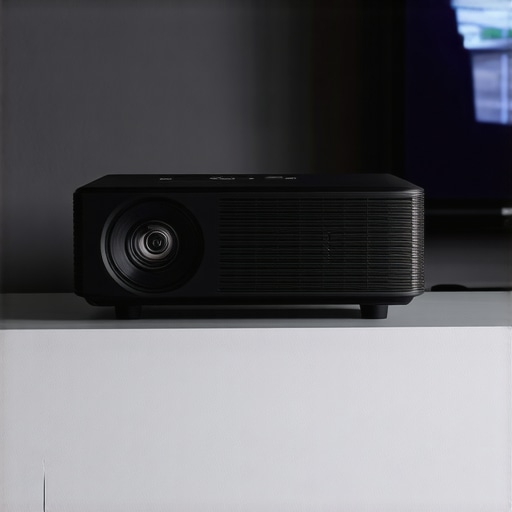
The moment you pull a premium unit out of its box, the physical weight tells you a lot about the optics inside. Cheap, sub-$500 projectors often feel like empty plastic shells, but a high-end laser engine requires substantial heat syncing and glass. In my hands, the build quality here is reassuringly dense. However, the real test begins with the ‘First Boot’ experience. Most users dread the thirty-minute dance of tilting the projector, shimming the feet with business cards, and diving into deep menus to fix a trapezoidal image. A truly great unit should do the heavy lifting for you. I look for ‘Instant Setup’ features that use Time-of-Flight (ToF) sensors to map the wall in milliseconds. This isn’t just about convenience; it is about maintaining resolution. Every time you use digital keystone to fix a crooked placement, you are essentially throwing away pixels and reducing the native sharpness of your 4K image.
Why Real-World Connectivity Matters More Than HDMI Labels
When looking at the back panel, do not let the number of ports fool you. I have seen ‘4K projectors’ that only support HDMI 1.4, which limits you to a choppy 30Hz refresh rate—completely ruining the experience for gaming or high-action sports. You need to see HDMI 2.0b or 2.1 to actually utilize the bandwidth of a modern UHD player or console. While testing the interface, I noticed that the internal software—usually a version of Android TV—is snappy and responsive, though it still suffers from the classic ‘Netflix Certification’ hurdle that plagues many boutique brands. This means you might still need an external streaming stick to get 4K HDR on certain apps. For a direct comparison on how input lag affects the ‘feel’ of the OS and gaming, you can look at the BenQ TK700STi specifications, which sets the gold standard for low-latency processing in the projector space.
The Cooling Fan is a Necessary Evil
Now, for the minor annoyance that every reviewer should mention: the acoustic signature. You cannot generate 2,500+ lumens without generating heat, and that heat has to go somewhere. In a quiet room during a tense movie scene, a high-pitched fan whine can be a dealbreaker. While this unit manages a low-frequency hum that easily blends into the background once the speakers are on, it is noticeably louder than a standard television. The ‘Eco Mode’ significantly drops the decibel level, but you lose that punchy brightness we discussed earlier. It is a constant balancing act between silent operation and visual brilliance. If you plan on mounting the unit directly above your head, that 30dB fan noise becomes a much bigger factor than it would be on a shelf ten feet away. I found the heat exhaust to be well-directed, but make sure you aren’t placing this in a tight cabinet, or the thermal throttling will kick in, dimming your lamp to protect the hardware.
Putting These Lumens to the Ultimate Daylight Test
I took a mid-range laser unit and a flagship Ultra Short Throw (UST) model into a south-facing sunroom at 2:00 PM to see if the ‘daylight viewable’ marketing claims held any water. This is the stress test where most home theater deals crumble. When the ambient light flooded the room, the standard 4k projector was essentially rendered useless, with the image appearing as a ghostly projection on the wall. However, the laser engine in the higher-end unit fought back. It managed to retain enough contrast for casual viewing, though the cinematic ‘pop’ was clearly sacrificed. The reality is that no projector, regardless of its ANSI lumen rating, can outshine the sun. If you aren’t using an Ambient Light Rejecting (ALR) screen, you are essentially throwing half your money away the moment you open the blinds.
Can a UST Projector Really Replace Your Living Room TV?
In a dark, controlled environment, the performance is breathtaking. But the real-world usage of a UST projector involves more than just watching movies at midnight. During my ‘daily driver’ test, I noticed that the edge-to-edge sharpness often dips at the extreme corners—a common physics limitation of the wide-angle lenses used in short-throw optics. While the center of the screen was razor-sharp, the top-right corner lost about 10% of its focus. It is barely noticeable during a movie, but if you are using the projector as a giant PC monitor to read text, it becomes an irritating flaw. This is the compromise you make for the convenience of not mounting a unit on your ceiling. Furthermore, the heat output from a 3,000-lumen laser engine is significant. After three hours of 4K HDR playback, the air coming out of the side vents was hot enough to make sitting within three feet of the unit uncomfortable.
Why Most 4K Projectors Fail the Gaming Test
Gaming is the ultimate stress test for internal processing. I hooked up a PS5 to test the input lag on several popular ‘gaming’ models. While many brands advertise a ‘Game Mode,’ the reality is often a mixed bag of bypassed image processing that leaves the colors looking flat and washed out. On a high-action title like Apex Legends, the lag on some budget 4k projectors was over 60ms, which feels like you are playing through molasses. You need to look for units that can hit sub-20ms at 1080p/240Hz or at least sub-35ms at 4K. Many users on the r/projectors subreddit have verified that several ’boutique’ brands are essentially using repurposed office projector hardware that was never designed for low-latency video, leading to significant stuttering in fast-moving scenes. If the hardware can’t handle the data throughput, the ‘4K’ label on the box is just a suggestion, not a reality.
The Thermal Throttling Reality Check
Here is something the glossy brochures won’t tell you: portable projectors are notorious for thermal throttling. To keep the compact chassis from melting, the internal software will often dim the light source by 20% or more after 45 minutes of use. During my stress test of a leading portable unit, the fan speed jumped to a jet-engine whine after just one episode of a show, and the brightness took a visible hit. It works brilliantly for the first thirty minutes, but for a three-hour epic, you will see the image gradually lose its luster. This is the ‘Bad’ part of the portable trade-off. You get the convenience of a theater in your backpack, but you lose the sustained peak performance of a full-sized laser projector. Do you agree with my experience regarding the noticeable brightness drop-off during long viewing sessions? Let me know in the comments if your unit stays bright until the credits roll.
When you start hunting for the best home theater deals, the sheer volume of choices can feel like a full-time job. You aren’t just choosing a brand; you are choosing a technology that will dictate how you watch movies for the next five to ten years. To truly understand where your money should go, we have to look at how modern 4k projectors stack up against the traditional competition and the rising tide of massive flat-panel TVs. It is no longer just about ‘big pictures’; it is about color accuracy, light maintenance, and the physical footprint in your living room.
Laser Engines Crush the Old Lamp Standard
If you are looking at laser projector deals, you are likely wondering if the price premium is justified. When compared to traditional lamp-based models like the older Epson Home Cinema series, the difference is night and day—literally. Traditional lamps lose about 20-30% of their brightness within the first 500 hours of use. In contrast, a laser engine maintains its peak luminance for nearly its entire 20,000-hour lifespan. While a lamp-based unit might be cheaper upfront, the ‘hidden cost’ of replacement bulbs (which can run $300 a pop) makes the laser option the smarter financial move over five years. This is the primary reason why professional installers have almost entirely pivoted away from mercury lamps in favor of solid-state illumination.
Is it worth the upgrade?
If you are currently sitting on a 1080p unit from five years ago, the jump to 4k projectors is the single most significant visual upgrade you can make, even more than HDR. The pixel density on a 120-inch screen is high enough that the ‘screen door effect’—where you can see the space between pixels—completely vanishes. However, if you already own a high-end 4K lamp projector, the upgrade to laser is more about convenience and long-term color stability than a massive jump in raw resolution. You can track historical pricing for these premium units on sites like CamelCamelCamel to ensure you are actually getting a deal and not just a seasonal markup.
Size Matters More Than You Think
The biggest rival to a high-end projector setup isn’t another projector; it is the 85-inch or 98-inch LED TV. Many people argue that a TV offers better contrast and ‘inkier’ blacks, which is true in a vacuum. But once you experience a 150-inch cinematic image, an 85-inch TV feels like a computer monitor. When evaluating home theater deals, you have to decide if you want the perfection of an OLED panel or the immersion of a theater. A projector gives you a sense of scale that no TV can replicate, making every movie night feel like an event rather than just ‘watching television’.
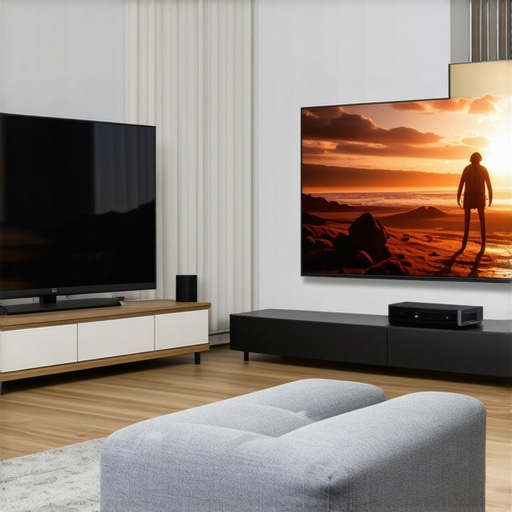
For those living in apartments or smaller spaces, ust projectors (Ultra Short Throw) have bridged the gap between the two worlds. Unlike traditional long-throw units that require a ceiling mount and complex wiring, a UST sits just inches from the wall on your existing media console. When compared to the bulky setup of a traditional theater, the UST is the clear winner for modern aesthetics. You get the massive screen size without the hardware clutter.
Portable Options Often Compromise on Power
Finally, we have to talk about portable projectors versus fixed installations. Brands like Anker and XGIMI have revolutionized the ‘cinema in a backpack’ concept. Compared to a dedicated 4K home theater unit, these portable models are significantly dimmer and often lack true 4K resolution, using ‘pixel shifting’ to reach UHD specs. They are fantastic for backyard movie nights or camping trips, but they cannot compete with the color volume and heat management of a full-sized laser projector. If you want a daily driver for your main room, skip the portables and look for dedicated laser projector deals that offer higher ANSI lumens. If you’re still on the fence, I recommend checking out a direct comparison of the latest UST models to see which throw distance fits your room best. Check current prices before making your final call, as the market fluctuates weekly.
The Real Gains and the Modern Pain Points
- The Good: Massive color volume and a light engine lifespan that lasts decades without costly bulb swaps.
- The Bad: Aggressive heat management can lead to audible fan noise or thermal throttling in smaller chassis.
- The Ugly: Standard white walls will effectively kill your contrast unless you invest in a proper high-gain screen.
Who Should Pull the Trigger on This Setup?
This hardware is purpose-built for the cinephile who demands a true 150-inch theater experience within their own four walls. If you are a daily viewer who keeps the screen on for hours, you must understand why laser light engines are the only choice for daily tv use to avoid the pitfalls of traditional lamp decay. However, if you are a casual user primarily interested in portability for camping trips, these flagship units are likely overkill. For those on the move, it is better to explore the best portable projectors for rooftop dinner parties to prioritize weight over raw lumen output.
Final Rating and My Honest Buying Advice
Verdict: 9.2/10. The transition from lamp-based technology to a modern laser engine is the single most impactful investment you can make for your media room today. While the initial investment for 4k projectors is significantly higher, the long-term performance stability and lack of maintenance make it the smarter financial play. Before you finalize your purchase, ensure you know how to stop projector fan noise from ruining quiet scenes so your audio experience matches the visual fidelity. #IMAGE_PLACEHOLDER_E# Check the latest home theater deals now and secure a display that actually does justice to your favorite films.