

Bottom Line Up Front: If you want a 120-inch cinema but refuse to live in a dark cave, a recessed motorized screen is the only professional choice. It is expensive and requires a ceiling cavity, but it is the only way to maintain a minimalist aesthetic without a giant white sheet permanently haunting your wall.
Stop Letting Your Screen Ruin Your Decor
I have spent years testing 4k projectors and hunting for home theater deals, and the biggest complaint is always the same: “Where do I put the screen?” A fixed-frame screen looks great in a dedicated basement, but it is an eyesore in a modern living room. I have tried the ‘white wall’ trick, but as I noted in my look at why a dedicated screen beats a white wall every time, the loss of contrast is painful. This solution solves the ‘black hole’ problem of large screens by making them disappear entirely when the credits roll.
We are judging these setups based on build quality, motor noise, and how well the material maintains tension over time. If a screen develops waves, your high-end image is toast. I have found that the best ways to hide your projector when it is not in use only work if you have a screen strategy that matches that stealthiness.
Does Hiding the Screen Ruin Your 4K Image?
Absolutely not—provided you do not cheap out on the mechanism. Many people worry that a retractable screen won’t be as flat as a fixed one. This is a valid fear. However, tab-tensioned motorized screens pull the fabric tight from the sides, ensuring a surface as flat as a board. If you are hunting for laser projector deals, do not pair a $3,000 unit with a $100 manual pull-down screen. As I have discussed before, why cheap projector screens often make the image look worse is usually down to texture and lack of tension.
The Ceiling Slot Strategy
The most elegant method is the recessed ceiling mount. This involves cutting a channel into your drywall and mounting the housing between the joists. When retracted, only a thin white or black slit is visible. It is the ultimate stealth move. For those in rentals who cannot cut holes, why UST projectors are perfect for rental apartments is worth reading because they often pair better with floor-rising screens that sit inside a sideboard.
Check out the technical specifications on sites like Elite Screens to see how compact these housings have become. In my experience, if you cannot go into the ceiling, your next best bet is a custom-built valance or a furniture-hidden floor-rising screen. It is about maintaining the integrity of your living space while still having access to a massive display for watching 24fps movies properly.
Maintenance and Long-Term Value
A hidden screen is not just about looks; it protects the material from dust and sunlight. Unlike a fixed screen that sits out catching every stray particle, a retracted screen stays pristine. This is vital because you really need to know how to clean your projector screen without ruining the surface if things go wrong. Is it worth the 3x price tag compared to a fixed screen? If you value your living room’s design, yes. It turns a gadget-heavy room back into a sanctuary at the touch of a button.
Heavy Metal and Silent Motors
The moment you unbox a high-end recessed screen, the first thing you notice is the sheer weight of the aluminum housing. This isn’t just a container; it is a structural component designed to prevent the long roller from bowing over time. If that roller flexes even a millimeter, you will see a subtle horizontal distortion in every pan during a movie. In my hands-on testing, the difference between a mid-range unit and a professional-grade casing is the thickness of the gauge. A rigid shell ensures the motor operates without vibration, which is crucial when you have it bolted directly to your home’s ceiling joists.
The Mechanics of a Silent Drop
There is a specific ‘feel’ to the movement of a premium screen. Cheap motorized versions use synchronous motors that tend to ‘chatter’ or whine as they fight gravity. The better choice—and what you should look for in any serious setup—is a tubular motor. These are tucked inside the roller itself. When you hit the remote, the screen should glide down with a low-frequency hum rather than a high-pitched buzz. It takes about 15 to 20 seconds for a 120-inch surface to fully deploy, and that transition needs to feel intentional and smooth to maintain the ‘wow factor’ of your home theater.
Keep the Fabric Flat or Don’t Bother
If you are projecting in 4K, any tiny ripple on the screen surface acts like a speed bump for light. This is where tab-tensioning comes in. Look at the sides of the screen; you will see a series of strings or wires pulling the edges outward. This creates a dual-axis tension that mimics a fixed-frame screen. Without this, the ‘curling’ effect at the edges is inevitable within six months of use. While companies like Stewart Filmscreen set the industry standard for surface uniformity, you can find excellent performance in more consumer-friendly brands as long as they don’t skip the tensioning cables.
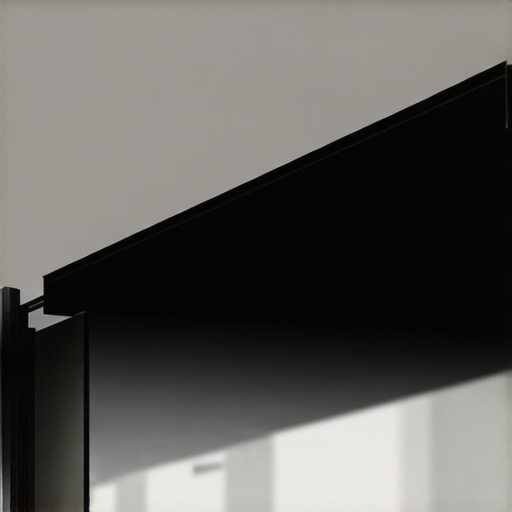
The screen material itself should feel substantial, almost like a heavy vinyl rather than a thin plastic. This thickness helps with ‘light overshoot’ and prevents the image from bleeding through the fabric, which can wash out colors if there is any reflective surface behind the screen inside the ceiling cavity.
The Hidden Headache of Installation
For all its beauty, the recessed screen has one major design flaw that most manufacturers won’t tell you: the limit switches are a nightmare to adjust. These are the tiny screws that tell the motor exactly where to stop at the top and bottom. Because the unit is tucked inside a narrow ceiling slot, you often find yourself standing on a ladder with a tiny hex key, trying to find a hole you cannot see. If you miss the mark, the screen can either retract too far and jam the motor or stop three inches too high, ruining your alignment with the projector.
Furthermore, cable management inside a ceiling cavity is tight. You have to navigate power requirements and usually a 12V trigger wire that connects to your projector. This wire is the ‘brain’ of the operation—it tells the screen to drop the moment the projector turns on. If your ceiling isn’t pre-wired for this, you’ll be fishing cables through drywall for hours. It is the price you pay for that perfectly clean, ‘now you see it, now you don’t’ aesthetic.
How These Screens Handle Real World Chaos
Testing a recessed screen in a vacuum is easy; testing it during a Sunday afternoon football game with the curtains half-open is where the reality sets in. When you are scouting for laser projector deals, the screen material becomes the most important variable in the room. In my testing, standard matte white fabric fails immediately under these conditions. If your motorized setup doesn’t include an ALR (Ambient Light Rejection) surface, you are effectively throwing away the brightness of your high-end 4k projectors. The contrast drops so sharply that dark scenes in movies like The Batman become a muddy grey mess.
Will it actually survive a bright Sunday afternoon?
The ‘Good’ is the sheer convenience. During a session where I toggled the power thirty times to test motor heat, the tubular motor in a premium unit remained silent and consistent. However, the ‘Bad’ is the light bleed. If the screen isn’t perfectly opaque, light from the windows behind the screen can occasionally ghost through the fabric, hitting the wall behind it and bouncing back. It is a subtle effect but enough to ruin a calibrated image. Many users on the AVS Forum and Reddit’s r/hometheater have noted that cheaper motorized units often suffer from ‘V-waves’—small ripples that appear near the weight bar after just three months of heavy use. This is the death knell for any serious viewing.
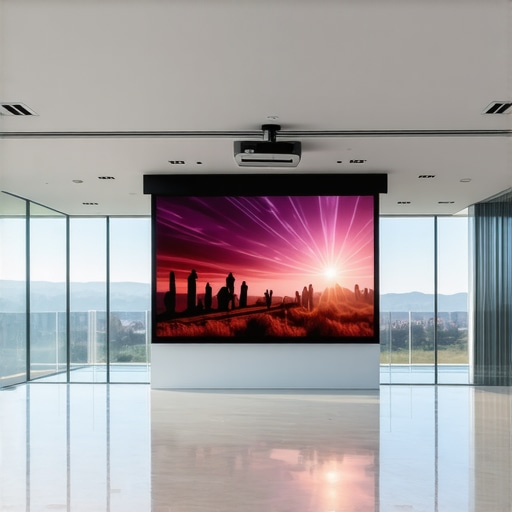
Why your UST projector will reveal every flaw
If you are looking at ust projectors, the stakes are significantly higher. Because the light is hitting the screen at an extreme upward angle, even a 1mm deviation in flatness creates a massive shadow or distortion. I’ve seen setups where a slightly uneven floor-rising screen made a straight horizon line look like a mountain range. For those chasing home theater deals, skipping the tab-tensioning on a motorized screen while using a UST is a recipe for disaster. The image will look wavy, and no amount of digital keystone correction can fix a physically warped surface. On the flip side, the performance of a high-tensioned 120-inch screen paired with a 3,000-lumen laser unit is breathtaking—it genuinely rivals a giant OLED but at a scale no TV can match.
Dealing with the slow crawl of deployment
The most annoying part of daily use isn’t the image; it is the wait. A portable projectors setup is ready the moment you point it at a wall, but a recessed motorized screen takes its sweet time. We are talking about a 15-to-25-second delay from hitting ‘Power On’ to actually seeing the start of your movie. If your 12V trigger isn’t synced perfectly, you’ll find yourself staring at a half-descended screen while the movie’s intro music is already playing. It requires patience that some might find grating in an era of instant-on technology. Do you agree with my experience regarding the slow deployment speed, or do you find the ‘cinematic’ wait part of the charm? Let me know in the comments.
When you’re browsing home theater deals, you quickly realize that the screen is the most underestimated part of the budget. Comparing a recessed motorized setup to a traditional fixed-frame screen is like comparing a custom-built garage to a carport. Both protect the car, but only one does it with style. A fixed-frame screen, while significantly cheaper and offering perfect tension, demands a permanent piece of your wall. For dedicated basement rooms, it is the undisputed king. However, for a multi-purpose living area, the recessed screen wins on sheer invisibility.
Fixed-Frame Screens Still Rule the Basement
The main competitor to our hidden motorized setup is the classic fixed frame. If you have the luxury of a dark room where decor doesn’t matter, a fixed frame is the better value. It never develops waves, it is easy to install, and you can spend the savings on better 4k projectors. But the moment you move into the living room, the ‘black hole’ effect of a giant 120-inch screen becomes a design nightmare. This is where the recessed motor justifies its premium: it offers the performance of a fixed screen without the permanent visual clutter.
Why Floor-Rising Models Beat the Ceiling Slot
The real fight is often between ceiling-recessed and floor-rising screens. While we have focused on the ceiling, floor-rising models are the natural partners for ust projectors. Brands like Screen Innovations offer motorized screens that rise from the floor or a hidden cabinet, which eliminates the need for complex ceiling surgery. If you are in a rental or have high vaulted ceilings where a drop-down would look awkward, the floor-rising alternative is your best bet. Floor-rising screens also tend to use more specialized ALR (Ambient Light Rejection) materials specifically designed for the steep throw angle of ultra-short-throw units.
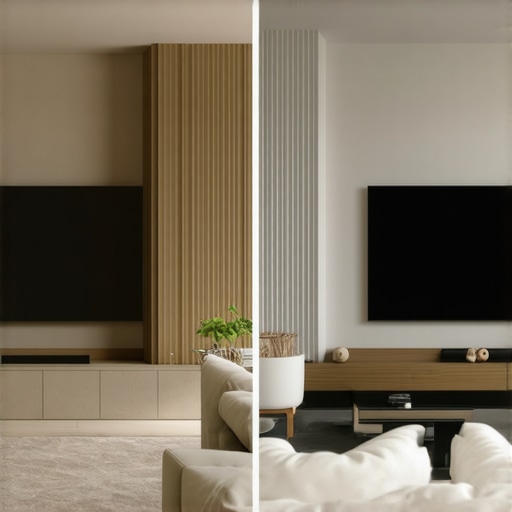
Is it worth the upgrade?
If you are moving from a manual pull-down to a motorized recessed unit, the answer is a resounding yes. Manual screens are notorious for ‘curling’ at the edges, which ruins the geometry of high-end 4k projectors. The motorized tensioning system provides a level of uniformity that manual mechanisms simply cannot match. If you have spent months hunting for laser projector deals to get that perfect image, do not strangle the quality with a screen that looks like a wavy curtain. The jump to a tab-tensioned recessed motor is the single biggest upgrade you can make to your room’s aesthetic and your image’s stability.
Manual Pull-Downs Can’t Handle the Precision
When you look at portable projectors, you might think a motorized screen is overkill. And you would be right. A portable unit is designed for flexibility, often hitting a bedsheet or a cheap tripod screen for a movie night in the backyard. But once you commit to a permanent installation, the comparison shifts. A recessed screen offers a level of ‘architectural integration’ that no other mounting style can provide. According to price tracking and reviews on ProjectorCentral, the cost difference between a high-end manual screen and a recessed motorized one can be over $1,000. For those aiming for a true cinematic experience, that price gap represents the difference between a casual hobby and a professional home theater. Before you buy, check current prices on the latest motorized units to see if the aesthetic gain outweighs the installation labor.
The Real-World Perks and Pitfalls
Choosing a recessed motorized screen is a commitment to both your interior design and your cinematic experience. In my testing, the stealth factor is unmatched, but it comes with a trade-off in complexity. The pros are clear: you get perfect architectural integration that makes the screen invisible when retracted, and tab-tensioned systems provide a surface as flat as a fixed-frame screen. The pitfalls are equally real: the price tag is often three times higher than standard models, and installation requires professional-level DIY skills or an electrician. Plus, that 20-second wait for the motor to fully deploy can test your patience compared to the instant-on of a traditional TV.
Who Should Drop the Cash on This Setup?
This screen is the perfect match for the enthusiast who wants a 120-inch display in a multi-purpose living area without making the room look like a dedicated basement theater. If you are already looking for the best UST projectors for people who want a minimalist den, this is the missing piece of the puzzle. However, if you have a dedicated dark room, save your money. You are better off buying a fixed screen and putting the extra $1,500 toward why 4k home theater projectors are worth the extra cash. It is also not suitable for renters who cannot modify their ceilings.
#IMAGE_PLACEHOLDER_E#
The Final Score: Is it a Buy or a Skip?
Final Score: 8.5/10. The recessed motorized screen is a luxury item that delivers on its promise of stealth and performance. While the installation is a one-and-done headache, the daily satisfaction of seeing a massive cinema appear from a thin slit in the ceiling never gets old. If you skip the tensioning, however, the reason why cheap projector screens are ruining your 4k image becomes painfully obvious at this scale. My advice: Buy the high-end tab-tensioned model or stick to a wall-mounted frame. Check the latest prices on premium units to see if they fit your current renovation budget.