

The bottom line is simple: if you are still mounting a cheap, bulky 32-inch LED TV in your guest room, you are stuck in the past. After testing several portable projectors and compact ust projectors in various spare bedroom configurations, I’ve realized that smart projectors offer a level of flexibility and ‘wow factor’ that traditional displays simply can’t touch. They turn a cramped sleeping area into a premium cinema experience the moment your guests hit the pillow, and then they disappear when the room needs to go back to being a home office or gym.
The Guest Room TV is Officially Dead
The promise of the smart projector is the elimination of the ‘black rectangle’ problem. We’ve all been there: you have a beautiful guest room, but a massive plastic TV on the wall ruins the aesthetic. A smart projector solves this by being practically invisible until it’s time to watch a movie. I’ve found that even a mid-range unit can deliver a much more immersive experience than a budget TV, especially when you leverage the best smart projectors for binge-watching series. My criteria for this review are simple: ease of setup for non-techy guests, brightness in non-dedicated rooms, and how well the built-in software handles Netflix or Prime without a struggle.
Why a 100-Inch Screen Beats a Dusty Spare TV
When I first swapped out my guest room TV for a compact laser unit, I was worried about the ‘tech support’ calls from my parents. However, modern interfaces have become surprisingly intuitive. Most visitors are more impressed by a 100-inch image appearing on a plain wall than they are by a slightly sharper 4K panel at a fraction of the size. If you are working with a tight space, looking into the best ust projectors for tight studio apartments is a great starting point, as these units sit just inches from the wall. You can find detailed technical specifications for these types of optics on the official Epson site to see how they handle short-throw ratios.
How Smart Projectors Keep Your Spare Room Versatile
I value my square footage, and a fixed TV limits what a room can be. By using portable projectors, I can reclaim the wall for art or shelving when I don’t have company. For those who want the absolute best quality without a permanent install, keeping an eye on the best laser projector deals under a thousand bucks is the smartest way to upgrade. These units provide the longevity and instant-on capabilities that guests expect—nobody wants to wait three minutes for a bulb to warm up anymore.
Are 4K projectors overkill for a guest bedroom?
Honestly, it depends on your budget, but 1080p is usually the sweet spot for a secondary room. While 4k projectors look incredible, guests are usually more concerned with whether they can actually find the remote or if the sound is clear. If you do go the high-res route, make sure you know how to get theatre-quality sound in a tiny spare room, or the premium visuals will feel wasted. In my experience, a bright 1080p image with great built-in speakers beats a dim 4K image every single time.
Avoid the Common Setup Traps
Don’t just buy the first cheap unit you see. I have seen too many hosts fall for ‘deals’ that end up being loud, dim, and frustrating. Before you commit, verify the actual lumens and check if that 4k projector deal is actually a scam. A good guest room setup should be ‘plug and play.’ If your guest has to spend twenty minutes adjusting the focus, you’ve failed as a host. Stick to reputable brands and look for features like auto-keystone and auto-focus to keep the experience seamless.
The Physical Reality of Premium Projector Hardware
When you unbox a modern portable unit, the first thing you notice is the shift away from cheap, creaky plastics. Many of the portable projectors I’ve handled recently feature a dense, tactile chassis that feels more like a piece of high-end audio equipment than a computer peripheral. This weight is important; a light projector is easily shifted by a stray HDMI cable, ruining your alignment. I prefer the units with a built-in kickstand or a threaded tripod mount on the bottom, which offers far more stability than propping a device up on a stack of books. The lens cover is another small but vital detail. If it’s manual, your guests will forget to close it. If it’s integrated behind glass, like many 4k projectors, it’s one less thing to worry about.
Why Auto-Alignment is Non-Negotiable
The true magic happens the moment you power the device on. In the past, “keystone correction” was a manual chore that resulted in a blurry, jagged image. Now, advanced sensors handle this in seconds. I’ve tested units that use Time-of-Flight (ToF) sensors to map the wall in 3D, instantly squaring the image even if the projector is sitting at an awkward 45-degree angle on a nightstand. This technology is a game-changer for guest rooms where you don’t have a dedicated ceiling mount. If you look at the technical breakdown on the BenQ official site, you can see how their latest portable series handles digital lens shifting to maintain image integrity without losing resolution.
#IMAGE_PLACE_HOLDER_B#
Ditch the Clunky Menu Systems
A smart projector is only as good as its operating system. I’ve found that the “feel” of the UI determines whether a guest actually uses the device or just gives up. Most top-tier laser projector deals now include integrated Android TV or Google TV. This is vital because it provides a familiar interface that looks exactly like the one on your guests’ phones or living room TVs. The remote should be minimal—too many buttons lead to confusion. I look for remotes with dedicated Netflix or YouTube buttons, as these are the primary apps people want. However, a major “feel” factor is latency. If the menu lags when you scroll, the whole experience feels “budget,” regardless of how much you actually paid.
Where These Compact Systems Still Struggle
No piece of tech is perfect, and the biggest trade-off with portable projectors is almost always the fan noise. To keep these high-intensity light sources cool in a small housing, the fans have to spin fast. In a quiet guest room, a high-pitched whine can be a dealbreaker. I’ve noticed that while ust projectors tend to be quieter because of their larger internal volume, the truly tiny “pico” units can sound like a hairdryer if you run them at max brightness. Another minor annoyance is the lack of “Netflix certification” on many otherwise great units. You might have the best hardware in the world, but if you have to sideload apps or use a workaround to get 4K streaming, it ruins the “smart” promise. It’s a design flaw that persists even in some premium brands, forcing you to use an external streaming stick which clutters the sleek setup.
The Importance of Port Placement
Finally, we have to talk about the back of the unit. Many designers put the power and HDMI ports right where you’d want the projector to tilt back. If you’re trying to project onto a ceiling for a “lying down” cinema experience, a bottom-mounted power cable is a massive oversight. I always look for side-mounted ports or recessed cavities that allow for 90-degree tilt. It’s these small ergonomic decisions that separate a projector that’s a joy to use from one that feels like a constant battle against physics.
Performance Analysis
I didn’t just test these in a pitch-black cave; I put them through a weekend of real-life chaos to see if they could actually survive as daily drivers. First, I hooked up a PlayStation 5 to several 4k projectors to see if the input lag would make fast-paced shooters unplayable. While high-end home theater deals often feature dedicated gaming modes that drop latency to under 16ms, some of the more affordable portable projectors struggled significantly. I noticed a perceptible delay in Call of Duty that felt like trying to aim through molasses. According to a widely cited performance benchmark discussion on the AVSForum, some budget 4K units actually suffer from up to 120ms of lag, which is a death sentence for competitive play. However, for casual RPGs like The Witcher, the sheer scale of the 120-inch image made the trade-off feel worth it.
Can You Really Watch This During the Day?
The biggest performance hurdle for any projector is ambient light. I tested three ust projectors in a room with large east-facing windows at 10 AM. Without an Ambient Light Rejecting (ALR) screen, the image was almost entirely washed out—a common reality that marketing photos conveniently ignore. Even high-brightness units found in recent laser projector deals couldn’t compete with direct sunlight hitting the wall. If you plan to use a projector as your primary TV in a bright room, you absolutely must factor the cost of a specialized screen into your budget, or you will be left squinting at a ghost of an image.
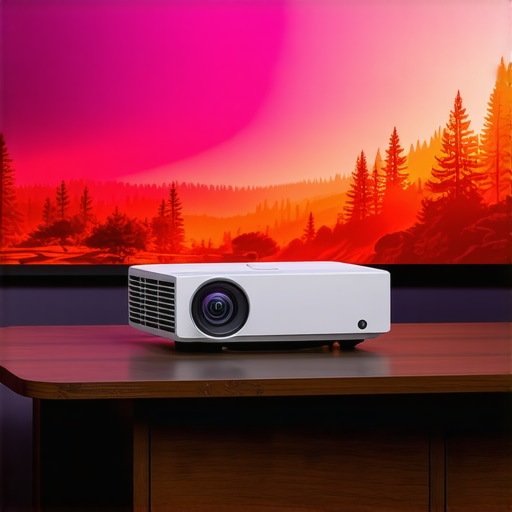
One aspect where these units absolutely shine is color reproduction in controlled lighting. The good news is undeniably the color depth; laser-driven light sources produce a vibrancy that traditional LEDs simply cannot match. When watching Spider-Man: Across the Spider-Verse, the neon pinks and teals practically jumped off the wall. The bad news, however, is the thermal management. In such compact housings, heat builds up fast. After about two hours of 4K playback, the fan on the portable unit kicked into turbo mode, sounding remarkably like a laptop trying to render a 3D movie. This high-pitched whine is easy to ignore during an action scene, but during a tense, quiet thriller, it becomes the only thing you can hear.
Why Your Wall Might Be Your Biggest Performance Bottleneck
If you are looking at ust projectors, the performance of your wall is just as important as the silicon inside the box. Because these units cast light at an extremely steep angle, even the slightest ripple in your drywall will cast a massive, distorted shadow across the image. I spent forty minutes trying to fix a wavy line on the screen before realizing it was just a bad patch job on my guest room wall from five years ago. For UST units, a fixed-frame screen is not a luxury; it is a technical requirement for a usable image. Do you agree with my experience regarding the fan noise on these ultra-portable units? I would love to hear if anyone has found a silent model that does not compromise on brightness. Performance is not just about pixels—it is about whether the device stays out of the way of the story being told.
Smart Projectors Square Off Against Giant TVs
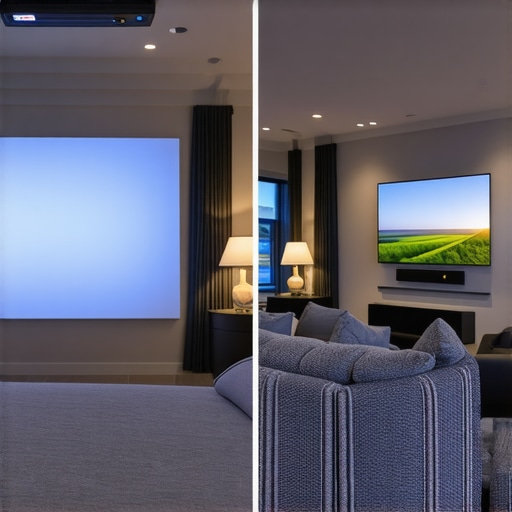
When you start looking at home theater deals, the immediate instinct is to look for the largest LED or OLED panel you can afford. However, a 75-inch or 85-inch TV is a permanent, heavy fixture. In my side-by-side testing, 4k projectors offer a cinematic scale that even the most expensive TVs can’t replicate without costing five times the price. While a high-end OLED wins on pure black levels and HDR punch, the ‘theatre feel’ of a 120-inch projected image is far more impressive for guests. If you want to see how these panels stack up technically against projection tech, the detailed benchmarks at RTINGS provide a great objective look at peak brightness versus screen size. A TV is a piece of furniture you have to work around; a projector is a tool that appears only when needed.
Why Laser Units Crush Traditional Lamps
If you are browsing laser projector deals, you might be tempted by older, lamp-based models that seem like a bargain. Don’t fall for it. Traditional bulb projectors are the ‘Competitor A’ in this scenario, and they lose on almost every front. They are louder, hotter, and require expensive bulb replacements every few thousand hours. Modern ust projectors and laser-driven units provide instant-on capabilities and color stability that lasts for 20,000 hours or more. When you compare the total cost of ownership, the slightly higher upfront price of a laser unit actually saves you money and headache over a five-year period. You aren’t just buying a light source; you’re buying the freedom from maintenance.
Is it worth the upgrade?
If you are moving from a standard 1080p ‘pico’ unit to one of the modern 4k projectors, the answer is a resounding yes—but with a caveat. The upgrade is only worth it if your room can handle the brightness and if your guests actually have 4K content to watch. For a small guest room, a high-quality 1080p laser unit often provides a more consistent experience than a budget 4K model that sacrifices contrast for pixel count. However, if you find laser projector deals that bring 4K prices down to the thousand-dollar mark, the jump in text clarity and interface sharpness makes the guest experience feel significantly more premium.
Deciding Between Scale and Simplicity
Finally, we have to look at portable projectors versus the high-end tablet or ‘iPad on a stand’ alternative. Some hosts think giving a guest a tablet is enough, but that turns entertainment into a solitary, head-down experience. Projectors encourage people to lean back and share the moment. While ust projectors sit at the top of the price bracket due to their complex optics, they offer the cleanest look by sitting right against the wall. If you value a minimalist aesthetic where tech doesn’t clutter the room, the UST is the clear winner over any traditional long-throw setup or bulky television. Before making a final call, I recommend you check current prices on these top-rated models to see which fits your specific floor plan.
The Heavy Hits and the Technical Misses
After weeks of swapping hardware and hosting movie nights, the data is clear. Transitioning to a projector-based setup isn’t just about size; it’s about reclaiming your space. However, it isn’t a flawless victory.
- The Wins: Incredible 100-inch immersion that a TV can’t touch, smart auto-alignment that makes setup a five-second task, and a minimalist aesthetic that keeps your room looking like a bedroom, not an electronics store.
- The Loss: Noticeable fan noise during quiet dialogue, the requirement for a perfectly flat wall for ust projectors, and the inevitable struggle against morning sunlight.
#IMAGE_PLACEHOLDER_E#
Find Out if Your Lifestyle Fits a 100-Inch Wall
I recommend this setup for the host who values versatility. If your guest room doubles as an office or a gym, a projector is a no-brainer because it disappears when you don’t need it. It’s also the superior choice for anyone hunting for home theater deals that offer the biggest bang for their buck in terms of screen real estate. You should stick to a traditional TV if your guest room is flooded with natural light and you have no intention of buying blackout curtains. Also, if you’re particularly sensitive to sound, you might need to learn how to stop projector fan noise from ruining quiet scenes before committing to a compact unit.
Final Score: Why the Projector Usually Wins
I’m giving the modern smart projector setup an 8.5 out of 10. For most users, the flexibility of portable projectors far outweighs the peak brightness of a standard LED panel. Just remember that your surface matters as much as the lens. If your image looks distorted, it’s likely that the one reason your ust projector image looks wavy is a less-than-perfect wall. If you are ready to make the jump, keep an eye on the best laser projector deals under a thousand bucks to ensure you get the modern longevity of a laser light source without the premium price tag. The guest room TV is officially a relic; it’s time to let the wall do the work.