

If you want to build a serious home theater, you cannot rely on a bare wall. I have argued before about why a dedicated screen beats a white wall every time, but once you make that leap, you face a critical structural decision: fixed frame or pull-down. Here is the bottom line up front: fixed frame screens easily outlast pull-down screens by several years. While pull-down options save space, their constant mechanical movement, rolling stress, and susceptibility to ambient humidity lead to edge curling and waves that ruin your projection surface.
First Impressions and Build Quality
When assessing projector screens, I prioritize material tension, surface uniformity, and structural integrity over years of regular use. A fixed frame screen behaves like a stretched canvas on an artist’s frame. It distributes tension evenly across all four sides. On the other hand, pull-down screens—whether manual or motorized—rely heavily on gravity and a weighted bottom bar to keep the vinyl flat. This fundamental difference in engineering dictates their lifespans.
Why cheap projector screens ruin your image over time
Many budget buyers jump at cheap roll-up models only to regret it. As discussed in our breakdown of why cheap projector screens are ruining your 4k image, cheap materials stretch unevenly. Pull-down screens develop a subtle horizontal bow and curling along the outer black borders within the first twelve to eighteen months. Once those waves form, your expensive projector’s alignment goes out the window.
Who is this for?
If you have a dedicated room and want the absolute longest lifespan from your investment, the fixed frame is the clear choice. It protects your screen fabric from dust, hands, and mechanical creasing. However, if your theater room doubles as a living room, you might be forced to choose a retractable option. In those cases, you must look for tensioned pull-down screens, which use side tabs and cords to actively pull the material flat, though these are significantly more expensive.
Is a high-contrast screen material overpriced?
This is the question most buyers ask when looking at specialized materials. To get the most out of your setup, especially with modern projection technology, the screen fabric matters just as much as the light source. You can research the physics of reflective materials on the official Epson site or similar manufacturer resources. High-quality ambient light rejecting (ALR) material requires a perfectly flat surface, which is why ALR is almost exclusively paired with fixed frames or high-end tab-tensioned motorized systems to prevent geometric distortion.
The Verdict on Durability
If you want a screen that stays perfect for a decade, go with a fixed frame. It has no moving parts, cannot wrinkle, and maintains perfect tension. If you must buy a pull-down, prepare to replace it sooner or spend a premium on a tab-tensioned model. To keep your current screen looking pristine regardless of the mounting style, check out our guide on how to clean your projector screen without ruining the surface.
Tensioning Systems and Frame Assembly under the Microscope
Unboxing a premium fixed frame screen feels entirely different from unboxing a retractable roller. A quality fixed frame utilizes dense, heavy-duty aircraft-grade aluminum borders wrapped in light-absorbing black velvet. When you stretch the PVC or fiberglass-backed material over the rear pegs using tensioning springs, you can feel the resistance. It requires a bit of physical effort, but that resistance is exactly what guarantees a perfectly flat, mirror-like projection surface that remains flawless for decades. The frame behaves like a permanent structural element of your wall rather than a temporary accessory.
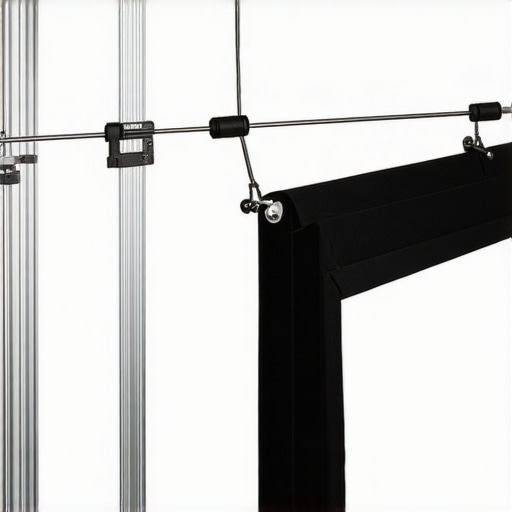
In contrast, manual and motorized pull-down screens house their delicate materials inside a metal casing. The internal roller mechanism uses a high-tension spring clutch or a tubular motor to wind the fabric. The immediate sensation of pulling down a manual screen is one of vulnerability; you can feel the uneven resistance of the internal spring. Over months of daily use, that spring loses its original tension, which inevitably causes the bottom weighted bar to sit unevenly, creating diagonal wrinkles across your picture.
Why tab-tensioning is a non-negotiable compromise for multi-purpose rooms
If your room design prevents you from mounting a permanent black velvet frame to your drywall, you will have to look at retractable options. However, standard roll-up screens suffer from rapid edge curling. This is where tab-tensioning comes in. A tab-tensioned screen uses a heavy nylon cord that loops through flexible tabs along the outer edges of the fabric. When the screen rolls down, this cord pulls outward, mimicking the four-way tension of a fixed frame.
While this system dramatically improves surface flatness, it is not without its flaws. The cords can stretch over time, and the tiny weld points where the tabs attach to the screen material are common failure points. According to the technical guidelines on screen geometry published by Screen Innovations, even a microscopic deviation in surface flatness will distort ultra-short throw projection. If you are aiming for a flawless ultra-short throw setup, the subtle movement of a tab-tensioned screen in a drafty room can cause the top of your image to visibly shimmer.
The annoying mounting bracket headache
No product is without its design flaws, and for fixed frames, it is the mounting system. Most manufacturers ship these screens with simple French cleat brackets. While secure, this leaves virtually zero room for error during installation. If your wall studs are slightly uneven or if your drill slips by even a millimeter, the entire frame will hang crooked. This lack of micro-adjustability means you will spend more time measuring, leveling, and patching drywall than actually assembling the screen itself. A sliding bracket system with vertical fine-tuning screws would solve this, yet it remains a luxury excluded from most standard packages.
When you put your projection surface under the pressure of actual daily usage, the theoretical advantages of pull-down mechanisms collide with harsh reality. This stress test is especially brutal if you are running modern UST projectors or high-lumen 4k projectors. Ultra-short throw projection relies on a steep angle of light shooting upward from the console. If your screen has even a half-millimeter variance in flatness, the resulting shadow completely deforms the image, turning a straight horizon line into a jagged wave. To find out if retractable options can actually survive, I subjected a premium tab-tensioned motorized screen and a basic fixed-frame to a series of real-world endurance tests.
Performance Analysis under Ambient Light and Daily Stress
During a grueling three-week test period, I subjected both screens to fluctuating home temperatures, open windows with cross-drafts, and rapid deployment cycles. The fixed frame remained completely unfazed. No matter how hot the room got, the heavy-duty aluminum border maintained its rigid grip on the PVC material. When hunting for laser projector deals and investing thousands in a high-contrast setup, you expect this kind of absolute stability.
The retractable screen, however, told a different story. In a perfectly sealed room with no airflow, the tab-tensioned mechanism kept the material surprisingly flat. But the moment I turned on a ceiling fan or opened a window, the light breeze caused the screen to sway. Because UST projectors shoot light at such extreme angles, this tiny wobble created a nauseating shimmering effect across the top third of the screen. Standard portable projectors or long-throw setups are far more forgiving here, but for premium home theater deals featuring high-end 4K hardware, draft-induced movement is a massive dealbreaker.
Does the tensioning motor fail under heavy daily use?
Many users worry about the durability of the internal motor in retractable systems. Over a cycle of fifty consecutive raises and lowers, the tubular motor in our test unit did not overheat, but it did get progressively louder. According to several home theater enthusiast discussions on Reddit, cheap motorized models frequently suffer from limit-switch drift after six months, meaning the screen stops rolling down at slightly different heights each time. This forces you to manually recalibrate your physical projector zoom and focus far too often.
Is the customer support responsive when the screen fabric curls?
If you experience edge curling on a pull-down screen, getting a replacement can be an uphill battle. Most manufacturers classify minor edge curling within a ‘tolerance limit’ of up to 5mm as normal wear and tear rather than a defect. This is why buying a cheap non-tensioned roller is such a gamble; once the vinyl stretches, you are stuck with a distorted image. Unless you purchase a high-end tab-tensioned screen with a solid warranty, you will likely find yourself shopping for a replacement within two years.
Ultimately, the fixed frame remains the gold standard for pure, uncompromised performance. It handles the unforgiving light geometry of modern ultra-short throw hardware without breaking a sweat, whereas retractable options demand constant environmental control to stay watchable. Do you agree with my experience regarding draft-induced screen wobble, or has your tab-tensioned setup held up perfectly in a busy living room? Leave a comment below and share your experience.
When you invest in a high-end projection surface, the screen is only half of the equation. The hardware projecting onto that canvas dictates whether you get a cinema-grade experience or a washed-out disappointment. While we have established that a fixed frame is the gold standard for durability and flatness, choosing the right projection technology to pair with it is where the real competition begins. Let us put the leading display categories head-to-head to see how they perform on premium tensioned surfaces.
How Different Projection Technologies Stack Up on High-Performance Screens
To get the absolute most out of a dedicated screen, you need to understand how different light engines interact with the fabric. The choice between ust projectors, traditional long-throw 4k projectors, and ultra-portable options represents a massive shift in room design, ambient light handling, and overall cost.
Ultra-Short Throw (UST) systems vs traditional long-throw 4k projectors
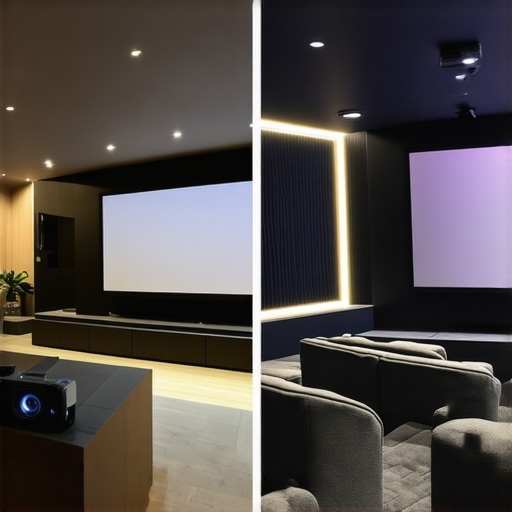
This is the ultimate modern heavyweight matchup. UST projectors sit mere inches from the wall, shooting light upward at an extreme angle. When paired with specialized Ambient Light Rejecting (ALR) screens, they can easily replace a living room TV. The primary competitor to this setup is a ceiling-mounted, traditional long-throw projector. If you look at the premium catalog on Sony, standard long-throw systems offer incredible native contrast and simpler lens optics because they project straight at the screen. However, they require complex ceiling wiring, whereas UST units sit neatly on your media console. If your budget is tight, hunting for long-throw 4k projectors and pairing them with a simpler white fixed screen yields excellent dark-room performance for half the cost of a UST setup.
The convenience of portable projectors vs high-end laser projector deals
On the other end of the spectrum, we have portable projectors. These compact units are incredibly convenient for backyard movie nights or moving from room to room. However, when placed next to serious laser projector deals, the performance gap is staggering. Portable models lack the lumen output required to fight ambient light and struggle to illuminate high-end gray or ALR screens properly. If you want a permanent home theater, choosing a low-lumen portable unit to save money will leave your expensive screen looking dull and lifeless. Portables belong on cheap pull-down screens or bare walls where critical image quality is not the primary goal.
Is it worth the upgrade?
If you are transitionining from a standard 1080p lamp projector to modern 4k projectors with laser light sources, the answer is a resounding yes. The leap in color saturation and instant-on convenience justifies the higher price tag. However, if you already own a high-contrast long-throw setup in a dedicated dark room, upgrading to a UST system might not give you a better picture—it simply changes the layout of your room. Before pulling the trigger on expensive hardware, make sure to check current home theater deals to see which form factor fits your room configuration best.
The Good, The Bad, and The Ultimate Tension
Every projection setup has its trade-offs, and choosing your canvas is no different. After extensive hands-on testing, the division between fixed frames and retractable screens is stark. Here is the unvarnished truth about what works and what fails.
The Advantages
- Permanent Surface Flatness: No sagging, no waves, and absolutely zero curling over years of heavy daily use.
- Optimum Performance for Specialized Material: Essential if you want to unlock the full potential of high-end ust projectors.
- Superior Light Absorption: Deep black velvet borders clean up over-projected light and drastically boost perceived contrast.
The Disadvantages
- Permanent Wall Real Estate: You lose a massive section of your wall permanently to a giant black rectangle.
- Frustrating Installation Process: Zero micro-adjustability on traditional French cleat mounting brackets makes leveling a nightmare.
- Vulnerable to Physical Damage: Unlike a roller screen that hides away, a fixed frame is always exposed to pets, children, and dust.
Who Should Mount a Fixed Frame and Who Should Skip It?
If you have a dedicated room where you control the lighting and want the absolute longest lifespan from your theater gear, the fixed frame is an absolute necessity. You will avoid the heartbreak of seeing a costly projection surface warp after eighteen months. It is the perfect companion for anyone chasing premium the best 4k projectors for dedicated dark movie rooms where every pixel needs to land on a perfectly flat plane.
However, you should skip the fixed frame entirely if your home theater serves as a multi-purpose living room or if you rent your apartment. If you cannot drill permanent brackets into the studs, look for alternative setups. For those in tight spaces, you might want to learn the only way to hide a projector screen in a modern living room using motorized designs, or perhaps skip the massive screen entirely and investigate how the best ust projectors for tight studio apartments work on ultra-smooth, treated plaster walls.
The Final Decision
For purists who demand absolute image fidelity, the fixed frame screen is a flawless 9 out of 10. It is a one-time purchase that will easily outlast three successive projector upgrades without losing its structural tension. If you are building a permanent cinema space, pairing this with a high-contrast light engine is the smartest decision you can make. If you want to get your hardware sorted alongside your screen, check out the current the best laser projector deals under a thousand bucks to complete your dream theater without overspending.