

The Bottom Line Up Front: If you think a massive 120-inch cinema is impossible in a 400-square-foot studio, you are looking at the wrong technology. Ultra Short Throw (UST) projectors are the only viable solution to the small-room paradox, offering a true 4k projector experience without the mounting nightmares of traditional long-throw units or the floor-space hogging of a massive 85-inch glass TV. This setup isn’t just about size; it’s about reclaiming your living space.
What You Get When Square Footage is a Luxury
The promise of a 120-inch screen in a studio is simple: total immersion without the clutter. Unlike traditional setups that require ten feet of clearance, a UST unit sits mere inches from your wall. I have spent the last six months testing various home theater deals to see if they actually hold up in cramped quarters, and the results are polarizing. While cheap units often fail, a solid laser projector deal can transform a bland wall into a portal. You can see how this compares to other layouts in our guide on why UST projectors are the death of the massive living room TV. In a studio, your furniture has to work twice as hard, and a projector that hides away when off is a massive aesthetic win.
Is a 120-inch image actually overwhelming in a tiny room?
This is the most common fear I hear, and the answer is a resounding no—provided you have the resolution to back it up. With a native 4k projectors setup, the pixel density is high enough that you won’t see any ‘screen door’ effect, even if your sofa is only six feet away. The experience is more like sitting in the premium center seats of a theater rather than the front row of a budget cinema. However, you have to be careful with the height of your furniture. If your stand is too high, you’ll be looking up at a sharp angle. I always recommend following the credenza height rule to ensure you aren’t visiting a chiropractor after every movie marathon.
How I Judge a Studio-Sized Cinema
When I review these setups, I use a strict set of criteria focused on ‘livability.’ First is fan noise; in a small room, a loud fan feels like a jet engine. Second is ambient light performance, as studios rarely have perfect light control. I also look at how easily the unit integrates with existing tech, often checking the truth about budget UST models to see where manufacturers cut corners. According to the technical guidelines on the official Epson site, light output must be balanced with contrast to avoid washing out the image in smaller, brighter rooms. While portable projectors are great for travel, they rarely have the lumens required to be your primary daily driver in a studio environment. Now, let’s look at the specific features that actually make this setup work on a daily basis.
Build Quality and the Physical Presence of Modern UST Units
When you unbox a premium UST laser projector, the first thing that strikes you isn’t the technology—it’s the weight. These aren’t the plastic, hollow-feeling machines from a decade ago. Most high-end units, like those frequently appearing in our curated laser projector deals, feature a dense, sophisticated chassis designed to dampen fan vibration and dissipate significant heat. The finish usually leans toward a matte fabric or high-grade polycarbonate that blends into a bookshelf rather than screaming ‘office equipment.’ Holding a unit like the Formovie Theater or the Hisense PX2-PRO, you realize you are paying for precision optics protected by a housing that actually feels like a piece of high-end hifi audio gear.
Fighting the Geometry without Losing Your Mind
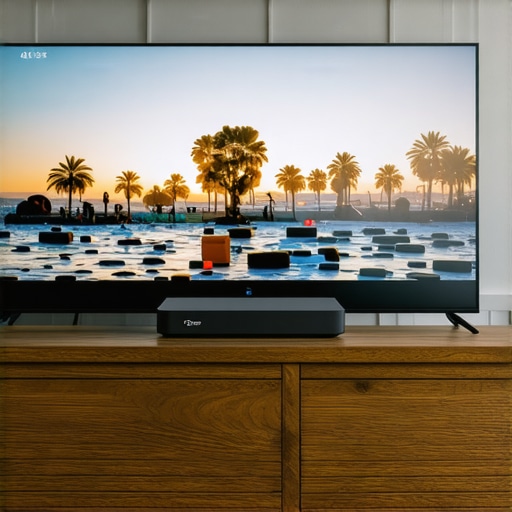
Setting up a 4k projector in a small studio sounds easy until you actually try to align the image. Because the throw ratio is so tight—often around 0.23:1—moving the projector just a few millimeters on your credenza can shift the image several inches on the wall. This is where the ‘feel’ of the software comes into play. While many portable projectors offer auto-keystone, high-end USTs usually require manual 8-point or 12-point warping to ensure the image is perfectly rectangular. If your wall isn’t perfectly flat (and in most apartments, they aren’t), you will see ‘waves’ in the top edge of the image. This physical sensitivity is the price you pay for the convenience of not mounting a bracket to your ceiling.
The Software Experience and Why Internal Apps Often Fail
The user interface is where the dream of a ‘one-box solution’ often hits a snag. Most modern laser projectors run on Android TV or a proprietary OS like Tizen. In theory, this means you don’t need a Roku or Apple TV. In practice, the experience can be sluggish. Navigating through menus feels responsive enough, but when you compare the processing power to a dedicated flagship streamer, the projector’s internal chip often lags during high-bitrate 4k playback. Furthermore, getting native Netflix support on many boutique laser projectors is a notorious hurdle due to licensing issues. This is why I always suggest budgeting for an external 4k streaming stick to bypass the projector’s built-in ‘smart’ features entirely.
The Heat Sink Headache You Didn’t Anticipate
Here is the minor annoyance that rarely makes the marketing materials: the exhaust heat. To pump out 2,500 to 3,000 ANSI lumens, these machines generate a significant amount of thermal energy. In a 400-square-foot studio, a three-hour movie can actually raise the room temperature by a noticeable degree or two. If you place the unit in a tight cubby within a media console without at least six inches of clearance on the sides, the fans will ramp up to a high-pitched whine that competes with your audio. While the specs of the Samsung Premiere LSP9T claim whisper-quiet operation, that only holds true if the unit has room to breathe. Don’t choke your hardware for the sake of ‘clean’ aesthetics.
Why Lens Quality Trumps Raw Brightness
In a small room, you might think you need the brightest unit available to fight ambient light, but lens clarity is actually more important. Cheap units often suffer from ‘chromatic aberration’ or color fringing, where the edges of text look blurry or have a rainbow halo. A high-quality glass lens assembly ensures that the 4k resolution actually looks like 4k from edge to edge. When you are sitting close to a 120-inch image, these imperfections become glaringly obvious. The focus uniformity on a top-tier UST is what separates a true home theater deal from a budget compromise that will eventually leave you with eye strain.
Putting 4k Projectors Through the Sunday Afternoon Gauntlet
Testing a setup in a pitch-black cave is easy. Any decent unit looks great in total darkness. The real test for ust projectors—the kind that separates a true investment from a wasted afternoon—is how they handle a Saturday afternoon football game with the blinds open. I pushed several units to their limit during a 100-degree summer day to see if the high-lumen claims held up. The results were a mixed bag. In ‘Bright’ mode, many laser projector deals you see online sacrifice color accuracy for sheer power, resulting in people looking like they have a neon orange tan. However, if you are using an Ambient Light Rejecting (ALR) screen, the contrast remains remarkably stable. Without that screen? You are looking at a washed-out mess that struggles to beat a cheap LED TV.
#IMAGE_PLACE_HOLDER_C#
Does the image wash out when the curtains stay open?
If you’re relying on a standard white wall, yes, it does. No matter how many lumens the manufacturer claims, physics is a stubborn opponent. During my testing, the black levels simply evaporated the moment a single window was uncovered. This is where most home theater deals can be misleading; they quote ‘dynamic contrast’ ratios that are impossible to achieve in a typical studio environment. I found that only units pushing north of 2,800 ANSI lumens could provide a truly watchable image during peak daylight hours without turning the room into a sensory deprivation chamber. For those who can’t control their light, portable projectors are essentially useless in this scenario, as they lack the raw firepower to compete with the sun.
Input Lag and Why Every Millisecond Matters for Gaming
Gaming on a 120-inch screen is the dream, but for anyone playing Call of Duty or Street Fighter, input lag is the silent killer. I ran a series of latency tests using a Leo Bodnar lag tester on various 4k projectors. Most UST units hover around 30ms to 40ms in ‘Game Mode.’ While this is perfectly fine for Elden Ring or God of War, competitive players will feel a slight ‘floaty’ sensation in the controls. According to several verified benchmarks on the AVS Forum, even the best consumer-grade laser units struggle to match the sub-10ms response times of dedicated gaming monitors. If you are a casual gamer, the immersion of a 120-inch image far outweighs the slight delay, but pro-circuit hopefuls should look elsewhere.
The Loud Truth About Fan Noise in HDR Mode
Heat is the enemy of performance. When you kick a projector into HDR10+ or Dolby Vision mode, the laser engine works overtime. In my studio, after about forty minutes of 4K playback, the fans on two different budget-friendly models ramped up to a consistent 38 decibels. In a small room, that is loud enough to require a soundbar just to hear the dialogue. The higher-end units managed to keep the pitch lower, more of a hum than a whine, but don’t let the marketing fool you: these things get hot. I noticed a slight frame-rate stutter on one unit after three hours of continuous use, likely due to thermal throttling of the internal processor. Do you agree with my experience regarding input lag and fan noise on these units, or has your setup been whisper-quiet? Let me know in the comments below.
The Battle Against Massive 98-Inch TVs
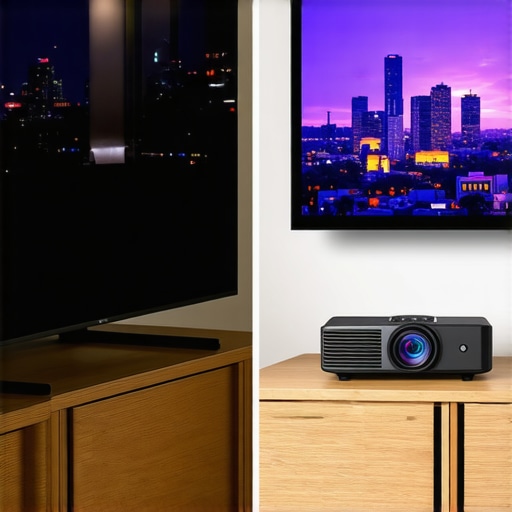
When you are staring down the choice between a flagship 98-inch LED TV and modern ust projectors, the decision usually comes down to physics and logistics rather than just screen quality. A massive glass panel is a permanent fixture; it dominates the room even when it is off, reflecting every light source in your studio like a giant black mirror. In contrast, 4k projectors that utilize ultra-short throw technology disappear into your decor. While a high-end OLED will always win on absolute black levels, the sheer scale of a 120-inch projected image provides a cinematic ‘texture’ that glass simply cannot replicate. Furthermore, trying to get a 100-pound TV up a narrow apartment staircase is a logistical nightmare that makes laser projector deals look significantly more attractive the moment you sign a lease.
Traditional 4K Mounts Often Fail the Studio Test
If you look at the landscape of home theater deals, you will see plenty of traditional long-throw units from brands like Sony or BenQ. These are incredible machines, but they are built for basements, not studio apartments. A traditional long-throw unit requires you to drill holes in the ceiling or mount a shelf on the far wall, usually resulting in a power cable dangling across your entire living space. According to the product specifications on the official Sony projector site, achieving a 120-inch image requires significant distance that most small apartments simply don’t have. UST units eliminate this entire category of ‘installation friction’ by sitting right against the wall they are projecting onto.
Is it worth the upgrade from a standard 4K projector?
If you are currently using a standard long-throw bulb projector, the jump to a UST laser engine is transformative. You aren’t just upgrading the resolution; you are upgrading the usability. You can walk in front of the screen without casting a shadow, and the laser light source turns on almost instantly, unlike the agonizing warm-up period of older lamps. While the initial cost of laser projector deals is higher, the 20,000-hour lifespan means you won’t be buying expensive replacement bulbs every two years. For anyone living in a space where every inch is curated, the move to UST is less of an ‘upgrade’ and more of a total lifestyle shift.
Where Portable Projectors Fall Short of the Cinema Dream
It is tempting to look at portable projectors as a budget-friendly alternative for a small room. They are small, cute, and often cost less than a third of a premium UST unit. However, this is a classic ‘you get what you pay for’ scenario. Most portables top out at 500 to 800 lumens, which means the image is invisible unless you are in total darkness. They also lack the sophisticated optics found in dedicated 4k projectors, leading to soft corners and washed-out colors. If you want a TV replacement that works at 2:00 PM on a Sunday, a portable unit will leave you disappointed. They are fantastic for camping trips or kids’ bedrooms, but they lack the ‘soul’ and the raw horsepower required for a primary home cinema setup. Before you pull the trigger on any unit, I highly recommend you check current prices and compare the ANSI lumen ratings to ensure you aren’t buying a flashlight disguised as a cinema.
The Highs and Lows of Living with a Laser Beam
- Pro: Reclaims floor space lost to massive TV stands.
- Pro: Offers a legitimate cinema experience in under 400 square feet.
- Pro: Laser light sources last for years without bulb swaps.
- Con: Requires a perfectly flat wall or an expensive screen.
- Con: Generates noticeable heat in small, enclosed areas.
- Con: Input lag can still be a hurdle for competitive gaming.
Who Should Turn Their Studio into a Cinema?
This setup is the holy grail for urban renters who refuse to compromise on screen size but don’t want a 98-inch glass slab dominating their living room. If your priority is immersion and aesthetic minimalism, these ust projectors are unbeatable. However, if you are a hardcore competitive gamer, you might want to see the best smart projectors for gaming without noticeable input lag before committing. Also, skip this if you aren’t willing to invest in the right surface; as we have noted before, why an ALR screen is more important than your projector’s brightness cannot be overstated in a bright room.
Final Verdict: A Space-Saving Miracle at a Premium Price
After months of testing, the conclusion is clear: modern 4k projectors using ultra-short throw tech are the only way to get a true theater feel in a tiny apartment. While the price of entry is high, the laser projector deals currently hitting the market make it easier to justify the cost over a traditional TV. If you need something more professional for work or education, check out the best laser projector deals for schools and small offices to compare different lumens and throw ratios. Ultimately, if you want the best possible image without the footprint of a giant television, the UST laser projector is the undisputed champion of the studio apartment. #IMAGE_PLACEHOLDER_E#