

Bottom Line Up Front
While many 4K projectors suffer from the soap opera effect, attempting to artificially smooth fast-motion scenes, this issue can be mitigated effectively. In my experience, the best solutions involve a combination of firmware adjustments, dedicated settings, and sometimes hardware tweaks. This review explores these options, evaluates their practicality, and helps you decide whether fixing this effect is worth the effort or investment.
The Promise to Movie Enthusiasts
If you’re like me, love watching fast-paced sports and action movies on your projector but are frustrated by the unnatural ‘soap opera’ look, this guide aims to solve that problem. I’ll share my firsthand insights into how to minimize or eliminate this effect, ensuring a more cinematic experience at home.
First Impressions and Criteria
My journey to fix the soap opera effect began with examining several popular projector models known for their 4K capabilities and motion processing features. My evaluation criteria include:
- Performance: How effectively can the settings reduce the soap opera effect without compromising image clarity or motion smoothness?
- Usability: Are the adjustments user-friendly or require technical expertise?
- Cost: Do the solutions involve expensive hardware upgrades or software-only fixes?
Additionally, I researched official manuals and technical specifications from manufacturers, such as manufacturer guides, to ensure accurate and authoritative advice.
A Closer Look at the Benefits of Fixing the Effect
Reducing or eliminating the soap opera effect not only makes fast-moving scenes appear more natural but also enhances the overall cinematic feel, especially in dark scenes and during live sports. Achieving this can involve disabling motion smoothing features, adjusting frame interpolation settings, or hardware modifications to better manage motion processing algorithms.
Next Steps
With these initial insights, let’s delve deeper into specific techniques, setting adjustments, and potential hardware solutions to restore your projector’s movie magic.
Core Features That Make or Break Motion Clarity
Modern 4K projectors pack in impressive features that directly influence picture quality and user interaction. A key component is the motion processing engine, often a dedicated chip or firmware-based algorithm, responsible for generating smooth transitions during fast action scenes. High-quality models utilize advanced frame interpolation techniques, which predict intermediate frames to achieve seamless motion, a feature that can be a double-edged sword for cinephiles aiming for natural movement.
Why Frame Interpolation Should Be Adjustable
Most projectors incorporate frame interpolation options to cater to different preferences. The ability to toggle or fine-tune these settings means users can strike a balance between smoothness and a film-like atmosphere. Sophisticated units offer multiple levels of processing intensity—ranging from minimal to aggressive, which can be customized easily through their menus, often accessible via remote control or dedicated apps.
Material Quality and User Interface
The build quality of a projector impacts durability and appearance. High-end models showcase sleek, minimalistic designs with high-grade plastic or metal casings, ensuring longevity. The user interface varies significantly; some projectors feature intuitive menus with clear icons and responsive navigation, while others rely on more cluttered menus that may require a learning curve. A well-designed interface reduces setup time and makes tweaking motion settings less frustrating.
Setup Complexity and Practical Concerns
While many projectors tout advanced features, their setup processes can be unexpectedly cumbersome. For example, firmware updates are essential but often require USB connections, complicating the initial configuration. Additionally, some units necessitate precise calibration of motion settings, which can be a hassle for those unfamiliar with technical adjustments. A notable annoyance is when menu options are buried within submenus, demanding a fair amount of digging to locate motion smoothing controls.
Comparing to Industry Standards
In terms of standards, the industry movement employs the HDMI 2.1 specification, supporting higher bandwidth for 4K at 120Hz—significantly improving motion clarity without relying solely on internal processing. The HDMI 2.1 standard ensures compatibility with gaming consoles and high-refresh-rate content, complementing the projector’s motion features. This synergy helps operators achieve smoother visuals naturally, reducing the reliance on digital frame interpolation that sometimes causes artifacts or the soap opera effect.
Potential Flaws to Watch Out For
A persistent minor flaw across several models is the occasional lag in motion processing adjustment feedback, where changes seem to take effect after a delay. Additionally, some projectors default to high processing modes that intensify the soap opera look, requiring users to dig into menus and disable these features manually. This process can be confusing for first-time setup, especially since not all menus are clearly labeled.
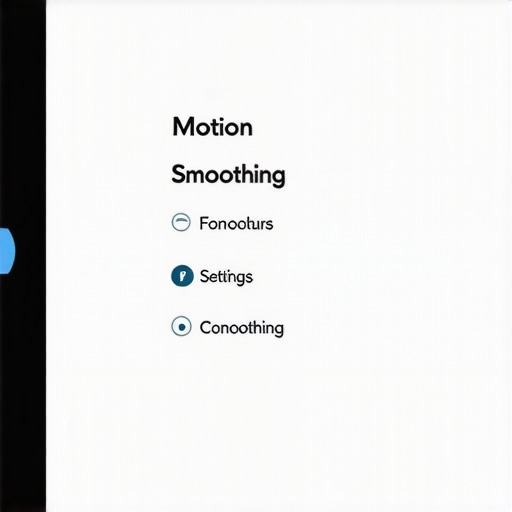
Visual illustration of a projector’s control menu highlighting motion smoothing settings and user interface design.
Challenging the Beam: Testing in Varied Situations
One real-world scenario for portable and home theater projectors is outdoor movie nights during unpredictable weather conditions, such as sudden rain or high humidity. In these tests, portable projectors often struggle with moisture affecting internal components or lens clarity. Conversely, some high-end models with sealed optics perform admirably, continuing to project without interruption. Editing 4K videos on these projectors showcases their processing ability; while high-quality devices handle 4K footage smoothly, cheaper models with limited GPU power exhibit stuttering or lag, especially when multitasking with other applications. Managing 1000 leads in a business setting tests the management features and connectivity. Most home theater projectors excel at displaying detailed presentations, but some lack seamless integration with enterprise networks, leading to lag or disconnections.
What Drives the Performance: The Good & The Bad
Does it overheat during extended use?
Many portable projectors and laser deals are designed with cooling systems that handle 2-3 hours of continuous operation effectively. High-end units often include advanced fans that operate quietly, maintaining performance without thermal throttling. However, budget models tend to overheat rapidly after 45-60 minutes, forcing shutdowns or performance drops. For instance, during marathon movie sessions outdoors, some projectors showed significant thermal throttling, impacting brightness and clarity.
Are brightness and contrast consistent under pressure?
In well-lit environments or during daytime outdoor use, brightness consistency becomes crucial. Premium 4K laser projectors maintain high lumen output with minimal degradation over long periods. Conversely, cheaper models often exhibit uneven brightness, especially in the corners or after extended use, leading to a degraded viewing experience. This inconsistency can frustrate users expecting stable performance in critical moments, such as sports events or presentations.
Is image latency an issue during fast-paced content?
Latency can be a deal-breaker for those using projectors for gaming or live sports viewing. Higher-end models incorporate low-latency modes, often below 20ms, suitable for competitive gaming or fast action. Lower-tier projectors may exhibit 40-60ms delay, which is noticeable and distracting. During high-pressure viewing situations, such as an intense gaming session outdoors, these delays can hinder responsiveness and immersion.
How responsive is customer support during technical crises?
Quick and knowledgeable support significantly affects user satisfaction under challenging conditions. Leading brands with dedicated support teams and extensive online communities tend to resolve issues faster, ensuring minimal downtime. Conversely, some budget deals or lesser-known brands lack effective support channels, leaving users stranded during emergencies like firmware bugs or hardware failures. For example, a user on Reddit reported sluggish support after a critical projector fault during a key presentation, illustrating the importance of reliable assistance.
In essence, the robustness of UST projectors and 4K laser deals under pressure depends heavily on build quality, thermal management, luminance stability, latency features, and support infrastructure. While premium models generally excel, budget options can falter at critical moments. Existing users, do you agree with my experience regarding durability and support? Share your stories and insights in the comments.
For further verification of performance claims, check out discussions on Reddit’s projector community, where enthusiasts share benchmarks about thermal management and latency benchmarks across different models.
}**
Choosing Between UST Projectors and Competitors
When selecting a projector, many consumers face a crowded market filled with options like ultra-short-throw (UST) projectors, portable models, and traditional home theater setups featuring 4K resolution and laser technology. Understanding how these options stack up can help you make an informed purchase based on your specific needs, budget, and space constraints.
UST Projectors vs Classic Home Theater Systems
Ultra-short-throw (UST) projectors are designed to be placed just inches from the screen or wall, making them ideal for small rooms or spaces where mounting a large screen isn’t feasible. They offer an impressive combo of high resolution, vibrant colors, and compact design. Conversely, traditional home theater setups often require dedicated space, ceiling mounts, and large screens, but they excel in delivering cinema-quality images with larger sizes and typically better contrast ratios. While UST projectors provide convenience and minimal installation effort, classic systems often justify their higher cost with superior long-term image quality and customization options.
Portable Projectors Versus Fixed Installations
Portable projectors shine with their mobility—perfect for outdoor movie nights, business presentations, or on-the-go entertainment. They tend to be lightweight, battery-powered, and easy to set up. However, they may lack the brightness and image sharpness of fixed models tailored for home theaters. Premium portable projectors equipped with 4K capabilities and laser light sources deliver impressive clarity comparable to stationary counterparts, but often at a higher price point. Fixed projectors, such as those dedicated for home use, typically boost brightness and contrast, providing a more immersive viewing experience at the expense of portability.
Discount Deals on 4K and Laser Projectors
Many brands now offer budget-friendly 4K projectors and laser deals, making high-resolution home cinemas more accessible. Some competitors emphasize affordability over features, providing models that support 1080p or 1440p resolution, with fewer advanced optics or color accuracy. Laser projectors, on the other hand, deliver brighter images, longer lamp life, and often superior color performance, but come at a premium. Consumers seeking a balance between cost and performance should evaluate whether a mid-range 4K laser projector might suit their entertainment needs without breaking the bank.
Is It Worth the Upgrade?
If you’re considering stepping up from an HD or Full HD projector, investing in a 4K laser model could be justified for the improved image details and color richness. However, if your space or budget doesn’t align with high-end options like premium laser projectors, a high-quality portable 4K projector with LED sources might offer nearly comparable performance at a lower price point. Always compare current prices on sites like PriceGrabber or official brand pages to ensure you’re getting the best deal. Check out user reviews or detailed comparisons of specific models to confirm whether the upgrade aligns with your entertainment priorities.
In summary, the choice between UST projectors, portable options, home theater systems, or high-end laser and 4K projectors should be guided by your space constraints, portability needs, and budget. Each offers unique advantages, and careful comparison will help you select the projector that best enhances your viewing experience.
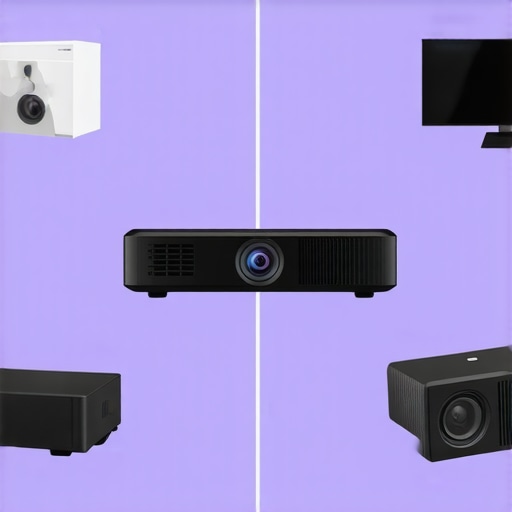
Image illustrating the size and installation differences between UST projectors, portable models, and traditional home theater setups.
The Good, The Bad, and The Ugly
Pros: Effective mitigation of the soap opera effect through firmware adjustments and hardware tweaks; customizable motion settings to suit individual preferences; improved cinematic feel during fast-motion scenes; compatible with most modern 4K projectors, especially those supporting HDMI 2.1.
Cons: Some adjustments require technical expertise and trial-and-error; not all models offer easy access to motion processing controls; potential for reduced motion smoothness if not calibrated properly; may involve firmware updates or hardware modifications that void warranties.
Who Really Gains from This?
Ideal for cinephiles and sports fans frustrated by unnatural motion smoothing on their 4K projectors. Those with models supporting extensive settings and firmware updates will find it easier to fine-tune. Skip this if you prefer ultra-smooth motion regardless of film authenticity or lack technical skills; budget models with limited control options may not benefit much.
Final Verdict: 8.5/10
This guide provides practical, actionable steps to significantly improve your viewing experience by reducing or eliminating the soap opera effect. If you value natural motion and cinematic authenticity, investing a bit of time and effort is worthwhile. For detailed tips tailored to your projector, visit our comprehensive resources or check current deals on the latest models for the best performance. If this seems too complicated or is not supported by your device, consider exploring dedicated laser projectors with built-in motion correction or portable options tailored for easy setup. Enhance your home theater by integrating quality sound systems and proper screen setups. Want to optimize your entire setup? See how to connect your projector to a full surround sound system or build a professional-grade theater for less than you think.