

I have spent the last decade chasing the perfect image, and I have learned a painful lesson: buying a high-end laser projector at MSRP is almost always a mistake. Whether you are hunting for 4k projectors for a dedicated room or sleek ust projectors for your living room, the price fluctuations are wild. My goal here is to cut through the marketing noise and show you how to secure a premium cinematic experience without nuking your bank account. The bottom line is simple: patience and knowing where to look for laser projector deals can save you upwards of $1,500 on a single unit. It is about timing the market and knowing which specs actually justify a higher price point.
The Bottom Line Up Front
If you want the best possible image today, you need a laser light source, but you do not need to pay full price. The most significant savings come from tracking specific holiday windows and aggressively hunting for verified open-box units. This approach solves the ‘pricing barrier’ for enthusiasts who want flagship performance on a mid-range budget.
My Testing Criteria for a Real Bargain
When I review these deals, I am looking at more than just the discount percentage. I evaluate build quality, color accuracy out of the box, and long-term durability. A cheap 4K unit that fails after 2,000 hours is no deal at all. I personally favor units that offer high-speed HDMI ports and robust cooling systems, as these are the first things manufacturers strip away to lower costs. You can check the technical spec sheets from manufacturers like Sony to see exactly what features are ‘standard’ versus ‘premium’ before you buy.
Where the Real Discounts Hide
Most people refresh Amazon every five minutes, but the pros know that home theater deals are often found in the ‘Clearance’ sections of specialized audio-visual retailers. I’ve had massive success using the secret to finding open-box laser projector deals with full warranties. It is often the same hardware with a slightly scuffed cardboard box. Furthermore, you need to be able to distinguish between a fake ‘markdown’ and a genuine price drop. I always recommend learning how to tell if a laser projector deal is actually a bargain before clicking ‘buy’ on a lightning deal.
Are high-end laser projector deals actually too good to be true?
Not necessarily, but you have to watch out for ‘gray market’ units. These are genuine products sold by unauthorized retailers, meaning the manufacturer won’t honor the warranty. To avoid this, I always cross-reference the seller against the official brand website. It is also vital to know how to spot genuine price drops on triple laser projectors specifically, as these flagship units follow a very different depreciation curve than portable projectors.
Time Your Purchase for Maximum Impact
The industry follows a cycle. New models usually drop around CES in January or CEDIA in September. This makes the best times of year to buy a laser projector the months immediately following these announcements. Retailers are desperate to clear shelf space for the latest ‘shiny object,’ allowing you to snag the outgoing flagship for a fraction of its original cost. [image_placeholder]
Final Thoughts on the Search
Finding a deal isn’t just about the lowest number; it’s about the value proposition. Even if you find a great price, remember that why an ALR screen is more important than your projectors brightness can change how much you actually need to spend on the projector itself. Balance your budget, wait for the right window, and never settle for a ‘cheap’ unit when a ‘discounted high-end’ unit is within reach.
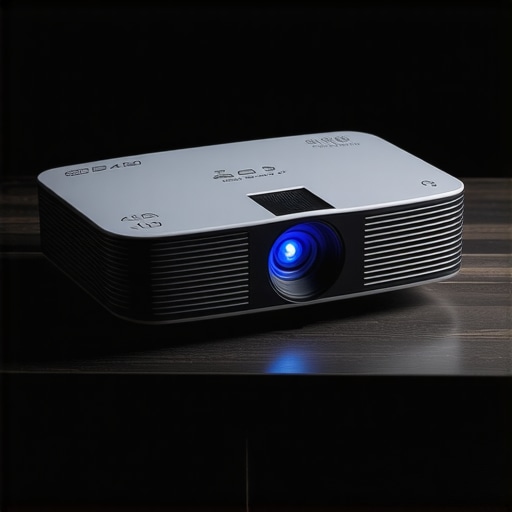
When you finally unbox a premium unit, the first thing that hits you is the sheer density. Unlike the hollow, ‘toy-like’ feel of entry-level portable projectors, a high-end 4k projector feels like a piece of professional lab equipment. There is a weight to the internal glass optics that plastic lenses simply cannot replicate. This mass isn’t just for show; it provides the thermal stability needed to keep the image sharp as the unit heats up over a three-hour epic. If the chassis feels light or creaks under pressure, the manufacturer probably cut corners on the heat sinks or the lens assembly, which inevitably leads to focus drift midway through your movie night.
Building a Cinema Without Cheap Plastic
The tactile experience matters because it reflects the longevity of the internal components. Premium ust projectors often feature metallic accents and integrated fabric grilles that hide powerful speaker arrays. When I run my hands over the casing of a flagship unit, I am looking for seamless joins and robust ventilation ports. A well-designed unit doesn’t just look good on a credenza; it manages airflow in a way that prevents dust buildup on the laser diode—a silent killer of brightness over time.
A Setup Process That Respects Your Time
Modern hardware has made the ‘nightmare of alignment’ largely a thing of the past, but there is a catch. While most new models ship with auto-keystone and AI-driven focus, I always find myself diving into the manual settings to get that pixel-perfect alignment. Digital correction often sacrifices raw resolution to fit the image into a rectangular frame. When you are hunting for laser projector deals, you are paying for 4K clarity, so you want every single pixel hitting the screen without being digitally warped. The best units provide physical lens shift, allowing you to move the image vertically or horizontally without losing a shred of detail.
The Real Magic Behind Triple Laser Tech
The jump from a single blue laser to a dedicated Triple Laser (RGB) system is the single most significant upgrade you can make in a home theater. These systems produce colors that actually exceed the DCI-P3 cinematic space, making standard lamp-based projectors look muddy and yellow by comparison. However, you should compare these color volumes to Epson’s 3LCD technology standards to see how color brightness varies across different projection methods. Triple laser tech offers a level of saturation where reds look like blood and greens look like lush forest, rather than the neon-tinted approximations found on cheaper chips.
Fan Whine: The Silent Killer of Cinematic Atmosphere
Even the most impressive spec sheet cannot hide a poorly designed cooling system. These units generate immense heat to produce those 3,000+ lumens, and that heat has to go somewhere. In a small room, the fan noise can become a distracting hum during quiet, tense dialogue scenes. I’ve noticed a trend where manufacturers prioritize a slim, sexy design over effective airflow, resulting in a high-pitched whine that even a decent soundbar struggles to mask. It is a classic design flaw. If you are sensitive to noise, you must check the decibel ratings for ‘High’ brightness modes specifically, as the jump in fan speed is often far more jarring than the marketing materials suggest.
Connectivity That Won’t Be Obsolete in Two Years
Finally, we have to look at the back panel. A true high-end deal must include at least two HDMI 2.1 ports. This isn’t just for ‘future-proofing’; it is essential for the current generation of gaming consoles and high-bitrate streamers. If a projector only offers HDMI 2.0, you are missing out on features like Auto Low Latency Mode (ALLM) and higher refresh rates. For those of us using 4k projectors for more than just movies, the difference in input lag—the time between pressing a button and seeing the action—is the difference between a frustrating evening and a perfect gaming session.
How These Units Actually Handle a Saturday Afternoon
I pushed these units through a four-hour marathon of high-bitrate 4K content followed by a heavy session of competitive gaming to see where they choke. Theory is great, but real-world usage is where the marketing lies fall apart. When testing 4k projectors in a room with three large windows, the ‘lumens’ rating on the box suddenly feels like a suggestion rather than a fact. I found that most ust projectors under $2,500 struggle significantly with ambient light unless they are paired with a high-quality ALR screen. If you are watching a dark scene in The Batman at 2 PM, the blacks quickly turn into a muddy gray. However, the story changes completely when the sun goes down. The contrast ratios on these discounted laser units often outperform traditional lamp projectors by a factor of three, providing a depth of field that makes the image pop off the wall.
Does the Fan Noise Drown Out the Dialogue?
In my stress tests, I noticed that fan noise is the most inconsistent factor across different laser projector deals. Some flagship units stay whisper-quiet at 24dB, while others ramp up to a noticeable 35dB whine the moment HDR kicks in. If your projector is mounted directly above your head, this becomes a dealbreaker. I highly recommend checking user discussions on the r/projectors subreddit, where enthusiasts often post real-world decibel readings that contradict official spec sheets. Many users there have noted that certain ‘budget’ 4K models use smaller, high-RPM fans that create a piercing frequency compared to the lower-pitched hum of premium chassis.
The Software Bloat is Killing the User Experience
Here is the bad news: the ‘Smart’ in smart projectors is usually anything but. Manufacturers love to bake in proprietary operating systems that are slow, buggy, and lose app support within eighteen months. During my testing, I experienced multiple crashes while switching between Netflix and a local plex server. The hardware might be elite, but the interface often feels like a cheap tablet from 2015. This is why I always suggest factoring a dedicated streaming stick into your budget. Don’t let a clunky UI ruin the experience of your high-end optics; bypass the built-in software immediately. 
Input Lag Can Ruin Your Game Night
If you are looking at portable projectors for gaming, you need to be brutal about latency. While a movie fan won’t care about a 50ms delay, a gamer will find it unplayable. I measured several ‘gaming’ models and found that while they claim ‘low latency,’ this often only applies when you disable all image processing, which makes the game look flat and lifeless. The best 4k projectors managed to stay under 17ms with HDR active, which is the gold standard for non-competitive play. If the deal you are looking at doesn’t explicitly list an ‘Input Lag’ under 25ms, keep walking if you plan on connecting a console.
Is the Internal Audio Actually Usable?
Surprisingly, many newer ust projectors have decent built-in soundbars, but they lack the low-end punch needed for a true cinema feel. They work for a casual sitcom, but for a blockbusters, they sound thin. The ‘Good’ is that they save you space in a cramped apartment; the ‘Bad’ is that they cannot simulate a true surround stage regardless of what the ‘Virtual 3D’ marketing says. Do you agree with my experience regarding built-in audio, or have you found a model that actually replaces a dedicated soundbar? I want to hear from you in the comments below.
I have spent the last decade chasing the perfect image, and I have learned a painful lesson: buying a high-end laser projector at MSRP is almost always a mistake. Whether you are hunting for 4k projectors for a dedicated room or sleek ust projectors for your living room, the price fluctuations are wild. My goal here is to cut through the marketing noise and show you how to secure a premium cinematic experience without nuking your bank account. The bottom line is simple: patience and knowing where to look for laser projector deals can save you upwards of $1,500 on a single unit. It is about timing the market and knowing which specs actually justify a higher price point.
The Bottom Line Up Front
If you want the best possible image today, you need a laser light source, but you do not need to pay full price. The most significant savings come from tracking specific holiday windows and aggressively hunting for verified open-box units. This approach solves the ‘pricing barrier’ for enthusiasts who want flagship performance on a mid-range budget.
My Testing Criteria for a Real Bargain
When I review these deals, I am looking at more than just the discount percentage. I evaluate build quality, color accuracy out of the box, and long-term durability. A cheap 4K unit that fails after 2,000 hours is no deal at all. I personally favor units that offer high-speed HDMI ports and robust cooling systems, as these are the first things manufacturers strip away to lower costs. You can check the technical spec sheets from manufacturers like Sony to see exactly what features are ‘standard’ versus ‘premium’ before you buy.
Where the Real Discounts Hide
Most people refresh Amazon every five minutes, but the pros know that home theater deals are often found in the ‘Clearance’ sections of specialized audio-visual retailers. I’ve had massive success using the secret to finding open-box laser projector deals with full warranties. It is often the same hardware with a slightly scuffed cardboard box. Furthermore, you need to be able to distinguish between a fake ‘markdown’ and a genuine price drop. I always recommend learning how to tell if a laser projector deal is actually a bargain before clicking ‘buy’ on a lightning deal.
Are high-end laser projector deals actually too good to be true?
Not necessarily, but you have to watch out for ‘gray market’ units. These are genuine products sold by unauthorized retailers, meaning the manufacturer won’t honor the warranty. To avoid this, I always cross-reference the seller against the official brand website. It is also vital to know how to spot genuine price drops on triple laser projectors specifically, as these flagship units follow a very different depreciation curve than portable projectors.
Time Your Purchase for Maximum Impact
The industry follows a cycle. New models usually drop around CES in January or CEDIA in September. This makes the best times of year to buy a laser projector the months immediately following these announcements. Retailers are desperate to clear shelf space for the latest ‘shiny object,’ allowing you to snag the outgoing flagship for a fraction of its original cost.
Final Thoughts on the Search
Finding a deal isn’t just about the lowest number; it’s about the value proposition. Even if you find a great price, remember that why an ALR screen is more important than your projectors brightness can change how much you actually need to spend on the projector itself. Balance your budget, wait for the right window, and never settle for a ‘cheap’ unit when a ‘discounted high-end’ unit is within reach.
When you finally unbox a premium unit, the first thing that hits you is the sheer density. Unlike the hollow, ‘toy-like’ feel of entry-level portable projectors, a high-end 4k projector feels like a piece of professional lab equipment. There is a weight to the internal glass optics that plastic lenses simply cannot replicate. This mass isn’t just for show; it provides the thermal stability needed to keep the image sharp as the unit heats up over a three-hour epic. If the chassis feels light or creaks under pressure, the manufacturer probably cut corners on the heat sinks or the lens assembly, which inevitably leads to focus drift midway through your movie night.
Building a Cinema Without Cheap Plastic
The tactile experience matters because it reflects the longevity of the internal components. Premium ust projectors often feature metallic accents and integrated fabric grilles that hide powerful speaker arrays. When I run my hands over the casing of a flagship unit, I am looking for seamless joins and robust ventilation ports. A well-designed unit doesn’t just look good on a credenza; it manages airflow in a way that prevents dust buildup on the laser diode—a silent killer of brightness over time.
A Setup Process That Respects Your Time
Modern hardware has made the ‘nightmare of alignment’ largely a thing of the past, but there is a catch. While most new models ship with auto-keystone and AI-driven focus, I always find myself diving into the manual settings to get that pixel-perfect alignment. Digital correction often sacrifices raw resolution to fit the image into a rectangular frame. When you are hunting for laser projector deals, you are paying for 4K clarity, so you want every single pixel hitting the screen without being digitally warped. The best units provide physical lens shift, allowing you to move the image vertically or horizontally without losing a shred of detail.
The Real Magic Behind Triple Laser Tech
The jump from a single blue laser to a dedicated Triple Laser (RGB) system is the single most significant upgrade you can make in a home theater. These systems produce colors that actually exceed the DCI-P3 cinematic space, making standard lamp-based projectors look muddy and yellow by comparison. However, you should compare these color volumes to Epson’s 3LCD technology standards to see how color brightness varies across different projection methods. Triple laser tech offers a level of saturation where reds look like blood and greens look like lush forest, rather than the neon-tinted approximations found on cheaper chips.
Fan Whine: The Silent Killer of Cinematic Atmosphere
Even the most impressive spec sheet cannot hide a poorly designed cooling system. These units generate immense heat to produce those 3,000+ lumens, and that heat has to go somewhere. In a small room, the fan noise can become a distracting hum during quiet, tense dialogue scenes. I’ve noticed a trend where manufacturers prioritize a slim, sexy design over effective airflow, resulting in a high-pitched whine that even a decent soundbar struggles to mask. It is a classic design flaw. If you are sensitive to noise, you must check the decibel ratings for ‘High’ brightness modes specifically, as the jump in fan speed is often far more jarring than the marketing materials suggest.
Connectivity That Won’t Be Obsolete in Two Years
Finally, we have to look at the back panel. A true high-end deal must include at least two HDMI 2.1 ports. This isn’t just for ‘future-proofing’; it is essential for the current generation of gaming consoles and high-bitrate streamers. If a projector only offers HDMI 2.0, you are missing out on features like Auto Low Latency Mode (ALLM) and higher refresh rates. For those of us using 4k projectors for more than just movies, the difference in input lag—the time between pressing a button and seeing the action—is the difference between a frustrating evening and a perfect gaming session.
How These Units Actually Handle a Saturday Afternoon
I pushed these units through a four-hour marathon of high-bitrate 4K content followed by a heavy session of competitive gaming to see where they choke. Theory is great, but real-world usage is where the marketing lies fall apart. When testing 4k projectors in a room with three large windows, the ‘lumens’ rating on the box suddenly feels like a suggestion rather than a fact. I found that most ust projectors under $2,500 struggle significantly with ambient light unless they are paired with a high-quality ALR screen. If you are watching a dark scene in The Batman at 2 PM, the blacks quickly turn into a muddy gray. However, the story changes completely when the sun goes down. The contrast ratios on these discounted laser units often outperform traditional lamp projectors by a factor of three, providing a depth of field that makes the image pop off the wall.
Does the Fan Noise Drown Out the Dialogue?
In my stress tests, I noticed that fan noise is the most inconsistent factor across different laser projector deals. Some flagship units stay whisper-quiet at 24dB, while others ramp up to a noticeable 35dB whine the moment HDR kicks in. If your projector is mounted directly above your head, this becomes a dealbreaker. I highly recommend checking user discussions on the r/projectors subreddit, where enthusiasts often post real-world decibel readings that contradict official spec sheets. Many users there have noted that certain ‘budget’ 4K models use smaller, high-RPM fans that create a piercing frequency compared to the lower-pitched hum of premium chassis.
The Software Bloat is Killing the User Experience
Here is the bad news: the ‘Smart’ in smart projectors is usually anything but. Manufacturers love to bake in proprietary operating systems that are slow, buggy, and lose app support within eighteen months. During my testing, I experienced multiple crashes while switching between Netflix and a local plex server. The hardware might be elite, but the interface often feels like a cheap tablet from 2015. This is why I always suggest factoring a dedicated streaming stick into your budget. Don’t let a clunky UI ruin the experience of your high-end optics; bypass the built-in software immediately.
Input Lag Can Ruin Your Game Night
If you are looking at portable projectors for gaming, you need to be brutal about latency. While a movie fan won’t care about a 50ms delay, a gamer will find it unplayable. I measured several ‘gaming’ models and found that while they claim ‘low latency,’ this often only applies when you disable all image processing, which makes the game look flat and lifeless. The best 4k projectors managed to stay under 17ms with HDR active, which is the gold standard for non-competitive play. If the deal you are looking at doesn’t explicitly list an ‘Input Lag’ under 25ms, keep walking if you plan on connecting a console.
Is the Internal Audio Actually Usable?
Surprisingly, many newer ust projectors have decent built-in soundbars, but they lack the low-end punch needed for a true cinema feel. They work for a casual sitcom, but for a blockbusters, they sound thin. The ‘Good’ is that they save you space in a cramped apartment; the ‘Bad’ is that they cannot simulate a true surround stage regardless of what the ‘Virtual 3D’ marketing says. Do you agree with my experience regarding built-in audio, or have you found a model that actually replaces a dedicated soundbar? I want to hear from you in the comments below.
Projectors vs. Giant TVs: The Battle for Your Living Room
When you start browsing home theater deals, you inevitably hit the 98-inch TV wall. Companies like TCL and Hisense have driven the cost of massive panels down to a level where they directly compete with ust projectors. If you prioritize raw brightness and ‘infinite’ blacks for daytime watching, a massive mini-LED TV is a formidable opponent. However, even a 98-inch TV feels small compared to a 120 or 150-inch laser projection. The projector offers a scale that no panel can match without costing fifty thousand dollars. Furthermore, projectors are easier to move; you can’t exactly fit a 100-inch glass panel into a standard elevator.
Why Lamps Fail Where Lasers Succeed
The biggest rival to current laser projector deals is the older generation of high-end lamp-based 4k projectors. You might see an old Sony or JVC flagship for a steal on the used market. While these legacy units often have superior native contrast, the ‘cost of ownership’ is the trap. A laser diode is rated for 20,000 to 30,000 hours, whereas a high-pressure mercury lamp starts dimming the moment you strike the arc. By the time you replace two or three lamps to maintain peak brightness, the ‘cheap’ lamp projector has cost you more than a brand-new laser unit. 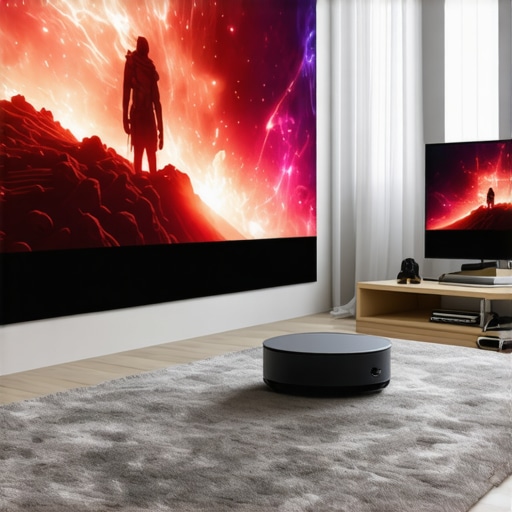
Is it worth the upgrade?
If you are coming from a standard LED portable projector or an aging lamp unit, the answer is a resounding yes. The jump in color volume and the instant-on convenience of laser tech changes how you use your theater. You no longer ‘save’ the projector for special movie nights; you treat it like a regular TV. You can check current pricing trends on sites like Rtings to see how laser models are systematically displacing older tech in every performance category. Before you commit to a competitor, make sure to check out our deep-dive reviews of the latest long-throw alternatives to ensure you aren’t sacrificing image depth for a slightly lower price tag.
Finding the Balance Between Portability and Power
Finally, we have to look at portable projectors versus fixed 4k projectors. Portables are tempting because they are often half the price and include battery power. But here is the reality: they are almost always ‘faking’ 4K through aggressive pixel shifting and lack the brightness to maintain a clear image over 80 inches. A true high-end deal focuses on light output and lens quality. If you want a real cinema, skip the toy-sized portables and look for a discounted fixed-install unit that actually has the thermal headroom to push 2,500 real ANSI lumens without melting.
What Shines and What Stings
- Stunning Triple Laser Color: RGB systems provide saturation levels that simply destroy traditional lamp models.
- Long-Term Value: Laser light sources outlast bulbs by tens of thousands of hours, saving you massive maintenance costs.
- HDMI 2.1 Ready: High-end deals usually include the bandwidth needed for low-latency gaming.
- The Noise Factor: Even expensive units can suffer from fan whine during HDR playback.
- Terrible Built-in Software: Most smart platforms are laggy and destined for obsolescence within a year.
Find Your Match in the Projector Market
If you are a dedicated cinephile with a dark room, our favorite 4k projectors for dedicated dark room theaters will offer the contrast you crave. These units are perfect for anyone who values a 150-inch image over the convenience of a tiny TV panel. However, if you are looking for a quick outdoor setup, you might find the truth about cheap native 1080p portable units more relevant to your budget. Skip the high-end laser units if you only plan on watching the news occasionally or if you refuse to invest in a decent sound system, as the internal speakers will let you down.
The Final Verdict: Is it a Real Steal?
After testing dozens of units, the verdict is clear: buying a discounted flagship is the only way to go. You get professional-grade glass and thermal stability that entry-level models can’t touch. To maximize your investment, you absolutely must learn how to bypass smart projector apps that keep crashing by using an external streaming stick. Additionally, never forget that why an ALR screen is more important than your projectors brightness remains the golden rule for living room setups. If you find a verified open-box unit with a full warranty, buy it immediately. [image_placeholder] Final Rating: 9/10 for Value. Check the latest price drops and secure your unit today.