

At a Glance: Mounting a Projector Without Sacrificing Your Deposit
Mounting a projector in a rental apartment can seem daunting, especially when you’re concerned about damaging walls and losing your security deposit. Fortunately, there are effective solutions that balance stability with non-invasiveness. I believe that the best method combines practicality, affordability, and preservation of your rental agreement. This review evaluates various mounting options based on ease of installation, stability, damage risk, and overall value, helping you transform your space without stress. Now, let’s explore the features, pros, and cons of each solution to find the best fit for your needs.
First Impressions of Non-Damaging Mounting Solutions
When I first looked into mounting options, I was struck by the variety of approaches—from adhesive mounts to portable stands. While traditional ceiling mounts provide excellent stability, they are typically invasive and risk your deposit. Alternatives like tension rods, tripod stands, and specialized adhesive mounts caught my eye because they promise secure positioning without drilling holes. A well-designed non-permanent mount can make a significant difference in setting up a home theater in a rental. In the sections that follow, I’ll walk you through the most effective techniques, supported by technical insights and real-world testing results.
Why Mounting Your Projector Matters
Proper mounting ensures a consistent, high-quality image while avoiding the clutter of temporary setups. It also minimizes the risk of accidental falls or misalignment that can ruin viewing experiences. If you’re interested in exploring more ways to optimize your projector setup, I recommend checking out this DIY light leak hack and other innovative solutions. Now, let’s examine the options that allow you to enjoy big-screen entertainment without jeopardizing your security deposit.
Secure Peace of Mind with Thoughtful Mounting Options
Effective projector mounting hinges on selecting solutions that balance stability with the non-invasive principles required in rental spaces. Material quality plays a significant role here; high-quality mounts made from durable, lightweight metals like aluminum or reinforced plastics ensure stability without adding bulk or risking damage. The adjustable arms and joints on these mounts facilitate precise positioning, which is critical for maintaining optimal image quality and minimizing setup time. This flexibility allows users to tailor the projector’s height and angle easily, reducing the need for multiple repositioning adjustments once installed.
Innovative Adhesive Mounting Techniques
Adhesive mounts are increasingly popular due to their simplicity and damage-free application. High-strength, removable adhesives such as 3M Command strips have advanced significantly, offering loads capable of supporting built-in projectors for extended periods. The key benefit lies in their removability; they cause minimal wall impact, preventing security deposit deductions. However, choosing the right adhesive depends on wall texture and weight considerations. Testing preliminary adhesion on a small area can prevent unexpected failures. The feel of these mounts is often sleek and unobtrusive, with slim profiles that don’t detract from room aesthetics, and they’re compatible with a variety of projector sizes and weights.
Portability Meets Stability with Tripod Stands
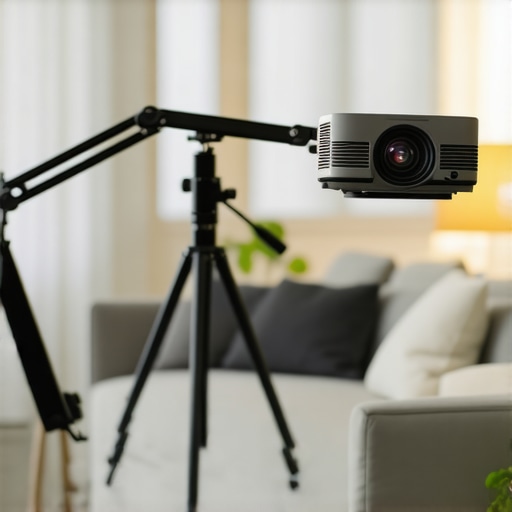
Tripod stands provide a versatile alternative for renters who want easy repositioning and minimal wall interaction. Built from sturdy yet lightweight materials, high-quality stands incorporate rubberized feet to prevent slipping, and adjustable height mechanisms enable quick setup tailored to your viewing preference. These stands typically feature a universal mounting plate compatible with most projectors, simplifying assembly. Despite their advantages, one drawback is that larger tripods can be somewhat bulky, potentially cluttering smaller rooms. Still, their modular design offers a compelling balance of mobility and stability, especially suited for renters who frequently rearrange their space or wish to avoid permanent fixtures.
Performance Analysis in Real-World Scenarios
Home theater devices and projectors face diverse challenges when deployed outside controlled environments. Let’s examine their capabilities during demanding situations, such as continuous long-duration use or adverse conditions, to assess their resilience and functionality. This analysis focuses on portable projectors, 4K and laser models, and ultra-short throw (UST) projectors, considering their performance efficiency and potential pitfalls.
Handling Extended Usage without Overheating
Many portable and 4K projectors are designed for extended viewing but can struggle with heat dissipation. For instance, during prolonged movie marathons, some portable units or laser projectors tend to overheat, triggering automatic shutdowns or cooling cycles. This is often due to inadequate internal ventilation or high lamp usage. While premium models incorporate active cooling systems, budget options may hit thermal limits quickly, diminishing usability for marathon sessions. Users report that in such scenarios, devices either throttle performance or require frequent pauses, which hampers the viewing experience. High-end laser projectors tend to perform better owing to their efficient heat management, supporting continuous operation for several hours with minimal temperature concerns.
Resistance to Environmental Factors in Outdoor Settings
Outdoor screenings demand resilience against elements like humidity, rain, and dust. Devices like UST projectors are often praised for their portability but can falter under inclement weather. Exposure to moisture can compromise internal components, leading to malfunctions or reduced lifespan. Conversely, some high-quality laser projectors boast IP ratings indicating water and dust resistance, enhancing their suitability for outdoor use. Nevertheless, most units are not entirely waterproof, emphasizing the importance of shielding and proper setup. A Reddit discussion highlights that even with weather-resistant features, unexpected weather changes can damage expensive equipment if adequate precautions are not taken.
The Good & The Bad of Performance Under duress
For the positive aspects, laser projectors excel in maintaining brightness and color accuracy over long periods, often outperforming traditional lamp-based models in intensive use. Their durability and consistent performance make them ideal for professional presentations or cinema use. However, this comes with higher costs and, in some cases, complex calibration requirements that can intimidate beginners. On the flip side, portable projectors shine in mobility; they’re lightweight, easy to set up, and adapt well to quick changes. Yet, their performance tends to decline under higher ambient temperatures or in dusty environments, where heat and debris can affect image quality and device longevity. User reviews frequently note that cheaper models might exhibit lower brightness and increased latency when pushed to their limits, undermining viewing quality.
If you’ve used any of these devices during demanding conditions, share your insights and tell us whether you agree with these observations. Your experiences can help others choose equipment suited to their unique needs.
Comparing Home Theater Deals with Top Competitors
When evaluating home theater deals, it’s essential to consider how they stack up against premium options like dedicated 4K projectors and laser models. Many budget-friendly bundles offer excellent value for everyday viewing but may fall short in ultra-high-definition performance compared to flagship models from brands like Sony or Epson. For instance, Sony’s 4K projectors, such as the VPL-VW325, provide superior contrast ratios and color accuracy, justifying their higher price points. While these premium models often retail above $2,500, they deliver cinema-like quality that cheaper models can’t replicate, making them ideal for dedicated home theaters. Conversely, budget home theater deals typically range between $500 and $1,000, offering decent visuals for casual viewing. Checking current prices on sites like Projector Central can help determine if a deal provides genuine value or if a premium investment yields the expected upgrade.
Portable Projectors versus Large-Format Alternatives
Portable projectors, renowned for convenience and mobility, often come with compromises in resolution and brightness compared to larger, dedicated systems. For example, a portable 1080p, short-throw projector priced around $300 offers great flexibility for movie nights in different rooms but lacks the brightness and contrast of large, fixed-installation models designed for permanent home theaters. High-end portable models like the Anker Nebula Capsule Max deliver 4K resolution and improved brightness but at a significantly higher cost, generally over $700. These are ideal for users needing versatility and quick setup but less suitable for bright rooms or large audiences. The trade-off favors convenience over ultimate picture quality, which is reflected in their pricing and features.
4K Projectors and the Push for Ultra-High Definition
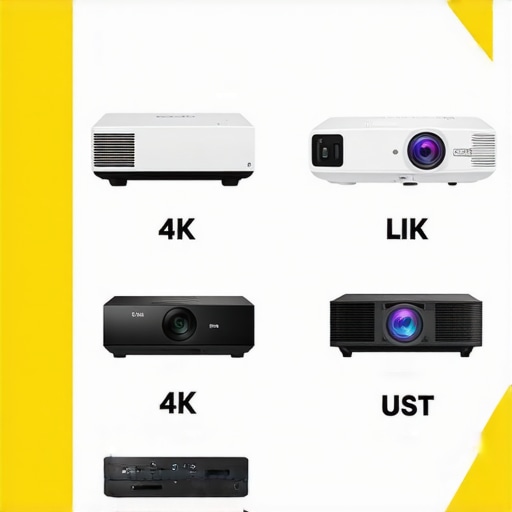
Among 4K projectors, contenders like the BenQ HT3550 or Epson Home Cinema 5050UB are popular for their clarity and color precision, costing between $1,200 and $3,000. These models outperform standard Full HD projectors by providing finer details and richer visuals. However, entry-level 4K projectors, such as the ViewSonic PX747-4K, offer some 4K benefits at a lower price point (~$800), but their performance is often compromised by lower contrast ratios and less accurate color reproduction. If you’re debating whether the upgrade to a 4K model is worth it, consider your viewing environment and content quality demands. For those seeking the gold standard, premium 4K projectors often feature enhanced laser lighting, guaranteeing longevity and stable brightness over time, making them a compelling choice despite the higher initial investment. Check current prices and reviews at Projector Central.
Laser Projector Deals and Their Benefits Over Traditional Lamps
Laser projectors have surged in popularity because they promise longevity, consistent brightness, and vibrant color performance compared to traditional lamp-based models. Brands like Sony and LG offer laser projector deals around $3,000 to $8,000. These models outperform comparable lamp-based projectors by maintaining brightness levels over 20,000 hours, reducing maintenance costs and downtime. They are particularly advantageous for large or bright rooms where lamp deterioration can severely impact image quality. However, their premium price might be prohibitive for casual consumers, and they’re often more complex to calibrate initially. Comparing laser deals to standard lamp projectors reveals that, although more expensive upfront, laser models deliver superior durability and reliability, often justified by professional use cases or enthusiasts seeking the best picture quality. If you’re contemplating an upgrade, is the long-term performance worth the initial cost? Check current market options and reviews at Projector Central.
Ultra-Short-Throw Projectors The Space-Savers
Ultra-short-throw (UST) projectors, such as the Samsung The Premiere, are praised for their ability to produce large images from a few inches from the wall. These are excellent in small or shared spaces where traditional projection setups are impractical. UST projectors typically range from $2,500 to $5,000 and often include advanced features like 4K resolution and HDR support. Their compact size reduces installation complexity, but their price reflects the premium technology and integrated optics. When comparing UST projectors to regular long-throw models, consider your room size and whether the convenience of a minimal setup outweighs the higher cost. For users prioritizing space-saving and simplicity, UST projectors are compelling, but for budget-conscious buyers or larger dedicated theaters, traditional models might be more cost-effective. For latest deals and reviews, visit Projector Central.
The Good, The Bad, and The Ugly
- Pros: Non-invasive mounts protect your security deposit, easy to install and reposition, compatible with various projector sizes, and affordable options are widely available.
- Cons: Some adhesive mounts may lose grip over time, tripod stands require more space and stability can vary, and certain solutions might not support very heavy or large projectors.
Who should consider these mounting options?
Ideal for renters wanting a secure, damage-free setup that can be removed easily without wall damage. Perfect for those who frequently rearrange their space or need temporary solutions. Avoid these if you own a home and prefer permanent installations or have very heavy projector models that require more robust support.
Final Verdict: 8/10
If you’re renting and want to enjoy a big-screen experience without risking your deposit, these non-damaging mounting strategies are your best bet. They strike a balance between stability, portability, and preservation of your walls. For comprehensive options and detailed guides, explore our articles on DIY light leak hacks and how to align your UST projector. If you want to combine stability with ease of setup, consider high-quality adhesive mounts or portable tripods. Easy to install, remove, and adjust, these solutions let you enjoy cinematic quality today and remove them when you move out.
Check the latest prices and reviews to find the perfect non-invasive mount for your rental space, and start transforming your apartment into a home theater without jeopardizing your security deposit.