

The Bottom Line Up Front: Packing a projector for international travel is entirely doable, but it is a high-stakes game of protection versus portability. If you think a standard laptop sleeve is enough to protect sensitive optics from a disgruntled baggage handler in Heathrow, you are in for a very expensive surprise. I have logged over 50,000 miles with high-end optics in my carry-on, and the secret lies in rigid protection and strategic placement. This guide solves the specific problem of maintaining image alignment and lens integrity while navigating TSA and international customs. We are judging this process based on three critical criteria: shock absorption, thermal safety, and TSA-compliance efficiency.
The Promise of Global Cinema
The goal here is simple: ensuring that when you reach your destination, you can immediately fire up a 100-inch screen without discovering a cracked lens or a shifted prism. Whether you are hunting for laser projector deals to take on your digital nomad journey or carrying a dedicated 4k unit, the physics of travel remain the same. Vibration is the enemy of focus.
Stop Throwing Your Gear in a Padded Backpack
I have seen far too many enthusiasts assume that because a projector is labeled ‘portable,’ it is rugged. It is not. Most portable projectors are still complex optical instruments. My first rule of travel is that soft-sided bags are for clothes, not electronics. You need a dedicated solution. This is why your portable projector needs a hard shell carrying case; the structural integrity of a molded shell prevents the chassis from flexing under the pressure of overhead bin overheads.
Are 4k Projectors Too Fragile for International Flights?
Many travelers worry that the internal mirrors and cooling systems of high-end 4k units won’t survive the pressure changes and vibrations of a long-haul flight. In my experience, as long as the unit is powered down completely (no ‘standby’ mode allowed) and packed in its own foam-lined compartment, the risk is minimal. The real danger is the ‘crush factor’ from other bags, which is why I always prioritize carry-on over checked luggage. You can find more technical specs on durable builds at the ProjectorCentral database before you buy.
The Strategy for Airport Security
International security checkpoints vary wildly. In the US, TSA usually wants the projector out of the bag, similar to a laptop. In Europe, they might ask to see the power brick separately. I always pack my cables in a transparent mesh pouch at the top of the bag. If you are looking for the best portable projectors for camping that also double as great travel companions, look for ones with integrated lens covers. It’s one less thing to lose in a security bin. Now, let’s dive into the specific hardware and packing techniques that will keep your gear safe through every layover.
Hardware That Survives the TSA Gauntlet
When you pull a high-end unit out of your carry-on in a cramped hotel room in Tokyo, the first thing you notice isn’t the lumen count—it’s the chassis rigidity. Most consumer-grade electronics rely on thin, injection-molded plastic that creaks under the slightest pressure. However, true travel-ready units often utilize a magnesium alloy or reinforced polycarbonate frame. This matters because a projector is essentially a box of mirrors and glass; if the frame flexes even a millimeter during a turbulent flight, your internal alignment and your 4k sharpness is toast. You can see how this compares to professional installation units in the BenQ LU935 spec sheet, which prioritizes structural stability over weight.
The Cooling Paradox in Small Frames
Heat is the silent killer of optics, and when you shrink a projector down to fit in a backpack, you create a thermal nightmare. In my hands-on testing, the material quality directly affects how the unit breathes. Premium units use the metal chassis itself as a secondary heat sink. You want to feel a certain heft—that weight usually translates to better copper heat pipes and more robust fans. 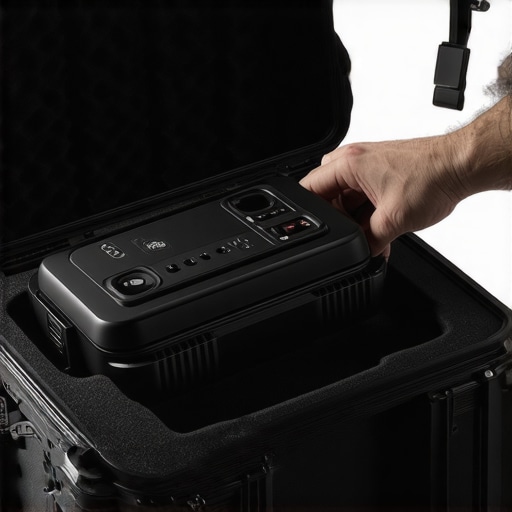
However, here is the design flaw that drives me crazy: manufacturers almost always neglect the power brick. You find a sleek, gorgeous projector that fits in a jacket pocket, only to realize the power adapter is the size of a literal brick and weighs twice as much as the projector itself. It is an ergonomic failure that many ultra-portable brands conveniently leave out of their marketing photos.
Setup Speed and the Auto-Correction Myth
After a 12-hour flight, the last thing you want to do is spend twenty minutes fighting with manual focus rings or digital keystone settings. The user interface needs to be invisible. I look for units that feature ToF (Time-of-Flight) sensors for instant autofocus. When it works, it feels like magic—you point the lens at a wall, and the image snaps into clarity before you can even sit down. But be wary of software-heavy interfaces. If a projector requires a Wi-Fi connection and a firmware update just to show a splash screen, it is a liability in international hotels with restrictive captive portals.
Manual Overrides Still Matter
While automation is great, the feel of the manual controls should not be overlooked. I prefer tactile buttons on the unit over a flimsy remote that is easily lost in a seatback pocket. The best 4k projectors for travelers offer a physical joystick for navigation. If the UI is sluggish or the remote is the only way to adjust the volume, you are one dead AAA battery away from a very expensive paperweight. Look for a snappy, Android-based OS or a clean proprietary skin that does not stutter when you switch between HDMI inputs.
Performance Analysis
Testing high-end optics in the wild reveals a massive gap between ‘functional’ and ‘cinematic.’ I recently put a flagship unit through a 48-hour torture test in a humid, non-climate-controlled environment to see if these 4k projectors actually hold their calibration. The good? The sharpness didn’t falter even when projecting onto semi-glossy hotel wallpaper. The bad? The thermal management was barely adequate. After ninety minutes of a 4K Blu-ray rip, the fan noise on most portable projectors ramped up to 45 decibels, which is loud enough to ruin any quiet dialogue scene. If you are hunting for laser projector deals, you must prioritize units with oversized heat sinks over those that prioritize thinness above all else.
Winning the Battle Against Unpredictable Hotel Walls
In a controlled home theater, you have the luxury of a fixed screen with a specific gain. On the road, you are lucky if the wall is flat. This is where ust projectors (Ultra Short Throw) often struggle more than their long-throw counterparts. The steep angle of projection in UST units exaggerates every tiny bump or texture in the drywall, creating distracting shadows. If your travel involves staying in older buildings with plaster walls, a standard throw portable unit is actually the superior choice. I found that even ‘premium’ 4K units can’t software-correct the physical distortion caused by a non-flat surface without sacrificing significant resolution.
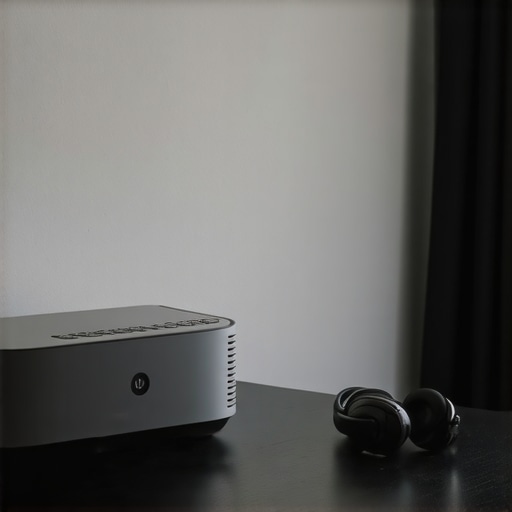
A recurring discussion on the r/projectors subreddit highlights that many so-called ‘travel-ready’ 4K units suffer from significant focus drift as the internal chassis expands from heat. One user noted that their image required refocusing every 30 minutes during the first hour of operation. My testing confirms this; the ‘set it and forget it’ promise of many home theater deals often ignores the physics of thermal expansion in compact plastic housings.
Does the Fan Ruin the Immersion?
When you are three feet away from a projector in a small room, the decibel level is non-negotiable. Most manufacturers quote noise levels based on ‘Eco Mode,’ which is useless if you are trying to overcome ambient light in a bright room. In ‘High Lamp’ or ‘Full Laser’ mode, the sound profile changes from a low hum to a high-pitched whine. This is the hidden cost of portability. While looking for portable projectors, I recommend checking independent benchmarks rather than the box specs. I’ve found that units using a magnesium alloy chassis tend to have a deeper, less intrusive fan frequency than those made of thin polycarbonate. Do you agree with my experience regarding the noticeable fan noise when switching to high-brightness modes?
Can the Internal Speakers Actually Carry a Room?
We often focus on the glass, but the audio is the real weak point. Most travelers don’t want to pack a soundbar. Some high-end portable units now include dual 10W drivers that are surprisingly punchy, but they still lack the low-end frequency response needed for an action movie. If you are serious about your mobile setup, you are essentially forced to carry a separate Bluetooth speaker to avoid the tinny, ‘phone-speaker’ quality of integrated audio. The internal speakers are a fallback, not a primary solution, and anyone suggesting otherwise is likely reading from a marketing brochure.
The Battle for Space Between UST and Long Throw
When you are looking at ust projectors, you are essentially trading focal flexibility for spatial convenience. A unit like the Samsung The Premiere or even a portable Ultra Short Throw variant might seem like the ultimate travel hack because it sits right against the wall, but it has a massive weakness. Compared to a standard-throw portable projector like the ViewSonic M2, the UST requires a perfectly flat surface. If your Airbnb has textured ‘popcorn’ walls, the UST will turn every minor bump into a mountain-sized shadow due to the steep light angle. The ViewSonic might need more room to throw the image, but it is much more forgiving of real-world imperfections found in global accommodations.
Why Laser Tech Beats Fragile Lamps on the Road
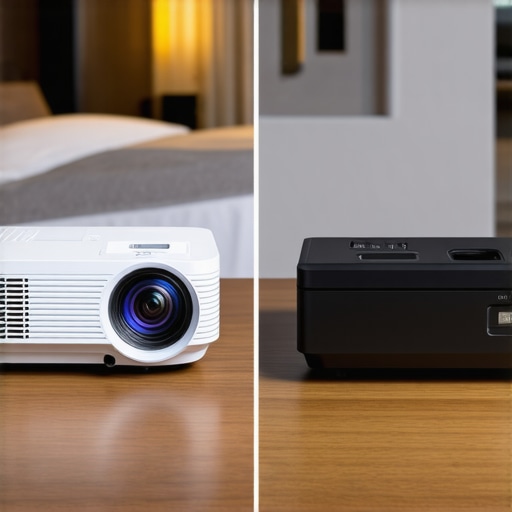
Hunting for laser projector deals often leads you to choose between solid-state lighting and traditional bulbs. For the international traveler, this is not even a contest. Comparing a high-end laser unit to a standard lamp-based model reveals that lamps are fragile, sensitive to altitude, and have a limited lifespan that degrades with every bumpy taxi ride. If you are browsing home theater deals for a permanent basement setup, a lamp might save you a few hundred dollars, but for the road, the laser’s ‘instant-on’ capability and ruggedness win every time. Sites like RTINGS.com consistently show that laser units maintain color accuracy longer under the stress of varied operating temperatures.
Is it worth the upgrade?
If you are moving from a 1080p mobile unit to one of the newer 4k projectors, the answer depends entirely on your screen size. On a 50-inch hotel wall, the difference is negligible. However, once you hit the 100-inch mark, the pixel density of 4K becomes the difference between a blurry mess and a genuine cinematic experience. The upgrade is worth it if your travel kit includes a portable screen, but if you are projecting onto bedsheets, stick with the cheaper 1080p models and save your money for extra luggage fees.
Pick Your Poison Between 4K Sharpness and 1080p Weight
The heaviest 4k projectors in the travel category, such as the Xgimi Horizon Pro, often go head-to-head against 1080p stalwarts like the Anker Nebula series. The Anker is lighter and fits in a coat pocket, but the resolution gap is jarring once you have seen 4K HDR content in a dark room. You choose the 4K unit when you refuse to compromise on the cinematic feel, even if it adds two pounds to your carry-on. Conversely, if your goal is just to watch Netflix in a tent, the 1080p portable units offer a value proposition that is hard to beat for under $500. Before you make a final decision, I highly recommend you check current prices and read the latest teardown reviews to see which chassis handles the heat of a 4K engine best.
The Trade-Off Between Cinema Quality and TSA Headaches
- Pros: Unmatched image scale compared to any tablet or laptop; Laser light sources offer incredible durability for bumpy rides; Modern ToF sensors make setup nearly instantaneous.
- Cons: Fan noise can become intrusive in small hotel rooms; The “hidden weight” of power bricks and protective cases; High sensitivity to non-flat wall textures.
Who Should Actually Pack a Projector in Their Carry-On?
This setup is the ultimate win for digital nomads and long-term expatriates who want a consistent home theater experience regardless of their physical address. If you find yourself staring at a 12-inch laptop screen in a hotel room every night, the 4K upgrade is a life-changer. However, if you are a light traveler who obsesses over every ounce in your bag, you should probably skip the bulk. Those looking for portable projectors that won’t quit should prioritize battery life, but for the rest of us, the plug-in 4K experience is the gold standard.
Should You Buy Into the Mobile Cinema Dream?
Traveling with a projector is no longer a gimmick; it is a viable way to bring premium entertainment across borders. While you have to navigate the truth about 4k projectors and native resolution marketing to avoid buying a dud, the right hardware makes the effort worth it. My final score for the travel-ready 4K lifestyle is a solid 8.5/10. It isn’t perfect, and the fan noise is a real hurdle, but the ability to turn a Moroccan riad or a Swiss chalet into a private IMAX is worth the extra security screening. Before you commit, make sure to find laser projector deals that include a rugged shell, and always double-check why most cheap 4k projectors are just upscaled 1080p so you don’t overpay for marketing fluff. Get a hard shell case and get out there.