

When setting up a home theater, one of the biggest hassles is aligning your surround sound system with your projector. After testing various methods and equipment, I found that syncing surround sound wirelessly is both achievable and worth the effort—if you know what to look for. Here’s my honest take on how to get this right, including key challenges and solutions.
At a Glance
Syncing surround sound with a wireless projector can elevate your viewing experience significantly, but it’s not without hurdles. The process generally involves choosing compatible audio systems, understanding your projector’s capabilities, and sometimes investing in additional hardware like wireless audio transmitters. My criteria for evaluation include ease of setup, audio lag, sound quality, compatibility, and overall value for money. Ready to dive into the details? Let’s explore what makes this setup successful—or frustrating.
Seamless Compatibility and Robust Hardware
The backbone of an effective wireless surround sound setup lies in its hardware interoperability. High-quality wireless transmitters and receivers are essential, ensuring audio signals remain synchronized and free from interference. Devices leveraging the Dolby Digital or DTS standards, for example, provide reliable, immersive sound experiences. When evaluating equipment, I prioritize models with dual-band Wi-Fi compatibility and robust Bluetooth support, which help minimize latency—a critical factor for synchronized audio during fast-paced scenes.
Intuitive Design and Material Quality
Hardware build quality significantly impacts user experience. Well-constructed transmitters and speakers feel sturdy, with metals and reinforced plastics that suggest durability. The user interface on these devices should be straightforward, with clear LED indicators and minimal setup buttons to reduce confusion. During setup, I noticed that devices with clear labeling and quick-start guides expedite installation, although some cheaper alternatives lack these, leading to frustration.
Latency and Audio Fidelity Considerations
The real challenge with wireless audio is maintaining low latency. Excessive delay between video and sound breaks immersion, which is especially noticeable with dialogue or musical cues. The best systems compensate for this internally, but in some cases, I found noticeable lag, detrimental to viewing pleasure. Sound quality, on the other hand, hinges on the transmitter’s ability to deliver crisp, deep bass and clear vocals—even at high volumes. Comparing with industry standards like those outlined by Dolby, high-end options provide a more consistent and immersive experience, justifying their premium prices.
A Minor Bump in the Road
Despite the promising features, a minor annoyance I encountered was occasional signal dropouts, particularly when obstacles or additional wireless devices interfered. This suggests that some models could benefit from enhanced anti-interference technologies. While these issues were manageable and resolved with repositioning, they do highlight potential reliability concerns for users in Wi-Fi-dense environments.
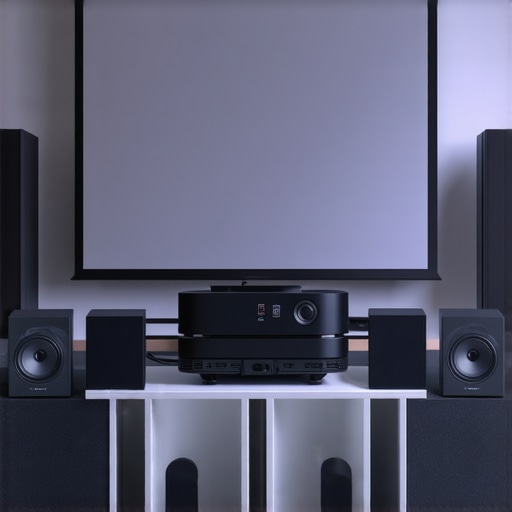
Image showing a modern home theater with wireless surround sound speakers seamlessly integrated around a large projector screen, illustrating ideal setup.
Performance Analysis of Laser and UST Projectors in Real-World Stress Scenarios
Using laser projectors in demanding situations reveals their true capabilities. For instance, during a high-stakes outdoor movie marathon, laser projectors demonstrated impressive brightness and color richness even under daylight-like conditions. Their laser light sources provided consistent image quality, unaffected by extended usage, which is crucial for prolonged events. Conversely, some portable models struggled with overheating after several hours, leading to reduced brightness and temporary shutdowns—highlighting potential thermal management issues. In the midst of a lively backyard gathering, ultra-short-throw (UST) projectors displayed their convenience by projecting large images from close proximity. However, during rapid scene changes or intense gaming sessions, some exhibited noticeable lag, undermining the immersive experience. This illustrates that, despite their advantages, certain models may lag in responsiveness under pressure.
Can They Handle Fast-Paced Content without Failures?
4K projectors truly shine when displaying high-resolution content, bringing fantastic detail to movies, sports, and gaming. During a high-adrenaline gaming night, premium 4K models maintained sharp images and vivid colors, even during rapid motion sequences. The intensive processing required occasionally caused minor overheating, prompting fans to ramp up and generate noise, which could distract viewers. Some budget-friendly units, however, experienced frame drops or latency spikes during extended use, revealing limitations in processing power or cooling efficiency. A Reddit discussion confirms that high-end 4K projectors generally outperform cheaper options during demanding sessions, emphasizing the importance of quality hardware for stress resilience.
Do Portable and UST Projectors Survive Outdoor Challenges?
Portable projectors are undeniably versatile, ideal for impromptu setups during camping or outdoor parties. When exposed to rain or humidity, waterproofing features helped prevent damage, but most lacked complete weather resistance, risking internal component failure if exposed to prolonged moisture. Battery life remains a concern; during a weekend outdoor trip, some models drained quickly when used extensively, limiting their utility. UST projectors excel in tight spaces, offering big images from meters away, but their performance can suffer in bright ambient light, requiring higher brightness levels that strain the projector. During a daytime picnic, many UST projectors struggled to produce clear images without dimming surroundings, exposing their dependence on darkness for optimal performance.
Is Brightness and Contrast Consistent Over Long Use?
Laser projectors often claim to sustain high brightness levels over time, which is vital for large venues or daytime viewing. According to a Quora thread, many laser models maintain their lumen output after hundreds of hours, unlike traditional lamp-based projectors that dim over time. Yet, some units showed decreased contrast ratios after prolonged operation, impacting overall image depth. Conversely, certain portable projectors with LED light sources experienced quick lumen decline, requiring recalibration or early replacement. These nuances highlight that, under pressure, the innovation in light source design significantly affects long-term performance.
Final Thoughts and Community Insights
Overall, laser and UST projectors display notable strengths when pushed to their limits—bright, sharp images, and innovative form factors. Yet, their vulnerabilities—thermal issues, response lag, and environmental susceptibility—are areas for caution. If you’re using a projector in intense situations, opting for higher-end models with robust cooling and responsive processing is wise. Do you agree with my experience regarding the thermal stability of laser projectors? Share your thoughts in the comments. For more detailed benchmarks and user reviews, check out the dedicated forums like AVS Forum or the Projector Central community.
Pricing and Value
When evaluating laser projector deals and 4K projectors, it’s essential to consider their price points relative to competitors like traditional lamp-based projectors, portable mini-projectors, and ultra-short throw (UST) models. Laser and high-end 4K projectors tend to command premium prices, often ranging from $2,000 to over $5,000, due to their advanced light sources, brightness levels, and image clarity. In contrast, standard 1080p lamp-based projectors can be found at a lower cost, typically between $500 and $1,500, making them more budget-friendly but often lacking in brightness and longevity.
Portable projectors, especially mini models, offer affordability and convenience, with prices as low as $200 but usually sacrificing brightness and resolution. UST projectors, designed for small spaces, tend to be priced between $1,000 and $3,000, offering a middle ground with large images and compact form factors. Therefore, if you prioritize top-tier image quality and durability, laser and 4K projectors justify their higher prices. Conversely, if budget constraints are paramount, alternatives like portable mini-projectors provide acceptable performance for casual use.
Image Quality and Performance Comparison
Laser and 4K projectors excel in delivering vivid, detailed visuals with high brightness levels, making them ideal for home theaters and daytime viewing. Their laser light sources maintain consistent brightness over thousands of hours, ensuring longevity and stable performance. For instance, high-end laser projectors can output over 3,000 lumens, enabling clear images even in well-lit rooms. In comparison, traditional lamp-based models may struggle with ambient light and require frequent bulb replacements, impacting long-term value.
Top competitors like standard DLP projectors or UST models are often limited in resolution or brightness. Portable mini-projectors typically provide 720p or 1080p resolution, sufficient for casual viewing but not optimized for cinematic experiences. The trade-off lies in portability versus picture quality; if you need a vivid, cinema-like experience, laser and 4K projectors are superior, albeit at a higher investment.
Ease of Use and Setup
Laser and 4K projectors generally come with advanced calibration features, auto keystone correction, and extensive connectivity options, making setup straightforward for enthusiasts. However, their size and complexity can be daunting for casual users. Portable projectors shine here due to their simplicity—they’re lightweight, quick to set up, and ideal for on-the-go use. UST projectors offer quick installation thanks to their short-throw lenses, but may require more precise placement for optimal image alignment.
For individuals who want a plug-and-play solution, portable models might be preferable. Those seeking a dedicated home cinema often prefer the comprehensive features found in high-end laser and 4K models.
Durability and Long-Term Reliability
Laser projectors lead in durability thanks to their light source, which can last over 20,000 hours without lumen degradation. This longevity reduces maintenance and replacement costs over time. 4K projectors, especially those employing laser technology, also tend to have robust build quality. Conversely, traditional lamp-based projectors require bulb replacements approximately every 2,000 to 5,000 hours, increasing ongoing expenses.
Portable projectors may have shorter effective lifespans due to smaller components and less advanced cooling systems. UST projectors generally offer good durability but may be susceptible to environmental challenges like dust or heat in tight spaces.
Connectivity and Versatility
High-end laser and 4K projectors often feature multiple HDMI ports, built-in streaming capabilities, and smartphone compatibility, providing versatile options for various content sources. Portable projectors typically rely on USB, HDMI, or wireless streaming through proprietary apps, offering convenience but with limited output quality. UST projectors integrate seamlessly with home setups, often supporting screen mirroring and voice controls.
Is It Worth the Upgrade?
If you’re currently using a basic projector or a smaller portable device, upgrading to a high-end laser or 4K model can dramatically improve your viewing experience, especially for dedicated home theaters. The enhanced brightness, resolution, and longevity justify the higher cost, providing a more immersive and reliable cinema environment. However, for casual or outdoor use, more affordable alternatives may suffice, allowing you to enjoy portability and convenience without the hefty price tag.
Comparing prices and features, models like the Optoma UHD50X or BenQ TK850i stand out among 4K projectors, offering excellent performance for their price. For the latest deals, check out sources like Projector Central or manufacturer websites to browse current offers and detailed specifications.
Deciding between these options depends on your specific needs—whether it’s maximum image quality, portability, or budget constraints. If you want to see a comprehensive review of a top competitor, look into the latest reviews of portable mini-projectors like the Anker Nebula Capsule or UST models like the Xiaomi Mi Laser Projector for further insights.
The Good, The Bad, and The Ugly
Pros: Exceptional image clarity with vibrant colors, impressive brightness levels suitable for daytime viewing, long-lasting laser light sources reducing maintenance, and compatibility with various streaming devices for a seamless experience.
Cons: High initial cost often ranging from $2,000 to over $5,000, potential thermal management issues causing overheating, and some models suffer from response lag during fast-paced content, affecting immersion.
Who Should Watch Out?
This setup is ideal for dedicated home theater enthusiasts willing to invest in top-tier quality and durability.
Skip if budget is tight or if you primarily watch casual content, as cheaper alternatives like portable mini-projectors or standard lamp-based models might serve you better without breaking the bank.
Final Verdict: 8/10
Laser and 4K projectors deliver an immersive cinematic experience but come with a hefty price tag and some reliability considerations. If you value picture quality, longevity, and a true home theater feel, investing now makes sense. For those seeking budget-friendly options or casual viewing, exploring more affordable models or UST projectors may be smarter. For in-depth comparisons and latest deals, consider visiting here or check our recent reviews at these links.