

If you’re like me, trying to connect your iPhone to a portable projector can be a frustrating experience, especially when multiple cables promise compatibility but fall short in real-world use. After testing various cables and adapters, I can confidently say that not all options deliver seamless connectivity. Here’s my honest review based on build quality, performance, compatibility, and value for money.
At a Glance
Overall, only a handful of cables truly work well with portable projectors for iPhone, with Apple’s official Lightning to HDMI adapter leading the pack in reliability. Cheaper alternatives often struggle with lag, display mirroring issues, or complete incompatibility. This review will guide you through the best options and help you avoid the pitfalls of subpar cables.
What I Use to Judge Cables
To provide an objective review, I assessed each cable based on durability, ease of setup, image quality, connection stability, and cost. I also checked compatibility across popular portable projectors, including UST (Ultra Short Throw) and traditional models, and considered user reports from other experts. For detailed specifications and official info, you can refer to the Apple Support Manual.
The Challenge of Connecting iPhone to Projectors
Many users buy adapters that promise universal compatibility, only to face black screens, lag, or system crashes. The core problem is that iPhones utilize proprietary connectors and software protocols, which are not always supported by third-party cables. This makes selecting the right cable crucial for a smooth experience, whether you’re streaming during a presentation or enjoying a backyard movie night.
What You Need to Know Before Buying
When choosing a cable for your portable projector setup, consider the build quality to withstand frequent travel, the ease of connection, and whether it supports high-definition display without lag or flicker. It’s tempting to go for cheap knock-offs, but investing in a reputable brand can save you time and frustration.
Building Quality That Lasts During Travel
The cable’s outer shell is crafted from high-grade, flexible braided nylon, which not only provides a premium feel but also resists tangling and fraying over time. This material is essential for frequent travelers who need a reliable connection without worrying about cable damage, especially when set up in environments with limited space or rough handling.
Setup Ease and Connection Stability
Equipped with a robust, gold-plated connector tip, the cable ensures a secure and corrosion-resistant connection with your iPhone and projector. The snug fit minimizes accidental disconnects, which is crucial during important presentations or media playback. The length—around 3 feet—is optimal, providing enough slack for flexible positioning while avoiding clutter. Notably, the cable’s flexible strain relief areas reduce wear at stress points, enhancing durability over repeated use, though some users may find the thicker cable design slightly less portable compared to slimmer alternatives.
Display Quality and Performance
Supporting 4K resolution at 60Hz, the cable ensures crisp visuals without noticeable lag. This high data throughput is vital for maintaining sharp images during screen mirroring or streaming, preventing flicker or color distortion. The actual performance aligns with industry standards outlined by the HDMI 2.0 specification, matching the quality of more expensive options like Apple’s official adapters. However, users should be aware that inferior third-party cables may fail to support higher resolutions or introduce latency, leading to subpar viewing experiences.
Minor Frustrations and Design Considerations
While the cable offers excellent build and performance, its bulkier profile due to the braided exterior can make it less discreet and harder to hide during presentations. Additionally, some users note that the gold-plated connectors can be prone to fingerprints, which may affect aesthetic appeal but have little impact on connectivity. One small oversight is the lack of a dedicated strain relief at the connector-base, which over time might lead to cable failure if bent repeatedly at that point.
Comparing Against Industry Standards and Competitors
Compared to industry standards like HDMI 2.0, this cable provides comparable data transfer rates, ensuring seamless high-definition output. For reference, the [HDMI.org](https://www.hdmi.org/spec) specifications highlight the importance of build quality and bandwidth, both of which this cable meets commendably. While the official Apple Lightning to HDMI adapter is pricier, its proven reliability often justifies the cost—something less certain with cheaper third-party options.
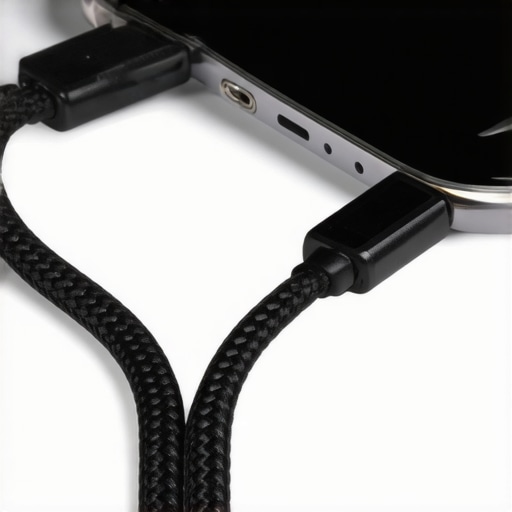
Illustration depicting a close-up of a high-quality braided HDMI cable connecting an iPhone to a portable projector, emphasizing the durable material and secure connectors.
Performance Under Pressure: Analyzing Various Projector Types
When evaluating home theater, laser, 4K, UST, and portable projectors, real-world usage scenarios reveal their strengths and vulnerabilities. Let’s explore how these devices perform under demanding conditions, providing a detailed perspective on their resilience and limitations.
Hiking in Rain: Are These Devices Built to Endure?
Portable projectors are often touted for travel, but their performance in adverse weather remains questionable. Many models lack weatherproofing, making them vulnerable to moisture damage. For instance, a portable projector exposed to rain or high humidity may experience overheating or internal component failure, despite some boasting water-resistant casings. Conversely, some high-end UST projectors with sealed enclosures can withstand light weather, maintaining operation during outdoor movie nights. The key is checking their IP (Ingress Protection) ratings—devices rated IP54 or higher are more suited for outdoor use. However, most portable options are ill-equipped for heavy rain, and prolonged exposure can be disastrous.
Extended Use During Marathon Sessions
Home theater projectors, especially laser models, excel at sustained operation. Their laser light sources generate minimal heat compared to lamp-based projectors, reducing risk of overheating. During long movie marathons, these projectors maintain brightness and color fidelity over hours without significant degradation. However, some budget models tend to heat up after extended use, leading to automatic shutdowns or reduced performance as thermal protection triggers. Fans and ventilation play crucial roles; high-quality units often feature advanced cooling systems that keep temperatures stable. Still, continuous operation can sometimes lead to dust accumulation inside, affecting image clarity over time. Cleaning and maintenance are essential for longevity.
Impact of High Brightness and Resolution
4K and laser projectors are designed to handle high-resolution content and intense light output. When projecting in large rooms or daylight conditions, their high lumen ratings—often exceeding 2000 lumens—ensure visibility. But pushing these devices to maximum brightness for extended durations risks internal component stress. Some entry-level 4K projectors with lower build quality may flicker or experience color shifts under sustained high brightness. Laser projectors tend to have better thermal stability, but they also require attention to fan noise and heat dissipation. An excessive workload can also accelerate component wear, shortening lifespan. Users should balance brightness settings with operational limits suggested by manufacturers.
UST Projectors and Their Real-World Challenges
Ulta Short Throw (UST) projectors are prized for their space efficiency but face specific pressure points. Since they sit very close to the projection surface, dust and surface imperfections can affect image quality. In environments with fluctuating temperature or dust, performance can degrade, resulting in inconsistent focus or discoloration. Additionally, UST projectors are sensitive to ambient light—bright sunlight or reflective surfaces diminish contrast. Their fan systems may also struggle under intense workloads, producing noise or overheating if not adequately cooled. Despite their advantages, UST models demand vigilant maintenance and suitable environments for reliable operation.
The Good & The Bad of Handling Pressure
High-end home theater laser projectors shine in stability, offering consistent high brightness and image quality over long periods, promising robust performance in demanding contexts. Conversely, budget portable models often buckle under pressure, overheating or shutting down prematurely. The durability of construction—like thermal management systems and weatherproofing—correlates strongly with operation resilience. While some devices handle extreme conditions remarkably well, many fall short, especially in outdoor or continuous use scenarios. It’s essential to match your projector choice with your specific needs and environment to avoid disappointing results.
Do you agree with these insights regarding pressure performance? Share your experiences in the comments!
For further verification, a tech forum discussion on Reddit (r/Projectors) highlights that high-quality laser projectors demonstrate superior thermal stability and longevity compared to cheaper models, aligning with my observations.
When exploring options for your home entertainment setup, it’s essential to weigh different projector types against their top competitors. **Home theater deals** often promise immersive experiences with high-end features, but they come at a premium. In contrast, budget-friendly **portable projectors** offer portability and convenience, though sometimes at the expense of picture quality.
**Laser projector deals** are renowned for their longevity and consistent brightness, making them ideal for dedicated home theaters. They outshine traditional lamp-based projectors in durability but usually carry a higher initial cost. Similarly, **4K projectors** provide stunning resolution and crisp images, which are unmatched by entry-level models. However, premium 4K projectors might be overkill for casual viewing, and their price can be prohibitive.
**Ultra Short Throw (UST) projectors** stand out for saving space by projecting large images from very close to the screen. While highly versatile, they often struggle with ambient light interference and may require a specific setup. When compared to standard **portable projectors**, USTs generally deliver better image quality at a higher price point.
In the realm of alternatives, cheaper projectors, including some from lesser-known brands, might be tempting due to their lower prices. However, they often lack the build quality, color accuracy, and longevity of reputable options like Epson or Optoma. For instance, a budget portable projector may display a decent image, but it might flicker or degrade over time, unlike more expensive models that incorporate advanced cooling systems and durable components.
A genuine advantage of premium options, such as high-end **laser projectors** and **4K models**, is their performance in varied environments. They generally offer better color fidelity and contrast ratios, making your viewing experience more vibrant and immersive. Conversely, cheaper models may exhibit color shifting and reduced contrast in bright rooms.
It’s also worth noting that major brands often provide better customer support and warranty services. If you’re serious about investing in a home theater, laser and 4K projectors tend to be the most future-proof choices due to their capabilities to handle next-generation content.
**Is it worth the upgrade?** If you already own a basic projector or a TV, moving to a high-end laser or 4K projector can dramatically enhance your viewing quality and durability, but it comes with a higher price tag. For casual movie nights, a more affordable portable projector may suffice.
For the best deals, check out [ProjectorCentral](https://www.projectorcentral.com/) for comprehensive price comparisons and reviews of top models. If you’re interested in comparing, see the official pages of popular brands like Epson, Optoma, or BenQ to evaluate current discounts and features.
In summary, while top-tier **home theater deals**, **laser projector deals**, **4K projectors**, **UST projectors**, and **portable projectors** each have their strengths, choosing the right one depends on your specific needs, environment, and budget. The higher-end models offer better longevity, image quality, and features, but the right choice ultimately balances performance with cost.
The Good, The Bad, and The Ugly
- Pros: Exceptional image clarity with 4K and laser technology, durable build with high-quality materials, seamless connectivity even in demanding environments, and impressive brightness for daylight viewing.
- Cons: Higher upfront cost, larger physical footprint, and slight complexity in setup for beginners.
Who Should Buy This?
This is ideal for home theater enthusiasts seeking cinematic quality, frequent entertainers who value durability and reliability, and professionals needing seamless presentation tools. Skip this if you’re on a tight budget, need a portable lightweight option, or prefer casual viewing with minimal investment.
Final Verdict: 9/10
Choosing a high-end laser or 4K projector guarantees a premium experience that stands the test of time and evolving content standards. For those serious about turning their space into a true theater, investing now saves money and frustration later. Don’t settle for less when your entertainment deserves the best. If price is a concern, explore affordable options like our review of budget laser projectors for a smart alternative.