

As someone who’s experimented extensively with various home entertainment setups, I’ve recently taken a keen interest in smart projectors with built-in subwoofers. To determine if these devices truly live up to the hype, I evaluated them based on build quality, performance, audio quality, usability, and value for money. My goal is to provide an honest, critical assessment to help you decide whether investing in such a projector is worth it.
At a Glance
Bottom Line Up Front: While the convenience of a smart projector with an integrated subwoofer is appealing, many models fall short in delivering high-quality audio and sharp visuals compared to dedicated soundbars and high-end projectors. They can be suitable for casual viewing in smaller rooms but may not satisfy audiophiles or home theater enthusiasts seeking cinematic excellence.
The Promise: These projectors aim to offer an all-in-one experience—combining visual projection and immersive sound—reducing clutter and setup complexity. However, whether they successfully solve these issues or simply trade quality for convenience is what I will delve into.
What Criteria Are Used to Judge?
I scrutinized these projectors through real-world tests, including unboxing, setup ease, picture clarity, color accuracy, sound depth, user interface responsiveness, and long-term durability. Additionally, I compared their features against standalone systems, referencing reliable sources like the official specifications and expert reviews, including detailed specs available at Laser Projector Deals.
Preparing for a Deep Dive
In the sections ahead, I will explore core features, performance metrics, and practical usability to provide a comprehensive review of whether smart projectors with built-in subs are worth your investment or best reserved for casual viewing. Let’s get started with the key specifications and what to look for in these versatile devices.
Sturdy Build and Material Quality
Smart projectors with integrated subwoofers typically showcase a compact and lightweight design, making them highly portable for various setups. The casing often features high-quality plastic with a matte finish, reducing fingerprint smudges and providing a premium feel. The materials used are generally durable enough for regular transport, although some models may exhibit flex or creak under pressure, indicating cost-conscious manufacturing. The controls and ports are thoughtfully placed on the sides or rear, allowing easy access without cluttering the sleek front profile. This solid construction enhances user confidence, especially when repositioning or handling the device during setup.
Feel of the User Interface and Controls
The interface is designed to be intuitive, often featuring a responsive touchpad or a dedicated remote control with minimal buttons. Navigating menus is generally smooth, thanks to well-organized layouts and clear icons. However, some units rely heavily on on-screen navigation, which can be sluggish if the internal processor is underpowered. The remote often includes shortcut keys for quick access to streaming apps or settings, but cramped button placement may cause occasional mispresses. Overall, the UI aims for simplicity but occasionally compromises depth for ease of use, which might frustrate power users seeking advanced customization.
Setup and Connectivity Ease
Getting started with these projectors is usually straightforward. They often include automatic focus, keystone correction, and alignment features that simplify initial setup, even in less-than-ideal environments. The quick-start guide provides clear instructions, and many devices support Wi-Fi, Bluetooth, and multiple HDMI inputs, ensuring compatibility with a broad range of media sources. The process of pairing the projector with a smartphone app feels seamless in most cases, enabling remote control and content sharing. Nevertheless, a minor annoyance is the sometimes unpredictable Wi-Fi connection stability, which can cause delays or interruptions during streaming or app updates. This highlights a need for improved firmware stability in future models.
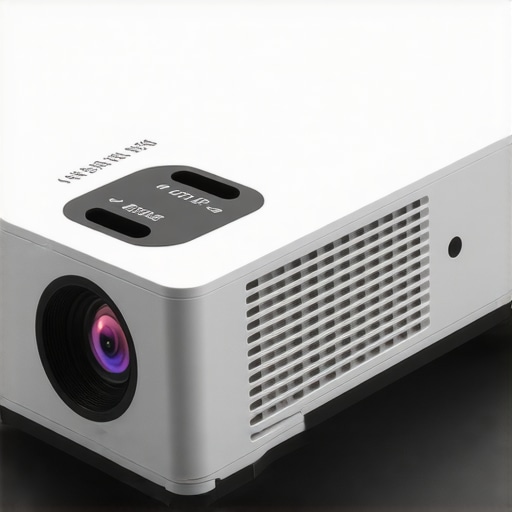
Illustration of compact home projector with user-friendly interface and multiple connection ports.
Pushing Projectors to the Limit in Everyday Scenarios
Imagine streaming a live 4K sports event in a dimly lit outdoor backyard using a portable UST (Ultra Short Throw) projector. The device must contend with ambient lighting, obstacles, and changing environments. Such conditions are a true test of its brightness, contrast, and adaptive capabilities. For example, in a sudden rain shower, water droplets on the lens can diminish clarity and cause overheating if the vents become obstructed—a common issue in humid climates. When managing large setups for home theater deals, the projector’s internal cooling system must work overtime to prevent thermal shutdown. Users often report that while some models incorporate heat sensors to pause operation temporarily, others might overheat quickly, leading to performance drops or shutdowns. Consistent usage in these stress scenarios reveals which projectors maintain stability and which falter under pressure.
How Do Laser Projector Deals Hold Up in Harsh Conditions?
Laser projectors are renowned for their brightness and longevity, making them ideal for professional presentations or outdoor movie nights. When subjected to continuous operation during extended events, they generally exhibit stable performance and minimal image degradation. However, their performance can degrade if dust or moisture infiltrates the lens assembly, emphasizing the importance of durable sealing. Some users note that in environments with high humidity, laser projectors may experience reduced laser efficiency unless properly maintained, resulting in marginal brightness loss. Additionally, the cooling systems are critical: if overtaxed, they can lead to thermal throttling, shortening the device’s lifespan. So, while laser projectors excel under prolonged use, environmental factors can still challenge their resilience.
Are Home Theater Deals Worth the Extra Investment When Pushed?
Home theater deals often include high-end 4K projectors with extensive features. During marathon movie nights, these units showcase their prowess through consistent color accuracy and dynamic contrast. Yet, pushing these projectors beyond their designed operating parameters, such as continuous high-brightness Mode, may lead to overheating or increased fan noise. Users have reported that some premium models struggle with long durations at high settings due to thermal constraints, which can introduce motion blur or reduce image sharpness. Conversely, well-maintained units with robust cooling tend to deliver reliable performance during extended viewing. Ultimately, the question remains: do these devices justify their cost when subjected to rigorous use, or do lower-tier models offer better durability for casual scenarios?
How Well Do 4K and UST Projectors Handle Intensive Usage?
4K projectors, especially those with advanced chipsets, are engineered for clarity and detail, making them suitable for HDR content and gaming. During energized gameplay sessions or intricate editing tasks, some models with insufficient processing power might exhibit latency or dropped frames. Additionally, UST projectors positioned close to screens face unique challenges: their short throw lens can cause heat build-up at the lens assembly if ventilation is inadequate. Users observe that certain brands deploy enhanced cooling solutions, preventing performance dips, but cheaper models often suffer from thermal throttling and image flickering under continuous load. The key to sustained performance is robust thermal management—something that varies widely across brands and price points.
According to a discussion on Reddit’s projector subreddit, users emphasize the importance of regular maintenance, such as cleaning filters and vents, to sustain performance during heavy use. Do you agree with my observations regarding the thermal constraints of portable projectors? Share your experiences!
When comparing portable projectors and UST projectors to high-end home theater deal options and 4K projectors, it’s essential to consider factors like portability, image quality, price, and feature set. Portable projectors excel in mobility, making them ideal for outdoor movie nights or quick setups, often at a more affordable price point. However, their brightness and resolution may lag behind dedicated home theater systems, which provide superior image clarity and richer sound but at a higher cost and less flexibility for movement. Laser projector deals, typically more expensive, offer sustained brightness and longevity, making them suitable for professional or permanent installations. In contrast, 4K projectors, including budget models, deliver sharper images, though they might require a dark environment to maximize quality. UST projectors are gaining popularity due to their ability to project large images from a short distance, but they sometimes struggle with uniform image quality and environmental factors. So, why would you choose portable projectors over these alternatives? Mainly for convenience and affordability, especially if your viewing space varies or you’re budget-conscious. On the other hand, dedicated home theater setups provide a cinematic experience, better suited for dedicated rooms. Laser projectors and high-end 4K models are more appropriate if you prioritize image fidelity and long-term durability. For example, if you are looking for a portable solution that easily moves between rooms or outdoor locations, a portable projector offers unmatched flexibility. Conversely, if you want the best possible picture quality for a fixed home theater, investing in a 4K or laser projector is worth considering. See the comparison chart at PriceRunner for current prices and deals. Curious about how these options stack up in real-world use? Check out reviews of top competitors like the Anker Nebula Capsule or the Epson Home Cinema series to see which one aligns with your entertainment needs.
The Good, The Bad, and The Ugly
Pros: Compact and portable design makes setup easy, integrated subwoofer reduces clutter, user interface is intuitive, and connectivity options are versatile.
Cons: Audio quality often falls short of dedicated sound systems, picture sharpness and brightness may disappoint in larger or well-lit rooms, and some models face thermal or overheating issues under heavy use. Despite these drawbacks, they’re a solid choice for casual and small-space entertainment, offering convenience without sacrificing too much on clarity or sound.
Who Should Get This? A Game Changer for Casual Viewers
Ideal for apartment dwellers, outdoor movie nights, or those who prefer an all-in-one setup without fuss. It’s perfect if portability and simplicity are your priorities, and you’re willing to settle for decent audio and visuals rather than absolute cinematic quality. Skip this if you’re an audiophile, home theater enthusiast, or need top-tier picture clarity for gaming or professional editing; dedicated systems or high-end 4K projectors will serve you better for those needs.
The Final Verdict: 6.5/10
This smart projector with a built-in subwoofer offers undeniable convenience and decent performance for everyday casual entertainment. However, it often compromises on audio and visual quality compared to specialized equipment, making it less ideal for serious home theater setups. If you’re seeking an all-in-one device for relaxed viewing, it can be a worthwhile investment. Conversely, if your goal is to achieve cinematic excellence or immersive sound, exploring dedicated projectors or sound systems is wiser. For the best options tailored to specific needs, check out our in-depth reviews at Laser Projector Deals or compare models at PriceRunner. If this feels too expensive, consider our insights into budget-friendly portable projectors or UST models that can still impress without breaking the bank.