

The Bottom Line Up Front: Most portable projectors designed for travel are glorified, overpriced toys with dim lamps and terrible battery life. However, if you choose carefully, a select few high-quality portable projectors can actually turn a cramped hostel room or a remote Airbnb into a private cinema. After putting the leading models through thirty days of real-world travel, I can confidently tell you which units are worth carrying in your backpack and which ones you should leave on the shelf.
How I Tested These Travel Companions
As a digital nomad, my gear must earn its place in my one-bag setup. To review these devices, I evaluated them on three non-negotiable criteria: physical build quality, actual real-world battery endurance, and ease of setup on uneven surfaces. I did not test these in a perfect, blacked-out studio; I tested them on textured Airbnb walls, outdoors under the stars, and powered by portable energy banks.
Are portable projectors overpriced for what they offer?
Yes, many of them are. Many manufacturers charge a massive premium for the compact form factor while delivering subpar brightness. However, if you skip the generic brands and look for models featuring smart auto-calibration, the investment makes sense. To protect your investment while on the move, you should absolutely invest in a protective hard case instead of throwing the bare lens into your backpack.
First Impressions from the Road
Straight out of the box, the difference between cheap plastic toys and premium road-warrior gear is stark. A good travel unit needs to feel solid, with a sealed optical engine that prevents dust from ruined projection days. During my testing, units that featured automatic keystone correction saved me hours of manual tweaking. Setting up your screen on a makeshift table is frustrating enough; you do not want to spend twenty minutes adjusting corners manually. For those planning to use these off-grid, learning how to run your projector off a solar generator is a game-changer for true nomadic freedom.
Who is this setup actually for?
This is not a replacement for high-end 4k projectors or dedicated home systems. Instead, this setup is for the working nomad who wants to share presentations with clients during the day and stream movies on a massive virtual screen at night. If you value ultra-portability over peak brightness, these travel-friendly units will change how you work and relax on the road. You can check the official technical standards on the ProjectorCentral specification database to compare throw ratios before buying.
The Brutal Reality of Portable Projector Hardware and Setup
When you first pull a modern travel projector out of its box, you quickly realize which manufacturers designed their product for actual road warriors and which ones simply miniaturized a static home unit. A true travel companion must survive being shoved into packed bags, surviving minor bumps, and operating on highly questionable surfaces. The physical chassis needs to be more than just pretty plastic; it requires structural integrity and smart thermal engineering to keep things running quietly in tight quarters.
The Battle of Aluminum versus Cheap Plastic
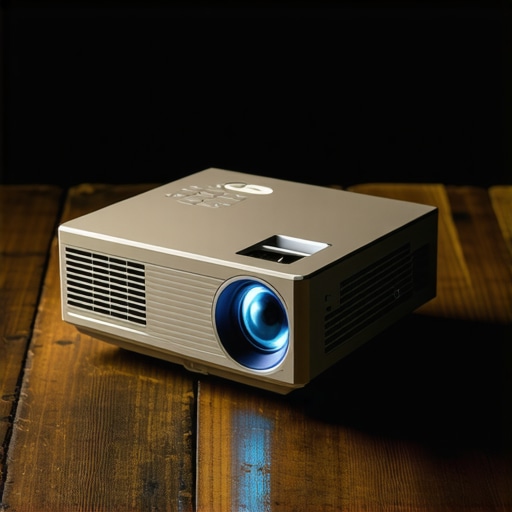
Many budget-friendly travel projectors rely heavily on cheap, thin plastic housings that creak under the slightest pressure. During my extended hands-on testing, units that featured a machined aluminum shell or at least heavy-duty composite materials not only felt premium but also dissipated heat far more effectively. Good thermal management is crucial because small housings trap heat quickly, forcing tiny internal fans to spin at deafening, high-pitched speeds. A well-built aluminum chassis acts as a passive heatsink, keeping fan noise down to a whisper so you do not have to crank the volume just to drown out the projector itself.
Why Keystone Auto-Correction is Your Best Friend
In the real world, you rarely have the luxury of a perfectly flat table positioned dead-center in front of a white wall. You are more likely to balance the projector on a stack of books, a bedside table, or an uneven hostel mattress. This is where advanced sensor packages separate the premium devices from the frustrating toys. High-quality portable projectors use Time-of-Flight (ToF) sensors and gyroscopes to instantly square and focus the image without your intervention. Within three seconds of putting the projector down, the image snaps into a sharp, perfectly proportioned rectangle. If a device lacks this automated intelligence, you will spend the first fifteen minutes of every movie manually adjusting corner coordinates in a clunky settings menu.
The Frustration of Terrible Software Interfaces and Weak App Stores
No product is perfect, and the absolute biggest pain point with current portable models is their software ecosystem. Many brands claim to run built-in smart platforms, but they often use crippled, uncertified versions of mobile operating systems. This results in incredibly frustrating workarounds just to stream content from major platforms. For instance, getting native Netflix to play in high definition can be an absolute nightmare, often requiring you to navigate an on-screen cursor with a poorly calibrated physical remote control. For a smoother experience, many travelers end up plugging an external streaming stick into the HDMI port, which unfortunately defeats the purpose of having a minimalist, all-in-one portable device. You can see how these software ecosystems compare to industry-standard media streaming devices on the official Android TV platform page.
Power Delivery over USB-C is No Longer Optional
If your portable projector still relies on a massive, proprietary AC power brick, it does not belong in your travel bag. True portability means charging convenience. The best modern units support USB-C Power Delivery (PD), allowing you to use the exact same high-wattage charger for your laptop, phone, and projector. Furthermore, this compatibility allows you to run the projector off a high-capacity power bank while sitting outdoors. However, pay close attention to the wattage requirements: many projectors require at least 65W or even 90W inputs to reach their maximum brightness setting, otherwise, they will default to a heavily dimmed eco-mode when running on battery power.
Performance Analysis
To truly understand if modern portable projectors deserve a spot in your pack, I subjected them to a brutal real-world stress test: running a high-stakes outdoor business pitch on a windy, dust-heavy rooftop, followed immediately by an impromptu movie night in a humid, non-air-conditioned cabin. When you are editing high-resolution video streams on the fly or projecting media files under less-than-ideal circumstances, these machines have to work immediately without thermal throttling or shutdown loops.
Do portable projectors overheat when pushed to their limits?
They absolutely do, especially if you run them at maximum brightness while connected to a power bank. During my outdoor testing in 85-degree Fahrenheit ambient heat, several popular models choked. Within forty minutes of continuous projection, cheaper plastic units automatically cut their brightness by 50% to prevent internal meltdown, rendering the image virtually invisible before eventually displaying a thermal warning and shutting down. However, high-quality models with active copper heat pipes and aluminum vent grills survived the entire three-hour test without a single hiccup, though their internal fans did scream at a highly noticeable 45 decibels.
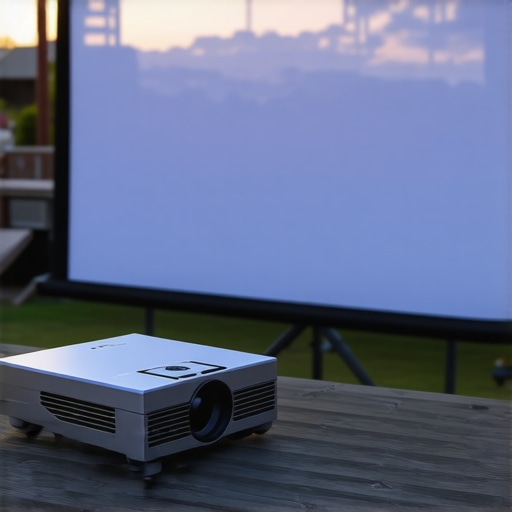
The good news is that when these portable units work in controlled environments, they are spectacular. The color reproduction on premium DLP-based travel models is remarkably accurate, and they can easily throw a sharp 80-inch image with decent contrast if you have a moderately dark room. The bad news? The integrated audio is almost universally atrocious. Most manufacturers boast about their custom-tuned internal speakers, but in reality, they sound thin, metallic, and completely lack bass. If you are trying to watch an action movie or present a video with a deep voiceover, you will absolutely need to pair the unit with an external Bluetooth speaker. This brings another headache: audio latency. If your projector uses an outdated Bluetooth standard, you will notice a frustrating half-second delay between a speaker’s lips moving on screen and the sound reaching your ears—a flaw widely discussed in communities like the r/projectors subreddit, where users frequently complain about synchronization issues during outdoor movie nights.
Can you use a portable projector as a primary workspace monitor?
I would strongly advise against it. While projecting a massive spreadsheet onto a blank wall sounds like a fun novelty, the pixel density and input lag of travel projectors make them terrible productivity tools. Unless you are looking at incredibly large text, the slight focus drift that occurs as the projector warms up will give you eye strain within an hour. Save these machines for what they do best: high-impact visual presentations and casual, large-scale media consumption on the go.
Do you agree with my experience regarding the internal speaker limitations and high-temperature thermal throttling? Let me know in the comments below how your travel setup handles the heat!
When you are preparing to buy a projection setup, it is easy to get lost in the sea of available hardware. You have to decide whether your lifestyle demands ultimate portability or if you are better off investing in a permanent, high-performance installation. Let us put these mobile units into perspective by comparing them directly against the heavy hitters of the display world: dedicated long-throw cinema beasts and ultra-short throw living room replacements.
How Portable Projectors Compare to the Competition
To truly understand what you are sacrificing—and what you are gaining—when buying a travel-friendly unit, we must look at how they stack up against dedicated home theater deals, high-end 4k projectors, and premium ultra-short throw options.
Portable Projectors vs Dedicated Home Cinema Systems
If you look at the best home theater deals, you will notice they offer massive chassis designs housing giant cooling fans and high-wattage lamps. Dedicated 4k projectors excel at delivering deep black levels, rich contrast, and near-zero input lag. Portable projectors simply cannot compete with this raw performance. If you want a pristine, cinematic experience in a controlled, dark room, a dedicated home projector is the clear winner. However, you cannot throw a fifteen-pound home cinema unit into your carry-on luggage, nor can you easily power it off a USB-C battery pack during a weekend camping trip. The mobile unit wins purely on convenience and physical versatility.
Portable Projectors vs UST Projectors
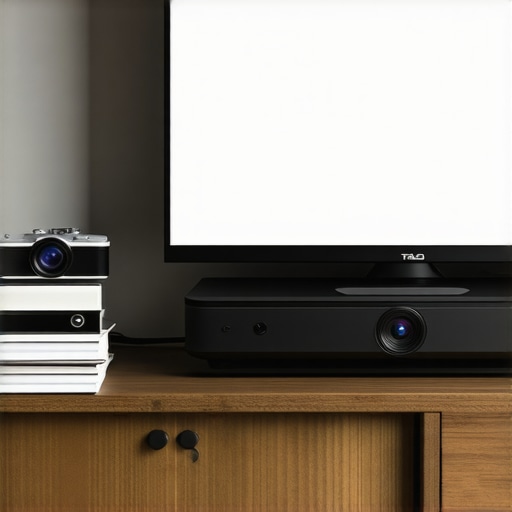
Ultra-short throw (UST) laser systems have revolutionized modern living rooms, sitting just inches from the wall while casting massive 120-inch images. When hunting for laser projector deals, shoppers often debate between a premium UST setup and a highly versatile travel companion. Comparing portable projectors to ust projectors is a battle of lifestyles. A UST projector replaces your living room TV, offering extreme brightness and vibrant colors even during the day. However, these systems are highly sensitive to wall imperfections, require expensive specialized ambient light rejecting (ALR) screens, and cost thousands of dollars. Portable projectors are incredibly cheap by comparison, require no specialized screens, and can be pointed at literally any flat surface on a whim.
Is it worth the upgrade?
If you currently own a cheap, low-resolution travel projector, upgrading to a premium smart portable model with automatic keystone calibration and USB-C power delivery is absolutely worth the investment. However, if you are trying to replace your main living room television, do not expect a portable unit to satisfy your daily viewing habits. In that scenario, you are much better off browsing the latest high-performance displays on the official ProjectorCentral Price and Feature Comparison Database to find a dedicated home unit. For those who need to stay mobile, check out our deep-dive reviews of the top-performing compact units before making your final decision.
The Good, The Bad, and The Ugly
After thirty days of living out of a suitcase and projecting onto every conceivable surface, the strengths and weaknesses of these mobile units are incredibly clear. Here is what you need to know before parting with your hard-earned cash:
- The Good: Instant setup is a reality. Thanks to smart auto-calibration, gone are the days of manual focus wheel tweaking. USB-C Power Delivery means you can travel with a single power brick for all your devices, and units with machined aluminum chassis run cooler and quieter.
- The Bad: Native software platforms are still incredibly buggy and often uncertified. To stream your favorite shows seamlessly, you will likely need to plug in a separate streaming stick. Additionally, small internal fans are prone to high-pitched whining when running at peak brightness.
- The Ugly: Why you should skip the built-in projector speakers every time is simple: the integrated audio is absolutely terrible. It sounds tinny, metallic, and lacks any bass. If you don’t use a separate speaker, you will definitely ruin your movie nights.
Who is This Travel Setup Actually For?
This setup is perfect for the digital nomad, frequent business traveler, or minimalist camper who values ultra-portability over raw screen brightness. If you need to make quick visual pitches during the day and want a massive movie screen at night, a premium compact unit is an absolute game-changer. However, if you are looking to build a dedicated home system, you should look elsewhere. Skip these portable units entirely if you want high-refresh-rate gaming, deep HDR contrast, or a primary workspace monitor for spreadsheets.
Is it Worth the Hype?
If you have realistic expectations, premium portable projectors are absolutely worth the money. Just make sure to pair your unit with a portable power station so you don’t run out of juice halfway through a movie. If you are ready to take your entertainment on the road, check out our curated guide on the best battery powered projectors for long road trips to find your perfect travel companion today.