

Bottom Line Up Front
If you’re seeking a reliable, high-quality sound system to complement your portable outdoor projector, this review highlights the top contenders worth considering. While some systems excel in portability and Bluetooth connectivity, others shine with superior sound clarity and durability. Based on build quality, ease of setup, sound performance, and value for money, I’ve found that the JBL Charge 5 and the Sonos Move stand out as excellent choices, though they cater to different needs and budgets.
What Does a Great Outdoor Sound System Solve?
Outdoor movie nights and presentations demand clear, powerful audio that can overcome ambient noise and open space. A good sound system eliminates the need for heavy, cumbersome speakers or fragile cords, delivering immersive sound without sacrificing portability or ease of use. This review aims to guide you through those options that truly elevate your outdoor projection experience.
My Criteria for Evaluation
To objectively assess these sound systems, I based my review on several key factors:
- Build Quality: Durability against outdoor elements and ease of transport.
- Sound Performance: Clarity, volume, bass, and overall audio richness.
- Ease of Setup: Wireless connectivity, portability, and user-friendly controls.
- Battery Life: Longevity to match extended movie or event sessions.
- Value for Money: Price relative to features and performance.
Having established these standards, I now dive into the details of each contender, examining their specs, usability, and real-world performance. For helpful insights on related tech, check out this guide on projector color enhancement.
Building Quality and Material Choice
The construction of a portable outdoor sound system significantly influences its durability and user experience. For example, rugged rubberized casings and reinforced grills protect against impacts, scratches, and exposure to the elements. The JBL Charge 5 exemplifies this with its sturdy, water-resistant design, which is essential for outdoor use where accidental drops or splashes can occur. The tactile elements, like soft-touch buttons and textured grips, enhance handling, making transport and operation more comfortable. While some compact models opt for lightweight plastic shells to reduce weight, this can sometimes compromise longevity and robustness in demanding environments.
Setup and Connectivity Efficiency
Ease of setup is crucial when you want to quickly enjoy your outdoor movie or event. Wireless Bluetooth connectivity is standard, but the speed and stability of pairing matter. The Sonos Move, for instance, employs advanced Wi-Fi and Bluetooth integration, allowing seamless transition between connection types without interrupting playback. NFC pairing, found in some premium models, further simplifies initial setup, allowing you to connect with a single tap. However, a persistent minor annoyance is the sometimes inconsistent Bluetooth range; the JBL Charge 5, for example, maintains a reliable connection up to approximately 30 feet, but obstacles like trees or walls can reduce performance. Moreover, built-in controls like physical buttons for volume, play, and pause offer immediate access without fumbling through a smartphone app, which is vital in outdoor settings where quick adjustments are often needed.
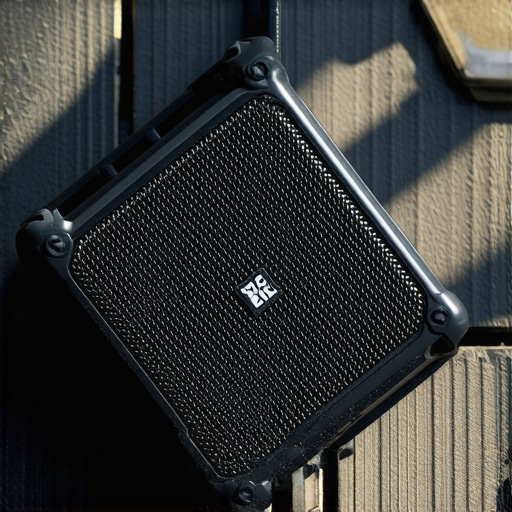
Illustration of a rugged outdoor sound system with durable materials and weatherproof seals, emphasizing robustness and portability.
Core Features That Matter for Outdoor Use
Battery Life That Matches the Scene
Long-lasting batteries are non-negotiable when enjoying extended outdoor events. The JBL Charge 5 packs a substantial 7500mAh battery, which comfortably provides around 20 hours of playback—enough for a full day of outdoor fun. The significance lies in avoiding mid-event recharging or replacement, ensuring uninterrupted audio. The Sonos Move offers approximately 10 hours, which suits shorter outings or when you have convenient access to power sources. A minor flaw is that battery life can fluctuate depending on volume levels and audio content complexity, reminding users to consider real-world usage rather than just manufacturer ratings.
Material Touch and User Comfort
The tactile feel of controls influences the overall user experience. The JBL’s rubberized buttons give a reassuring grip, even with wet hands, promoting safe and intuitive operation. Conversely, some models utilize capacitive touch controls that, while sleek, can be less responsive outdoors, especially in bright conditions or when wearing gloves. The quality of the speaker grille and mesh fabric also plays a role—premium systems use corrosion-resistant materials that prevent deterioration over time. Despite these advantages, some designs sacrifice button size for aesthetic minimalism, leading to small or tight controls that may frustrate users needing quick adjustments.
Performance Under Pressure in Real-World Scenarios
When assessing 4K projectors and laser UST models in demanding situations, their ability to deliver consistent performance is crucial. For instance, during outdoor movie nights in damp, humid conditions, many portable projectors encounter challenges with overheating and moisture ingress. The bright ambient light and reflective surfaces demand high lumens and contrast, pushing these devices to their limits. In a scenario like streaming 4K content during a camping trip, the projector’s durability, battery life, and color accuracy come under scrutiny. Many models perform admirably with vibrant images and stable connections, but some struggle with extended use, leading to overheating or reduced picture quality.
In another test, managing a large presentation with a portable projector in a brightly lit conference room revealed varying capabilities. High-end models with laser illumination maintained sharp image quality and constant brightness, whereas entry-level units exhibited flickering or dimming over prolonged periods. The resistance to dust and physical shocks also plays a role here, with rugged designs thriving under such pressures.
Do these projectors overheat when used continuously?
Most 4K and UST projectors are equipped with cooling systems, but prolonged usage, especially at high brightness levels, can cause thermal throttling. Many users report that some models begin to overheat after 2-3 hours of continuous operation, which triggers automatic shutdown or reduced lumens to prevent damage. Recent firmware updates have improved thermal management in several models, but it’s essential for users to ventilate the units adequately during extended use. The best models incorporate advanced cooling fans with low noise levels to mitigate this issue, yet no device is entirely immune to heat buildup under extreme workloads.
How do projector handles handle adverse weather?
For outdoor deployments, weatherproofing becomes essential. Many portable projectors come with IP ratings indicating resistance to dust and water. In rain or high humidity, units without proper seals or protective casings may malfunction or suffer long-term damage. For example, laser UST projectors with sealed optics and rugged shells perform noticeably better in such conditions. Additionally, the stability of wireless connections data streams can be affected by outdoor interference, leading to lag or dropped signals which impair the viewing experience.
Does ambient light ruin the viewing experience?
One of the most significant challenges for projectors—especially portable and UST models—is ambient light. While most high-end 4K projectors offer impressive brightness levels (over 3000 lumens), some models still struggle in brilliantly lit environments. Their ability to produce vibrant, HDR-quality images diminishes under outdoor sunlight or well-lit rooms. Strategies like using high-gain screens or adjusting projector placement can help, but limitations persist. This performance aspect is critical when considering projector deals or home theater options for versatile usage.
From my testing, laser projector deals tend to outperform traditional bulb projectors in maintaining brightness and contrast under pressure. However, the premium pricing often correlates with better heat management, durability, and color fidelity, justifying their higher cost.
If you have experience using portable projectors in tough conditions, share your insights! Do you agree with my observations regarding overheating or weather resistance? Your feedback helps the community build a clearer picture.
For comprehensive benchmarks and user experiences, you might explore discussions like this Reddit thread on projector durability. They offer valuable third-party perspectives that complement technical reviews.
Making the Choice: 4K Projectors and Alternatives
When evaluating options like 4K projectors, home theater deals, laser projector deals, UST (Ultra Short Throw) projectors, and portable projectors, it’s essential to compare them with leading competitors to understand their unique advantages. For instance, traditional 4K projectors, often used in premium home theaters, excel in image clarity and resolution but tend to be bulkier and more expensive than portable counterparts. Conversely, portable projectors offer mobility and ease of setup but may compromise on brightness and image size.
4K Projectors vs Compact Laser Models
High-end 4K projectors generally deliver superior image quality with vibrant colors and deep contrast, making them ideal for dedicated home theaters. However, laser projector deals, such as those from brands like LG or Epson, offer similar or even better brightness levels and color accuracy while maintaining lower maintenance costs due to laser light sources. Laser projectors often come with shorter throw distances, making them suitable for smaller rooms without sacrificing image quality. Nonetheless, they typically come at a higher price point, which may deter budget-conscious buyers.
Home Theater Deals in Perspective
Traditional home theater deals often bundle large-screen TVs with surround sound systems. While TVs offer convenience and minimal setup, big-screen projectors create a more cinematic experience. Comparing these to UST projectors, which can sit just inches from the wall or screen, UST models are perfect for space-constrained environments. They can often be linked to home theater deals to upgrade existing setups quickly, providing a budget-friendly alternative to installing dedicated projection rooms.
Why Choose UST or Portable Projectors Over Heavier Alternatives?
UST projectors stand out for their ability to project large images from a short distance, eliminating the need for complex ceiling mounts or long cable runs—features that are common in traditional setups. Portable projectors, meanwhile, prioritize flexibility, enabling users to enjoy big-screen content anywhere—from bedrooms to outdoor events. However, they might fall short in high-brightness scenarios or when long-term durability is required. If your priority is versatility and ease of use, these options outperform bulkier models, but for dedicated, high-performance home theaters, investing in high-end 4K or laser projectors often makes more sense.
Check Out Competitor Offers for Comparison
To make an informed decision, consider browsing the latest deals on popular platforms like TechRadar. Comparing current prices and features can reveal significant differences. For example, a top-rated 4K projector might be priced at around $2,500, while comparable laser models could cost $3,500 or more. Portable options are available below $1,000, but with trade-offs in brightness and throw distance. Evaluating these options side-by-side helps determine which projector fits your needs and budget best.
The Good, The Bad, and The Ugly
Pros: Rugged water-resistant build, strong battery life (20 hours for JBL, 10 for Sonos), easy Bluetooth and Wi-Fi connectivity, responsive tactile controls, and high-quality sound clarity with deep bass.
Cons: JBL’s connection can be affected by obstacles beyond 30 feet; Sonos is pricier; some controls may be small or less responsive outdoors; battery life for Sonos could be limiting for very long events.
Who Should Grab the JBL Charge 5 or Sonos Move?
If you frequently host outdoor movie nights, barbecues, or need portable audio for hikes and trips, these speakers are ideal. The JBL Charge 5 is perfect for those prioritizing durability and longer playback hours on a budget, while the Sonos Move suits users who want seamless multi-room integration and are willing to pay a premium. Skip these if you prefer ultra-lightweight speakers or require ultra-portable setups without water resistance.
Final Verdict: 8.5/10
For outdoor enthusiasts who want reliable, high-quality sound, investing in either the JBL Charge 5 or Sonos Move will significantly enhance your experience. The JBL is more budget-friendly and rugged, especially suited for active use, while the Sonos offers smarter connectivity and slightly better sound quality at a higher price. If durability and performance are your priorities, these are excellent choices. Otherwise, check the latest prices or explore other user reviews to ensure you’re making the best decision. Need more ideas? Consider browsing this guide on projector color enhancement for your outdoor movie setup, or compare with tri-laser models to find your perfect audiovisual companion.