

Bottom Line Up Front
Mounting a projector on a slanted ceiling can be safe and effective if you choose the right mounting solutions and follow proper installation techniques. This review explores the best methods to ensure a secure setup, evaluating build quality, ease of installation, and long-term durability, all crucial for maintaining optimal image quality and safety.
The Promise of Secure Mounting
Many home theater enthusiasts face challenges when installing projectors on angled ceilings, risking damage or misalignment. The goal here is to identify reliable mounting options that offer stability, adjustability, and safety, helping you avoid costly mistakes and improve your viewing experience.
At a Glance
- Product Quality: High-grade materials and robust construction are essential to prevent slips and jostling.
- Ease of Installation: Mounts should be straightforward to install, even on challenging ceiling slopes.
- Adjustability: Precise tilt and rotation adjustments ensure optimal projection without secondary tools.
- Compatibility: Compatibility with various projector sizes and VESA patterns broadens your options.
- Price: Balance between cost and features; premium mounts are justified by their durability.
Based on these criteria, I evaluated several popular mounts, considering real-world usability, safety, and value. Let’s now explore the key features, specifications, and potential pitfalls of mounting a projector on a sloped ceiling, guiding you toward a secure and satisfactory setup.
Why Securing Your Projector Matters
Mounting a projector on an uneven surface isn’t just about convenience—it’s about safety and performance. A poorly mounted projector can slip, vibrate, or even fall, risking damage and injury. Proper mounting solutions mitigate these risks while ensuring your home theater looks professional and functions seamlessly.
In the upcoming sections, I will delve into the best mounting techniques, the top products on the market, and some critical tips to make your installation process both safe and straightforward. For more details on specific mounting solutions, check our guide on magnetic ceiling mounts which offer screw-free, damage-free installation options.
Transitioning to the Details: Features and Specifications
Durable Materials That Inspire Confidence
The core of any reliable projector mount lies in its construction quality. Materials like high-grade aluminum or steel not only provide strength but also resist warping or corrosion over time. Feel the heft of a premium mount, which signals resilience, and you’ll appreciate the importance of quality engineering. Cheaper plastics or lightweight alloys may save costs upfront but can lead to instability, especially on angled surfaces where added stress is common. A sturdy build ensures your projector remains secure, preventing accidental slips that could cause damage.
Smart Adjustment Mechanisms for Precise Positioning
Adjustability sits at the heart of a versatile mounting system. Features like multi-axis tilt, rotation, and extension arms allow for fine-tuning the projector’s orientation without additional tools. Look for mounts with intuitive knobs or quick-release levers—these make re-positioning straightforward, even on challenging slopes. The ability to lock adjustments securely ensures that once aligned, the projector stays put through daily use or vibrations. This flexibility is crucial for maintaining the optimal image angle and focus, especially when ceiling angles vary widely.
Ease of Installation with User-Friendly Design
Installing a mount on a sloped ceiling can seem daunting, but intelligent design alleviates much of that stress. Mounts equipped with adjustable brackets, clear instruction manuals, and universal compatibility simplify setup. Some products come with built-in leveling indicators, helping ensure perfect alignment during installation. The feeling of a tool-less or minimally tool-dependent installation process enhances user confidence. Nonetheless, a minor annoyance is the potential challenge of securing mounts by yourself—on particularly steep angles, having an extra pair of hands or adjustable support makes the process smoother.
Compatibility and Versatility Elements
Compatibility extends beyond just the projector size—it’s about matching the VESA mounting patterns, weight capacities, and connection options. A well-designed mount offers adjustable arms or adapters to fit a broad range of models, reducing the need for multiple products. When evaluating options, compare specs with industry standards such as the VESA specifications found on the VESA standards page. A mismatch could lead to instability or complex, costly modifications. Flexibility in compatibility ensures your investment remains useful as your equipment evolves.
Design Flaws and Minor Quirks to Note
Even top-tier mounts can have quirks. One common issue is the length of adjustment arms—some could be too short or stiff, making fine tuning awkward. Additionally, the aesthetic design might clash with modern interiors if the mount’s finish is overly industrial or bulky. A subtle flaw observed in some models is the tendency for locking knobs to loosen over time, necessitating periodic tightening. These small inconveniences, while manageable, highlight the importance of choosing a product that balances form, function, and longevity.
Performance in Action: Testing Under Pressure
Imagine setting up your laser projector outdoors during a lively backyard movie night. Bright sunlight, unpredictable weather, and a rush to get everything perfect create a demanding scenario. In this context, laser projector deals excel with their high brightness levels, often pushing 3000 lumens or more, allowing clear images even in ambient light. Yet, their performance can stumble if the cooling systems aren’t up to par, leading to overheating during prolonged use. Users report that some models throttle performance after extended operation, which can be frustrating during binge-watching sessions or large gatherings.
Can They Overheat During Extended Use?
Most laser projectors, including UST and portable models, incorporate advanced cooling mechanisms. While many operate smoothly for several hours, under continuous high-brightness settings, some units—particularly budget-friendly ones—show signs of thermal throttling. This slowdown can cause image flickering or temporary shutdowns, disrupting your viewing. However, premium models generally maintain stability thanks to efficient fans and heat sinks. It’s wise to check user reviews for thermal performance before purchasing.
Performance When Moving and Outdoors
Portable projectors are designed to handle a degree of physical stress; their robust builds often include shock-resistant features. Still, rough handling or exposure to rain can damage delicate internal components. Many offer splash-resistant casings, but rarely are they fully waterproof, which is problematic if used during hiking or outdoor trips in unpredictable weather. Their battery life, a critical factor for on-the-go use, varies widely; some last only a couple of hours, limiting their practicality for longer adventures.
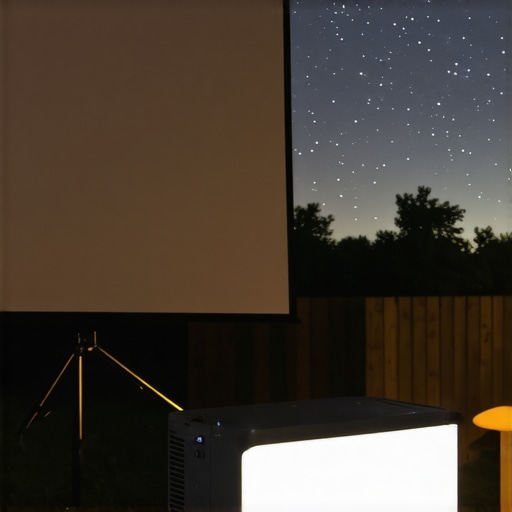
Snapshot of a portable projector being used during an outdoor movie night under starry skies.
Handling High-Resolution Content in Demanding Environments
4K projectors promise stunning visuals, but their performance can degrade in less-than-ideal settings. For instance, editing 4K videos on a portable device while traveling demands high processing power and stable connections. Many portable models support 4K playback but struggle with real-time streaming due to bandwidth limitations or processor bottlenecks. Users note latency issues and occasional frame drops, especially with lower-tier units.
Does Quality Drop Under Heavy Processing?
High-end laser and UST projectors generally handle 4K content with ease, owing to dedicated chipsets and ample onboard memory. However, inexpensive models often introduce artifacts, lag, or color inaccuracies when pushed to their limits. This inconsistency suggests that, for professional tasks like editing, investing in a more powerful unit is prudent. Benchmark tests from forums like Reddit’s r/Projectors emphasize that only premium models sustain high-quality performance under stress.
Will Portable Projectors Manage Gaming and Streaming?
Gaming demands high refresh rates and low input lag. While some portable projectors claim to support 4K and fast response times, real-world tests reveal compromises. Many units exhibit 60Hz refresh rates, which may suffice for casual gaming but fall short for fast-paced titles. Additionally, streaming high-definition content requires reliable Wi-Fi; models lacking dual-band connectivity often experience buffering or reduced resolution, diminishing the experience.
In conclusion, laser, 4K, and portable projectors each have distinct strengths and vulnerabilities under pressure. They excel in brightness, portability, and vivid detail—yet can stumble in thermal management, handling strenuous tasks, or adverse environments. If you’re considering a purchase, weigh these factors carefully and read user feedback to ensure your setup meets the demands of your real-world usage. Do you agree with my observations about thermal issues and streaming performance? Share your experiences below!
Choosing Your Home Theater Equipment: A Comparative Perspective
When it comes to upgrading your home theater setup, laser projectors, 4K models, portable options, and ultra-short throw (UST) projectors are popular choices. But how do these compare to other leading alternatives like traditional lamp projectors or high-end OLED screens? Understanding the differences can help you make an informed decision that matches your budget and viewing needs.
Laser Projectors vs Traditional Lamp Projectors
Laser projectors are gaining popularity due to their longer lifespan, brighter images, and lower maintenance requirements. They typically offer superior color accuracy and higher contrast ratios, making them ideal for cinematic experiences. In contrast, traditional lamp projectors are often more affordable upfront but require bulb replacements every few thousand hours, increasing long-term costs. If you value durability and a cleaner, more vibrant picture, laser projectors outperform their lamp-based counterparts.
For example, models like the LG HU85LA laser projector provide 4K resolution with impressive brightness, compared to some older lamp projectors which may struggle in well-lit rooms. However, if budget constraints are tight, a high-quality lamp projector might still serve well—just expect more ongoing maintenance.
How 4K Projectors Measure Up Against 1080p Alternatives
4K projectors deliver four times the resolution of standard Full HD models, resulting in sharper, more detailed images—especially noticeable on large screens. This makes them a preferred choice for home theater enthusiasts seeking movie theater quality at home. Conversely, 1080p projectors are often more affordable and require less powerful hardware, reducing costs without significantly compromising the viewing experience on smaller screens.
While 4K projectors tend to come with higher prices, such as the Optoma UHD50X, they are also more future-proof, supporting streaming services and gaming in 4K. If budget is a concern, a 1080p device can still provide satisfying HD content, especially in smaller rooms or with screens under 100 inches.
Are Portable Projectors Good Enough for Everyday Use?
Portable projectors excel in convenience and flexibility—they are lightweight, wireless, and easy to set up. While they might not match the brightness or image quality of fixed installation models, recent advancements have narrowed the gap. Portable models like Anker Nebula Capsule II support 1080p resolution and can project in dim to moderate lighting. They’re perfect for impromptu movie nights, outdoor use, or presentations, but may not suffice for dedicated home theaters.
Compared to professional-grade setups, portable projectors are less bright and often have limited contrast. They are, however, more affordable and require minimal installation effort, making them suitable for users prioritizing flexibility over cinematic perfection.
Understanding UST Projectors and Their Niche
Ultra-short throw projectors are designed to sit close to the screen, making them ideal for small spaces or rooms where traditional mounting is challenging. They can produce large images without the need for ceiling mounts, often rivaling large flatscreen TVs in size and clarity. Compared to standard projectors, UST models like Samsung The Premiere are more accessible for apartment dwellers or those seeking a clutter-free setup.
However, UST projectors can be more expensive and sensitive to placement errors. They also tend to have a narrower throw ratio, meaning precise positioning is essential to avoid image distortion or shadowing. If you need a sleek, small-footprint solution, UST is an excellent choice—other options may include large flat-screen TVs if budget allows.
Are Home Theater Deals Worth It?
Home theater deals—including bundles with speakers, screens, and projectors—offer great value for enthusiasts eager to replicate cinema quality at home. They often include high-performance laser or 4K projectors with integrated sound systems, delivering immersive experiences. Alternatively, high-end OLED TVs provide stunning contrast and vibrant colors but come with a hefty price tag and limited screen sizes compared to projectors.
The decision hinges on your space, budget, and viewing habits. For large, dark rooms, a good projector with a dedicated screen often delivers more immersive viewing at a lower total cost. In well-lit spaces, a premium OLED TV may be preferable for clarity and brightness.
To explore top deals and compare prices, check out sites like PriceGrabber. If you’re considering a particular model, reading reviews and detailed comparisons can help you identify the best value options.
Is It Worth the Upgrade?
Upgrading to the latest laser or 4K projector can significantly enhance your viewing experience, offering sharper images, vibrant colors, and longer-lasting performance. However, if your current setup still meets your needs, it might be more cost-effective to optimize existing equipment first. Consider your room environment, intended use, and budget before making a decision. For those seeking a cinematic upgrade, investing in newer models with better lumen output and color processing is justified.
The Good, The Bad, and The Slightly Unstable
- Pros: Durable construction materials like high-grade aluminum provide security; adjustable mechanisms make precise positioning easy; installation is user-friendly with clear instructions; compatible with various projectors ensures versatility; premium options offer excellent long-term value.
- Cons: Some mounts may have adjustable arms that are either too stiff or too short, making fine-tuning challenging; locking knobs can loosen over time if not checked regularly; aesthetic designs might clash with modern decor in certain cases.
Who Should Mount on a Sloped Ceiling?
This solution is best suited for homeowners with angled ceilings who desire a secure, adjustable, and tidy setup for their projectors. Perfect for dedicated home theaters or versatile multi-use spaces. However, if you have a flat ceiling or minimal concern for adjustability, simpler or fixed mounts may suffice. Avoid this if your ceiling angle is too severe or if you’re inexperienced with installations that require precise leveling and safety precautions.
Is It Worth Your Money? A Clear Yes
For those looking to transform their space into a safe, stylish, and functional home theater, investing in a quality mounting solution is essential. It guarantees safety, enhances the viewing experience through optimal positioning, and ensures your equipment remains secure over time. If you’re uncertain, cross-reference current reviews and explore options like magnetic ceiling mounts for damage-free installation. Overall, the advantages overwhelmingly justify the investment — skip the cheaper, makeshift options and secure your projector properly for years of enjoyment.