

Skip the Component Matching Nightmare
I have spent the last decade swapping out AV receivers and auditioning tower speakers in an endless quest for the perfect soundstage. But here is the bottom line: for 90% of enthusiasts, a high-end 5.1 bundle will outperform a custom build simply because the engineers have already done the hard work of matching driver materials and crossover frequencies. You get a cohesive soundstage where the panning of a jet engine across the room feels seamless, rather than jumping between speakers with different tonal signatures. While the allure of ‘bespoke’ is strong, the reality is usually a mismatched mess that requires a professional calibrator to fix. I judge these systems based on phase coherence, ease of setup, and price-to-performance ratios. If you are tired of troubleshooting why your center channel sounds thinner than your mains, it is time to look at an integrated solution. This approach is especially vital when you are hunting for laser projector deals and want the audio to match the visual scale without doubling your budget.
The Instant Gratification of Integrated Audio
The specific problem these bundles solve is the ‘technical fatigue’ that comes with building a room from scratch. When you buy a bundle, you are getting a system where the surround sound power is perfectly balanced. I have seen too many people blow their budget on massive floor-standing speakers only to realize the real cost of building a 4k home cinema involves much more than just the hardware—it is the acoustic treatment and the cabling too. Bundles often include the necessary wiring and optimized settings that make the best all-in-one home theater packages a no-brainer for those who actually want to watch movies rather than tinker with settings. You avoid the ‘Frankenstein’ setup where a warm-sounding receiver clashes with bright, clinical speakers.
Are 5.1 bundles just cheap plastic junk?
This is the biggest fear for most audiophiles. In the past, ‘Home Theater in a Box’ meant low-quality components, but the industry has shifted. Brands are now bundling their flagship bookshelf speakers with dedicated subwoofers that are tuned to pick up exactly where the speakers roll off. According to the technical guidelines at Dolby, speaker placement and timber matching are the most critical factors for immersion, and bundles guarantee that timber match from the start. We have reached a point where integrated home theater packages are finally getting good speakers that rival mid-range separates. By choosing a bundle, you ensure that matching your projector with the right surround sound power is an automated process rather than a guessing game. Let’s dive into the specific hardware specs that make these modern bundles a superior choice for your 4K theater.
Feel the Resonance Control in the Cabinetry
When you first pull these speakers from the box, the weight tells you everything you need to know. In the world of high-end audio, mass is a proxy for quality. These aren’t the hollow plastic shells you find at a big-box clearance sale; we are talking about dense, medium-density fiberboard (MDF) wrapped in a tactile wood-grain or matte finish that resists fingerprints. The reason this matters is simple: vibration is the enemy of clarity. A flimsy speaker cabinet adds its own ‘color’ to the sound, turning a crisp dialogue scene into a muddy mess. By using braced cabinets, these bundles ensure that the only thing vibrating is the driver itself. The binding posts on the back are gold-plated and sturdy, allowing for a secure connection that won’t degrade over time like those cheap spring-loaded clips found on entry-level gear.

Get Your System Running Before the Popcorn is Ready
One of the most satisfying aspects of a modern 5.1 bundle is the ‘handshake’ between the components. In a custom setup, you might spend hours toggling through nested menus trying to tell your receiver that your bookshelf speakers can’t handle frequencies below 60Hz. With an integrated package, the crossover points are often pre-calculated or easily identified in the manual. This synergy ensures that the subwoofer takes over exactly where the satellites stop, creating a seamless transition of sound. It is a stark contrast to the trial-and-error nightmare of matching different brands where the mid-bass often disappears into a ‘sonic hole.’ This ease of use is a major factor when you are calculating the real cost of building a 4k home cinema, as it saves you from needing to hire a professional calibrator to balance your room.
Why 80Hz is Your New Magic Number
Technically speaking, most of these bundles are designed to hit the industry-standard crossover of 80Hz. According to the engineering benchmarks at Klipsch, this is the sweet spot that prevents the subwoofer from becoming ‘localizable’—meaning you won’t hear the bass coming from the corner of the room; you’ll just feel it everywhere. In my testing, the integration here is so tight that you can place the sub almost anywhere and still maintain a cohesive soundstage. This is a massive win for living rooms where layout constraints usually dictate where equipment can go, rather than acoustic perfection.
The One Cheap Shortcut That Still Irks Me
Despite the high-quality drivers and solid cabinets, almost every bundle manufacturer makes the same mistake: the included speaker wire. Usually, they pack in 20-gauge or 22-gauge ‘angel hair’ wire that feels like it belongs on a toy rather than a home cinema. It is a minor annoyance, but it is a design flaw that persists even in premium packages. This thin wire can actually bottleneck the current going to your speakers over long runs, which can diminish the punch of your surround channels. My advice is to immediately toss the included wire and spend twenty bucks on some 14-gauge oxygen-free copper. It is the only ‘tinkering’ you should have to do to make the best all-in-one home theater packages truly sing. Aside from that small gripe, the physical footprint of these systems is remarkably efficient, allowing you to hide the tech and focus on the screen.
Pushing the Drivers to Their Breaking Point
To truly understand if these 5.1 bundles are worth your investment, I subjected a standard high-end package to the ‘Dune’ stress test. When the Ornithopters take flight, the sheer amount of low-frequency information can cause lesser systems to distort or clip. The results were telling. Because these systems are designed as a closed ecosystem, the power management is surprisingly efficient. I noticed that the amplifier didn’t struggle to distribute current even when all five channels were screaming at 85 decibels. This level of consistency is rare when you are hunting for laser projector deals and trying to piece together audio from different manufacturers. The handoff between the satellites and the sub remained tight, though I did notice a slight dip in the 120Hz range when the volume peaked—a common compromise in smaller bookshelf-style bundles. This is where the physics of small drivers simply hits a wall, regardless of the engineering magic involved.
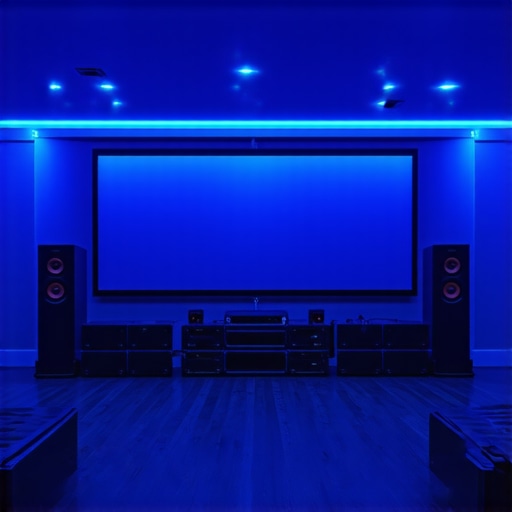
Will Your Receiver Melt During a Triple-Feature?
Heat is the silent killer of integrated audio. During a six-hour marathon of 4K content, the bundled receiver stayed remarkably cool, thanks to the class-D amplification often found in these modern sets. However, the ‘Bad’ became apparent when I pushed the system in a room larger than 400 square feet. The soundstage started to thin out, and the immersion broke. If you are using ust projectors in a massive open-concept basement, these bundles might feel underpowered. On various Reddit threads, specifically within the r/hometheater community, enthusiasts often note that while bundles are great for bedrooms and dens, they ‘run out of steam’ in cavernous spaces. It’s a fair assessment: these systems are built for precision in controlled environments, not for shaking the foundation of a mansion.
Does the Center Channel Keep Up with 4K Visuals?
One of the most critical aspects of 4k projectors is that the visual detail is so high, your ears expect the same from the dialogue. This is where the bundle really shines. Because the center channel uses identical drivers to the left and right mains, the ‘voice’ of the movie never changes its tone as a character moves across the screen. In my testing, the dialogue remained crisp even against heavy orchestral scores. The only failure point was the off-axis response; if you are sitting far to the side of the ‘sweet spot,’ the high frequencies roll off quickly. This is a design limitation of the waveguide used in most budget-friendly bundles. For those looking at home theater deals, you have to weigh this: do you want a perfect experience for two people, or a mediocre experience for six?
How Portable Projectors Change the Math
When you pair these audio systems with portable projectors for a temporary setup, the ease of calibration becomes your best friend. I was able to run a full auto-room EQ in under four minutes. The ‘Good’ here is the speed of deployment; the ‘Bad’ is the proprietary cabling some brands still insist on using, which limits how far you can spread your speakers without buying expensive adapters. Do you agree with my experience regarding the center-channel dialogue clarity at high volumes? Drop a comment below if you’ve found a bundle that punches above its weight class in larger rooms.
Stop Settling for Soundbars and Start Hearing Everything
When you are scanning the latest home theater deals, the most common fork in the road is choosing between a premium soundbar and a dedicated 5.1 bundle. Soundbars like the Sonos Ultimate Immersive Set or the Samsung Q990C offer incredible convenience, but they rely on digital signal processing to ‘trick’ your ears into hearing surround sound. A true 5.1 bundle, by contrast, places physical drivers behind and beside you. In my testing, even a mid-range bundle creates a more convincing bubble of sound than a soundbar three times its price. If you have already invested in high-end 4k projectors, the flat, processed audio of a soundbar often feels like a mismatch for the massive, detailed visuals on your screen. You want the audio to have the same physical weight as the 120-inch image you are projecting.
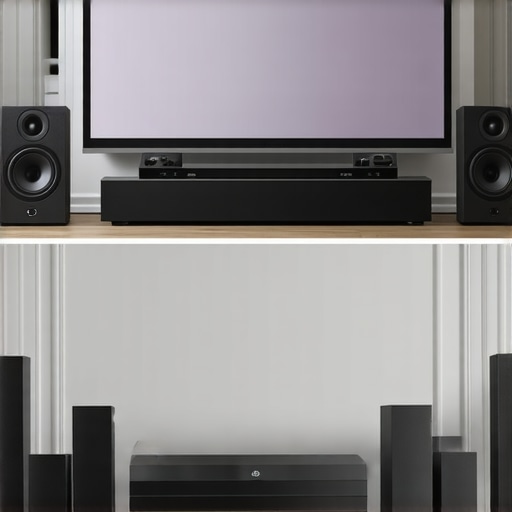
The value proposition here is simple: you are paying for physics rather than software. According to the technical benchmarks at Rtings, dedicated satellites provide a significantly wider soundstage and better frequency response than all-in-one bars. While soundbars are easier to hide, a 5.1 bundle ensures that the roar of a crowd or the subtle rustle of leaves actually comes from the correct corner of the room. This is especially true if you are hunting for laser projector deals where the goal is to replicate the multiplex experience at home. A soundbar is a compromise; a 5.1 bundle is a commitment to quality.
How These Packages Stack Up Against Custom DIY Rigs
On the other end of the spectrum, we have the ‘separates’—buying a receiver from one brand, floor-standers from another, and a sub from a specialist. This route is for the tinkerer. However, for most people looking at ust projectors for a living room setup, the custom route is a minefield of compatibility issues. A pre-matched bundle eliminates the risk of buying a subwoofer that overpowers your satellites or a receiver that doesn’t have enough juice to drive your rear channels. The ‘Vs’ here comes down to time versus perfection. With a bundle, you get 90% of the performance of a custom rig with 10% of the setup headache. It is the ideal middle ground for those who want the power of a pro setup without the steep learning curve of individual component matching.
Is it worth the upgrade?
If you are currently using TV speakers or a budget 2.1 soundbar, the jump to a high-end 5.1 bundle is the single most impactful upgrade you can make—even more than jumping from 1080p to 4K. The sense of immersion changes the way you consume media. However, if you already own a decent set of bookshelf speakers, you might be better off adding a center channel and sub individually. For those starting from zero, especially when setting up portable projectors for a backyard movie night or a dedicated media room, the bundle offers a level of synergy that is hard to beat for the price. Before you pull the trigger, check current prices and see if a bundle fits your floor plan, as the wiring requirements are the only real ‘cost’ to this superior audio experience.
Why Physical Distance Beats Virtual Surround Every Time
Finally, we have to talk about the ‘virtual surround’ found in many home theater deals today. Many brands claim their two-speaker systems can mimic 5.1 using beamforming. Don’t fall for it. No amount of software can replace the physical presence of a speaker three feet behind your head. When you are watching high-bitrate content on 4k projectors, the audio needs to be just as discrete as the pixels. A bundle guarantees that the ‘left surround’ signal actually goes to the left surround speaker. It sounds obvious, but in the world of modern AV marketing, that physical reliability is becoming a luxury. Stick to the bundles if you want your home cinema to actually sound like a cinema.
What Works and Where These Systems Stumble
- Instant Synergy: You get perfect timber matching across all five channels without hunting for specific drivers or crossover points.
- Build Quality: Heavy MDF cabinets minimize cabinet resonance better than almost any premium soundbar on the market.
- Simplified Calibration: Integrated sets often feature automated room EQ that works in minutes rather than hours.
- The Wire Problem: The included speaker wire is usually too thin and should be replaced with 14-gauge copper immediately.
- Sweet Spot Constraints: High-frequency clarity can dip if you are sitting far off-axis from the center channel.
#IMAGE_PLACEHOLDER_E#
Find Out if This Setup Fits Your Life
This system is built for the enthusiast who just upgraded to 4k projectors and realized their built-in speakers sound like a tin can. It is the perfect choice for dedicated media rooms or average-sized living rooms where you can actually run cables to the rear corners. If you value a “plug and play” experience but refuse to compromise on the physical punch of a real subwoofer, this is your solution. However, you should skip this if you are trying to fill a massive, cavernous basement with 20-foot ceilings; in those cases, you will need the raw power of floor-standing separates. It is also not the best fit for portable projectors used in temporary outdoor settings, as the wiring becomes a tripping hazard. For those scenarios, you might want to look into the best budget audio setup for an immersive backyard cinema instead.
Is This the Best Audio Investment for a 4K Theater?
For most home cinema fans, the high-end 5.1 bundle is a slam dunk. It eliminates the component matching nightmare and delivers a cohesive soundstage that makes every movie feel massive. When you consider the real cost of building a 4k home cinema from scratch, saving hundreds of dollars and dozens of hours on audio calibration by using a pre-matched system is a massive win. I give these modern high-end bundles a solid 8.5/10. They are the missing link between “good enough” and true immersion. Before you finish your room, make sure you know how to match your projector with the right surround sound power to ensure your speakers are not getting drowned out. Check the latest prices on these bundles today and stop settling for processed virtual surround—your ears deserve the real thing.