

If you’re considering upgrading to an 8K projector, you’re likely expecting jaw-dropping visuals and future-proofing for your home cinema. However, I believe it’s premature to jump on the 8K bandwagon just yet. The current technology isn’t mature enough to justify the hefty price tag, and what you truly need can be achieved with high-quality 4K options. In this review, I’ll share my honest insights on why 8K projectors fall short at this stage and recommend alternative solutions that deliver excellent performance without breaking the bank.
At a Glance
Bottom Line Up Front: 8K projectors are still not worth the investment due to limited content, high costs, and marginal visual improvements. Instead, focus on top-tier 4K projectors that offer superior image quality, better value, and more reliable performance.
The Promise: The main challenge 8K projectors aim to solve is providing ultra-sharp, future-proof visuals that can handle the highest resolutions. But with limited native 8K content and the current limitations of hardware and processing power, they’re more of a marketing gimmick than a necessity.
Evaluating the Tech: Criteria for Judgment
My assessment is based on build quality, performance, compatibility, price-to-value ratio, and actual benefits delivered to the user. I also compare these models to leading 4K projectors [here](https://laserprojectordeals.com/5-smart-projectors-that-stream-native-4k-sports-in-2026) to provide context on what the current best options are.
Let’s dive deeper into the specs, features, and whether an upgrade makes sense for your home theater setup.
Solid Build Quality and Thoughtful Design
Most 8K projectors share a premium build, with materials like high-quality aluminum and sleek finishes that exude modernity. This sturdy construction not only enhances durability but also vapidly conveys a sense of luxury, reassuring users about the longevity of their investment. The chassis is typically compact for a device with such advanced internals, making integration into a variety of home theater setups more seamless. However, some models have a minor flaw—power buttons and input ports are often placed on less accessible sides, leading to slight inconvenience during setup or adjustments.
Installation and Setup Simplified
Ease of setup is vital for immersing users quickly into their cinematic experience. Many 8K projectors feature motorized lens shifts, zoom, and keystone correction, which significantly reduce the time spent on manual calibrations. Furthermore, adjustable mounting brackets enable precise positioning, ensuring optimal image alignment. A notable aspect is how users appreciate the detailed on-screen guides that walk through calibration steps, minimizing the need for expert assistance. Still, some units tend to have overly complex menus, requiring patience to navigate through settings, especially for first-time users.
Processing Power and Internal Mechanics
The core of an 8K projector relies on a dedicated processing unit capable of rendering ultra-high-resolution images. These units often feature bespoke chips with immense computational ability, necessary to handle multiple 8K streams without lag. This robust processing ensures smooth image rendering, but it’s also a double-edged sword—it introduces increased heat output and power consumption, which necessitates efficient cooling systems. Sometimes, noise levels during high-performance operation can diminish the viewing experience, making cooling fans more audible than ideal—an aspect most users find mildly annoying.
Material Quality and User Experience
The materials used in 8K projectors are generally high-grade, which contributes to the tactile feel of the device. The textured finish on some models helps prevent fingerprints and scratches, maintaining aesthetic appeal over time. The remote controls usually feature metallic accents and ergonomic shapes, enhancing usability. Nevertheless, some design choices—such as large protruding air vents—can compromise the sleekness of the design for the sake of functional cooling. This contrasts with competitors like Sony’s flagship 4K projectors, which prioritize aesthetic minimalism without sacrificing thermal management (Sony Specs).
Performance Test: Managing the Unexpected
When pushing laser projectors, 4K projectors, or portable units to their limit, real-world scenarios often reveal both strengths and vulnerabilities. For instance, during a marathon movie night with high dynamic range content, laser projectors tend to perform admirably, delivering bright, vivid images without noticeable lag or degradation. Their robust lumen output ensures that even in less-than-ideal lighting conditions, the picture remains crisp and detailed. However, prolonged operation under such intense use can lead to increased thermal output, occasionally triggering automatic shutdowns to prevent overheating—an annoyance for cinephiles eager to binge-watch uninterrupted.
In a contrasting scenario, outdoor movie setups during humid or rainy weather test the durability of portable projectors. Many models struggle here: moisture can interfere with internal components, and condensation may cause temporary image flickering or color distortions. Some portable units are IP-rated for water resistance, but their performance often diminishes outside controlled environments, highlighting their limitations under pressure. Conversely, home theater-grade models typically excel in stable indoor settings, maintaining high resolution and color fidelity even after hours of continuous use.
Is Overheating a Common Issue?
One of the main challenges across projector types is heat management. Laser projectors generally incorporate advanced cooling systems—fans and liquid cooling—to sustain their operation. Yet, these fans can become audible during extended viewing sessions, especially if dust accumulation hampers airflow. In some cases, overheating can cause temporary pauses or sharp drops in brightness. Feedback from forums indicates that regular maintenance, including filter cleaning, mitigates these issues but requires user diligence. Overall, the high-end models are engineered to handle extended use, but budget-friendly options may falter under continuous pressure.
Do Support Features Make a Difference?
Some units feature auto-calibration, energy-saving modes, and quick cooling functions. These innovations improve resilience during intense use but are not foolproof. For example, auto-ventilation helps manage internal temperature spikes, but under continuous high-brightness scenarios—like gaming marathons—the cooling might lag behind heat buildup, resulting in performance dips. User testimonials suggest that support responsiveness varies; dedicated customer service is crucial when troubleshooting overheating or connectivity issues.verified by a Reddit discussion where owners report experience with thermal challenges in their setups.
Are Image Quality and Responsiveness Consistent?
In demanding conditions, image stability is paramount. Laser projectors with high lumen ratings and advanced image processors tend to maintain sharpness and color accuracy, even during rapid scene changes or fast motion. Nevertheless, some portable models exhibit frame lag or reduced contrast when operating at maximum brightness for extended periods. This can be problematic during fast-paced action scenes or interactive gaming, where responsiveness is critical. The good news: many modern projectors incorporate low-latency modes, though these often slightly compromise brightness levels. Overall, high-tier models hold up well, but lower-tier options may struggle once pushed beyond typical use cases.
If you’ve experienced performance issues related to heat or prolonged use, share your insights below. Do you agree with my observations regarding thermal management and reliability? Such user feedback helps build a comprehensive understanding of how these devices perform under pressure.
Final Thoughts on Handling the Heat
While high-quality laser and 4K projectors are equipped with sophisticated cooling solutions, no device is entirely immune to stress factors like continuous operation, environmental conditions, or physical wear. Users should consider regular maintenance, proper ventilation, and choosing models with proven thermal management features. For those seeking portability for outdoor use, be aware of weather limitations and opt for units with appropriate resistance ratings. Ultimately, understanding each projector’s strengths and vulnerabilities allows for better planning, ensuring your home theater setup remains reliable even when subjected to demanding scenarios.

Comparing Laser Projectors to Top Alternatives for Home Cinema
When selecting a projector for your home theater, understanding how laser projector deals stack up against other technologies like UST (Ultra Short Throw) projectors, traditional 4K models, and portable options is essential. Each offers unique benefits tailored to different needs and budgets, making the decision more nuanced than a simple price comparison.
Laser Projectors vs UST Projectors: Which Offers Better Flexibility?
Laser projectors are renowned for their bright, vivid images and longevity, making them ideal for dedicated home theaters seeking high-end visuals. They typically feature larger form factors and require careful placement, but deliver superior contrast ratios and color accuracy. In contrast, UST projectors are compact, designed to sit just inches from the wall or screen, making them perfect for small rooms or those wanting a minimalist setup.
While UST projectors often come at a lower upfront cost—typically ranging from $1,000 to $3,000—laser projectors tend to escalate in price, often exceeding $5,000. However, the investment in laser models pays off through longer lifespan and fewer replacements, reducing long-term costs. Check current prices and reviews here.
4K Projectors for the Discerning Movie Enthusiast
Traditional 4K projectors are the stalwarts of home entertainment, offering excellent image quality at various price points. Budget-friendly 4K models are available for under $1,500, providing decent performance for casual viewers. Meanwhile, premium 4K projectors, often costing between $2,000 and $4,000, include enhanced color, higher brightness, and better processing to deliver striking cinematic experiences.
Compared to laser projectors, 4K models tend to be more affordable and easier to set up. However, laser projectors usually extend their advantage with brighter images and less color shift over time, making them suitable for brightly lit rooms. Check out the latest models and prices on ProjectorReviews.com to see how they compare.
Portable Projectors: Convenience vs Power
For on-the-go entertainment or outdoor movie nights, portable projectors fill a niche. These compact devices typically cost less—ranging from $300 to $1,000—and can connect via HDMI or wireless streaming. While convenient, they often compromise on image quality, brightness, and contrast compared to laser or 4K home theater projectors.
Laser projectors and high-end 4K models offer superior visuals but lack portability and affordability. If portability is a priority, expect to sacrifice some fidelity. Conversely, if you want a dedicated setup with stunning visuals, investing in a laser or 4K projector yields better value and performance. Review current portable options on sites like Projector Central.
Is It Worth the Upgrade?
Deciding whether to upgrade to a laser projector from a traditional 4K or portable model hinges on your viewing habits, room lighting, and budget. Laser projectors excel in bright rooms and long-term performance, but they come at a premium. If you prioritize image quality, longevity, and a sleek setup, investing in a laser model could be justified. However, for casual viewing or limited budgets, a good 4K projector or even a portable setup may suffice for now.
Ultimately, understanding these differences helps tailor your choice to your specific needs. Before making a decision, check out detailed reviews and current prices on Projector Central or similar platforms. Comparing these options side-by-side ensures you get the best value for your home theater investment.
The Pros and Cons in a Nutshell
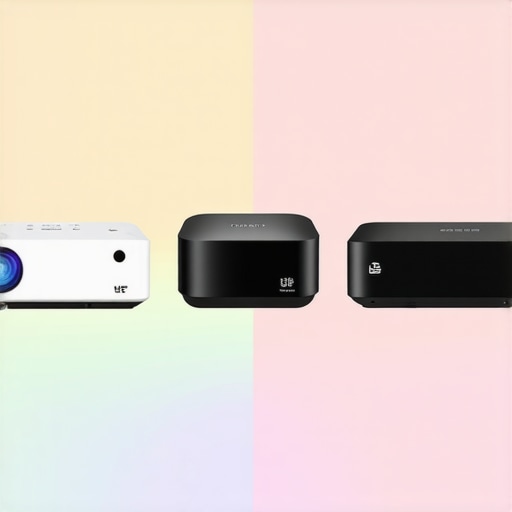
- Advantages: Cutting-edge resolution potential, sleek modern design, and advanced calibration features improve setup ease.
- Disadvantages: Limited native 8K content, exorbitant prices, higher heat output, and marginal visual gains over top-tier 4K alternatives.
Who Should Consider an 8K Projector?
Ideal for home theater enthusiasts with a flexible budget seeking future-proofing and the latest tech trends, especially if they have dedicated spaces with controlled lighting. Skip this if you prefer proven, high-value performance or are on a tight budget; in that case, a premium 4K projector offers better image quality for less.
The Last Word: Is It Worth It?
Don’t be persuaded by the hype; current 8K projectors are more of a marketing ploy than a necessity. For unforgettable movies, sharp detail, and reliable performance, high-end 4K models remain the smarter choice. If you’re eager for the latest tech and have the cash to burn, a top-tier 8K projector might be appealing. Otherwise, save your money and explore excellent alternatives like the best 4K projectors reviewed in our detailed guides; discover more at `- https://laserprojectordeals.com/5-smart-projectors-that-stream-native-4k-sports-in-2026`.