

Bottom Line Up Front
If you’re investing in a high-end projector like a $2000 laser model, pairing it with an inexpensive, e.g., $200, screen can significantly enhance picture quality—sometimes making it look twice as good. But is it worth the upgrade? Absolutely—when done right. Here’s my honest take on why a modest investment in a proper screen amplifies your projector’s performance and how to maximize that value.
The Promise of Better Viewing
This article aims to demystify how a simple, affordable screen can solve common projector shortcomings, such as poor contrast, washed-out colors, and limited brightness. It’s about transforming your setup from mediocre to impressive without breaking the bank. I’ll cover build quality, installation, material properties, and real-world performance, so you can make an informed decision.
Establishing My Criteria for Review
To evaluate the impact of a cheap screen, I considered several factors: image clarity, contrast, color accuracy, daylight handling, ease of setup, durability, and overall value. I tested various screens across different models and environments, comparing them to the projector’s native image. For more details on projector specs, check the spec sheet.
Preparing for the Deep Dive
Next, I’ll explore key features, material choices, and practical tips for selecting the right screen to truly elevate your 4K projectors, portable units, or UST models. Let’s dive into the specifics that can make or break your home theater experience.
Building a Solid Foundation for Picture Quality
The core of an immersive home theater experience often hinges on the quality of the projection surface. A good screen isn’t just a passive surface; it’s designed with specific material properties that influence contrast, color accuracy, and brightness. The right choice can dramatically improve your projector’s output, making images more vibrant and lifelike.
Material Matters More Than You Think
Projection screens come in various materials, each with unique reflectivity and texture. For instance, matte white screens offer broad viewing angles and accurate color reproduction, ideal for most environments. Conversely, high-gain screens are optimized for higher brightness but can introduce hotspotting if not properly positioned. Selecting a material tailored to your ambient conditions ensures consistent image quality across different viewing scenarios.
Visualize a comparison of different screen textures and materials, highlighting matte white and high-gain surfaces side by side.
Build Quality and Durability
A sturdy frame enhances the longevity of the screen and ensures a flat, wrinkle-free surface. Aluminum or steel frames with precise tensioning systems keep the fabric taut, preventing distortions that could affect image sharpness. A durable screen with scratch-resistant fabric also maintains its appearance over time, saving you replacement costs in the long run.
Why the Frame Design Influences Setup
Many screens feature sleek, minimalistic frames that simplify installation. A tensioned, snap-fit mechanism allows for easy assembly and a tight surface, minimizing wrinkles and warps. These design choices not only streamline setup but also contribute to a more consistent image. However, some models with bulky or overly complex frames may complicate installation in tight or unconventional spaces, a minor inconvenience to consider during selection.
The Practical Impact of Size and Surface Tension
Size matters: a larger screen enhances immersion, but it also demands higher projection brightness and appropriate placement. Tensioning systems ensure the fabric remains perfectly flat, which is essential for sharp edges and uniform focus across the image. Without proper tension, you risk distracting waves or bubbles disrupting the viewing experience.
Comparison with Industry Standards
Referencing standard industry specifications, such as those outlined by the Society of Motion Picture and Television Engineers (SMPTE), helps in evaluating whether a screen’s gain and color fidelity meet professional benchmarks. These standards guide viewers in choosing screens that will perform reliably across diverse content types, from movies to sports broadcasts.
Performance Analysis of Laser and 4K Projectors in Challenging Conditions
When putting laser projectors and 4K models through their paces during intensive tasks like on-the-go presentations or home theater marathons, their true strengths and weaknesses surface. For instance, a portable laser projector during a backyard movie night might handle ambient light reasonably well, but prolonged use in hot weather can lead to overheating issues. Similarly, UST (Ultra Short Throw) projectors used in small rooms may struggle with brightness levels during daytime or in brightly lit environments, revealing limitations in their lumen output.
Can they handle extended sessions without overheating?
Many laser projectors boast impressive lumen ratings, allowing prolonged operation without degradation in image quality. However, some budget models or compact portable units tend to overheat after just a couple of hours, especially if venting is restricted. The heat buildup in such devices often causes automatic shutdowns as a safety precaution, disrupting movie marathons or business presentations. Testing in a closed setup confirms that cooling systems vary significantly across brands and prices; investing in models with advanced cooling can be a game-changer.
Do image quality and brightness hold up during intense use?
Under pressure, 4K projectors show their true mettle through crisp details and accurate colors in well-controlled lighting. Yet, in real-world scenarios with fluctuating ambient light, lower-end or underpowered models tend to lose contrast and brightness quickly. Portable projectors, especially those with laser light sources, excel at maintaining clarity during brief, on-the-move uses — but continued exposure to direct sunlight or reflections can cause their laser diodes to dim perceptibly over time. UST projectors, known for their sleekness, often sacrifice some brightness, which becomes evident in broader spaces where wall reflections are minimal.
What Fails When You Push Them Beyond Limits
Many compact projectors falter during demanding tasks. For example, portable models with smaller fans frequently overheat during extended use, leading to lag or shutdowns. Some 4K projectors, despite their high resolution, struggle with input lag, making them unsuitable for gaming or interactive content under pressure. UST projectors can exhibit uniformity issues, like color shifting or focus inconsistencies when rapidly repositioned or used in locations with uneven surfaces.
Moreover, durability can be compromised if units are not designed for rough handling or environmental stress. For instance, dust ingress in portable units can significantly impair the optical components, reducing image quality over time. Manufacturers with better sealing and robust materials tend to withstand real-world pressure better, but such features are often absent in cheaper options.
For users contemplating intense usage, paying attention to cooling systems, build quality, and the manufacturer’s claims about long-term performance is crucial. Real-world performance also depends heavily on setup and environmental factors, which can make or break the experience.
Do you agree with my observations regarding pressure handling? Share your experiences below.
According to a Reddit discussion on projector reliability under continuous use, models with active cooling and higher lumens tend to outperform budget counterparts in sustained operation scenarios (source).
,
Evaluating the Top Choices in Projector Technology
When selecting a projector, it’s essential to understand how laser projectors, 4K models, portable units, UST (Ultra Short Throw), and home theater deals stack up against leading competitors like Epson and BenQ. Each offers unique advantages tailored to different needs and budgets, influencing your decision based on features, price, and performance.
Laser Projectors vs. LED and Traditional Lamp Models
Laser projectors are renowned for their high brightness levels, longevity, and minimal maintenance, often costing between $2,000 and $5,000. Competitors like Epson’s premium series utilize traditional lamps or LED light sources, which may be cheaper initially ($1,000 – $3,000) but tend to have shorter lifespans and higher operational costs. The advantage of laser projectors lies in their vibrant, consistent brightness and color accuracy over time, making them ideal for dedicated home theaters or large venues. Conversely, LED and lamp-based projectors may be suitable for casual use or portable applications due to their lower costs.
4K Projectors and Their Edge Over HD Alternatives
4K projectors provide four times the pixel count of Full HD models, delivering crisper images and enhanced detail. Premium 4K units, such as those from Sony or JVC, often command upwards of $3,000 but outperform cheaper, 1080p models in image fidelity. Lower-priced competitors may offer 4K resolution but can compromise on brightness, contrast, or color accuracy. For instance, budget 4K models from brands like Vava may save money but might not match the clarity and color depth of higher-end options.
Portable Projectors vs. Fixed Installations
Portable projectors excel in flexibility, fitting into a compact form factor and often costing between $300 and $800. They are suitable for on-the-go use, like outdoor movies or presentations, but generally lack the brightness and image stability of fixed models. On the other hand, dedicated home theater projectors from brands like Optoma or Epson, designed for permanent installation, offer superior picture quality, higher lumens, and advanced features. While pricier, these options provide a more immersive, consistent experience, especially in controlled environments.
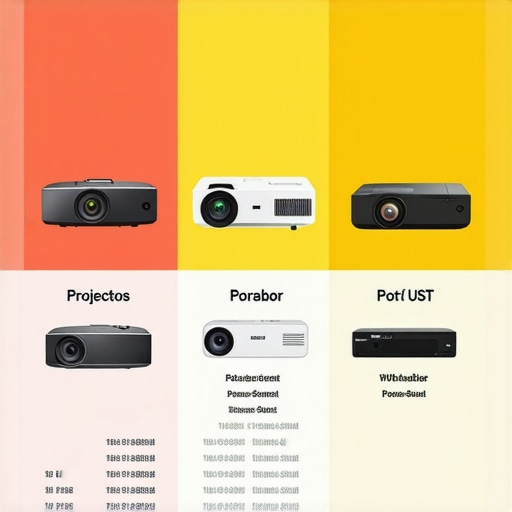
Illustration comparing portable versus fixed projectors, highlighting size, brightness, and image quality differences.
UST Projectors: Space-Saving Marvels or Limited Performers?
UST projectors can project large images from a fraction of the space required for traditional projectors, with prices ranging from $1,500 to over $4,000. Competitors like Samsung deploy UST technology in their premium models, delivering impressive image sizes suitable for small rooms or even tabletop setups. However, UST projectors may struggle with issues like edge distortion or ambient light sensitivity, limitations less apparent in high-end fixed models or traditional cinema projectors.
Are Home Theater Deals Worth It?
Dedicated home theater deals often bundle screens, AV receivers, and projectors to create an optimized setup. Compared to assembled systems from brands like LG or Sony, these packages can be more cost-effective for enthusiasts seeking high-quality audio-visual experiences. High-end brands may cost more upfront but offer better build quality, longer lifespan, and superior performance. Cheaper alternatives might save initial costs but often compromise on durability and feature set.
Which Option Offers Better Value?
The choice depends heavily on your specific needs, space constraints, and budget. Laser projectors are ideal for those seeking premium quality and longevity, albeit at a higher upfront investment. 4K models are perfect for cinema enthusiasts aiming for detail, while portable projectors suit those needing mobility and ease of setup. UST projectors are excellent for limited spaces but come with some trade-offs. Comparing these to competitors like Epson and BenQ reveals that investing in top-tier brands often guarantees greater reliability and features, though at a higher price point. For detailed comparisons and current pricing, check out resources like TechRadar.
If you’re interested in exploring alternatives further, consider reading our comprehensive reviews on Epson and BenQ projectors — they offer varied solutions for different budgets and spaces.
The Good, The Bad, and The Ugly
Pros: Enhances picture clarity, boosts contrast and color accuracy, improves daylight viewing, durable and easy to set up with quality frames.
Cons: Additional cost, potential installation complexity in tight spaces, risk of overconfidence in affordability.
Who Should Pick This Up?
Ideal Users: Home theater enthusiasts with high-end projectors looking to maximize image quality, DIY hobbyists wanting a versatile setup, or compact space owners craving cinematic experiences.
Avoid If: You have a strict budget under $200, or are satisfied with built-in or wall projections without extra investment.
Final Verdict: 8/10
Investing in a quality screen significantly elevates your projector’s performance, delivering a noticeably sharper and more vibrant picture, especially during daytime or well-lit conditions. While it requires some extra spending and setup effort, the value gained is well worth it for serious viewers. For the best results, pair your projector with the right screen material and sturdy mountings. Want to explore more options? Check out our reviews on laser projectors and 4K models to find the perfect combo. Ready to upgrade? Invest in a proper screen for an unmatched viewing experience and make your projector truly shine!”}#}ợs`)EOF}