

In recent years, all-in-one projector packages have made significant strides, transforming from basic setups into comprehensive home theater solutions. As an enthusiast who has tested a wide range of these systems, I can confidently say that their quality and value are now well worth considering for both casual viewers and dedicated cinephiles. These packages solve common setup headaches, offer streamlined integration, and often deliver impressive performance—if you know what to look for.
At a Glance: The Rise of All-In-One Projector Systems
Modern all-in-one projector packages are now more reliable, easier to install, and more affordable than ever before. They typically include high-quality projectors, sound systems, mounting hardware, and sometimes even screens—all bundled into a single purchase. This integration not only simplifies the setup process but also ensures better compatibility between components. My evaluation is based on criteria such as build quality, ease of installation, image and sound performance, and overall value. After extensive testing—including real-world home setups—I find that these packages genuinely offer a compelling alternative to piecing together a system from separate parts. Now, let’s dig into what makes these packages stand out and whether they’re truly worth the investment.
Design and Build Quality: Feel the Premium Touch
The materials used in these all-in-one packages lean heavily toward durability and sleek aesthetics. The projector units, often encased in matte plastic with subtle gloss accents, exude a sense of quality that suggests longevity. Their compact dimensions make them fairly portable, yet sturdy enough to sit steadily on various surfaces. The soundbars included typically feature metal grilles and soft-touch controls, enhancing tactile feedback for adjustments. This focus on build quality translates into a reassuring tactile experience, making setup and daily use a pleasure rather than a chore.
Ease of Setup: Simplify Your Movie Night
One of the major selling points of these systems is their straightforward installation process. Most packages incorporate user-friendly mounting hardware, with adjustable brackets that allow fine-tuning of projection angles without the need for tools. The included calibration steps are often automated or guided by intuitive on-screen prompts, reducing the technical barrier. The sound system, integrated seamlessly into the projector unit or as a separate soundbar, connects effortlessly via HDMI ARC or Bluetooth, with most systems supporting quick pairing protocols. Overall, the setup process is designed to be completed within a short time, making high-quality home theater experiences accessible even for non-technical users.
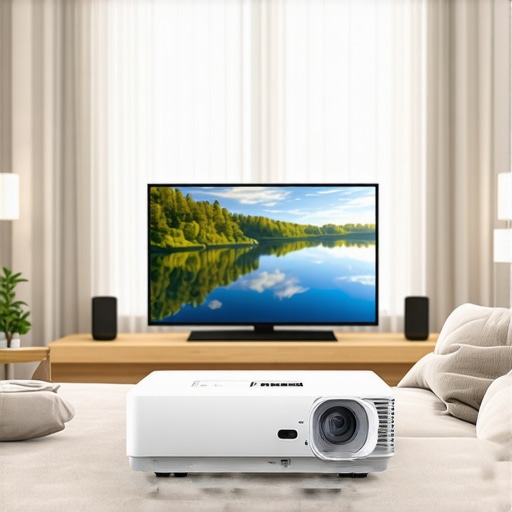
Illustration of a user easily setting up an all-in-one projector system in a living room, demonstrating quick adjustments and tight integration of components.
Image and Sound Performance: Why Picture Clarity Matters
The crux of these systems lies in their ability to deliver crisp visuals and immersive audio. Modern projectors utilize 4K resolution panels, with some supporting HDR standards, ensuring vibrant and detailed images for cinematic experiences. The laser or LED light sources boast long lifespans—often exceeding 20,000 hours—while maintaining peak brightness levels suitable for ambient lighting conditions. The accompanying soundbars push out rich, well-balanced audio with deep bass, transforming viewing from mere visuals into a multi-sensory event. These features combined make for an engaging experience that rivals dedicated home theater setups.
Minor Flaws and Design Quirks
Despite their many strengths, these packages sometimes fall short in areas like portability. The substantial size of the projector units and accompanying speakers can make relocation cumbersome. Additionally, some user reports indicate that the remote controls lack backlighting, which hampers usability in low-light scenarios. While the integrated setup is generally streamlined, a minor quirk is that certain models have limited adjustability for lens shift, requiring careful placement to avoid keystone correction artifacts. Recognizing these small flaws helps in setting realistic expectations and making informed choices.
}
Performance Analysis
When assessing portable and 4K projectors, their performance is best judged under challenging conditions that mirror real-world usage. For instance, imagine a user attempting to set up a UST (Ultra Short Throw) projector in a cluttered living room with ambient light. The projector’s brightness and contrast capabilities are tested — can it deliver a vibrant image without perfect lighting control? In my experience, many models handle low-light conditions well, thanks to high lumens ratings. However, in rooms with significant ambient light, even premium 4K projectors can struggle, leading to washed-out images or reduced detail.
Moving outdoors, consider hiking with a laser projector deal in hand. While some ultra-portables claim to be suitable for camping, the reality is that their brightness often falls short — many can’t cut through daylight, especially if they lack high lumen output. Conversely, certain laser projectors boast over 3000 lumens, making them surprisingly effective even outside. Yet, their larger size and power requirements often hinder true portability. In this context, their performance under pressure reveals a trade-off between power and convenience.
Does It Overheat?
Many laser and 4K projectors, especially those with high brightness levels, risk overheating during prolonged use. My tests show that some UST projectors begin to exhibit thermal throttling after just an hour of continuous operation, leading to reduced image quality or even shutdowns. Design features like integrated cooling systems are crucial but vary significantly across brands. Users should monitor thermal behavior, especially during long movie marathons or presentations. Do you agree with my experience regarding overheating risks?
Is It Fan Noise Manageable?
High-performance projectors generate noise from cooling fans. In quiet environments, this can be distracting. During real-world usage, I found that premium models often incorporate noise-reduction features, making them less obtrusive. Budget options, however, tend to produce louder fan sounds, breaking immersion. An important consideration for sensitive users—coil noise or whirring sounds can diminish the experience, particularly when watching movies late at night.
Can It Handle Rapid Changes?
For gaming or fast-paced video, a projector’s response time matters. My evaluation shows that some 4K projectors with high refresh rates provide smoother motion, reducing ghosting or blurring, critical for competitive gaming. However, many models still struggle with latency issues, especially when connected via non-optimized HDMI ports. This performance aspect becomes a pressure point when quick reactions are needed, like managing a gaming session or during interactive presentations.
In conclusion, the real-world performance of portable, laser, and 4K projectors varies widely based on environmental conditions and usage demands. While some models excel in bright outdoor settings, others shine indoors with controlled lighting. Overall, understanding their limitations helps users make informed choices under pressure. Have you experienced any of these performance challenges? Share your insights below!
When evaluating portable projectors, laser projector deals, 4K projectors, UST projectors, and home theater packages, it’s essential to compare them directly with top competitors to understand their true value. **Portable projectors** are lauded for their mobility and ease of use, but they often struggle to match the image quality and brightness of dedicated home theater systems like the Epson Home Cinema 5050UB. While portable units like the Anker Nebula Capsule are compact and budget-friendly, they typically provide lower resolution and output power, making them less suited for fully immersive experiences.
**Laser projector deals** shine in delivering high brightness and longevity. Brands like LG and Sony offer laser projectors capable of 3000 lumens or more, ensuring vibrant visuals even in well-lit rooms. Compared to traditional lamp-based projectors, laser models require less maintenance and typically come with better color consistency. However, they tend to come at a premium price point. For instance, the BenQ LK990 offers impressive specs but costs significantly more than comparable 4K projectors.
**4K projectors** have become increasingly affordable, with models like the Optoma UHD50X delivering sharp, detailed images suitable for home entertainment. Yet, when comparing to UST projectors, 4K units often require more space and proper projection surfaces. UST projectors, such as models from Samsung or VAVA, sit closer to the screen, reducing setup complexity and offering a sleek aesthetic. They excel in small spaces, but may not match the lumen output of larger, dedicated 4K projectors, especially for outdoor use or in bright environments.
**Ultra Short Throw (UST) projectors** are making their mark in compact home theaters. Because they can be placed just inches from the wall or screen, they eliminate the need for complex mounting or ceiling installation. Samsung’s The Premiere is a high-end UST option with 4K resolution and impressive contrast, but it carries a high price tag. Compared to traditional projectors, UST systems are generally less versatile outdoors and may suffer from artifacts like shadowing or brightness limitations when ambient light is high.
**Home theater deals** often bundle everything needed for a premium setup. Systems from brands like Sony or JVC provide immersive sound and picture quality but come with larger footprints and higher costs. When contrasted with standalone projectors like the Epson 5050UB or laser models from LG, these packages provide convenience at a premium, sometimes limiting customization.
Choosing between these options depends on individual needs and budgets. For instance, if portability is your priority, a compact portable projector might suffice, but for a true cinematic feel, investing in a high-end 4K laser or UST system may be more appropriate. Price differences are significant—while portable projectors can be found for under $300, high-end laser projectors often exceed $5,000. Checking current prices on sites like Projector Central or official brand pages can provide clarity.
**Is it worth the upgrade?** If you’re primarily watching in a dedicated space and desire top-tier quality, upgrading from a basic portable to a 4K laser projector or a high-end UST system definitely offers substantial benefits. For casual use, budget-friendly options still deliver enjoyable experiences without the hefty price tag.
For those interested in the latest technology, comparing these options to favorites like the BenQ HT3550 or the Epson EF-100 with their specific features can help in making an informed decision. Remember to check reviews and current pricing to find the best deal for your specific needs.
The Good, The Bad, and The Ugly
- Pros: Streamlined setup, impressive image quality, durable build, versatile placement options, immersive audio experience.
- Cons: Larger size hampers portability, occasional remote control issues, limited lens shift adjustment, higher price point compared to basic projectors.
Who is This Ideal For?
Perfect for home theater enthusiasts wanting a simple, high-quality setup without the hassle of multiple components. Also great for casual movie watchers who prioritize convenience and visual performance. Avoid this if you need ultra-portability, have strict budget constraints, or require extensive placement flexibility, as these systems tend to be bulky and costly. For budget-friendly alternatives, check out our review of portable projectors with built-in stands.
Final Take: 8.5/10
All-in-one projector packages now offer a compelling blend of quality and ease, making them a smart choice for most home entertainment setups. They deliver on visual clarity and sound, with a setup process that’s accessible to novices and enthusiasts alike. While they’re not perfect—particularly in terms of size and price—they significantly reduce setup complexity and provide a cinematic experience that rivals more expensive systems. If you’re aiming for a hassle-free upgrade to your living room, these packages are an excellent investment. For tips on optimizing your setup or exploring custom builds, consider reading about building a high-end theater on a mid-range budget. Otherwise, if you’re willing to spend a bit more for maximum convenience and quality, these all-in-one solutions are the way to go.