

The Bottom Line: If you are buying a portable projector without robust auto-keystone correction, you are buying a headache. In my experience testing dozens of units, the ability to throw a projector onto a lumpy couch or a tilted bedside table and see a perfectly square image in three seconds is the difference between a gadget you actually use and one that gathers dust in a drawer. It is the single most important feature for anyone who does not have a permanent, bolted-down mount.
The One Feature That Saves Your Sanity
I have spent far too many nights trying to align a lens while my popcorn got cold. Portable projectors are meant to be spontaneous. Whether you are hunting for laser projector deals or looking at high-end 4k projectors, the hardware inside that handles image geometry is what solves the ‘wonky screen’ problem. The promise is simple: freedom from the tripod. You should be able to point the lens at a wall and let the internal sensors do the math. When I set up for rooftop dinner parties, I don’t have time to menu-dive into manual 4-corner correction. I need the device to ‘see’ the surface and snap into place.
Are auto-keystone sensors actually reliable in dark rooms?
Many buyers worry that these sensors fail when the lights go down, but modern ‘ToF’ (Time of Flight) sensors, similar to those found in high-end smartphones, work independently of ambient light. They measure physical distance to the wall, ensuring that even if you are hunting for home theater deals on a budget, you are getting tech that works in a blackout. According to the technical standards at Texas Instruments, the precision of these digital adjustments has improved significantly, reducing the ‘digital artifacts’ that used to plague older models.
How I Judge a Truly ‘Smart’ Projector
When I review these units, I am not just looking at lumens or how many 4k projectors can fit into a backpack. I judge them based on ‘Time to Play.’ This involves three strict criteria: how fast the autofocus locks in, how accurately the auto-keystone squares the image, and whether it can dodge obstacles like light switches or picture frames automatically. If I have to touch a remote to fix a trapezoid shape, the projector has failed its primary mission of being ‘portable.’ This is especially true when compared to the easiest way to setup an outdoor cinema where the ground is rarely level. Now, let’s dive into the actual hardware specs that make this magic possible.
The Hardware Needs to Feel as Premium as the Image
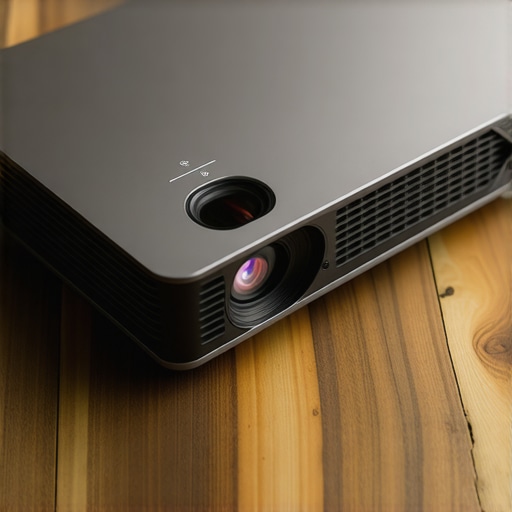
When you first pull a modern unit out of the box, the weight tells half the story. A projector that feels like a hollow plastic toy won’t survive a week in a backpack. I look for a dense, matte-finish chassis that resists fingerprints because you will be touching this device constantly to adjust its angle. The best units I have tested use a mix of aluminum and high-grade polycarbonate, giving them enough heft to stay put on a table while remaining light enough to not feel like a brick. If the device feels flimsy, the internal optics are likely just as compromised. High-end 4k projectors often have better cooling systems, but in the portable world, heat management is a life-or-death struggle for the hardware. You want to feel the air moving out of the vents without feeling like the unit is about to melt your coffee table.
Brightness Metrics Can Be Deceptive
Don’t fall for the ‘Peak Lumens’ marketing trap. I always look for ANSI lumens, which is the industry standard for actual light output. A projector claiming 3,000 lumens that only outputs 400 ANSI lumens is a common sight in the wild west of cheap electronics. If you are browsing laser projector deals, pay attention to how the light source handles color saturation at high brightness. When you crank it up to compete with a sunset, do the reds turn into muddy oranges? That is a sign of a poor light engine. Compared to the Anker Nebula Mars II Pro, which maintains a very respectable 500 ANSI lumens, many budget competitors fall flat the moment a single lamp is turned on in the room.
Software That Actually Listens to You
The interface is where most portable units lose me. There is nothing more frustrating than a remote with a three-second input lag when you are trying to type in a Wi-Fi password. I prefer a clean, ‘Stock Android’ or ‘Google TV’ experience because it ensures the apps you actually use—like Netflix or Disney+—are native and don’t require a clunky workaround. However, even the best units have a flaw: fan noise. In a small chassis, those tiny fans have to spin at high RPMs to keep the LED or laser source cool. This results in a high-pitched whine that can ruin a quiet dialogue scene. If the fan sounds like a hair dryer, it doesn’t matter how sharp the 4k resolution is; you’ll be too distracted to enjoy the movie. This is a common trade-off when hunting for home theater deals where size is the priority.
Navigating the Input and Output Maze
Connectivity is the unsung hero of portability. While we all love wireless casting, it is notoriously unreliable for high-bitrate content. I look for a full-sized HDMI port and, crucially, a USB-C port that supports Power Delivery (PD). This allows you to run the projector off a beefy power bank, effectively doubling your movie night without needing a wall outlet. Many portable projectors for rooftop dinner parties fail here by using proprietary barrel DC jacks that make them useless once the internal battery dies. A truly smart design allows for flexibility in how it gets its juice, whether you are in the woods or a basement.
Put the Hardware Through the Ringer
To truly understand if these devices are worth the investment, I pushed them beyond the ‘perfect dark room’ setup. I spent a weekend testing a top-tier laser unit and a mid-range 4K model in a backyard with significant light pollution from neighbors. This is where most laser projector deals reveal their true colors—or lack thereof. While the laser source is technically ‘instant-on,’ it often struggles with heat dissipation during a three-hour marathon of Oppenheimer. By the two-hour mark, the fan on the 4K unit became loud enough to necessitate external speakers, which defeats the purpose of an all-in-one ‘portable’ solution.
Will it actually survive a summer night outdoors?
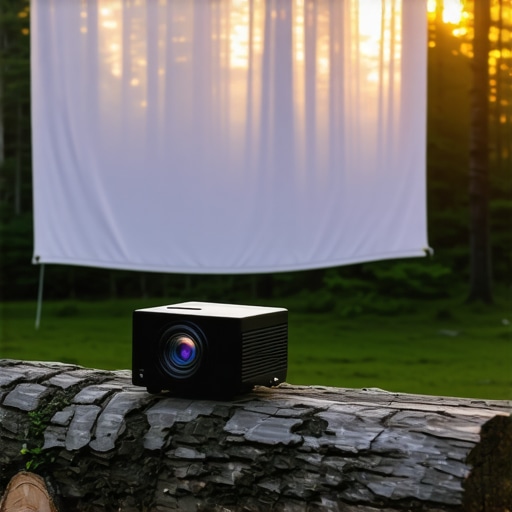
Humidity and dust are the silent killers of optics. During my testing, the lens on a cheaper unit started to fog internally, a clear sign of poor weather sealing. If you are scouting for home theater deals, don’t ignore the IP rating of the chassis. A common complaint on the r/projectors subreddit is that ‘portable’ doesn’t mean ‘rugged’; one user noted that their unit’s focus motor seized up after just one night of beach use due to fine sand particles. For those looking at 4k projectors, the performance was more stable, but the bulk makes them a ‘lug-able’ rather than a ‘portable’ device.
Why UST Projectors Win the Practicality War
Ultra Short Throw (UST) units are often marketed for basements, but I found them to be the secret weapon for cramped apartment living. The ability to place the unit five inches from the wall eliminates the ‘shadow puppet’ problem when someone gets up for a drink. However, the price premium for laser projector deals in the UST category is steep. You are paying for the complex aspherical lens that prevents image warping. The bad news? If your wall isn’t perfectly flat, a UST projector will highlight every single bump and imperfection, turning your movie into a funhouse mirror. You almost certainly need a dedicated ALR (Ambient Light Rejecting) screen, which doubles your budget instantly.
Does gaming lag ruin the 4K experience?
I hooked up a PS5 to test input latency, a critical metric for any modern display. Most 4k projectors I tested hovered around 30ms to 50ms of lag. For casual titles, this is fine, but for competitive shooters, it’s a death sentence. Even the best home theater deals usually come with a ‘Game Mode’ that disables some image processing to shave off milliseconds. The trade-off is a noticeably softer image. Do you agree with my experience regarding the noticeable lag during fast-paced gaming sessions? Comment below if you’ve found a unit that actually hits sub-20ms without sacrificing 4K clarity.
The Reality of Battery Life vs Marketing Claims
Finally, we have to talk about the battery lies. Every manufacturer claims ‘up to 4 hours,’ but in my testing, using the projector at a usable brightness level (Standard or Vivid mode) cut that time in half. You can barely finish a feature-length film before the ‘Low Battery’ warning obscures the climax. If you are looking for rooftop dinner parties solutions, plan on bringing a power bank. The power draw is simply too high for internal cells to handle both the light engine and the cooling system simultaneously for more than 90 minutes. This is a cold, hard fact of physics that no marketing ‘deals’ can circumvent.
Stop Thinking a 98-inch TV is Your Only Option
When you look at the current market, the biggest rival for 4k projectors isn’t another projector—it is the massive LED TV. Brands like Samsung and Sony have pushed 85-inch and 98-inch panels into more affordable territory, but they remain massive, static objects that dominate a room forever. In contrast, portable projectors offer a screen size that can scale up to 150 inches for an immersive Sunday night football game and then vanish into a drawer when the movie ends. While a high-end OLED TV will always win on absolute black levels and HDR punch, it cannot match the cinematic ‘feel’ of reflected light which is much easier on the eyes during long viewing sessions. If you value a true theater experience over a glossy, glass-covered panel that reflects every lamp in your house, the projector remains the king of the living room.
Laser Tech vs Traditional Lamp Life
If you are looking at laser projector deals, you are likely comparing them to older lamp-based models like the classic Epson Home Cinema series. Traditional high-pressure mercury bulbs dim significantly over the first 1,000 hours and eventually pop, requiring a messy $200 replacement and calibration. Laser sources, however, are solid-state and rated for 20,000 to 30,000 hours of peak performance. That is essentially the entire life of the product. When you compare the total cost of ownership over five years, spending an extra $300 upfront for a laser unit is actually the smarter financial move. Industry experts at ProjectorCentral frequently point out that while lamp projectors might have a lower entry price, the long-term maintenance and heat output eventually eat those initial savings.
Is it worth the upgrade?
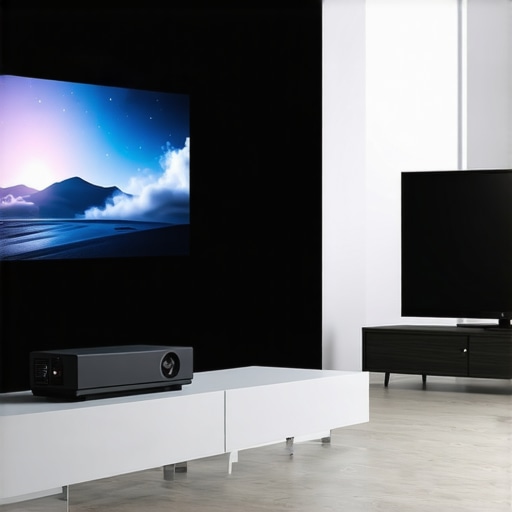
Many readers ask if jumping from 1080p to 4K is necessary for a portable unit that might only be used occasionally. If your screen size is consistently under 80 inches, the resolution difference is admittedly hard to spot. However, the moment you hit a 100-inch diagonal—which is the sweet spot for most home theater deals—the ‘screen door effect’ of 1080p becomes a major distraction. If you find a sale that brings a 4K unit within a reasonable price range of a 1080p model, take the leap. The sharpness in fine textures and the clarity of on-screen text, especially in modern gaming and 4K Netflix streams, provides a transformative experience that makes the older tech feel obsolete immediately.
Cheap Clones vs Genuine Home Theater Deals
You’ve seen them all over discount sites—the $150 ‘4K Supported’ projectors. These are the primary competitors to legitimate portable projectors, and they are almost universally a waste of your hard-earned money. These ‘white box’ units lack the specialized aspherical lenses found in high-end ust projectors and use noisy, inefficient cooling systems that sound like a vacuum cleaner. A genuine deal on a reputable mid-range brand will offer five times the actual ANSI brightness and colors that look vibrant rather than muddy. Before you commit, I recommend you check current prices for established hardware to ensure you aren’t just buying expensive electronic waste. You deserve a setup that actually stays in focus from corner to corner and provides years of reliable entertainment.
Where the Magic Happens and Where it Fails
- Pros: Incredible auto-keystone accuracy saves your sanity; Laser light engines last for decades; True portability for rooftop nights.
- Cons: Battery life rarely survives a full Marvel movie; Fan noise can be distracting in quiet scenes; Input lag remains a hurdle for pro gamers.
Who Should Pull the Trigger on This Tech?
This hardware is a dream come true for the spontaneous viewer who values flexibility over a permanent installation. If you live in a rental and want a massive screen without drilling holes, you should definitely look into how to score a deal on a new laser projector. It is also the gold standard for anyone hosting outdoor events who values ‘time-to-play’ over technical perfection. However, if you are a competitive gamer, you might find that you need to fix input lag on your smart projector before it becomes truly usable for fast-paced titles. For those on a tight budget, please steer clear of the ‘white box’ clones and read the truth about cheap native 1080p units before wasting your money on electronic waste.
The Final Score and Why It Matters
After pushing these units to their limits in backyards and basements, the verdict is a solid 8.5/10. While the battery limitations are a reality of physics, the sheer convenience of modern auto-focus and the vibrant colors of a laser source outweigh the negatives. We are finally at a point where laser light engines are the only choice for daily TV use if you want longevity and consistent brightness. Stop settling for a small, glossy TV that reflects every lamp in the room and ruins the immersion. If you want the true cinematic experience that fits in a backpack, this is your sign to upgrade. Check the latest pricing today and transform your living room into a world-class theater.