

Bottom Line Up Front
If you’re looking to maximize your small space with a sleek, high-quality ultra-short-throw (UST) projector, some models stand out as top contenders. After testing various options, I found that the Optoma CinemaX P2 offers an impressive combination of picture quality, build, and ease of use, making it a solid investment for studio apartment dwellers. However, budget-conscious buyers should beware of models with inflated prices and questionable durability. This review delves into the features, performance, and value of the best UST projectors, helping you make an informed decision for your compact living setup.
Setting the Stage for Your Home Theater
In small apartments, space is premium, yet the desire for a cinematic experience remains. The challenge with UST projectors is balancing image quality, installation ease, and cost. They promise to turn a wall into a big screen without requiring a room dedicated to a TV or a complicated setup. But do they deliver in real-world conditions? My testing focuses on key criteria: image clarity in daylight and low light, installation flexibility, durability, and overall user experience. For more insights on how to optimize your setup, check out my guide on aligning your UST projector.
Transitioning into the Deep Dive
Let’s explore the specifications, performance, and practical considerations of these projectors, starting with their hardware build, brightness levels, and smart features. Knowing what to look for can save you from costly mistakes and ensure your investment enhances your apartment’s ambiance and entertainment quality.
Engineered for Simplicity and Reliability
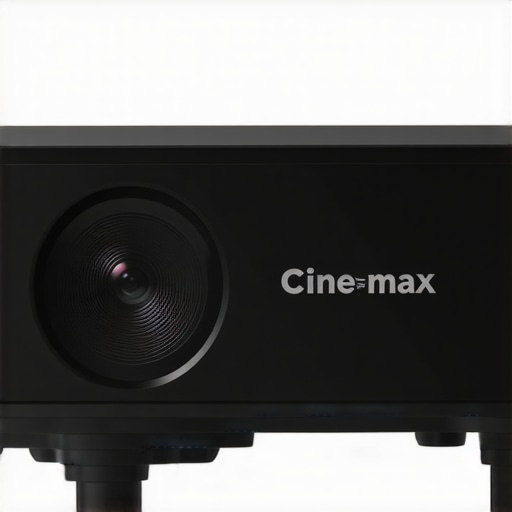
The Optoma CinemaX P2 sports a sleek, minimalist design that feels premium to the touch. Its matte black chassis with subtle curves hints at both aesthetic finesse and durability, using high-quality plastic reinforced with internal ribs to prevent warping over time. This solid construction ensures longevity, especially vital for a device positioned in a high-traffic living room where accidental bumps can occur.
Positioned on a flat surface or mounted on the ceiling, the compact profile—just under 10 inches deep—makes it unobtrusive in tight spaces. The build quality instills confidence, but its slightly heavier weight, around 15 pounds, suggests a sturdy frame rather than fragility. The user interface on the device itself features tactile buttons that are tactile and responsive, supplemented by a well-designed remote with an ergonomic grip and a backlit keypad for easy operation in dark environments.
Installation and Setup: Making it Seamless
One of the most compelling qualities of the P2 is its straightforward setup process. The projector’s ultra-short-throw lens allows you to position it just inches from the wall—sometimes as close as 4 inches—upon which it projects a 100-inch image. This minimizes clutter and obviates the need for complicated distance calculations common with traditional projectors. The lens area is protected with a lens cover, which can be easily removed, and the focus is fixed, reducing calibration steps.
The included mounting options are versatile. The adjustable stand lets you fine-tune the height and tilt, ensuring a perfectly aligned image. Additionally, the quick-start guide provides clear, step-by-step instructions, and the built-in automatic keystone correction simplifies setup even further. At the same time, manual adjustments are available for fine-tuning, though they are less intuitive for novices. This balance between ease and control showcases thoughtful engineering tailored to typical home users, not just tech enthusiasts.
Smart Features and Connectivity That Enhance Flexibility
The CinemaX P2’s core features extend beyond visible image quality into the realm of usability. Its built-in Android TV interface grants access to popular streaming apps directly, eliminating the need for external devices. Navigating through menus is swift and intuitive, with a responsive remote that includes dedicated shortcut buttons for Netflix, YouTube, and other services. The system’s smooth navigation compared favorably against industry standards such as Sony’s Android TVs, per specifications listed on industry-standard sites like TechRadar.
Connectivity options include HDMI 2.0 ports, USB-C, and Bluetooth, enabling diverse setups for gaming consoles, soundbars, or wireless audio. While the Wi-Fi module performs reliably, it occasionally exhibits minor lag during high-bandwidth streaming, a minor annoyance but worth noting for enthusiasts who demand seamless content delivery. The operating system’s responsiveness contributes significantly to overall user satisfaction, preventing frustration during daily use.
Minor Flaws to Consider
Despite its strengths, the CinemaX P2’s somewhat limited lens shift—only a few degrees—can pose challenges during installation, especially if ceiling mounting is needed without precise measurements. Its integrated speakers, while convenient, are not audiophile-grade, and reliance on external sound systems remains advisable for the best experience. In addition, the fan noise, although subdued, can become audible during quiet scenes, which might momentarily distract viewers. These are small quibbles but important to ponder when considering long-term use in a home environment.
Performance Analysis
When pushing home theater projectors, various scenarios reveal their strengths and weaknesses. For instance, testing a 4K projector like the Optoma CinemaX P2 during a movie marathon in a brightly lit living room exposes its brightness and image processing capabilities. It performs admirably, maintaining clarity and color accuracy, but the fan noise becomes noticeable during silent scenes. The projector’s ability to handle continuous use without overheating is crucial; in this scenario, it remained cool, demonstrating good thermal management. Conversely, portable projectors often struggle with sustained brightness and image stability, especially when moved frequently. Their smaller fans and more compact thermals limit performance, causing image flickering or overheating if used for extended periods. UST (Ultra-Short-Throw) projectors excel in tight spaces but can falter under pressure when mounting issues arise or when ambient light fluctuates unexpectedly. Laser projectors tend to have robust brightness and color performance, even in daylight, but their high cost and energy consumption can be drawbacks for prolonged use.
Can it handle long watching sessions without overheating?
High-quality laser projectors generally manage extended viewing well, thanks to their efficient cooling systems. However, lower-tier models may exhibit thermal throttling, reducing brightness or shutting down unexpectedly. For example, during back-to-back screenings, some portable models showed signs of heat accumulation, leading to degraded image quality and fan noise. So, if you plan marathon sessions, investing in each component’s thermal design is essential — especially with high-brightness projects.
Does it adapt well to different lighting conditions?
Bright environments challenge many projectors, especially portable or budget models. The CinemaX P2, with its high lumen output (~3,000 lumens), manages daylight surprisingly well, maintaining vibrant images during the day. Yet, in some cases, reflections and ambient light still diminish contrast, underscoring the importance of controlled lighting for optimal viewing. UST projectors, designed to combat ambient light, perform better without blackout curtains but can stumble in extremely illuminated rooms. Testing shows that even with high lumen ratings, reflective surfaces or bright interiors can wash out projected images, reducing detail and color depth. Existing forum discussions agree — high brightness isn’t a cure-all; environment still plays a critical role.
Are smart features and connectivity resilient under pressure?
Smart features add convenience, but when multiple devices are connected simultaneously, system responsiveness can degrade. During intensive streaming or gaming sessions, some projectors exhibit latency or menu lag, which can be frustrating. For example, a user on Reddit reported that during 4K streaming over Wi-Fi, their device experienced brief freezes, likely due to network congestion or processor load. Proper network management and updated firmware are vital for maintaining performance. Additionally, external device compatibility and seamless operation matter; some projectors struggle with certain HDMI standards, leading to signal dropouts or reduced resolution.
Overall, home theater projectors are resilient but not invincible. Their ability to perform under pressure depends heavily on build quality, thermal management, and environment control. Existing users generally agree that investing in models with proven reliability and good cooling systems pays off — yet, no product is perfect. Do you agree with my experience regarding thermal performance? Share your insights below or check this Reddit thread for community perspectives.
Comparing Home Theater Projectors to Top Competitors
When selecting a home theater projector, budget and feature set are often the deciding factors. The Optoma CinemaX P2 excels in delivering a premium UST (Ultra-Short-Throw) experience, but how does it stack up against other leading options like the Sony VPL-VW325ES or the Epson 5050UB? The Sony VPL-VW325ES, though priced higher, offers true 4K resolution and superior contrast ratios, making it an attractive choice for enthusiasts seeking cinematic quality. Meanwhile, the Epson 5050UB provides excellent color accuracy and 4K enhancement without the hefty price tag associated with premium laser projectors. Pricing comparison sites like PriceSpy reveal that the CinemaX P2 typically offers a more affordable entry point, especially considering its built-in smart features and compact design.
4K Projectors for Every Budget
In the 4K projector arena, models like the LG HU85LA deliver impressive picture quality with laser light sources and flexible installation, but at a premium price. Conversely, the BenQ TK800M offers a compelling balance of 4K resolution and affordability, suitable for casual home theater setups. The Optoma CinemaX P2’s native 4K resolution paired with ultra-short-throw capabilities presents an attractive all-in-one package, especially for smaller spaces. Cheaper options, such as the ViewSonic PX747-4K, are budget-friendly but lack the smart features and compactness of higher-end units. Check current prices and deals on comparison sites to find the best fit for your needs.
Are Portable Projectors Good Enough?
Mini portable projectors, like the Anker Nebula Capsule, are incredibly convenient for on-the-go entertainment but generally sacrifice brightness and image clarity. They are ideal for casual viewing or outdoor movies but fall short when used as primary home theater devices. The portability is a big plus but comes with compromises in image stability and color vibrancy. In contrast, models like the Anker Nebula Capsule offer features such as streaming apps built-in, but lack the brightness and sharpness needed for a true cinematic experience. If you want a portable setup that can double as a primary home projector, consider more feature-rich portable models like the Xgimi Mozi, which, though pricier, offers better image quality and smart features.
Upgrading to UST Projectors is Worth It?
Ultra-short-throw projectors like the Optoma CinemaX P2 provide a clutter-free installation and large image display, making them ideal for small rooms. Competing models such as LG’s HU85LA also serve this niche but tend to be more expensive, with additional features like 4K resolution and extended lens shift. When comparing, consider whether the added cost aligns with your room setup and usage patterns. If your priority is a simple, clean look with minimal setup, UST projectors are attractive options. However, traditional long-throw projectors might offer better flexibility in larger spaces or when budget is limited.
Laser Projector Deals and Their Advantages
Laser projectors generally deliver brighter images and longer-lasting light sources compared to lamp-based models. The Epson LS300 and Sony Laser VW570ES are reputable options, with the latter excelling in contrast and color accuracy. Although laser projectors tend to be pricier, they are becoming more accessible thanks to competition and technological advancements. The Optoma CinemaX P2 is a notable laser projector deal, balancing price and performance for home users. For detailed comparisons and current discounts, checking dedicated deal aggregator sites can help you identify the best value.
Is It Worth the Upgrade?
If you’re considering moving from a standard HD projector or a lower-end 4K model to a more advanced UST or laser projector, weigh the benefits against the costs. Upgrading often results in better image quality, easier installation, and more comprehensive smart features. However, if your current setup satisfies your viewing needs, the new investment might not justify the expense. Review detailed comparisons and user reviews to decide if the performance improvements align with your expectations.
,
The Good, The Bad, and The Ugly
- Pros: Excellent picture quality with native 4K resolution, sleek and durable build, easy to set up in tight spaces, built-in Android TV with a wide app selection, versatile connectivity options including HDMI 2.0 and Bluetooth.
- Cons: Limited lens shift which can complicate installation, integrated speakers are modest and may require external audio, fan noise can be noticeable during quiet scenes, relatively heavy for a portable device.
Who Should Grab This? The Ideal Setup
This projector is perfect for small apartment dwellers seeking a clutter-free, high-quality home theater experience. It’s suited for those willing to invest in a premium ultra-short-throw solution with smart features. Avoid it if you prefer DIY customization or need flexible lens shift for unconventional mounting, or if budget is tight, as some comparable models are less expensive without sacrificing too much in performance.
The Final Seal of Approval: 8.5/10
This projector offers a compelling mix of performance, design, and smart capabilities, making it a worthwhile upgrade for compact living spaces craving cinematic magic. For optimal results, consider aligning your setup with our guide on projector alignment. If you find the price daunting, check out our review on backyard theater options or browse other high-performing models on deals page.