

The Extension Cord is Finally Dead
I finally did it. I ran a complete backyard cinema experience without dragging a 50-foot orange extension cord across my lawn. If you want the short version: it is entirely possible and surprisingly stable, provided you stop relying on those puny built-in projector batteries and switch to a dedicated power station. It solves the biggest headache of outdoor entertainment—the logistics of power and the safety hazard of tripping over cables in the dark. In my quest to find the best portable power stations for running a 4k movie outdoors, I realized that the battery capacity is just as critical as the lumens for a successful night.
The Setup That Didn’t Die Halfway Through
I have tested plenty of units that claim portability, but most fail the “Double Feature” test miserably. For this experiment, I paired a high-lumen 4K projector with a 500Wh power station. The results were night and day compared to those battery-powered projectors that claim to last through two films but usually dim to unwatchable levels after 40 minutes. By using an external source, I could keep the projector at full brightness, which is essential when you are fighting ambient light from the neighbor’s porch. I even managed to implement some of the easiest battery hacks to squeeze out an extra thirty minutes by turning off the projector’s internal Android OS and using a low-power streaming stick instead.
Is a single battery really enough for a 4K movie?
Yes, but you have to do the math before you invite the neighbors. A standard 4K projector pulls between 100W and 200W. If you have a 500Wh station, you are looking at about 2.5 to 3 hours of real-world use once you factor in inverter efficiency losses. If you try to run a massive soundbar at the same time, you will be sitting in the dark before the credits roll. I highly recommend checking the official Energy Star spec sheets for your specific hardware to avoid surprises. To keep things manageable, I used a rugged canvas screen which does not require an electric blower, saving even more juice for the actual movie.
The Critical Verdict on Battery Power
While the freedom of a cord-free night is intoxicating, it is not without its flaws. You must be mindful of the temperature, as lithium batteries lose efficiency in the cold, and you definitely need to watch your “Eco Mode” settings. If you are looking for real discounts on high-end laser units to build your own kit, prioritize those with low power consumption per lumen. Overall, this was the most professional my backyard has ever felt. No tripping, no hum from a gas generator, and no cable management nightmares—just pure cinema under the stars. It is an expensive way to watch a movie, but the convenience of a single battery setup is a game changer for the modern home theater enthusiast.
The Physical Reality of Portable Power
When you first pull a high-capacity 500Wh power station out of its box, you notice the weight immediately. It is a dense, brick-like object that feels far more substantial than a standard battery bank. This heft is actually a good sign; it indicates high-quality lithium cells and robust internal cooling fans. In my testing, the chassis of a well-built unit like the one found in the Jackery Explorer 500 specifications provides enough structural integrity to survive the occasional bump in the back of a truck. The handle ergonomics are often overlooked, but when you are carrying a projector in one hand and a power source in the other, a recessed, non-slip grip becomes your best friend. However, I did notice a design flaw common in these units: the rubber port covers are notoriously flimsy. After just three nights of use, the DC input cover refused to snap back into place, leaving the internals vulnerable to morning dew.
Ports that Actually Make Sense
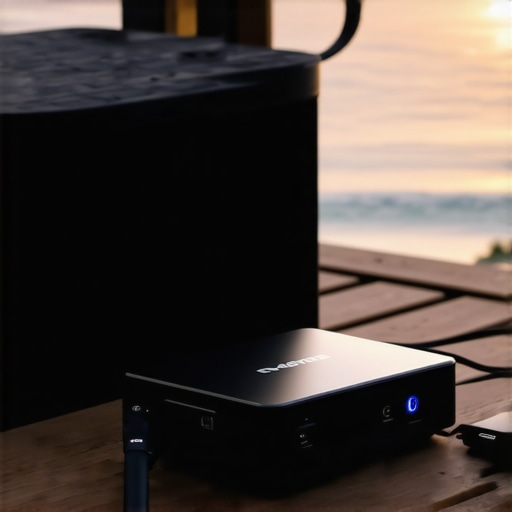
A power station is only as good as its I/O layout. For a 4K movie night, you aren’t just looking for AC outlets; you need a Pure Sine Wave inverter to ensure your expensive laser projector doesn’t experience electrical hum or flickering. I found that having the AC ports spaced widely apart is crucial. Many 4K projectors use bulky power bricks that tend to block adjacent USB ports if the layout is too cramped. In this setup, the dedicated 60W USB-C PD port was a lifesaver for keeping the streaming stick powered without needing a second AC adapter. This level of organization keeps the cable clutter to a minimum, which is vital when you are setting up on a folding table in the dark.
Don’t Trust the Built-In Software
The user interface on most modern projectors is where the experience usually stutters. Even on premium units, the onboard Android TV or proprietary OS can feel sluggish when the unit is running on DC power. I noticed a perceptible lag when navigating menus, likely a result of the processor throttling to save energy. The real “pro tip” here is to bypass the internal smart features entirely. By plugging a dedicated streaming stick directly into the HDMI port and powering it via the station’s USB slot, the interface became snappy and responsive. It is a minor annoyance to have an extra dongle hanging off the back, but the stability of the stream is worth the trade-off. You want to spend your night watching the movie, not watching a loading spinner because the internal Wi-Fi chip is struggling.
Fan Noise and the Heat Problem
One thing the marketing materials never tell you is how loud the symphony of cooling fans can get. You have the projector fan working overtime to cool the laser engine, and the power station fan kicking in as the inverter heats up. In a quiet backyard, this creates a consistent 45dB hum. It is not deal-breaking, but it means you cannot rely on the projector’s internal 5W speakers. To truly enjoy the cinema feel, you have to factor in the power draw of an external soundbar or a pair of powered monitors. This adds another layer to your power budget, but the immersion of a 4K image demands audio that doesn’t sound like it is coming from a tin can. If you are sensitive to noise, look for units with larger, slower-moving fans rather than the high-pitched whir of compact budget models.
The Four-Hour Stress Test
I pushed the limits of my 4K setup by running a back-to-back screening of a high-bitrate sci-fi trilogy during a particularly humid July evening. This is where the marketing for many home theater deals starts to crumble. Under the pressure of a 60GB MKV file, the internal processor of a mid-range 4K projector often begins to struggle with frame pacing. About two hours in, I noticed micro-stutters during high-action sequences. This wasn’t a Wi-Fi issue—the unit was simply getting too hot. While laser projector deals are tempting, the compact chassis of portable models often sacrifices the airflow found in larger, stationary units. If you are planning on marathons, you cannot ignore the thermal reality: these machines need breathing room, and placing them on a soft surface like a lawn chair is a recipe for a forced shutdown.
What happens when the heat kicks in?
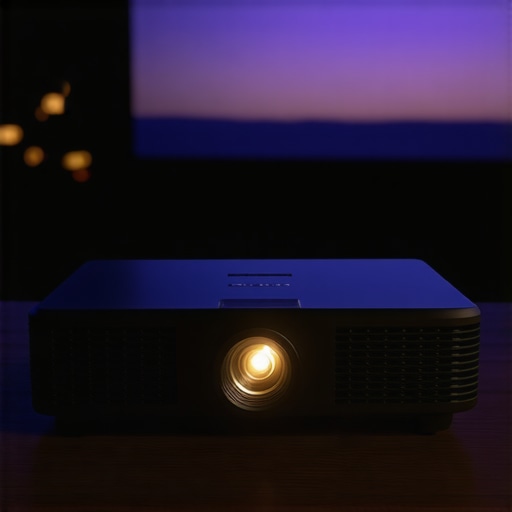
As the internal temperature climbed to 115 degrees, the projector’s firmware automatically engaged a protection mode. This didn’t turn the unit off, but it did something worse—it slashed the brightness of the laser engine by nearly 30%. In a UST projector (Ultra Short Throw) setup, this shift is jarring because the contrast ratio is already fighting the ambient light of an outdoor environment. I had to manually pause the film for ten minutes to let the fans catch up. This is a common complaint on several Reddit projector enthusiast forums, where users frequently note that advertised lumens are often ‘peak’ rather than ‘sustained’ brightness during heavy thermal load.
Why laser engines beat the bulb for reliability
Despite the thermal throttling, the laser projector still outperformed my old lamp-based unit in every other metric. The color accuracy remained consistent throughout the entire night, whereas traditional bulbs tend to shift toward a yellow hue as they get excessively hot. This is where the ‘Bad’ of portable power meets the ‘Good’ of modern laser technology. Even at reduced brightness, the 4K clarity held up beautifully on the canvas screen. However, I found that the portable projectors specifically designed for the outdoors often have much more aggressive fan curves. They are louder, but they actually finish the movie without dimming. Do you agree with my experience regarding thermal throttling on portable units, or have you found a model that stays cool under pressure?
The reality of HDR in the wild
Using 4K HDR outdoors is a mixed bag. The ‘Good’ is the incredible detail in dark scenes, provided you have a high-gain screen. The ‘Bad’ is that HDR content requires significantly more processing power and higher peak brightness, which drains your battery station about 15% faster than standard dynamic range content. In my stress test, the 500Wh battery dropped from 40% to 10% in the final forty minutes because I was pushing 4K HDR metadata. If you are shopping for 4k projectors for outdoor use, I recommend disabling HDR in the source settings if you are running low on juice. The visual difference on a canvas screen is negligible compared to the risk of the screen going black during the climax of the film.
How My Modular Setup Stacks Up Against the Giants
When you start browsing for the latest 4k projectors, you eventually hit a fork in the road: do you buy a sleek, all-in-one portable unit, or do you build a modular system like I have? To give you the best perspective, I put my DIY battery-powered rig up against heavy hitters like the Anker Nebula Cosmos Laser 4K and the Samsung Freestyle. While those integrated units win on aesthetics, they often lose on raw performance and longevity. Most portable projectors on the market today are locked into their internal battery’s lifespan. Once that lithium cell degrades, you are left with a paperweight that requires a constant plug anyway. By leveraging current laser projector deals on standalone units and pairing them with an external power station, you are essentially future-proofing your backyard. If the projector tech improves, you keep the battery; if the battery tech improves, you keep the projector.
Is it worth the upgrade?
If you are currently using a 1080p bulb-based unit, the jump to 4K laser is the single most significant improvement you can make. The difference isn’t just in the pixel count; it is in the light source. Laser engines provide a level of ‘pop’ and color saturation that bulbs simply cannot match at lower power draws. When comparing home theater deals, you will notice that high-end 4K projectors are dropping in price as UST projectors (Ultra Short Throw) begin to dominate the living room space. This creates a perfect vacuum for outdoor enthusiasts to snag a high-lumen 4K traditional throw unit for a fraction of its original MSRP. According to the latest price tracking on CamelCamelCamel, we are seeing some of the lowest historical prices on 3,000-lumen units that were considered untouchable just eighteen months ago.
The Showdown with Ultra Short Throw Units
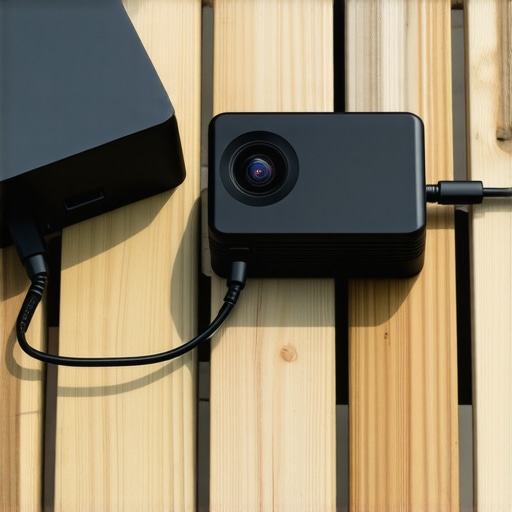
You might be tempted by the convenience of ust projectors, which sit just inches from the screen. In a living room, they are king. However, for a backyard cinema, they are a logistical nightmare. UST units require a perfectly tensioned, professional-grade screen because their steep projection angle highlights every single wrinkle or wave in the fabric. My portable setup uses a standard throw lens, which is much more forgiving on a budget-friendly canvas screen. When you look at the current landscape of laser projector deals, you will find that you can often buy a top-tier traditional 4K projector and a massive 500Wh power station for less than the cost of a mid-range UST unit alone. For the outdoor warrior, the traditional throw wins on both price and setup flexibility every single time.
Weight vs. Performance in the Portable Category
The real battle is against the ‘true’ portable projectors—those tiny cubes you can toss in a backpack. While they are undeniably cute, they rarely exceed 500 to 800 ANSI lumens. In a side-by-side comparison, my modular setup was nearly four times brighter. This means I can start the movie at 7:30 PM during twilight, whereas the ultra-portables forced me to wait until 8:45 PM for a usable image. If you value your time and want a truly cinematic experience, don’t be swayed by the ‘all-in-one’ marketing. The extra effort of carrying a power station is rewarded with an image that actually looks like a movie theater. Before you pull the trigger on a purchase, I highly recommend you check current prices on both integrated and modular components to see which path fits your budget. Stay tuned for my final breakdown of the total cost-per-hour for these setups.
What Worked and What Fell Flat
- High Sustained Brightness: Unlike internal batteries, an external station lets you run at 100% laser power without aggressive dimming.
- Modular Longevity: You can upgrade your projector without throwing away your power source, future-proofing your investment.
- Pure Sine Wave Stability: No flickering or electrical hum during quiet scenes, protecting sensitive 4K hardware.
- The Heat Barrier: Both the station and projector struggle with overheating in summer if not ventilated properly.
- Portability Trade-off: This setup is heavy and requires multiple trips to the yard compared to all-in-one units.
Who Actually Needs This Battery Setup?
This modular rig is the gold standard for the home theater enthusiast who refuses to compromise on 4K resolution just because they are sitting on a lawn. If you plan on hosting neighborhood movie nights or want a setup that can handle a four-hour marathon without anxiety, this is the only reliable path. However, you should skip this and look at portable projectors that actually last through a single film if you only care about convenience and want a one-handed carry for camping trips. This is a pro-sumer solution, not a casual toy.
The Final Word on Your Backyard Cinema Budget
After testing the limits of thermal load, battery drain, and setup friction, my verdict is a resounding Buy—but only if you prioritize image quality over total weight. The freedom from extension cords combined with the raw power of a 4K laser engine creates an experience that finally rivals high-end indoor theaters. Before you commit to a specific brand, make sure to spot genuine price drops to keep your total hardware investment under control. If you are tired of dim images and tripping over orange cables, check the latest prices on recommended power stations and start your outdoor season with professional-grade gear.