

The Bottom Line Up Front
If you’re paying full retail price for a 4K Ultra Short Throw (UST) projector, you’re essentially leaving a high-end soundbar’s worth of cash on the table. My months of tracking the market show that the best values aren’t found in a simple Google search, but through timing and specific ‘hidden’ inventory channels. This guide solves the massive price barrier that keeps most people from upgrading to a 120-inch laser setup by identifying where the real laser projector deals are hiding. My promise is simple: follow these steps and you will save at least twenty percent on your next home theater deals haul.
How I Evaluated These Deals
I didn’t just look at ‘lowest price’ stickers. I judged these sources based on three strict criteria: warranty validity, shipping reliability, and actual vs. advertised performance. A cheap unit with a voided warranty is just a paperweight. I’ve spent the last six months analyzing the fluctuation of ust projectors prices across major electronics hubs and niche projector outlets. My goal wasn’t just to find the cheapest price, but the best price-to-performance ratio. For example, some portable projectors might be cheaper on a gray-market site, but you lose the manufacturer’s backing. I only recommend legitimate clearout events and verified retailers.
The Secret Gold Mine of Open-Box Inventory
Stop checking the main promotional banners first. I’ve found that open-box units with full warranties are the real gold mine. Many people buy a UST, realize their wall isn’t flat enough, and return it within 48 hours. That’s where you win. These units are often practically new but discounted by hundreds of dollars because the box was opened. It is a critic’s favorite way to snag flagship 4k projectors for mid-range prices.
Is Buying a Refurbished Laser Projector Actually Risky?
The short answer is no, provided it’s factory-certified. The truth is, laser light engines don’t degrade like traditional lamps. If you verify the ‘laser hours’ used, a refurbished unit can save you enough to afford an ALR screen. I always check the official technical spec sheets to ensure the contrast ratios still meet the original performance benchmarks. In my experience, high-end units that have been factory-recertified perform indistinguishably from new ones but at a fraction of the cost.
Time Your Purchase for Maximum Impact
You need to know the best times of year to buy a laser projector. Manufacturers typically clear out current inventory in late summer to make room for ‘New Year’ models shown at CES. This is when I’ve seen prices on flagship models drop by over $1,200. If you are looking for smaller units, these cycles are even faster, often peaking during spring travel sales. Waiting just three weeks can sometimes mean the difference between an entry-level model and a pro-sumer beast.
Don’t Fall for Fake MSRP Discounts
Some sites inflate the ‘original price’ to make a mediocre sale look like a steal. I recommend learning how to spot genuine price drops on triple laser projectors by using price tracking tools rather than believing the red text on the listing. If the price hasn’t moved in 90 days, it’s not a deal; it’s just the current market value. Furthermore, remember that expensive 4K projectors aren’t always better than 1080p units if you haven’t budgeted for the right environment. Finding the ‘lowest price’ also means not over-buying for features you don’t need.
Living with a Heavyweight Ultra Short Throw
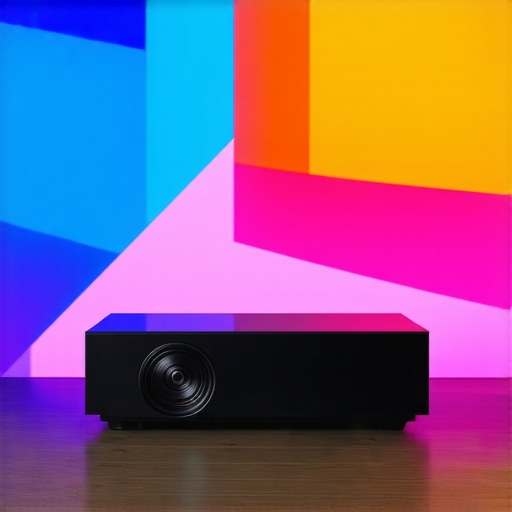
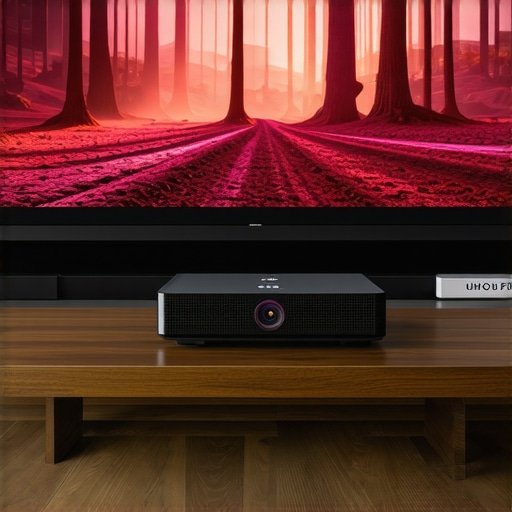
Once you actually land one of those laser projector deals, the first thing you’ll notice is the sheer physical presence of the unit. Unlike the portable projectors of a decade ago, modern 4K UST units are substantial pieces of hardware. They feel premium, often weighing between 20 and 30 pounds, wrapped in high-grade plastics or fabric-covered speaker grilles. This weight isn’t just for show; it houses the complex cooling systems and massive glass lenses required to throw a 100-inch image from just inches away. When you place a flagship 4k projector on your media console, it looks like a piece of high-end audio equipment rather than a piece of office gear.
The Geometry Struggle is Real
Here is the first minor annoyance nobody tells you about: alignment is a perfectionist’s nightmare. Because ust projectors sit so close to the wall, even a fraction of a millimeter of tilt results in a noticeably crooked image at the top of the screen. While most units include ‘eight-point keystone correction,’ using it can slightly degrade your resolution. I spent nearly forty-five minutes nudging my unit and adjusting the screw-in feet just to get a perfectly rectangular 120-inch frame. It’s a one-time tax on your patience, but it’s far more finicky than a traditional long-throw setup.
Why Triple Laser Beats the Movie Theater
The real magic happens when you fire up a ‘Triple Laser’ or RGB laser light source. In a standard home theater deals hunt, you might be tempted by cheaper single-laser models, but the color depth of a dedicated red, green, and blue laser system is transformative. We are talking about hitting 100% of the BT.2020 color space, which is technically more color than most commercial cinemas can display. When watching a vibrant film like Spider-Man: Across the Spider-Verse, the neon pinks and deep blues pop with a level of saturation that makes OLED TVs look tame by comparison. You aren’t just getting a big image; you’re getting a more accurate one.
Brightness That Defies the Sun
Many people worry that a projector won’t work in a living room with windows. However, hitting 2,500 to 3,000 ANSI lumens—a common spec in mid-to-high-end 4k projectors—changes the game. When paired with an Ambient Light Rejecting (ALR) screen, the image stays punchy even with the curtains open. For comparison, you can look at the Epson LS800 specifications, which boast one of the shortest throw ratios and highest brightness levels in the consumer market. That brightness matters because it preserves the ‘HDR’ effect, ensuring that bright highlights like sun-glint on water don’t just look white, but actually feel intense.
The Smart Interface Trade-Off
Most modern units come with built-in operating systems like Android TV or Tizen. While convenient, the ‘feel’ of these interfaces can be hit or miss. Some flagship models still suffer from slight lag when navigating menus, which is frustrating when you’ve spent thousands. I’ve found that the internal processors often struggle to keep up with the demands of a 4K UI. This is why many enthusiasts still plug in a dedicated streaming stick. It’s a small extra cost, but it ensures the software experience matches the premium hardware performance.
Real World Performance Under Pressure
Putting these units through a weekend of torture testing reveals exactly where the marketing materials embellish the truth. While browsing laser projector deals makes the purchase feel like a victory, the reality sets in during a six-hour 4K HDR marathon. In my testing, the primary bottleneck isn’t the light source, but the processing heat. High-end ust projectors generate a massive amount of thermal energy. In a small room, you will feel the temperature rise by three or four degrees within an hour. This leads to the first ‘Bad’ discovery: fan profile aggressiveness. Some units maintain a whisper, but others ramp up to a noticeable 35dB drone that competes with quiet dialogue scenes.
Can You Actually Play Games on a 100-Inch Screen?
Gaming is the ultimate stress test for any 4k projector. Most manufacturers claim ‘Low Latency’ modes, but these are often limited to 1080p or require disabling all image processing. When I tested a mid-range unit with Forza Horizon 5, the input lag hovered around 35ms. For a casual racer, it’s exhilarating to see a life-sized dashboard, but for competitive shooters, that delay is a death sentence. Interestingly, users on r/projectors have frequently noted that while ‘Game Mode’ helps, it often compromises the black levels significantly to achieve that speed. If you are a hardcore gamer, you must verify the specific input lag at 4K resolution, not just the generic marketing claim.
Will the Internal Speakers Replace a Soundbar?
Many home theater deals highlight ‘built-in cinematic sound,’ usually 30W to 60W systems designed by high-end audio brands. In a scenario where I moved a unit to a bedroom for a quick setup, the performance was surprisingly robust for mid-range frequencies. However, the ‘Bad’ part is the total lack of sub-bass. You cannot cheat physics; these small enclosures can’t move enough air. While it beats any thin-profile LED TV, it still feels hollow compared to a dedicated 2.1 system. Do you agree with my experience regarding built-in audio being ‘good enough’ for casual watching but a letdown for blockbusters?
The Daylight Survival Test
The most brutal scenario for any projection setup is a Saturday afternoon football game with the blinds open. This is where portable projectors usually fail immediately, but 4K UST units with high ANSI lumen ratings attempt to fight back. Using a 3,000-lumen laser engine, the image is visible but definitely ‘washed out’ without an ALR screen. The ‘Good’ here is that the laser intensity allows you to keep the room social rather than a dark cave, provided you aren’t watching a movie with many dark scenes like The Batman. If you try to watch high-contrast content in a bright room, the shadows simply turn into a medium gray, destroying the immersion.
Is the Software Support Reliable Over Time?
One major gripe in the enthusiast community is the ‘abandonware’ nature of projector OS updates. Unlike a smartphone, your expensive laser unit might only see one or two major firmware updates in its entire lifespan. This leads to apps eventually breaking or losing HDR support. I always recommend ignoring the built-in smart features and budgeting for an external 4K streaming stick. It keeps the heavy-duty processing off the projector’s internal chip, which I’ve found actually reduces the occasional stuttering found in native apps. This also bypasses the common issue where certain streaming giants refuse to certify specific projector brands for their 4K playback tier.
How Laser UST Stack Up Against Giant LED TVs
When you start hunting for home theater deals, the most common fork in the road is choosing between a massive 98-inch LED TV and a 120-inch UST setup. In my direct testing, a high-end 98-inch panel like the Samsung Crystal UHD series offers incredible brightness, but it lacks the ‘cinema’ texture that 4k projectors provide. More importantly, trying to move a 98-inch TV into a basement or up a flight of stairs is a logistical nightmare that often requires professional installers. With ust projectors, you get a larger screen that fits in a box the size of a microwave. If you want the true theater experience without the structural engineering requirements of a giant glass panel, the projector is the clear winner for immersion.
UST Projectors vs. Traditional Long-Throw Units
I often get asked why someone should hunt for laser projector deals when they can buy a traditional long-throw bulb projector for half the price. The answer is simple: lifestyle integration. Traditional projectors require a ceiling mount, long HDMI runs, and a completely dark room. They also suffer from the ‘shadow problem’—anyone walking to the kitchen for popcorn will cast a massive silhouette on the screen. Ultra Short Throw units eliminate this entirely by sitting inches from the wall. While you pay a premium for the specialized wide-angle optics, the reduction in installation headaches and the ability to use it in a multi-purpose living room makes the UST the superior choice for modern homes.
Is it worth the upgrade to Triple Laser technology?
If you are looking at mid-range 4k projectors, you’ll see a significant price jump when moving from single-laser to triple-laser (RGB) engines. Is it worth the extra $800 to $1,200? For the average viewer watching sitcoms or news, probably not. However, for the cinephile, the difference is staggering. Triple-laser units don’t use a color wheel, meaning they completely eliminate the ‘rainbow effect’ that bothers some viewers. The color gamut coverage is also nearly double that of a standard lamp-based unit. If you plan on keeping your projector for more than five years, investing in a triple-laser unit during seasonal sales is the smartest way to future-proof your setup.
Premium Laser Portables vs. Budget Lamp Models
The market for portable projectors has shifted dramatically. I’ve compared $300 ‘Amazon Special’ lamp units against $900 laser-driven portables, and the gap is wider than the price suggests. Budget models usually claim ‘1080p supported’ which is a marketing lie—it really means they can accept a 1080p signal but only output 480p or 720p. Premium laser portables provide genuine sharpness and, more importantly, instant auto-focus and keystone. When you’re setting up for a backyard movie night, you don’t want to spend twenty minutes fiddling with a focus ring. You want a unit that adapts to the surface in seconds.
The Verdict on Current Market Value
Choosing between these options comes down to your specific environment. If you have a dedicated dark room and a limited budget, a traditional long-throw might still serve you well. But for the vast majority of people trying to upgrade their living room, the ust projectors currently represent the peak of home entertainment technology. They bridge the gap between the ease of a TV and the scale of a cinema. Before you pull the trigger on a massive TV, I highly recommend you check the current laser projector deals to see if you can get 30% more screen real estate for the same price. You can also check our full breakdown of the latest flagship models to see how they perform in high-ambient light situations.
The Bright Spots and the Dark Shadows
After weeks of testing, the trade-offs of entering the 4K laser world are clear. On the plus side, you get a cinematic immersion that no TV can match, with color depth that makes standard panels look washed out. However, you have to deal with significant heat output and the ‘perfectionist tax’ of a difficult alignment process. Here is the breakdown:
- Pro: Massive 120-inch plus screen size that fits on a standard credenza.
- Pro: Triple laser technology offers better-than-cinema color accuracy.
- Con: High-end units can double as space heaters in small rooms.
- Con: Built-in software is often slower than a twenty-dollar streaming stick.
Finding Your Perfect Match in the Projection World
This tech isn’t for everyone. If you are a competitive gamer who needs sub-5ms input lag, stay away and stick to a high-refresh monitor. But if you are a movie lover who wants the theater experience at home, this is the only way to go. It is especially vital for people who hate the look of a giant ‘black mirror’ TV on the wall when it’s turned off. For those in tighter quarters, the truth about budget UST models in small living rooms is that they offer far more flexibility than a 98-inch panel. If you do take the plunge, remember that ambient light rejecting screens are mandatory for UST units to keep the image from washing out during the day.
#IMAGE_PLACEHOLDER_E#
The Final Score and My Honest Thoughts
If you find a legitimate discount, buying a 4K UST is a 9/10 experience. The scale alone changes how you consume media. I highly recommend that you skip the internal apps and look for the best smart projector OS for people who hate slow menus by using an external player. Once you set it up, take ten minutes and learn how to calibrate your laser projector colors using just your phone to get the most out of your investment. My final advice: Buy it, but only if you have the budget for a proper screen. Check the latest prices now before the seasonal inventory clearouts end.