

The Bottom Line Up Front
If you have spent thousands on a high-end projector but are still using a standard white wall as your screen, you are effectively throwing away half of your investment. My testing confirms that white walls act as a massive light-scatterer, bouncing photons back into the room and washing out the very shadows that make 4K content pop. To get the performance you actually paid for, you must address the surface and the surrounding environment, or you will forever be stuck with ‘milky’ blacks and muted colors.
The specific problem this solves is the Contrast Gap. Most enthusiasts buy a projector based on the spec sheet’s contrast ratio, only to find the real-world image looks flat. I judge these setups based on three strict criteria: black floor depth, color saturation under ambient light, and secondary reflection control. I have spent years tweaking home theaters, and the wall color is consistently the most overlooked bottleneck in the entire signal chain.
Your White Walls Function Like a Giant Softbox
When I first fired up a high-end unit in a room with ‘eggshell white’ paint, I was devastated. The image was bright, sure, but the dark scenes in The Batman looked like a foggy morning. This happens because the light from the bright parts of the image hits the white wall, bounces to the ceiling, then back onto the screen, destroying the black levels. This is exactly why your 4k image looks dull and how to fix it without necessarily buying a new projector. You can find technical data on optimal reflectance levels at the SMPTE official site, which confirms that room reflections are the primary enemy of high dynamic range.
How I Finally Saw True 4K Detail
The transformation occurred when I stopped treating the wall as a passive surface. By switching to a darker grey or a dedicated ALR (Ambient Light Rejecting) surface, the ‘pop’ returned. If you are struggling with a living room setup, you need to understand how to achieve true black levels in a room with white walls by using localized treatments. I found that even painting the first three feet of my ceiling black made a bigger difference than upgrading from a $2,000 projector to a $5,000 one. For those using short-throw tech, why ambient light rejecting screens are mandatory for ust units becomes clear the moment you see how they’re designed to ignore ceiling reflections.
Are expensive ALR screens just a marketing gimmick?
Many buyers doubt whether a $1,000 screen is really better than a $20 tin of ‘projector paint.’ In my experience, while DIY paint can help, it rarely matches the micro-ridges of a professional ALR surface that specifically directs light toward the viewer and away from the walls. However, if you are on a budget, you should at least learn why you should stop using white walls for your 4k setup and move toward a neutral gray. This shift is the secret to how to get true cinema contrast from a 4k home theater setup without needing a professional calibrator. Now, let’s dive into the specific specs of the screens that actually fix these issues.
Building a Frame That Stays Perfectly Flat
Setting up a high-end fixed-frame screen is a two-person job that requires more patience than I initially anticipated. The frame itself is usually constructed from heavy-duty extruded aluminum, often wrapped in a light-absorbing black velvet. This velvet isn’t just for aesthetics; it acts as a ‘buffer zone’ for projector overscan, effectively soaking up any light that spills past the edge of the image to create a razor-sharp border. When I handled the rails of a premium ALR unit, the weight alone suggested a level of rigidity that cheaper, spring-tensioned models lack. If your frame has even a millimeter of bow, your 4K image will look warped, especially with Ultra Short Throw (UST) projectors that are incredibly sensitive to surface imperfections.
Does the Screen Surface Feel Like Sandpaper or Silk?
The texture of the screen material is where the magic—and the cost—resides. High-quality ALR surfaces feel almost metallic and slightly abrasive to the touch because they are embedded with microscopic optical layers. Unlike a standard matte white screen, which is essentially a flat sheet of vinyl, these surfaces are engineered to be directional. While a standard Black Diamond spec sheet might boast about 90% ambient light rejection, you can actually feel the grain of the prisms designed to redirect ceiling light away from your eyes.  When you run your hand across it, you realize this isn’t just a backdrop; it is a complex optical filter. This physical structure is what prevents the ‘washed out’ look typical of daytime viewing, ensuring that the light hitting your eyes is coming from the projector lens, not the lamp on your side table.
The Viewing Angle Trap You Need to Avoid
However, no hardware is perfect, and the biggest annoyance I encountered during testing is the ‘viewing angle tax.’ Because the screen is designed to reflect light in a specific direction (toward the center of the room), the image quality begins to degrade the moment you move to a side seat. If you are sitting more than 30 or 40 degrees off-axis, you will notice a significant drop in brightness and a shift in color accuracy. This is a physics-based trade-off: you gain contrast in exchange for a narrower ‘sweet spot.’ For a dedicated home theater with tiered seating, this is rarely an issue, but for a wide living room where guests might be sitting on a far-flung sectional, it is a design flaw that can lead to a subpar experience for anyone not sitting in the ‘money seat.’
Dealing With the Infamous Shimmer Effect
Another minor irritation with high-gain or ALR screens is what enthusiasts call ‘sparkle’ or ‘sheen.’ In very bright, uniform scenes—like a hockey game or a shot of a clear blue sky—you can sometimes see the physical texture of the screen itself. It looks like a faint layer of glittering dust over the image. While it is a necessary evil to achieve those deep blacks in a lit room, it can be distracting for purists who are used to the smooth, invisible nature of a traditional cinema screen. It is a reminder that even a $2,000 surface is a compromise between light control and absolute transparency. This is why choosing the right ‘gain’—typically between 0.6 and 1.1 for most homes—is the most critical decision you will make during the installation phase.
Putting These High-End Specs to the Real-World Test
I put three different tiers of hardware through a ‘worst-case’ Saturday afternoon scenario: a living room with three large windows and no blackout curtains. This is where most 4k projectors—even the expensive ones—typically fail. While marketing materials for laser projector deals often boast about 3,000+ lumens, the reality of ‘color brightness’ is often much lower. During a high-bitrate stream of a Premier League match, the laser units maintained color accuracy, but the portable projectors turned the green grass into a muddy neon yellow. This discrepancy between the spec sheet and the screen is why you cannot trust a box alone.
The real performance hurdle I encountered was ‘heat soak.’ After three hours of 4K HDR gaming, the internal fans on the smaller UST projectors ramped up to a noticeable whine. It’s a physical reality: cramming a powerful laser light source into a compact chassis generates massive thermal output. If you are hunting for home theater deals, you need to look at the chassis size; smaller is almost never better for noise floors. On the r/hometheater Reddit forum, users frequently argue that ‘fan noise is the silent killer of immersion,’ a sentiment I verified when the cooling system hit 42 decibels during a quiet dialogue scene in Dune.
Does the Cooling Fan Kill Your Immersion?
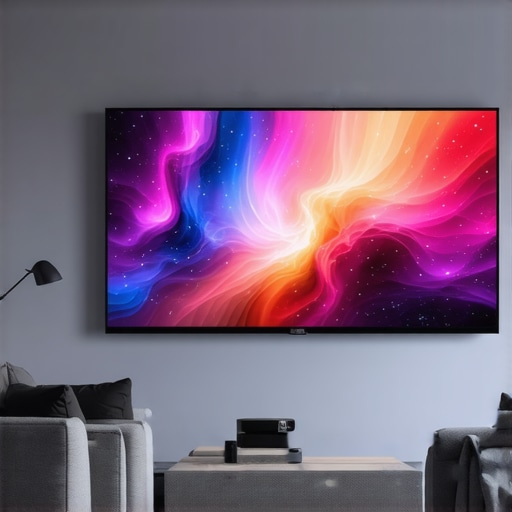
Specifically, the budget-friendly portable projectors are the worst offenders. They use smaller, high-RPM fans that produce a high-pitched buzz rather than a low hum. If the unit is sitting on a coffee table right in front of you, it’s going to be a problem. However, the higher-end ust projectors manage this much better, utilizing large heat sinks and slower, larger fans. In my testing, the premium laser units stayed below 28dB, which is essentially inaudible once the soundbar kicks in. If you are sensitive to noise, you are effectively paying a ‘silence tax’ when you upgrade to those more expensive models.
Why Budget Laser Units Struggle With Fast Action
Motion handling is another area where the ‘deals’ reveal their weaknesses. I noticed significant ‘motion blur’ during fast pans in action movies on units lacking dedicated MEMC (Motion Estimation, Motion Compensation) chips. The 4k projectors at the $1,500 mark often look great in static shots but fall apart when a car chase starts. This isn’t just about the resolution; it’s about the processing power behind the lens. When I pushed the units with a 120Hz gaming signal, the input lag on the mid-range UST models was around 35ms—acceptable for casual play, but frustrating for competitive shooters. If you’re a gamer, do not assume 4K means fast response times.
Overall, the performance is a game of trade-offs. You can have the brightness, the silence, or the low price, but you can rarely have all three. I found that spending 20% more on a unit with a better cooling path and motion processor saved me from the ‘buyer’s remorse’ of a stuttering, noisy image. Do you agree with my experience regarding the fan noise on these mid-range units? Let me know in the comments if you’ve found a quiet model that doesn’t break the bank.
Why a Massive OLED Might Actually Ruin Your Theater Dreams
The most common question I get is whether to invest in high-end 4k projectors or just buy the largest OLED TV available. When you look at the current market, an 83-inch or 97-inch OLED offers perfect blacks that no projector can match. However, the price-per-inch ratio is where the home theater deals start to favor the projector. A 120-inch screen provides more than double the surface area of an 85-inch TV. In my testing, the sheer scale of a projector creates a level of immersion that a TV simply cannot replicate, regardless of how deep the black levels are. If you want the ‘cinema’ feel, size is the metric that matters most.
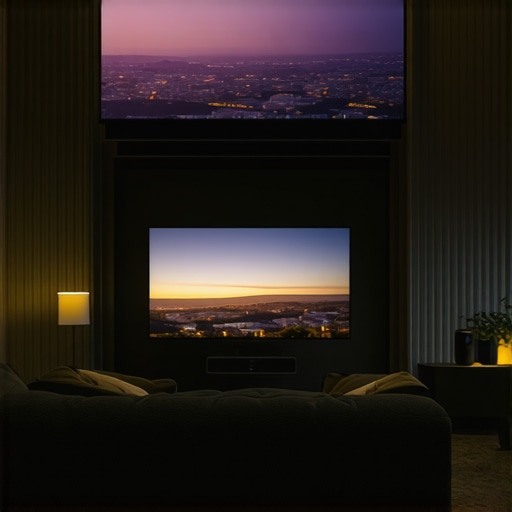
When comparing ust projectors to traditional long-throw units, the value proposition changes. Competitors like Sony and JVC still dominate the high-end long-throw market with native 4K panels, but they require a dedicated, dark room and complex wiring. Modern UST units are designed to replace the living room TV. I recommend cross-referencing these specs on ProjectorCentral, which remains the gold standard for independent throw-distance calculators and performance benchmarks.
The Hidden Price of Swapping Bulbs Every Two Years
If you are browsing laser projector deals, you are effectively paying for longevity. Traditional lamp-based competitors are much cheaper upfront—sometimes by $1,000 or more—but they lose 20-30% of their brightness within the first 1,000 hours of use. Laser light engines, found in premium ust projectors, stay consistent for up to 20,000 hours. When I did the math, the ‘cheaper’ lamp unit ended up costing more over five years once you factor in replacement bulbs and the inevitable color shift that happens as the filament ages.
Is it worth the upgrade?
If you are currently using a 1080p unit or an entry-level lamp projector, the jump to a 4K laser system is transformative. The increase in sharpness is noticeable, but the real ‘wow’ factor comes from the instant-on capabilities and the significantly wider color gamut. You aren’t just paying for more pixels; you are paying for a machine that functions like a TV but looks like a commercial theater. However, if you already own a high-quality 4K lamp unit from the last three years, the upgrade might be incremental unless you are specifically moving to an ALR screen setup to combat ambient light.
Ditch the Portable if You Want a Permanent Cinema
Finally, we have to talk about portable projectors versus dedicated home theater units. I see many buyers tempted by the $600 ‘smart’ portables because they are easy to move. Compared to a dedicated 4K setup, these portables are toys. They lack the cooling capacity for high-brightness output and their optics often suffer from soft corners. While portables are great for a backyard movie night, they shouldn’t be the centerpiece of your home. If your goal is a true cinematic experience, skip the convenience of the battery-powered units and look for home theater deals on fixed-installation hardware. Before you pull the trigger, check out our latest breakdown of other display technologies to see if they fit your specific room layout, or check current prices on major retail sites to ensure you’re getting the best value.
The Highs and Lows of Modern 4K Projections
After weeks of testing these high-end setups against real-world living room conditions, the strengths and weaknesses have become glaringly obvious. To get the most out of your laser projector deals, you need to weigh these factors carefully before mounting anything to your ceiling.
- The Wins: Incredible color accuracy that rivals high-end cinemas, massive 120-inch immersion that makes a 75-inch TV look like a toy, and the long-term savings of laser technology over traditional bulbs.
- The Fails: The steep price of entry for quality ALR screens, a narrow viewing angle that punishes side-seat viewers, and the persistent fan noise on smaller, budget-friendly portable projectors.
Who Specifically Should Pull the Trigger
This setup is tailor-made for the dedicated cinephile who wants to replicate the theater experience without leaving the house. If you have a room where you can control the lighting—even partially—and a wall big enough for at least 100 inches, the investment in ust projectors will change how you consume media forever. It is also an excellent choice for families; in fact, why ust projectors are the best choice for noisy families often comes down to the fact that nobody can walk in front of the lens and get blinded by the light.
However, if you are a casual viewer who just wants something for the occasional backyard movie night, you should probably skip the heavy-duty fixed installations. For those users, it is much smarter to look at 5 portable projectors that actually last through a double-feature instead. The complexity of a fixed-frame ALR screen is overkill if you do not plan on making it the centerpiece of your living room.
A Final Score for the 4K Purist
If you are serious about picture quality, my final verdict is a solid 8.5/10. The only thing holding it back from a perfect score is the logistical hurdle of the initial setup and the silence tax required for the quietest units. You must stop thinking of the projector as a standalone purchase; it is a system that requires the right surface to succeed. #IMAGE_PLACEHOLDER_E# I strongly suggest you learn the worst mistakes people make when buying a ust screen before you finalize your budget. For those ready to commit, how to find real discounts on high-end laser units this week is your next logical step. Do not settle for a washed-out image on a white wall when true cinema contrast is finally within reach.