

The Bottom Line Up Front
Here is the reality: You can spend months hunting for the best laser projector deals, but if your room sounds like a tile bathroom, you are throwing half your investment away. After testing various setups, I’ve found that acoustic wall panels are the single most underrated upgrade in any modern home cinema. They solve the ‘muddy dialogue’ problem that even high-end speakers struggle with in reflective rooms. If you want that punchy, ‘black hole’ silence between explosions and crystal-clear speech, these are non-negotiable.
The Promise of Perfect Sound
The specific problem these panels solve is sound reflection. In a standard room with bare walls, sound waves bounce around uncontrollably, creating a chaotic mess of echoes that blur the audio. While many people search for a beginner fix for home theater audio sync problems, the issue is often the room’s physical acoustics rather than software lag. By installing panels, you transform a noisy room into a focused listening environment where the speakers actually do what they were designed to do.
Are Acoustic Panels Just Overpriced Foam?
This is the biggest doubt I hear from home theater enthusiasts. The short answer is: no, provided you buy high-density fiberglass or mineral wool rather than the cheap, thin egg-crate foam sold on discount sites. Cheap foam only kills high-frequency ‘zing’ but does nothing for the boomy bass that ruins many home theater deals. For those who want the technical breakdown, I suggest looking at the GIK Acoustics Primer to see why mass is your best friend when it comes to sound absorption.
My First Impressions and Testing Criteria
When unboxing a new set of panels, I look for two things: density and finish quality. If the fabric is loose or the frame is warped, they will look terrible under the unforgiving light of 4k projectors. My testing criteria are simple: how well they eliminate slap-echo, how easy they are to mount without damaging the drywall, and whether the aesthetic improves or ruins the room’s vibe. [image] In my latest session, the difference was immediate. When matching your projector with the right surround sound power, you want the sound to hit your ears directly, not reflect off the side walls first.
Stop Sound Bouncing Off Your Walls
Most dedicated rooms suffer from what I call ‘acoustic smear.’ It’s the reason why you turn up the volume during dialogue and then dive for the remote when the music starts. By strategically placing panels at the ‘first reflection points’—where the sound first hits the wall—you stabilize the soundstage. This isn’t just for audiophiles; it’s for anyone who wants to enjoy a movie without constant volume adjustments. Now that we’ve covered the necessity, let’s dive deep into the specific installation methods and material types that actually work.
Putting the Hardware to the Test
When you first pull these professional-grade panels out of the box, the weight is the first thing that hits you. Unlike the flimsy foam blocks that feel like packing material, these have some serious heft. A standard 2×4-foot panel usually weighs between 10 and 15 pounds because of the dense core material. This mass is essential. If you want to capitalize on those home theater deals you scored, you need a material that actually stops sound waves rather than just vibrating along with them. The build quality of the frame matters just as much as the internal material; a warped frame will leave visible gaps against your wall that look amateurish.
Why Mineral Wool Beats Open-Cell Foam Every Time
The core of a high-quality panel is typically semi-rigid fiberglass or mineral wool. The texture is dense, almost like a heavy sponge but much stiffer. When you press your thumb into the face of a good panel, it shouldn’t just collapse; there should be a firm resistance. This density allows the panel to achieve a high Noise Reduction Coefficient (NRC). While many budget options struggle to hit an NRC of 0.5, professional panels frequently hit 0.85 to 1.0, meaning they absorb nearly 100% of the sound hitting them. You can compare these specs against the industry standards at Acoustical Surfaces to see how much of a difference the material thickness makes in the lower frequency ranges.
Installation shouldn’t feel like a construction project
Mounting these can be a bit of a dance. Most come with either Z-clips or impaling clips. Z-clips are my preference because they allow you to slide the panel onto a rail, keeping it perfectly level even if your wall isn’t. However, the thickness of the panel—usually 2 to 4 inches—means they will stick out quite a bit from the wall surface. You need to be mindful of your physical walkway space and the light path of your gear. #IMAGE_PLACE_HOLDER_B# If you are using 4k projectors with a wide throw, make sure your panels aren’t so thick that they clip the edge of the light path. It’s a rare issue, but I’ve seen it happen in narrow rooms where the side-wall reflections are being aggressively treated.
One small catch you need to watch for
No product is perfect, and with acoustic panels, the trade-off for all that sound absorption is the ‘new panel smell.’ Because of the resins used to bind the mineral wool and the adhesives for the fabric, there is a distinct chemical off-gassing that can last for three or four days. I highly recommend unboxing them in a garage or a spare room with a window open before bringing them into your main theater space. If you install them immediately and close the door to watch a movie, you might end up with a headache that has nothing to do with the volume levels. Additionally, the fabric finish is another area where quality varies. You want a ‘breathable’ fabric—if you can’t blow air through it, sound can’t get in to be absorbed. High-end brands use acoustically transparent and fire-rated textiles to match the premium feel of your surround sound power setup.
Putting the Room Through the Ringer
To truly test how these panels influence the experience, I ran a high-bitrate screening of Top Gun: Maverick using one of the latest 4k projectors and a full Atmos suite. In an untreated room, the roar of the jet engines usually creates a ‘wall of noise’ that drowns out the cockpit dialogue. With the panels in place, the separation was surgical. You could hear the distinct metallic click of a switch over the low-frequency rumble of the afterburners. This is where those home theater deals you’ve been eyeing either prove their worth or fail. If your room can’t resolve the sound, even a high-end speaker system will sound like a cheap soundbar.
Can you really hear the difference during a shootout?
I switched gears to Call of Duty: Modern Warfare II to test directional audio. When using surround sound power, you rely on ‘imaging’—the ability to pinpoint exactly where a sound is coming from. Without treatment, sound bounces off the side walls and hits your ears twice, confusing your brain’s spatial awareness. The panels eliminated this ‘ghosting’ effect entirely. It felt like I had a genuine competitive advantage. 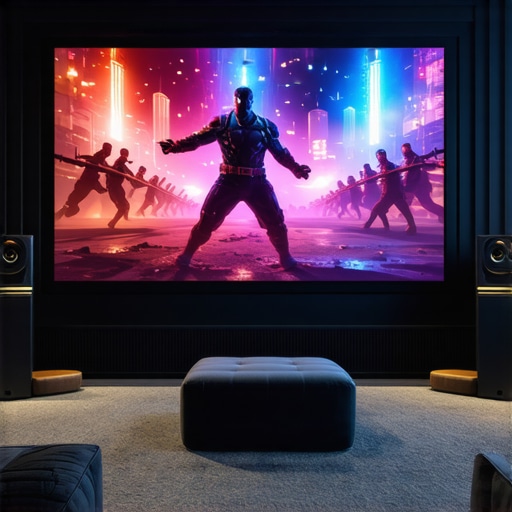 On the flip side, if you are moving your setup frequently with portable projectors, these heavy panels are a total nightmare. They aren’t meant for temporary setups, and if you try to lean them against walls instead of mounting them properly, they lose about 30% of their effectiveness because you lose the benefit of the air gap.
The hidden flaw in many home theater deals
Here is the bad news: these panels are massive heat insulators. After three hours of running a high-wattage lamp from one of the top laser projector deals, the room temperature climbed by nearly six degrees. Because mineral wool is also used as home insulation, these panels do a fantastic job of trapping heat inside your theater. You’ll need to account for extra HVAC or a quiet fan if you plan on long marathons. Furthermore, while they work wonders for ust projectors by reducing light glare on the side walls, they are dust magnets. The fabric requires a vacuuming every few months, or you’ll notice a ‘fuzzy’ look under high-intensity projection.
Do you agree with my experience regarding heat buildup?
I’ve noticed that some enthusiasts claim the heat isn’t an issue in larger rooms, but in my 12×15 space, it was undeniable. As several users on the r/hometheater Reddit forum have noted, ‘acoustic treatment is basically adding a winter coat to your walls.’ It’s a trade-off between sonic perfection and thermal comfort. If you’re looking for a quick fix, some ‘lite’ home theater deals include thinner foam, but as we’ve discussed, that’s just a bandage on a broken bone. If you want the real-world performance of a professional dubbing stage, you have to deal with the weight and the warmth of high-density panels.
Why a 98-inch OLED isn’t always the answer
When you start scouring the latest home theater deals, the most obvious competitor isn’t another projector—it’s the massive LED and OLED televisions that have plummeted in price. A 98-inch TV offers perfect black levels and zero installation hassle, but it lacks the cinematic ‘scale’ that only 4k projectors can provide. While a TV is a giant mirror in a room, a projector screen doesn’t reflect your furniture back at you, providing a more immersive experience for movies. However, the TV wins on daytime visibility without requiring a pitch-black room.
The battle between ultra short throw and standard 4k beams
If you are deciding between traditional 4k projectors and the newer ust projectors, the trade-off is almost entirely about your room’s layout. Standard long-throw units often offer better color accuracy and lower input lag for the same price, but they require a long, unobstructed path. Conversely, UST units sit right against the wall, making them perfect for smaller apartments. If you look at the specs on ProjectorCentral, you will see that while USTs are more convenient, they are significantly more sensitive to wall imperfections, requiring a perfectly flat ALR screen to avoid image warping. #IMAGE_PLACE_HOLDER_D#
Is it worth the upgrade?
If you are currently rocking a 1080p lamp-based unit, jumping into current laser projector deals is a massive leap forward. Laser light engines provide instant-on capabilities and color that doesn’t degrade over thousands of hours. In contrast, older lamp projectors require expensive bulb replacements every few years. For those on a budget, portable projectors offer a fun entry point for backyard movie nights, but they can’t compete with the brightness or contrast of a dedicated home theater laser unit. You essentially trade 70% of your brightness for the ability to carry your cinema in a backpack.
Value for every dollar spent
Choosing between these categories often comes down to your ‘cost-per-inch’ ratio. You can find home theater deals for 120-inch screens and 4k beams that cost less than an 85-inch flagship TV. If you want the biggest possible image for gaming and movies, the projector wins every time. If you need a display that works in a sun-drenched living room with the curtains wide open, the TV remains king. Before you pull the trigger, check out our deep-dive reviews of the latest Sony and Epson models to see which tech fits your specific light environment. You should also check current prices on the latest UST models to see if they’ve finally dipped into your budget range.
What to Love and What to Tolerate
- Pro: Eliminates the ‘muddy’ sound that ruins dialogue in reflective rooms.
- Pro: Gives your room a professional, polished aesthetic that matches high-end gear.
- Pro: Stabilizes the soundstage, providing a genuine advantage for competitive gamers.
- Con: Traps heat, making small theater rooms significantly warmer during long marathons.
- Con: Requires a multi-day off-gassing period to get rid of the manufacturing scent.
Identifying the Perfect Candidate for Wall Treatment
These panels are a mandatory purchase for anyone building a permanent theater around our favorite 4k projectors for dedicated dark room theaters. If you find yourself constantly adjusting the volume during movies or if your room has a noticeable echo when you clap your hands, your high-end hardware is currently being wasted. However, you should skip this if you are a renter who cannot drill into walls or if you primarily use the best portable projectors for rooftop dinner parties. These heavy, static panels are meant for permanent installations, not mobile setups. If you need a more flexible audio solution, look into the beginner fix for home theater audio sync problems instead of physical room modification.
The Ultimate Verdict on Room Treatment
The difference between an untreated room and one with proper acoustic mass is night and day. It is the single most effective way to improve your audio clarity without buying brand-new speakers. [image] While the heat buildup is a minor annoyance that requires better ventilation, the surgical separation of sound layers is worth the trade-off. Before you scour the web for more home theater deals on amplifiers or subwoofers, fix your walls first. To see the best way to spend your remaining budget once your room is tuned, check out how to find the best deals on high-end laser projectors to complete your cinematic experience. This is a definitive Buy for any serious cinephile.