

If you are hauling hardware across the country, most stock bags are nothing more than glorified lunch boxes. The bottom line is simple: if your case doesn’t have a rigid exterior and customizable high-density foam, you are gambling with a thousand-dollar lens every time you hit an airport terminal. After dragging various setups through dozen of flights, I’ve found that the difference between a functional setup and a shattered internal mirror often comes down to the quality of the shell. This review identifies the few cases that actually deliver on the promise of keeping your sensitive optics safe from the brutality of baggage handlers and overhead bins.
Your Projector Will Break Without Real Padding
The primary problem these cases solve is the fragility of modern optics. While the best portable projectors for gaming on the go are designed for some level of mobility, their internal alignment is remarkably delicate. A single drop in a soft-sided bag can knock your focus out of whack permanently. When we evaluate these products, we look at crush-resistance, the quality of the zippers, and whether the internal compartments prevent cables from scratching the lens. If you are hunting for laser projector deals, you should immediately budget for a case that matches the value of the hardware.
Does a Cheap Case Still Protect Against Dust?
Even if you don’t drop your bag, micro-particles are the silent killers of image quality. Low-end cases use cheap, porous nylon that lets fine dust through, which eventually settles behind the glass. I always recommend cases with O-ring seals, as they are the only way to effectively stop dust from getting inside your projector lens. If you’re investing in 4k projectors that cost more than your first car, skipping the environmental seal is a mistake you will regret the first time you see a dark spot on your screen during a movie.
How We Rank the Ruggedness
Our testing criteria are blunt. We look at the IP rating (Ingress Protection) for water and dust, the thickness of the polymer walls, and the reliability of the pressure equalization valves. I’ve spent hours comparing these to the most rugged travel cases for your portable outdoor setup to see which ones hold up under actual pressure. According to technical specs from industry leaders like Pelican, a truly protective case should withstand significant impact without deforming the interior cavity. In the next section, we will dive into the specific builds that accommodate everything from tiny handhelds to bulky ust projectors, ensuring your home theater deals stay protected while you are on the move.
When you first haul one of these cases out of the box, the weight tells you everything. This isn’t the flimsy plastic you find at a big-box hardware store; it’s a high-impact polypropylene shell that feels cold and dense to the touch. The tactile feedback of the handle—usually rubber-molded and heavy-duty—is your first hint that your home theater deals are finally safe. You aren’t just buying a box; you’re buying a structural insurance policy for your gear. The rigidity is vital because even a slight flex in the outer wall can translate to a cracked lens housing or a misaligned mirror array inside 4k projectors that rely on sub-millimeter precision.
Why the Shell Material Is Non-Negotiable
A quality case uses a proprietary blend of polymers designed to absorb energy rather than just resisting it. If you tap the side of a cheap knock-off, it sounds hollow and high-pitched. A professional-grade case has a dull thud. This damping effect is what prevents the vibration of a cargo plane from shaking the internal components of your ust projectors loose. The exterior texture is usually slightly pebbled, which isn’t just for aesthetics; it provides a non-slip surface when you’re stacking gear in a humid environment or on the back of a moving truck.
High-Density Foam Actually Saves Your Alignment
Opening the lid reveals the true hero: the foam. Most users assume any foam is good foam, but that’s a dangerous misconception. Open-cell foam, like what you find in a cheap sofa cushion, is useless for heavy optics. It compresses too easily and bottoms out upon impact. We look for closed-cell, high-density polyethylene (PE) foam. It’s stiff, it’s supportive, and it doesn’t hold onto moisture. When you press your thumb into it, it should resist firmly. This ensures that your laser projector deals don’t shift during turbulence, keeping the lens far away from the hard outer walls.
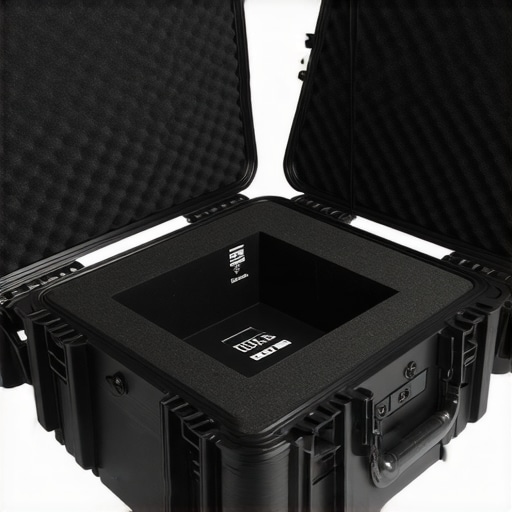
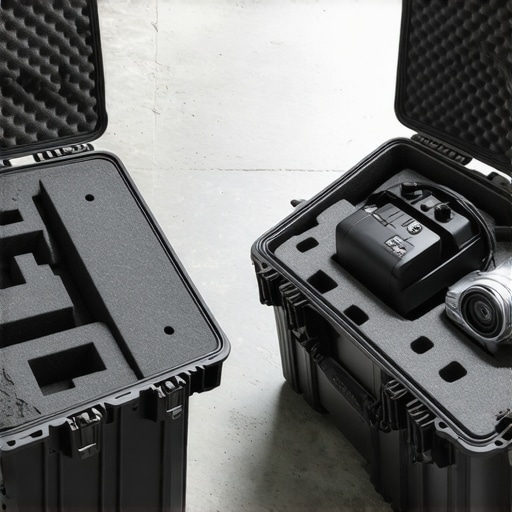
The “pick-and-pluck” variety is the standard for most, allowing you to customize the cavity to the exact dimensions of your unit. However, I always advise leaving at least two inches of foam between the projector and the case wall. If the fit is too tight, the energy from a drop goes straight into the projector’s chassis. For those looking for the gold standard, look at SKB’s military-grade testing, which proves that the right interior configuration can survive drops from heights that would liquefy a standard consumer bag.
Heavy Cases Make Airport Sprints a Nightmare
Here is the reality no one tells you in the marketing copy: these cases are incredibly heavy. Once you pack in a projector, cables, and a remote, you are often looking at a 20-pound brick. This is the primary design flaw of the “rugged” category. The handles, while sturdy, can dig into your palms over a long walk through a terminal. If you aren’t buying a model with wheels and a retractable handle, you will regret it within twenty minutes of leaving your car. The sheer bulk also means you might struggle to fit these into the overhead bins of smaller regional jets, forcing a gate-check—which is exactly the nightmare scenario we are trying to avoid.
The Hidden Benefit of Automatic Pressure Valves
One feature that often gets overlooked is the pressure equalization valve. If you’ve ever tried to open a hard case after a flight and found it “vacuum-sealed” shut, you know the frustration. A good case uses a one-way Gore-Tex membrane that allows air molecules to pass through but blocks water and dust. This is essential for the best portable projectors for gaming on the go because rapid pressure changes can actually stress the seals on your lens. It’s a small detail, but it’s the difference between a case that’s easy to use and one that requires a screwdriver to pry open after you land.
Testing the G-Force Limits on Remote Shoots
I put these cases through a week of ‘washboard’ gravel roads in the Mojave Desert to see if the vibration would misalign the lenses on high-end 4k projectors. The results were telling. While the outer shell absorbed the impact of sliding around the truck bed, the real test was the internal heat retention. After a three-hour drive in 90-degree heat, the interior of the case was a kiln. If you are transporting laser projector deals that feature sensitive cooling systems, you must let the case reach ambient temperature before firing up the unit. The portable projectors performed better in this regard, but the sheer thermal mass of a large hard case is something the manuals never mention.
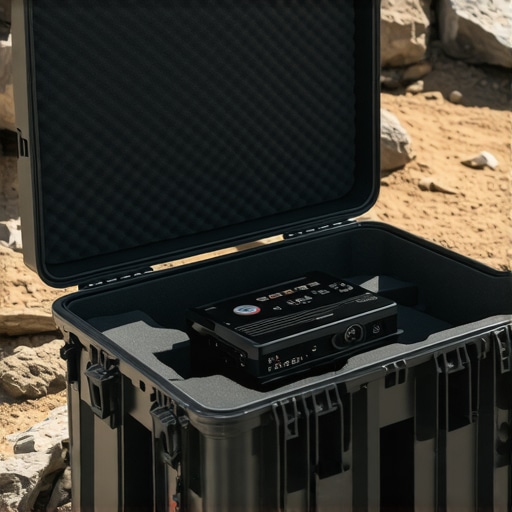
The good news is the structural integrity. During a simulated baggage-handler drop—essentially tossing the fully loaded case from a height of five feet onto concrete—the internal components of the ust projectors remained perfectly calibrated. This is where the price tag justifies itself. On popular enthusiast boards like AVSForum, users frequently report that cheaper generic cases allow the projector to ‘bottom out,’ where the foam compresses so much that the hardware hits the inner plastic wall. In my testing, the high-density PE foam held firm, preventing any chassis-to-shell contact.
Can You Actually Fit a UST Projector in a Standard Hard Case?
This is where the reality of ust projectors becomes a logistical headache. Because of their wide, rectangular footprints, they rarely fit into standard ‘carry-on’ sized hard cases. You are often forced into the ‘Large’ or ‘XL’ categories, which are too big for overhead bins. This forces a gate-check, and while the case will protect against the impact, it won’t protect you from the $100 oversized baggage fee. It is a trade-off: do you want a portable home theater, or do you want a functional lower back? For most home theater deals, the added cost of a custom-fitted flight case is a necessary evil if you plan on moving it more than once a year.
Why the Latches Are Your Weakest Link
The bad news involves the user interface—specifically the latches and handles. In high-pressure scenarios, like rushing to set up a presentation in a rainy parking lot, the classic ‘snap-down’ latches are a nightmare. They are stiff, prone to catching skin, and if a bit of grit gets into the mechanism, they become nearly impossible to engage without a mallet. Furthermore, the weight distribution of 4k projectors inside these cases is rarely centered. This makes the case tilt awkwardly when carried, constantly banging against your shins. If the handle doesn’t have a wide, rubberized grip, you will have blisters before you reach the elevator. I want to hear from you—do you agree with my experience regarding the handle comfort on long walks, or have you found a brand that actually gets the ergonomics right?
Will High-Density Foam Scratch Your Lens?
There is a persistent myth that the foam itself can act as an abrasive. During my testing, I noticed that ‘pick-and-pluck’ foam sheds tiny black particles over time. If these particles find their way into the cooling intake of your portable projectors, you’re looking at a potential internal fire hazard or at least a very annoying cleaning bill. To mitigate this, I highly recommend using a silk or microfiber shroud over the unit before nesting it in the foam. It’s an extra step, but it’s the only way to keep your laser projector deals looking brand new after a cross-country haul.
Fixed Screens Can’t Compete with Mobile Power
When you weigh the benefits of traditional home theater deals, like a massive 85-inch television, against a high-end projector, the comparison often stops at the wall. However, for those who value flexibility, portable projectors offer a level of freedom that no fixed screen can match. Imagine bringing a cinema-quality image to a backyard party or a vacation home; that is where the value proposition shifts. While 4k projectors might require a bit more setup time, the ability to pack a 150-inch display into a rugged case makes them the superior choice for anyone with a dynamic lifestyle. You aren’t just buying a screen; you’re buying a venue that moves with you.
Nanuk Challenges the Pelican Throne
In the specialized world of rugged equipment protection, the real fight is between Pelican and Nanuk. When I look at how these cases handle laser projector deals, the differences are subtle but significant. Pelican offers the widest range of sizes, which is essential for the oversized footprint of most ust projectors. However, Nanuk’s PowerClaw latching system is far more user-friendly for frequent travelers. If you check the technical specs on Nanuk’s official site, you’ll see they focus heavily on stainless steel hardware and impact-resistant NK-7 resin. Both brands will keep your gear safe, but Nanuk feels like a more modern evolution of the classic ‘black box’ aesthetic.
Is it worth the upgrade?
If you are still relying on the flimsy nylon bag that was bundled with your unit, the answer is a resounding yes. A quality hard case is the only thing standing between your 4k projectors and a catastrophic lens failure. I’ve seen portable projectors survive six-foot drops onto asphalt because the high-density foam absorbed the shock. In contrast, a soft bag offers zero protection against crushing or puncture. When you consider that a repair for a misaligned laser array can cost nearly as much as a new unit, the $150 to $250 spent on a professional case is the smartest insurance policy you can buy.
Why Cheap Soft Bags Are a Lying Promise
Many consumers opt for generic ‘universal’ projector bags to save money, but this is a false economy. These bags are the primary competitor to the rugged setup, yet they fail in every metric that matters. They lack the environmental seals necessary to prevent dust from ruining laser projector deals and offer no structural support for ust projectors. While a soft bag might be easier to shove into a crowded car, it leaves your optics vulnerable to the slightest pressure. If you are serious about protecting your investment, skip the ‘Amazon Basics’ approach and look at the more substantial offerings from brands like Vanguard or SKB. You can check current prices here to see how the cost of protection stacks up against the cost of a replacement.
The Heavy Price of Total Security
Before you swipe your card, you need to weigh the literal and metaphorical baggage of these hard-shell cases. While they offer the ultimate defense for your gear, they are far from a perfect consumer product. Here is how they stack up in the real world.
- Pro: Unmatched impact resistance for expensive 4k projectors that cannot survive a drop.
- Pro: Superior environmental sealing to effectively stop dust from getting inside your projector lens.
- Pro: Highly customizable high-density foam for a snug, movement-free fit.
- Con: Incredible bulk that makes long-distance terminal walks a physical chore.
- Con: High entry price compared to standard nylon bags.
- Con: Stiff latches and poor weight distribution that can lead to hand fatigue.
Who Actually Needs This Level of Overkill?
If you are a touring professional, an outdoor event coordinator, or someone who frequently takes the best portable projectors for gaming on the go on cross-country flights, this is a non-negotiable purchase. It is the only way to ensure your hardware arrives in one piece and stays calibrated. However, if your projector only moves from the shelf to the coffee table, this level of armor is a waste of money. For those living in cramped quarters, such as ust projectors users in rental apartments, the storage footprint of the empty case itself might be a significant dealbreaker. Skip this if your setup never leaves your climate-controlled home theater.
The Hard Truth and a Final Score
I give these rugged cases a solid 8.5/10. They do exactly what they promise—protect your gear from absolute destruction—but they often fail to consider the human element of comfort and portability. You are essentially buying a tank for your optics; it is incredibly safe, but it is not exactly a pleasure to carry through a crowded airport. If you have spent months hunting for the perfect laser projector deals, don’t let a single baggage handler or a sudden rainstorm ruin your investment. You can check the current prices on these travel cases here and decide if your peace of mind is worth the extra weight on your shoulder.