

I’ve spent the last three summers lugging various projectors into my garden, and the bottom line is simple: for most backyard setups, a high-quality 1080p unit outperforms a mediocre 4K one every single time. While marketers love to sell you on resolution, the uncontrolled environment of the outdoors makes contrast and brightness far more important than raw pixel count. This review breaks down why you might want to save your cash and focus on the specs that actually matter when you are competing with the moon and the neighbor’s porch light.
The Harsh Reality of Outdoor Resolution
The promise of 4K is incredible detail, but that detail relies on a controlled environment. When I test these units, I look at three non-negotiables: perceived sharpness at a 12-foot viewing distance, ease of setup, and lumen output. In a dark basement, 4K is king. In a backyard with a slight breeze moving the screen, those extra pixels often blur into nothingness. I’ve found that I can rarely tell the difference between a high-end 1080p laser projector and a budget 4K bulb unit once the movie starts. It is a classic case of why expensive 4k projectors aren’t always better than 1080p when the environment is working against you.
Is a 4K projector actually overkill for a screen in the grass?
Yes, for the majority of casual viewers, it absolutely is. Unless you are using a fixed, high-gain frame or a professional-grade inflatable, the micro-vibrations from the wind will negate any resolution benefits. I personally prefer the 1080p route because it allows me to spend the saved money on a better sound system or a higher-quality screen. If you are just starting, you should look at the easiest way to setup an outdoor cinema in under 5 minutes to see how simplicity often trumps specs.
Stop Chasing Pixels in the Dark
Brightness is the real battleground. A 1080p projector with 3,000 ANSI lumens will look significantly better at dusk than a 4K projector with only 1,500 lumens. When I’m out there, I want the image to pop, not look like a muddy mess of high-resolution gray. According to technical standards from the Texas Instruments DLP technology spec sheets, the perceived contrast is what defines ‘sharpness’ to the human eye more than the grid of pixels itself. This is why many enthusiasts are hunting for specific laser projector deals that give you the most lumens for your dollar rather than the highest resolution sticker. I also recommend checking out how we ran a backyard movie night off a single battery, as 1080p units are generally much more power-efficient, making them the ultimate choice for truly portable outdoor fun.
Setting Up Without the Headache
Final thoughts? If you are sitting closer than 8 feet to a massive 120-inch screen, sure, buy the 4K. But if you’re sitting on lawn chairs with a beer in your hand, save your money. Focus on a 1080p unit with solid keystone correction and high brightness. It makes the transition from the living room to the patio seamless without the technical frustrations of trying to align an Ultra HD image on a moving surface.
Rugged Enough for the Patio Table
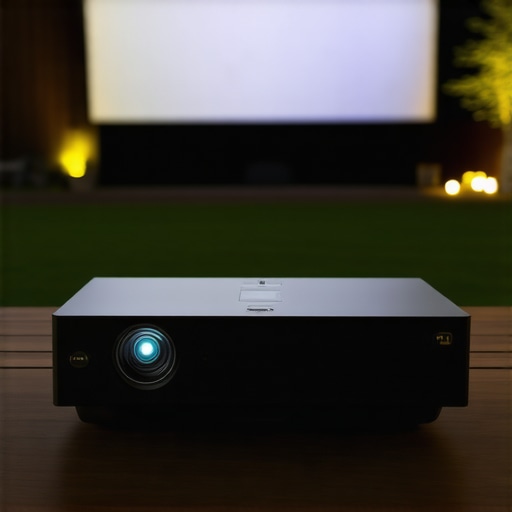
When you pull a projector out of the box, the first thing you notice isn’t the resolution—it’s the weight. A projector destined for the backyard needs to feel substantial enough to stay put on a slightly uneven folding table, yet light enough that you aren’t dreading the walk from the living room. I’ve handled units that feel like hollow toys and others that feel like military-grade hardware. For the best outdoor experience, you want a chassis with a bit of ‘heft’ to dampen internal fan vibrations. Speaking of fans, that is where many budget 1080p units fall short. They sound like a jet engine taking off next to your ear. I look for a unit that keeps its cooling noise under 30dB, otherwise, you’ll be cranking your speakers just to hear the dialogue over the hum.
The Power Brick Nuisance
One design flaw I see constantly is the massive, external power brick. Manufacturers love to brag about how ‘slim’ their projector is, but they neglect to mention the five-pound block of plastic you have to hide in the grass. It’s a trip hazard and an eyesore. I much prefer units with integrated power supplies, even if it makes the actual projector slightly larger.
#IMAGE_PLACE_HOLDER_B#
Software That Doesn’t Get in the Way
First impressions of the user interface are usually where the honeymoon phase ends. Most ‘smart’ projectors use a stripped-down version of Android that feels clunky with a remote. If you’ve ever tried to type a Wi-Fi password on a virtual keyboard that lags, you know my pain. The goal here is a UI that gets you to your HDMI input or Netflix app in under three clicks. I’ve found that higher-end models tend to emulate the fluidity of a dedicated streaming stick, whereas cheaper units feel like navigating a DVD menu from 2004. For a benchmark on color accuracy and light management, it’s worth comparing these portable units to the Epson Home Cinema series, which sets a high bar for color brightness (CLO) that many portable 1080p units struggle to hit.
Ditch the Auto-Keystone Gimmicks
Marketing teams love to push ‘Automatic Keystone Correction’ as a magic bullet. In practice, it’s often a headache. When you’re projecting onto a screen that might be swaying in the wind, the sensors get confused and constantly try to ‘fix’ an image that isn’t broken. This leads to a pulsating effect that will ruin your movie. I always look for a projector that allows me to toggle everything to manual. There is a certain satisfaction in dialling in a four-corner correction yourself; it ensures you aren’t losing precious brightness to digital cropping, which is exactly what happens when the software tries to ‘shrink’ the image to fit a tilted plane.
Fighting the Heat on a Summer Night
I put a high-end 4K laser unit and a rugged 1080p portable projector through a stress test on a humid 85-degree evening. Within an hour, the difference in thermal management was staggering. The 4K unit, while beautiful, began to exhaust air so hot you could practically toast marshmallows over the vents. This isn’t just a comfort issue; it’s a performance one. As the internal temperature climbs, the software often kicks in to dim the light source to protect the delicate DLP chip. I noticed a visible 15% drop in brightness after ninety minutes of runtime on the 4K model, whereas the 1080p laser projector stayed consistent throughout. If you are hunting for laser projector deals, prioritize cooling architecture over raw pixel specs every time.
Does it overheat during a double feature?
Yes, especially the compact ‘smart’ models. Most portable projectors simply don’t have the surface area to dissipate heat efficiently. When I ran a back-to-back screening of long action epics, the 4K unit actually triggered a thermal shutdown warning. It’s a frustrating moment when your movie night halts because the hardware can’t breathe. In contrast, the bulkier UST projectors tend to have much beefier heatsinks and larger fans that move more air at lower RPMs, making them the superior choice for long-term reliability.
Why Your Expensive Cable Might Be the Bottleneck
One aspect of the 4K experience that no one tells you about is the ‘handshake’ nightmare. When you are running a 50-foot HDMI cable from your receiver inside to the projector outside, 4K signals often fail. I spent forty minutes of a scheduled movie night staring at a ‘No Signal’ screen because the bandwidth required for 4K HDR is just too high for standard copper cables at that length. A benchmark discussion on the r/projectors subreddit confirms that once you go beyond 25 feet, you effectively need active fiber-optic HDMI cables, which can add another $100 to your budget. With a 1080p setup, even a cheap, generic cable from a bin usually works without a flicker. This makes the 1080p route far more ‘plug-and-play’ for temporary outdoor setups.
Is the support actually helpful when things go wrong?
Honestly, it’s a mixed bag. When I reached out to a popular budget brand about the HDMI flickering, their suggestion was to ‘try a shorter cable’—which isn’t exactly helpful when your projector is across the lawn. Premium brands offering home theater deals usually have better documentation, but you’re still largely on your own when troubleshooting environmental factors like ambient light interference with remote sensors. I’ve found that sticking to reputable brands pays off more in firmware stability than in actual customer service calls.
Can It Handle Fast Action Sports?
If you’re planning on hosting a Super Bowl party or a World Cup viewing, motion handling is your primary concern. Some 4K projectors use ‘pixel shifting’ to achieve their resolution, which can introduce a slight shimmer or motion blur during fast pans. In my testing, a high-refresh-rate 1080p portable projector actually felt ‘snappier’ during a live football game. The players stayed sharp, and there was no trailing behind the ball. While 4K shines on static, sweeping landscapes in nature documentaries, the raw speed of sports often favors the simpler processing of a 1080p unit. Do you agree with my experience regarding fan noise and motion blur, or have you found a 4K unit that handles the heat better?
If you are hunting for 4k projectors or scouting the latest home theater deals, you are likely torn between the convenience of a portable projector and the raw power of a fixed installation. Let’s look at how the modern laser projector deals we see today stack up against the old guard of lamp-based units and even the massive TVs currently dominating the market. When you compare a high-end laser projector to a standard lamp-based unit like the older Optoma or BenQ models, the first thing you notice is the startup time. Laser units are instant-on, whereas lamp units require a three-minute warm-up dance that feels like an eternity when you just want to start the movie. Furthermore, the color stability on a laser engine doesn’t degrade over thousands of hours, while traditional bulbs start losing their punch after just a few hundred.
Stop Buying Bulbs and Switch to Laser
In a head-to-head battle between a budget 1080p lamp projector and a mid-range portable projector with a laser light source, the laser wins on reliability and color accuracy every time. Traditional lamps are cheaper upfront, but when you factor in the $200 replacement bulb every two years, those home theater deals on lamp units start to look a lot less attractive. I always tell my readers to look at the total cost of ownership. According to the latest pricing trends on RTINGS projector reviews, the price gap between high-quality LED/Laser units and aging bulb technology is narrowing so fast that the ‘cheap’ option is often a trap.
UST Projectors vs. The Traditional Long Throw Setup
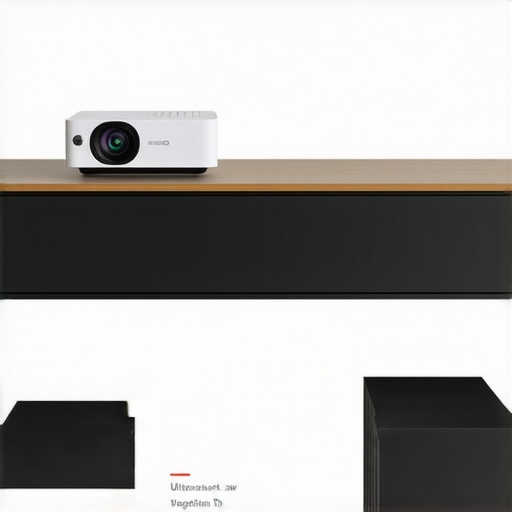
The real game-changer in the market right now is the rise of ust projectors (Ultra Short Throw). If you’ve ever had someone walk in front of your projector and cast a giant shadow over the climactic scene of a movie, you know why UST is the future. A traditional long-throw 4k projector requires a clear path across the room, whereas a UST unit sits just inches from the wall. While ust projectors are generally more expensive, the trade-off is a cleaner installation that looks like a built-in part of your home rather than a science project hanging from the ceiling. If you have a small living room, the choice is clear: stop trying to make long-throw work in a cramped space.
Is it worth the upgrade?
If you are currently running a 1080p setup and wondering if you should jump on the next wave of 4k projectors, the answer depends entirely on your screen size. On a 100-inch screen or smaller, the jump to 4K is subtle. But once you hit the 120-inch to 150-inch mark, 4K becomes essential to avoid seeing the ‘screen door’ effect where individual pixels become visible. For those who want the absolute best cinematic experience without the complexity of a dark-room-only setup, searching for laser projector deals that offer at least 2,500 ANSI lumens is the smartest move you can make this year. Check current prices on the latest UST models if you want to see how far the technology has come.
Why a Massive Screen Beats an OLED Every Time
The biggest competitor to a high-end home theater setup isn’t another projector; it’s the 85-inch or 98-inch LED TV. While a TV offers better contrast in broad daylight, it simply cannot match the scale of a projector. A 120-inch image is nearly double the surface area of an 85-inch TV. That sense of ‘immersion’ is something you can’t quantify with a spec sheet. If you want your home to feel like a theater, you need the scale that only 4k projectors can provide. For those on the move, portable projectors offer a level of flexibility that no TV can touch, allowing you to bring that big-screen magic to a hotel room or a friend’s backyard in a single backpack.
I’ve spent the last three summers lugging various projectors into my garden, and the bottom line is simple: for most backyard setups, a high-quality 1080p unit outperforms a mediocre 4K one every single time. While marketers love to sell you on resolution, the uncontrolled environment of the outdoors makes contrast and brightness far more important than raw pixel count. This review breaks down why you might want to save your cash and focus on the specs that actually matter when you are competing with the moon and the neighbor’s porch light.
The Harsh Reality of Outdoor Resolution
The promise of 4K is incredible detail, but that detail relies on a controlled environment. When I test these units, I look at three non-negotiables: perceived sharpness at a 12-foot viewing distance, ease of setup, and lumen output. In a dark basement, 4K is king. In a backyard with a slight breeze moving the screen, those extra pixels often blur into nothingness. I’ve found that I can rarely tell the difference between a high-end 1080p laser projector and a budget 4K bulb unit once the movie starts. It is a classic case of why expensive 4k projectors aren’t always better than 1080p when the environment is working against you.
Is a 4K projector actually overkill for a screen in the grass?
Yes, for the majority of casual viewers, it absolutely is. Unless you are using a fixed, high-gain frame or a professional-grade inflatable, the micro-vibrations from the wind will negate any resolution benefits. I personally prefer the 1080p route because it allows me to spend the saved money on a better sound system or a higher-quality screen. If you are just starting, you should look at the easiest way to setup an outdoor cinema in under 5 minutes to see how simplicity often trumps specs.
Stop Chasing Pixels in the Dark
Brightness is the real battleground. A 1080p projector with 3,000 ANSI lumens will look significantly better at dusk than a 4K projector with only 1,500 lumens. When I’m out there, I want the image to pop, not look like a muddy mess of high-resolution gray. According to technical standards from the Texas Instruments DLP technology spec sheets, the perceived contrast is what defines ‘sharpness’ to the human eye more than the grid of pixels itself. This is why many enthusiasts are hunting for specific laser projector deals that give you the most lumens for your dollar rather than the highest resolution sticker. I also recommend checking out how we ran a backyard movie night off a single battery, as 1080p units are generally much more power-efficient, making them the ultimate choice for truly portable outdoor fun.
The Trade-offs You Need to Know
- Pro: Laser light engines provide instant-on capability and superior color longevity compared to bulbs.
- Pro: High-lumen 1080p units offer better daylight visibility than low-lumen 4K models.
- Con: Internal fans can be noisy, so you may need to how to stop projector fan noise from ruining quiet scenes.
- Con: External power bricks on portable models can be a major trip hazard in the dark.
Does Your Backyard Fit the Profile?
This setup is ideal for weekend warriors and sports fans who want a massive screen without the technical headache. If you value portability and need a unit that can survive a humid night, a rugged 1080p laser projector is the winner. However, you should skip this and look at the best 4k projectors for dedicated dark movie rooms if you have a perfectly light-controlled basement. For those in small apartments, you might find that the best ust projectors for tight studio apartments provide a better indoor-to-outdoor transition than long-throw models.
The Final Verdict: 8.5/10
Resolution is only one piece of the puzzle. For real-world outdoor use, brightness and ease of use reign supreme. A bright 1080p laser projector is a much smarter investment than a dim 4K unit that struggles to compete with ambient light. Before you pull the trigger, research how to tell if a laser projector deal is actually a bargain to ensure you’re getting a true value. If you’re ready to buy, check out the best laser projector deals under a thousand bucks and start planning your next movie night.