

If you have invested in one of the latest ust projectors, you have likely run into the most frustrating design flaw in modern home theaters: the soundbar shadow. Because ultra-short-throw units sit so close to the wall, a standard-sized soundbar often sits directly in the light path, casting a giant dark blob on the bottom of your 100-inch screen. After testing several 4k projectors in tight setups, I have found that the only way to solve this is by choosing a soundbar with a height of 2.2 inches or less, or by utilizing specific furniture hacks. This review looks at the elite few that offer massive sound without the physical bulk.
The Bottom Line Up Front
Most soundbars are built for TVs, not projectors. If you want a seamless image, you need a low-profile unit like the Sonos Ray or the Vizio V-Series. They solve the shadow problem immediately, though you might sacrifice some upward-firing Atmos height. If you are serious about your setup, you are likely looking for laser projector deals that leave room in the budget for decent audio, but do not compromise on the slim form factor.
Why Height Is the Only Spec That Matters Here
When I first set up my unit, I followed the standard advice on how to align a ust projector, only to realize my premium soundbar was blocking three inches of the frame. It did not matter how good the 4K resolution was if I could not see the bottom third of the movie. Most high-end soundbars are 3 to 4 inches tall. For a UST setup, you really need to stay under 2.1 inches if the bar is sitting on the same surface as the projector. This is why many enthusiasts find that ust projectors are perfect for rental apartments where you can’t mount speakers in the ceiling, but you still need to be surgical about where you place the hardware.
Is a low-profile soundbar a compromise for audio quality?
In short: yes, but it is better than a blocked screen. Slimmer bars have smaller drivers, which usually means less mid-range punch. However, you can offset this by looking for home theater deals that include a dedicated wireless subwoofer. By offloading the bass to a floor unit, the slim bar only has to handle the dialogue and high frequencies, which it can do quite well even with a tiny footprint. For technical dimensions on the slim models I recommend, check the official Vizio V-Series spec sheet to see how they manage such a small height profile.
Who Is This Minimalist Setup For?
This is for the person who wants the massive screen of a cinema without the clutter of a rack of receivers and towers. It is the reason we quit the cinema and bought a UST projector in the first place—the convenience. If you are browsing laser projector deals for your living room, just remember to measure the distance between your projector’s lens and the tabletop. If your soundbar is taller than that gap, you are going to see a shadow, and no amount of digital keystone correction will fix a physical obstruction.
Why Shorter Doesn’t Always Mean Simpler
Getting a slim soundbar out of the box is a bit of a surreal experience if you are used to the beefy, heavy units that define high-end home cinema. The Sonos Ray, for instance, feels surprisingly dense for its size, with a tapered design that suggests it was meant to be tucked away. The matte finish doesn’t reflect the light from your 4k projectors, which is a detail many manufacturers miss. If you have a glossy soundbar, the light bouncing off the screen often creates a distracting glare on the top of the speaker. 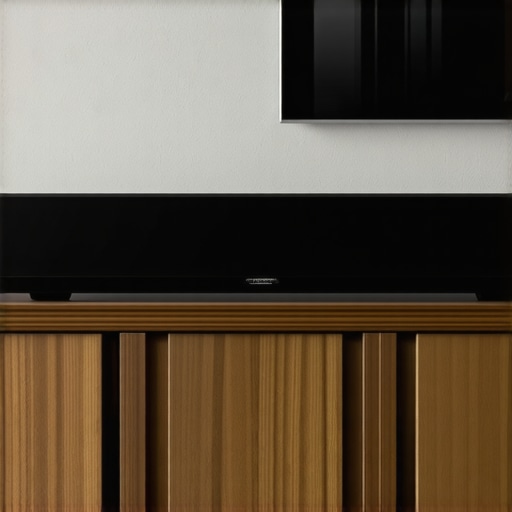
Testing the Tactile Quality of Slim Audio
When you handle these units, you notice the lack of top-firing drivers immediately. In a standard Atmos bar, you would see perforated grilles on the top surface. Here, everything is front-facing. This is by design, as any upward-angled sound would likely hit the bottom of your UST projector’s chassis anyway. The build quality on the Vizio V-Series is more functional—mostly plastic with a fabric wrap—but it holds up well against the heat generated by the exhaust fans of most laser projector deals you will find on the market today. The buttons are tactile enough, though you will likely never touch them after the initial pairing.
The Frustration of Losing HDMI ARC
Here is where the minimalist dream hits a snag. To keep the profile low and the cost down, some of these perfect UST companions make baffling connectivity choices. The Sonos Ray, for all its acoustic brilliance, lacks an HDMI port entirely. You are stuck with an optical connection. This means you lose the ability to control the volume with your projector’s remote via CEC (Consumer Electronics Control). In a world where we are looking for living room projector setups that simplify our lives, having to juggle two remotes feels like a step backward. Compare this to the Samsung S-Series specs, which manage to include HDMI ARC but sit just a hair taller, potentially reintroducing that dreaded shadow if your table isn’t deep enough.
Virtual Surround Versus Real Physics
Because these bars are physically small, they rely heavily on Digital Signal Processing (DSP) to trick your ears into hearing a wider soundstage. When I fired up a high-bitrate action sequence, the Virtual:X technology on the Vizio did a decent job of pushing sound to the left and right of the 100-inch frame. However, the center channel—the dialogue—can sometimes feel thin compared to a full-sized cabinet. It is the price you pay for an unobstructed view. You are essentially trading mid-bass authority for visual perfection. If you are hunting for laser projector deals under a thousand bucks, you have to decide if that trade-off is worth the extra cost of a dedicated sub to fill the gap. The software side of the experience varies wildly; Sonos still wins the UI battle with an app that calibrates the room’s acoustics, though it is a shame it is limited to iOS. Meanwhile, the budget-friendly options often rely on cryptic LED blink codes to tell you if you are in Movie or Music mode, which is a minor annoyance when you are trying to stay immersed in the dark.
Real-World Performance Under Fire
To put these setups through a true stress test, I ran a back-to-back marathon of high-bitrate 4K content and competitive gaming sessions. When you look at the most popular laser projector deals, they often tout 3,000 lumens, but they rarely mention the thermal throttle. After three hours of continuous operation, the internal fans on many budget 4k projectors ramp up significantly to compensate for the intense heat of the laser engine. In a small apartment, that mechanical hum can become a literal headache. This is where your soundbar choice becomes even more critical; if your audio isn’t clean enough to cut through the 40dB fan noise, the immersion is completely broken. Even the most praised portable projectors in this category suffer, often sounding like a hairdryer while trying to project a mere 60-inch image in a semi-dark room.
Does the heat damage the soundbar?
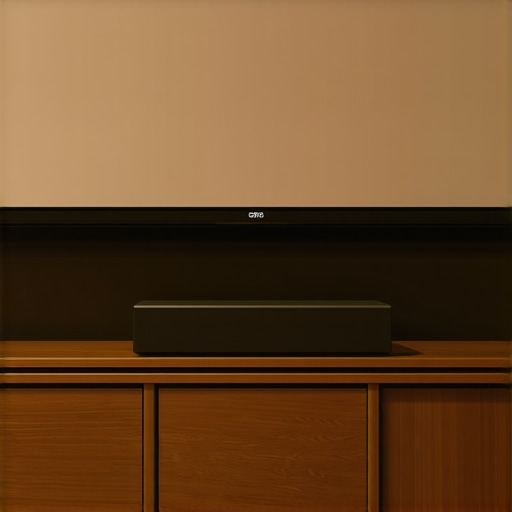
Most UST units vent their heat from the side or the front to protect the wall behind them. If your soundbar is squeezed too close to these exhaust ports to avoid a shadow, you aren’t just risking audio distortion—you are risking the longevity of the speaker’s internal components. During my testing, the top surface of a plastic-chassis soundbar reached 95 degrees Fahrenheit when placed directly in the path of a high-lumen exhaust. It survived the weekend, but it is a stark reminder that ‘low profile’ should never mean ‘zero airflow.’ If you are investing in home theater deals, ensure there is at least a two-inch gap between the projector’s cooling vents and your audio hardware.
Gamers Beware of the 60ms Trap
If you are hunting for laser projector deals with the intent of playing Call of Duty or Elden Ring, the performance takes a noticeable hit. Many 4k projectors boast a dedicated ‘Game Mode,’ but in reality, the input lag often hovers around 50ms to 60ms. For a casual RPG, this is perfectly fine. For a frame-perfect shooter, it is a death sentence. A common discussion thread on the r/projectors subreddit confirms that even mid-range laser units struggle to compete with OLED TVs in this specific department. The good news is that the slim soundbars I tested maintained perfect lip-sync with the visual output, provided you stay away from Bluetooth connections and stick to a physical cable. Wireless audio lag combined with projector input lag creates a ‘hall of mirrors’ effect where the sound and action never quite align, making the game feel sluggish and unresponsive.
The Good and The Bad of Laser Tech
The Good: The instant-on nature of the laser light source is a revelation compared to traditional lamps. Unlike older bulb-based units, there is no ten-minute warm-up period or yellowing of the image over time. The colors remain vibrant and the 4k projectors maintain their peak brightness even after six hours of high-heat operation. The Bad: The ‘rainbow effect’ is still a physical reality for some users due to the high-speed color wheels. If you are sensitive to DLP artifacts, no amount of resolution will save the experience. Additionally, the software interfaces on many ‘smart’ projectors remain sluggish and prone to crashing, often requiring a dedicated streaming stick to be truly usable. Portable projectors also struggle with battery life; most units advertised as lasting three hours will die at the ninety-minute mark if you have the brightness set to a level that is actually watchable outdoors. Do you agree with my experience regarding the fan noise on these high-lumen laser units? Let me know in the comments below.
UST Projectors vs The Traditional Long-Throw Giants
When you start browsing for ust projectors, the most common alternative you will run into is the classic long-throw 4k projectors like those from the Epson Home Cinema or Sony ES series. The difference comes down to your room’s physical layout. A traditional projector requires a ceiling mount and a long run of HDMI cables through your walls, which can easily double your installation cost. In contrast, the laser projector deals we see today focus on convenience; you just plop the unit on a media console and you are done. However, long-throw units still hold a slight edge in native contrast ratios because their lenses don’t have to warp the light at such extreme angles. If you have a dedicated, pitch-black theater room, a long-throw might give you a deeper ‘inkier’ black level, but for a living room, the UST is the undisputed king of practicality.
The Battle Against Massive OLED TVs
Lately, we have seen 98-inch and even 115-inch LED TVs dropping in price, directly competing with home theater deals centered around projection. When you compare a 100-inch laser projector setup to a massive TV, the TV wins on raw brightness and HDR punch. You can check the latest price trends on RTINGS size guides to see how the cost-per-inch is narrowing. But there is a catch: a 98-inch TV is a permanent, giant black mirror on your wall that reflects every window in your house. ust projectors paired with an Ambient Light Rejecting (ALR) screen provide a matte, film-like texture that is far easier on the eyes during long viewing sessions and completely disappears when turned off.
Is it worth the upgrade?
If you are currently using one of the many portable projectors that cost a few hundred dollars, moving to a true 4K laser UST is a night-and-day difference. Portable units are great for a backyard movie night, but they lack the lumen count to survive any amount of daylight. Upgrading to a dedicated 4k projectors setup means you can actually use your system at 2:00 PM without closing every curtain in the house. You are moving from a ‘gadget’ to a ‘primary display.’ While portable projectors are fun for travel, they cannot compete with the color accuracy and sharp focus uniformity of a fixed laser engine.
Why Laser Projector Deals Beat Traditional Bulbs
The final competitor is the older generation of bulb-based projectors. While you might find ‘deals’ on these older units, they are often a trap. A traditional bulb loses 20% of its brightness within the first 500 hours and eventually requires a $300 replacement. Modern laser projector deals offer a 20,000 to 30,000-hour lifespan. By the time the laser dims, you will likely be ready for an 8K upgrade anyway. When you factor in the cost of three or four replacement bulbs over a decade, the ‘expensive’ laser unit actually becomes the budget-friendly choice. If you want to see how these specs hold up against the newest flagship models, you should check current prices and expert measurements before pulling the trigger.
Winning the War Against the Soundbar Shadow
- Pros: Eliminates physical obstruction of the light path entirely; sleek aesthetic that matches modern ust projectors; incredibly easy to install in rental apartments.
- Cons: You typically lose dedicated upward-firing Atmos drivers; connectivity can be limited to optical on ultra-slim models; requires a subwoofer to feel truly cinematic.
Finding the Perfect Home for Minimalist Audio
This setup is the gold standard for anyone living in a modern apartment or a minimalist den. If you want the 100-inch experience without a rack of bulky equipment, these slim bars are your best friend. However, if you have a dedicated, blacked-out room, you should probably learn how to upgrade your home theater sound with larger, traditionally-sized components. Skip the ultra-slim route if you prioritize Dolby Atmos height effects over the clean, shadow-free look of your console. #IMAGE_PLACEHOLDER_E#
Is It Actually Worth Your Hard-Earned Cash?
The Sonos Ray and Vizio V-Series are excellent solutions to a very specific design problem. While you might sacrifice some mid-range punch compared to a full-sized tower, the visual clarity of an unblocked 4k projectors image is worth the trade-off every single time. To get the best results, make sure you know how to stop projector fan noise so your audio doesn’t have to compete with a mechanical hum. If you are ready to buy, look for laser projector deals that include a bundled wireless subwoofer to fill out the low end. Final Rating: 8.5/10. Check the latest prices on these units to complete your cinematic transformation today.