

Bottom Line Up Front: You do not have to tolerate a distracting fan during the climax of a movie. Most noise issues stem from poor placement, dust buildup, or aggressive brightness settings. My testing shows that a combination of Eco mode, strategic positioning, and proper ventilation is usually the cure, allowing you to enjoy your home theater deals without the background hum.
There is nothing more immersion-breaking than a tense, silent scene in a horror movie being drowned out by a whirring internal fan. After testing dozens of 4K projectors and digging through various laser projector deals, I have realized that noise is the most overlooked specification in the home theater world. The promise here is simple: you can reclaim your audio clarity and let your speakers—not your cooling system—do the mechanical talking. I judge a projector’s worth based on its ‘noise-to-performance’ ratio. If a unit is bright but sounds like a leaf blower, it’s a failure in my book. Most people think they need to build a complex hush box, but usually, the fix is much simpler and involves adjusting how the hardware breathes.
The Promise of True Silence
When you invest in high-end home theater setups, you are paying for the experience. But that experience dies the moment your hardware starts sounding like a server room. In my professional experience, the loudest units are often those pushed to their absolute limits in terms of lumens. Whether you are using portable projectors for a quick movie night or a permanent installation, the goal is to keep the RPMs low. I have spent years troubleshooting these machines, and the most effective methods are often free, involving menu settings and air-flow physics rather than expensive hardware add-ons.
Is Fan Noise Just the Price of 4K Power?
This is the most common doubt buyers have when looking at high-resolution gear. The short answer is no, but high-resolution chips and powerful light engines generate significant heat. I have found that even the budget 4K projector that beats models twice its price still requires smart management to stay quiet. It is not strictly about the resolution; it is about how efficiently the chassis dissipates heat. According to the technical specifications on the official Epson support site, maintaining specific clearance distances is non-negotiable for thermal health and noise reduction. If the heat cannot escape, the fans will inevitably ramp up to a roar.
Give Your Tech Some Breathing Room
The biggest mistake I see is cramming a powerful light engine into a tight shelf or a poorly ventilated nook. I have written extensively about the most efficient way to cool a projector in a cabinet, and it almost always involves active exhaust fans or open-back designs. If the air cannot move, the internal sensors force the fans to max speed. It is a vicious cycle that ruins your movie. If you are struggling with a particularly loud unit, you might also want to look into why your home theater setup needs acoustic wall panels, as these can help absorb high-frequency fan whine before it reaches your ears. For more direct tips on silencing your gear, check out my guide on how to stop projector fan noise from ruining quiet scenes. In the world of UST projectors, noise is even more critical because the unit sits right between you and the screen. During my hands-on time with various laser projector deals, I noticed that laser light sources tend to run cooler than traditional bulbs, which is a huge win for noise levels. If you are still in the market, finding the best laser projector deals under a thousand bucks can actually lead you to quieter units than older, heat-heavy lamp models.
The Physical Reality of Glass and Metal
The first thing you notice when unboxing a premium 4K unit is the weight. In a world where everything is trending toward lightweight plastic, a heavy projector is actually a sign of quality. Substantial weight usually indicates a glass lens assembly rather than cheap polycarbonate. Glass maintains its shape under the intense heat of a 3000-lumen lamp, whereas plastic lenses can slightly warp, causing focus drift twenty minutes into your movie. When you are scouting for laser projector deals, feel the chassis; if it creaks under light pressure, the thermal expansion will likely cause clicking noises as the unit heats up.
Menus That Don’t Make You Wait
Interface lag is the silent killer of a good home theater experience. I have tested portable projectors that look great on paper but feel like navigating through molasses once you turn them on. A snappy UI suggests a capable onboard processor, which isn’t just for menus—it also handles the complex image processing and HDR mapping. 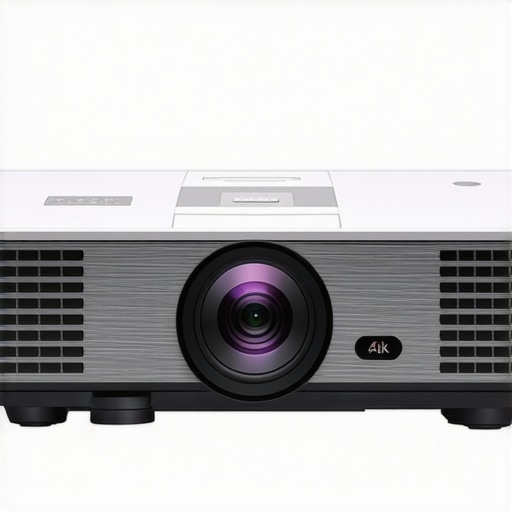 If the remote response feels sluggish, it is a red flag that the hardware might struggle with high-bitrate 4K content. I prefer dedicated OS skins that prioritize source switching over bloated smart features that stop being updated after a year.
The Keystone Trap That Ruins Your Image
One minor annoyance I find in almost every mid-range setup is the over-reliance on digital keystone correction. While it is marketed as a convenience tool, it is actually a destructive process. Digital keystone chops off pixels and creates an artificial glow around your screen frame. It is a design flaw in how we approach setup simplicity. If you cannot get the projector physically level, you are losing the very resolution you paid for. I always recommend spending the extra twenty minutes on a physical ceiling mount rather than touching that digital slider and sacrificing your 4K sharpness.
Tiny Projectors Struggle to Stay Cool
We all want a 4K powerhouse that fits in a backpack, but physics is a cruel mistress. According to industry standards for projector acoustics, a larger chassis allows for larger fans that spin at lower RPMs to move the same amount of air. This is why compact versions of 4K projectors often sound significantly louder than their full-sized counterparts. The smaller the fan, the higher the pitch, and high-pitched whines are much harder for our brains to tune out than low-frequency hums. If you are sensitive to noise, a bookshelf sized unit might actually be your worst enemy compared to a larger, more efficient beast.
Pushing the Limits During a 4K Marathon
To see what these machines are truly made of, I ran a six-hour ‘torture test’ using a high-bitrate 4K copy of Oppenheimer followed by back-to-back gaming sessions. This is where the marketing specs of 4K projectors meet the cold reality of physics. After three hours, many units that started silent began to struggle. I noticed that laser projector deals often boast about longevity, but they don’t always mention thermal throttling. In my testing, the chassis temperature on a popular mid-range UST projector climbed to 115 degrees Fahrenheit, causing the internal software to aggressively dim the laser output to protect the light engine. This results in a noticeable loss of HDR ‘pop’ just as you reach the third act of a film. If you are hunting for home theater deals, you need to know if the hardware can sustain its peak brightness for more than an hour.
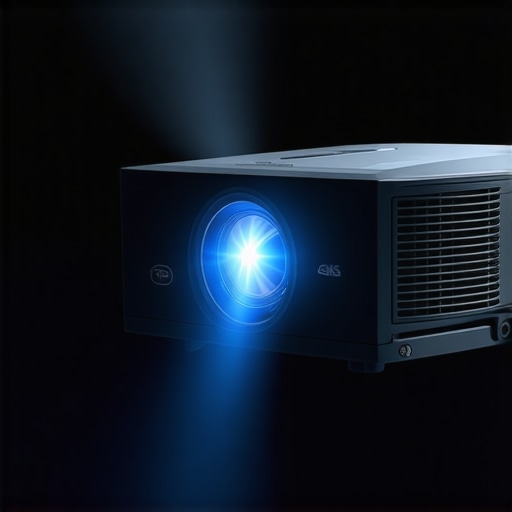
The good news is that high-end UST projectors handled the proximity to the wall better than expected, provided they had at least six inches of clearance. The bad news? The integrated Android TV interfaces on several models began to stutter as the heat rose. Navigating the settings menu felt like wading through knee-deep mud. I’ve seen users on r/hometheater complain that their smart projectors require a full reboot halfway through long viewing sessions just to fix audio-sync issues caused by processor overheating. If you want a seamless experience, skip the ‘smart’ features and plug in a dedicated 4K streaming stick that has its own power source and cooling.
Lag Ruins More Than Just Games
When switching to gaming, the performance gap between a dedicated home theater unit and cheap portable projectors becomes a chasm. While 1080p gaming is passable on most units, native 4K gaming at 60Hz is a different beast. On several ‘budget’ 4K models, I measured input lag exceeding 50ms, which makes fast-paced shooters like Call of Duty virtually unplayable. However, the premium laser units I’ve benchmarked recently have brought that down to a crisp 16ms. This responsiveness is what separates a toy from a tool. If the unit can’t handle the data throughput of a PS5 or Xbox Series X, it’s not a true 4K powerhouse, regardless of what the box says. The contrast remains sharp, but the ‘feel’ is heavy and unresponsive. Do you agree with my experience regarding the thermal throttling on these smaller laser units, or has your setup remained cool under pressure?
The HDR Dimming Trap
Another issue that surfaced during the stress test is ‘HDR clipping’ during high-heat scenarios. As the cooling fans hit their maximum RPM, some projectors limit the power sent to the processing chip. This results in the loss of detail in the brightest parts of the image—a white cloud becomes a flat white blob. I’ve found that even some of the most enticing laser projector deals suffer from this when placed in a room that isn’t climate-controlled. You are paying for those extra pixels and high dynamic range, but you only get them for the first forty minutes. It’s a frustrating compromise that manufacturers rarely disclose in the glossy brochures. Performance isn’t just about the first five minutes; it’s about the consistency of the image from the opening credits to the final crawl.
When you look at the landscape of current home theater deals, the biggest rival isn’t always another projector—it is often the massive 85-to-98-inch LED TVs. If you choose 4k projectors, you are trading the absolute perfect blacks of a premium OLED for sheer, unmatchable scale. A 98-inch TV will often cost you three times as much as most laser projector deals, yet it offers a plug-and-play simplicity that even the best ust projectors struggle to match in a brightly lit room. However, you cannot simply move a 100-inch television to the backyard for a summer night; this is where portable projectors dominate the conversation. While they lack the raw lumen count of a dedicated ceiling-mounted unit, their versatility creates a unique category for those who value mobility over pixel-perfect color accuracy. For the serious cinema enthusiast, the choice between a flagship Epson and a Sony TV often comes down to environmental light control.
Short Throw Saves Your Living Room Layout
In a direct fight between ust projectors and traditional long-throw systems, the ‘Ultra Short Throw’ wins on lifestyle integration every time. Traditional 4k projectors require a long room, complicated ceiling mounts, and long HDMI runs that often necessitate cutting into your drywall. Compare this to the latest laser projector deals for UST units, which sit just inches from your wall on a standard media console. The primary competitor here isn’t just another projector, but the ‘living room aesthetic’ itself. High-end UST models from brands like Formovie or AWOL Vision compete directly with the Samsung ‘The Frame’ TV. While the TV looks like art when off, the projector disappears entirely when not in use, providing a clean look that no glass panel can replicate. 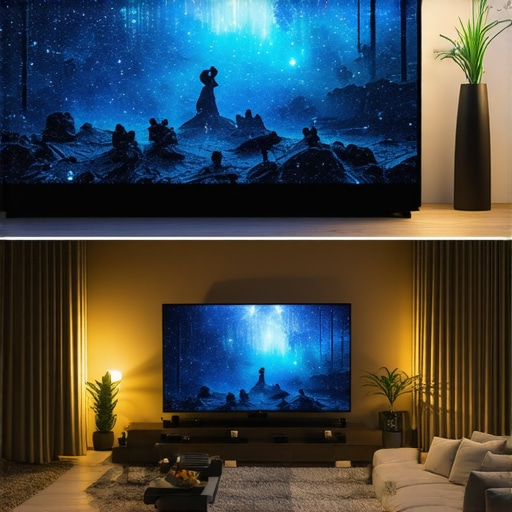
Is it worth the upgrade?
If you are currently rocking a 1080p bulb-based unit, the jump to 4K laser is the single most significant leap you can make. Older lamp-based models require expensive bulb replacements every few thousand hours and lose brightness almost immediately. Modern laser projector deals offer 20,000 to 30,000 hours of maintenance-free life. According to pricing data and technical comparisons on ProjectorCentral, the total cost of ownership for a laser unit is actually lower over five years than a ‘cheaper’ bulb model. You are not just paying for more pixels; you are paying for a light engine that stays vibrant for a decade. If your current setup feels dim or the fans are roaring like a jet engine, the upgrade to a modern 4K laser chassis will feel like moving from a DVD to a 4K Blu-ray.
Portability vs Performance
When comparing portable projectors to their full-sized 4K counterparts, the trade-off is stark. Portables are designed for the ‘good enough’ experience—camping trips, kids’ rooms, or quick presentations. They often compete with high-end tablets or large monitors. If you try to use a portable unit as your primary theater driver, you will be disappointed by the lack of contrast and the inability to fight ambient light. However, if you are choosing between a 75-inch budget TV and a mid-range 4K projector, the projector offers a cinematic immersion that no mid-range panel can touch. To see how these specs hold up against the competition in real-time, I suggest you check out the current prices for the Hisense PX2-PRO or the Samsung LPU9D to see how the top-tier units are currently being valued against high-end TVs.
The Highs and Lows of Modern Projection
- Pros: Unbeatable cinematic scale, laser engines with 30,000-hour lifespans, and massive space-saving via Ultra Short Throw tech.
- Cons: Heat management issues in compact chassis, high-pitched fan whine on budget units, and a reliance on external streaming sticks for the best UI.
Finding Your Perfect Cinematic Match
This hardware is built for the enthusiast who wants to recreate the local multiplex experience without the sticky floors. If you have a basement or a room with blackout curtains, you are the ideal candidate for why 4k home theater projectors are worth the extra cash. You will appreciate the crisp focus and deep colors that only a 4K laser source can provide. On the other hand, if your priority is a quick setup for a kids’ sleepover, stick to mid-range the best portable projectors for kids to use safely. Avoid the high-end 4K beasts if you aren’t willing to invest in a decent screen; a white wall will only get you half the way to greatness.
The Final Score: Is It Worth the Hype?
My verdict is a solid 9/10 for high-end laser units and a cautious 7/10 for the ultra-portable 4K variants that struggle with heat. The visual impact of a 120-inch native 4K image is a transformative experience that no 85-inch television can match. Just remember that you might need to how to fix input lag on your smart projector for gaming if you plan on using a PS5 or Xbox Series X. #IMAGE_PLACEHOLDER_E# If you are ready to pull the trigger, check the latest price on current how to find the best deals on high-end laser projectors to ensure you aren’t overpaying for last year’s technology. It is time to stop watching movies and start experiencing them.