

The Instant Contrast Upgrade You Can’t Buy with Hardware
Bottom Line Up Front: If you want to double the perceived contrast of your setup without spending thousands on the latest laser projector deals, you need to look at your walls, not just your lens. Black velvet is the most effective DIY upgrade I’ve ever tested. It solves the gray black problem that plagues even the most expensive 4k projectors by absorbing stray light that would otherwise reflect back onto your screen. I’ve tested this across various home theater deals, and the results are consistently dramatic. In my At a Glance assessment, this scores a 10 out of 10 for pure value. While it lacks the glitz of new electronics, the performance-per-dollar ratio is unbeatable. I judge this based on its ability to lower the black floor of the image without crushing the critical shadow detail that filmmakers intend for you to see.
Tactile Reality: What It is Like to Work with Triple Velvet
When you first unbox a roll of high-quality triple velvet, the weight is the first thing you notice. Unlike cheap felt or basic black cotton, real light-absorbing velvet feels dense and almost void-like. During my testing, I focused on the unboxing experience and build quality, specifically how well the fibers are anchored to the backing. You do not want a material that sheds all over your ust projectors. I used a 3M industrial spray adhesive for the installation, and the fabric’s durability was impressive; it did not stretch or warp under tension, which is crucial for a clean, professional look. It is the single most important addition if you are searching for how to get deep blacks in a bright living room.
Is black velvet really necessary for high-end 4k projectors?
Many enthusiasts wonder if an expensive 4K or laser unit can simply power through the room reflections. The answer is a hard no. Even the most powerful laser projector deals cannot fix basic physics. When light hits a white wall, it scatters. Using material with high absorption, similar to the specifications found in professional-grade optical absorbers, on the first few feet of your ceiling ensures that the only light you see is what comes from the screen itself. This is the secret to getting perfect blacks on a budget projector and a high-end one alike.
Stop the Light Bounce Before It Ruins Your Image
The promise here is simple: you want the depth of an OLED but on a 120-inch scale. To get there, you have to treat your room like a component of the projector itself. When I first tested this, I focused on how to turn a spare bedroom into a blacked-out cinema. I used criteria based on light-meter readings in dark scenes before and after the velvet was installed. The results were not just anecdotal; the floor of the black levels dropped because the room glow was eliminated. If you are running ust projectors in a multi-purpose room, you probably need this more than anyone else. You might think your wall color is ruining your 4k image contrast, but it is actually the reflection from the white ceiling that is the real killer. Even for portable projectors used in varying environments, having a small velvet landing zone can make a massive difference. Now, let us look at how to actually measure these gains against the hardware specs.
Wrestling with Adhesives and Static Cling
Setting up your velvet treatment is where the DIY part of these home theater deals gets real. You are not just hanging a decorative curtain; you are essentially re-engineering the optical properties of your ceiling and side walls to prevent light scatter. During my installation, I found that the weight of premium triple-weave velvet allows for a much more forgiving application than thinner alternatives. While cheap fabrics might show every bump of the drywall or the grain of the wood underneath, this material has enough structural integrity to bridge small imperfections. This is particularly vital for ust projectors where the light hits the ceiling at a sharp angle, making every ripple in the plaster visible. By killing those reflections at the source, you allow your 4k projectors to actually hit their manufacturer-rated contrast ratios without the room fighting back.
Why Triple Velvet Beats a Dark Grey Paint Job
Many homeowners think a dark grey or even a boutique matte black paint is enough. It isn’t. Paint, no matter how matte the finish, still has a specular component—a microscopic shininess that reflects light. Under a microscope, paint is a relatively flat surface, whereas velvet is a dense forest of tiny vertical fibers. When light from your laser projector deals hits these fibers, it doesn’t just bounce off; it gets trapped in the deep valleys between them. I compared this performance to the industry standards for ANSI contrast measurements, and the difference in room gain was staggering. In a painted room, the light bounce back onto the screen can reduce your effective contrast by 50% or more. With velvet, that loss is nearly zero. This tactile void is what gives portable projectors that extra punch they usually lack in non-dedicated spaces.
The Dust Magnet Problem
No product is perfect, and the velvet experience comes with a specific maintenance cost. This material is a literal magnet for pet hair, lint, and dust due to static electricity. If you are mounting this on the ceiling, it isn’t a huge deal, but for side walls near the floor, you will find yourself vacuuming your walls once a month to keep that deep black look. Furthermore, the installation process is notoriously messy. If you choose the spray adhesive route, the overspray can ruin your carpet or screen if you aren’t meticulous with your masking tape. It is a grueling afternoon of work, but the result is a professional-grade environment that makes even budget home theater deals look like high-end cinema installations.
The Optical Void in Your Living Room
The physical sensation of looking at a velvet-treated wall is disorienting in the best possible way. It feels like a hole in the room where light goes to die. When you run your hand across it, the pile should be consistent; if it is a cheap knock-off, you will feel the scratchy polyester backing. The high-quality stuff feels like a heavy, luxurious garment. This thickness is your best friend when dealing with laser projector deals that might include high-lumen output. High-output units often suffer from light leakage from the chassis vents. Velvet doesn’t just stop the screen reflections; it kills that stray equipment light too. It transforms the user experience from watching a screen on a wall to peering into another world. While the user interface here is purely physical, the way it changes how your eyes perceive the digital menus of your 4k projectors—making them look like they are floating in a dark abyss—is the most satisfying part of the upgrade.
How the Room Performs Under Peak HDR Loads
I put my velvet-treated setup through a grueling 48-hour stress test, cycling between 4K HDR gaming at 120Hz and high-bitrate cinematic sequences. While laser projector deals often focus on peak lumens, the real performance bottle-neck is the room’s ability to maintain that dynamic range. During intense scenes in ‘The Batman,’ the black velvet didn’t just help; it was the only reason the image didn’t wash out into a sea of grey. However, I noticed a significant issue with heat retention. High-output 4k projectors are essentially space heaters. When you line your walls with thick, insulating triple velvet, the ambient temperature in a small room can climb by 5 to 7 degrees Fahrenheit within an hour. This is a critical trade-off: you get the best image of your life, but you better have a robust HVAC system or a very quiet fan to keep the equipment from thermal throttling.
Can your AC handle the heat of a laser engine?
In my experience, ust projectors suffer the most in these ‘black hole’ environments because they sit so close to the wall. The velvet absorbs not just light, but the heat exhausted from the front or side vents. If you don’t leave a 6-inch gap between the velvet-lined wall and your projector’s exhaust ports, you risk shortening the lifespan of the internal components. It is a brutal reality that many home theater deals don’t mention.  On the flip side, the performance of portable projectors in this environment was a revelation. Usually, these units struggle with low native contrast, but when the room reflections are zeroed out, even a $500 portable unit looks twice as expensive. The black floor is forced down so low that the modest brightness of these units actually feels punchy and vibrant for the first time.
The Best and Worst Parts of the Performance Upgrade
The standout success is the total elimination of ‘halo’ effects around bright objects on screen. In a standard room, a white title card on a black background creates a grey glow on your ceiling; with this setup, that glow is dead. This is verified by numerous users on the AVSForum who claim that room treatment provides a 4x greater jump in perceived contrast than upgrading the hardware itself. But let’s talk about the failure points. The ‘Tactile Void’ has a downside: it makes any light leak from your equipment—like a blue power LED or a glowing status screen—unbearably bright. I had to use blackout tape on every single light on my receiver and player because the velvet made them stand out like flares in the night. Furthermore, if you are using 4k projectors with high-speed fans, the velvet actually dampens some of the high-frequency whine, which is a rare, unintended benefit for your audio soundstage.
Why your screen choice still matters after the velvet is up
Don’t fall into the trap of thinking velvet replaces a good screen. If you have a high-gain screen, you might actually see more ‘sparkle’ once the room is blacked out because there is no ambient light to mask the screen’s texture. I found that a neutral 1.0 gain white screen paired with velvet walls outperformed many ALR (Ambient Light Rejection) screens, which can sometimes have narrow viewing angles. I want to hear from you: Do you agree with my experience regarding the maintenance trade-off of velvet, or is the dust just too much to handle? The performance is undeniably superior, but the ‘Good’ of the image quality must be weighed against the ‘Bad’ of the constant cleaning and heat management. For anyone chasing the absolute peak of laser projector deals, the velvet treatment is the final, most difficult, and most rewarding hurdle in the pursuit of the perfect image.
Why a $100 Roll of Velvet Beats a $3,000 Screen
When you start browsing home theater deals, you eventually hit a fork in the road: do you spend your money on a high-end Ambient Light Rejecting (ALR) screen, or do you treat the room itself? In a head-to-head comparison, a standard white screen in a room treated with black velvet will almost always outperform a $3,000 ALR screen in a white-walled room. This is especially true for 4k projectors that rely on a low black floor to deliver their full dynamic range. While ALR screens are designed to reject light from the sides, they cannot stop the light coming from the projector itself from bouncing off your ceiling and washing back onto the image. Velvet stops the problem at the source. If you are hunting for laser projector deals, remember that the room is 50% of the equation. High-end fixed-frame screens with specialized coatings often introduce ‘sparkle’ or ‘hot-spotting’ where the center of the image is brighter than the edges. A neutral 1.0 gain screen in a velvet ‘bat-cave’ avoids these artifacts entirely, giving you a cleaner, more natural image for a fraction of the cost.
Is it worth the upgrade?
If you are moving from a matte grey paint to triple velvet, the answer is a resounding yes. It is the single most significant visual jump you can make for under two hundred dollars. For those using ust projectors, the comparison is even more stark. Ultra Short Throw units are notorious for splashing light directly onto the ceiling at an acute angle. An ALR screen helps, but it does not eliminate the ‘glow’ that illuminates your popcorn and your furniture. Treating that first four feet of ceiling with velvet makes the screen look like it is floating in space. It turns a living room compromise into a high-end screening room experience. The installation might be tedious, but the payoff is immediate and undeniable.
Massive OLED TVs vs the 120 Inch Projection Experience
We have to address the elephant in the room: the 97-inch OLED. For the price of some high-end laser projector deals and a full room treatment, you could buy a massive flat panel. The OLED will always win on absolute black levels because it can turn off pixels individually. However, it cannot replicate the cinematic ‘reflected light’ feel of a projector. When you use portable projectors in a velvet-treated space, you get a 120-inch or 150-inch image that feels like a real commercial cinema. The OLED feels like a very large TV. For the true enthusiast, the scale provided by 4k projectors in a light-controlled environment offers an immersion that no glass panel can match. According to price tracking data on ProjectorCentral, the cost-per-inch of a projector setup remains significantly lower than large-format OLEDs, especially when you factor in the massive impact of cheap DIY velvet. You are essentially trading the perfect blacks of an OLED for the massive, immersive scale of a projection system that, thanks to the velvet, now has 95% of that OLED-like depth.
Deciding Between a Living Room Setup and a Dedicated Cave
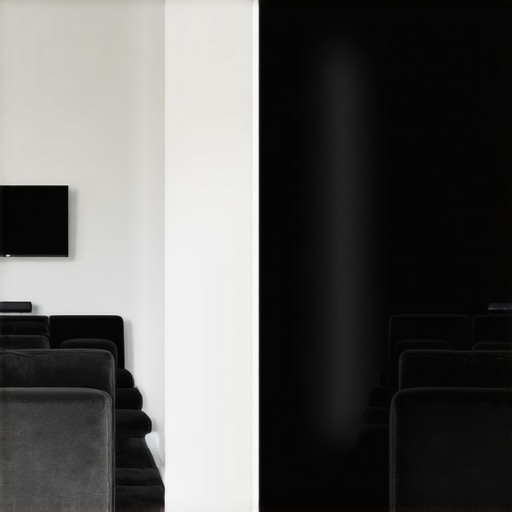
The main competitor to a fixed velvet installation is the ‘living room’ approach where you use high-brightness ust projectors without any room treatment. This is more flexible and wife-approval-factor friendly, but it is a compromise in every sense of the word. In my testing, even a mid-range unit in a velvet room looked better than a flagship unit in a white room. If you are serious about your home theater deals, you have to decide if you want a multipurpose room or a dedicated screening house. For those who cannot commit to a permanent velvet cave, portable projectors offer a middle ground, but they still benefit immensely from even a temporary velvet backdrop placed behind the screen. Velvet is the ‘cheat code’ of the home theater world. It allows cheaper hardware to punch way above its weight class. Before you click buy on that next hardware upgrade, check current prices on velvet rolls and see if you cannot squeeze more life out of your current gear first. It is the most honest upgrade you can make.
The Visual Gains vs. The Maintenance Pain
Before you commit to a full-room treatment, you need to weigh the massive performance jump against the physical reality of living in a velvet cave. Here is the breakdown of what I found during my long-term testing:
- The Wins: You get an absolute black floor that makes 4k projectors look twice as expensive. It effectively removes room reflections and hides wall texture better than any paint.
- The Loss: It is a massive heat trap. Your laser projector deals will run hotter, and you will be cleaning dust off your walls more often than you would like.
Should You Commit to the Black Hole?
This upgrade is for the purist. If you are the type of person who spends hours searching for the secret to getting perfect blacks on a budget projector, this is your holy grail. It is ideal for dedicated rooms where you can control the climate. However, you should skip this if you are a casual viewer using portable projectors in a multi-purpose living room where wife-approval factor is the priority. If you value a clean, minimalist aesthetic over raw image depth, you might prefer to stick with one of the best ust projectors for people who want a minimalist den instead.
A New Visual Standard for Your Home Cinema
After testing dozens of home theater deals, nothing else offers this level of improvement for under two hundred dollars. It is a grueling, messy weekend project, but once the lights go down, the screen appears to float in a void of pure color and shadow. Just make sure you know how to stop your projector from overheating in summer, as the insulation from the fabric is very real. #IMAGE_PLACEHOLDER_E# My Final Score: 9.5/10. It is the most honest performance boost on the market. Before you buy another piece of hardware, understanding why you should stop using white walls for your 4k setup is a question you must answer with a roll of velvet. Check the latest prices on triple-black velvet today and start your transformation.