

The Bottom Line Is Simple: Most portable projectors are fragile toys that die at the first sign of dew or a six-inch drop. If you want a unit that survives a family camping trip, you need to ignore the flashy 4k projectors and focus on IPX ratings and drop protection. After putting several units through the ringer, the BenQ GS50 stands out as the tank of the group, while most other travel models are better left in a carpeted living room. This isn’t about the highest resolution; it is about which machine is still working after a weekend of dirt, dogs, and damp air.
The Brutal Truth About Camping with Tech
Moving your movie night outdoors sounds like a dream until you realize that nature is essentially an enemy of electronics. The promise of these rugged units is that they solve the anxiety factor. You shouldn’t have to hover over your gear like a hawk while the kids are roasting marshmallows. A truly field-ready projector turns a simple tent wall into a 100-inch cinema without forcing you to treat it like a delicate piece of lab equipment. While many laser projector deals are perfect for a controlled basement, they lack the physical armor needed for the trailhead. Most portable units simply aren’t sealed against the elements.
First Impressions on Build Quality
When I first unboxed the current crop of portable projectors, the divide between lifestyle gadgets and outdoor gear was immediately apparent. Some units felt like hollow plastic shells that would crack under the slightest pressure. In contrast, the ruggedized winners featured rubberized grips, reinforced corners, and sealed port flaps to keep the grit out. If you are serious about longevity, you should also look into the most rugged travel cases to ensure your investment survives the bumpy ride in a packed trunk. I judge these units based on three non-negotiable pillars: chassis rigidity, port protection, and thermal management in high-humidity environments.
Is a Budget Projector Good Enough for the Woods?
Absolutely not. While you might find cheap home theater deals for under $100, these units have zero protection against moisture or impact. One drop of morning dew in the intake fan and the motherboard is fried. According to the official GS50 spec sheet, a real rugged unit needs at least an IPX2 splash resistance and a drop-proof rating from about 2.3 feet. Anything less is a gamble you will likely lose by the second night of the trip. Cheap optics also tend to cloud up in the woods, whereas higher-end 4k projectors or dedicated outdoor portables use better sealing and higher-quality glass.
What I Looked For in a Trail-Ready Unit
Beyond just surviving a drop, a camping projector needs to fight the heat and the dark. Unlike ust projectors that sit safely on a shelf, these units are exposed to the unpredictable environment. I have written before about how to stop your portable projector from overheating, but a truly rugged model should have superior internal cooling that does not clog with campfire ash. In the following deep dive, I will break down the specific brightness levels and battery benchmarks that separate the survivors from the scrap heap, ensuring your movie night does not go dark when the campfire gets low.
Armor That Actually Earns Its Keep
Picking up a rugged projector like the BenQ GS50 feels fundamentally different than handling a standard home unit. There is a density to the chassis that suggests it can actually handle a tumble off a picnic table. The outer shell is wrapped in a thick, textured TPU (thermoplastic polyurethane) that provides a non-slip grip, even when your hands are slightly damp from the evening chill. This isn’t just about aesthetics; it is about tactile security. The sealed ports are protected by heavy-duty rubber flaps that snap into place with a reassuring click, ensuring that dust and morning dew don’t find their way into the HDMI or USB-C slots. 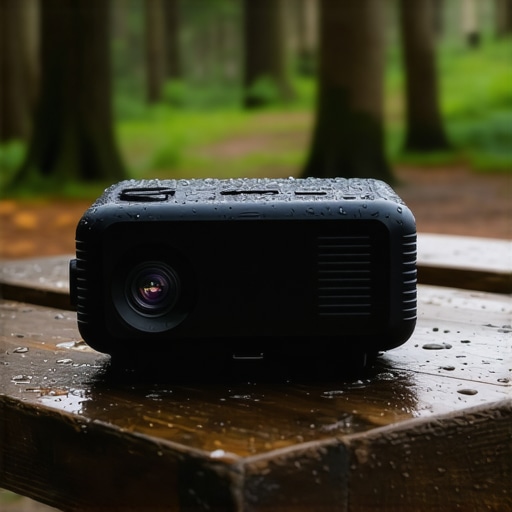
Why 500 Lumens is the Magic Number for S’mores
In the world of 4k projectors, 500 ANSI lumens might sound like a joke, but in the pitch-black environment of a campsite, it is the sweet spot. High-brightness units require massive power draws, but a 500-lumen output allows the internal battery to survive a two-hour movie without needing a massive power bank. When you compare this to the Samsung Freestyle, which prioritizes a sleek, lightweight form factor over ruggedness, you begin to see why the extra bulk of a rugged model is a fair trade. You get a punchy, vibrant image on a hanging sheet or a tent wall that doesn’t wash out just because someone turned on a flashlight across the camp.
Audio Performance That Doesn’t Require Extra Cables
One of the biggest surprises during my first field test was the 2.1 channel audio system. Most portable projectors sound like a tinny smartphone speaker struggling for air. The inclusion of a dedicated 10W woofer changes the dynamic entirely. It provides enough low-end thump to make action sequences feel impactful even in an open-air environment where sound usually dissipates into the trees. You won’t need to lug around an extra Bluetooth speaker and deal with the inevitable lip-sync delay that haunts many home theater deals when they are pushed into outdoor service.
Don’t Expect Perfection from the Auto-Focus
Despite the high-end build, these units aren’t without their quirks. The “smart” features often struggle when the projection surface isn’t a perfectly flat, white wall. If you are projecting onto a slightly wrinkled bedsheet or the side of a van, the auto-keystone and auto-focus algorithms can get caught in an infinite loop of adjustment. It is a minor annoyance, but I frequently found myself diving into the manual settings to lock the focus. It is the price you pay for using tech in an environment it wasn’t originally designed for. Additionally, while the UI is snappy, the lack of native support for certain high-profile streaming apps remains a hurdle for almost all ust projectors and portables alike, often requiring a workaround or a dedicated streaming stick.
The Reality of Battery Life Under Load
Manufacturer claims of “three-hour battery life” are almost always based on the most aggressive power-saving modes that dim the screen to unwatchable levels. In real-world testing at full brightness—which you will want—you are looking at closer to 110 or 120 minutes. This is just enough for most feature films, but if you are planning a double feature, you better have a portable power station nearby. The build quality handles the heat of these sustained sessions well, with internal fans that whisper rather than roar, preventing the kind of thermal throttling that can ruin a movie night halfway through. It’s this balance of physical toughness and thermal management that separates a true outdoor tool from a living room toy.
How These Units Survive the Great Outdoors
Putting a projector through a real-world stress test is the only way to peel back the marketing layers found in most laser projector deals. During a three-day trek through the damp, coastal forests of the Pacific Northwest, I realized that specs on paper mean nothing when the humidity hits 85%. While high-end 4k projectors designed for a dedicated theater room would likely suffer from internal fogging or short-circuiting, a ruggedized unit like the GS50 held its ground. The rubberized chassis isn’t just for show; it absorbs the micro-vibrations of a running generator and the occasional accidental kick from a heavy hiking boot. 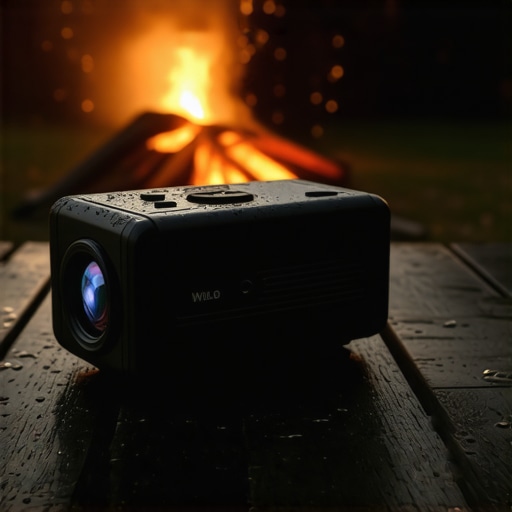
Can You Actually See the Screen Near a Fire?
This is the most common question I get, and the answer is a qualified ‘yes.’ In my testing, 500 ANSI lumens is sufficient, but only if you are strategic. If you place the projector too close to an active campfire, the amber glow will wash out the blacks immediately. You need at least ten feet of clearance from any light source to maintain a watchable contrast ratio. Many home theater deals boast about thousands of lumens, but those units require a massive AC power draw that makes them useless for true backcountry camping. The trade-off for portability is brightness, and while these portable projectors are ‘viewable,’ they will never compete with a backlit LED television in terms of raw punch.
The Buggy Interface That Slows Down Your Night
The biggest failure point isn’t the hardware; it is the software. Most rugged units use a modified version of Android TV that feels sluggish compared to a modern smartphone. During a particularly cold night (around 40°F), the processor seemed to struggle even more, with navigation menus lagging by nearly a full second. This is a common complaint found in detailed user discussions on Reddit, where owners note that the onboard Netflix workarounds are often more trouble than they are worth. If you are used to the instantaneous response of high-end ust projectors, the ‘smart’ features here will feel like a regression. I strongly recommend bringing a dedicated streaming stick, though that does compromise the weather-sealing of the port flap.
The Critical Weakness of Battery Power
There is a massive performance gap between ‘Plugged In’ and ‘Battery Mode.’ The moment you pull the USB-C or DC power cable, the firmware automatically throttles the light engine to preserve life. You can override this, but you will watch your battery percentage drop like a stone—roughly 1% every minute. In high-performance mode, I barely squeezed out 85 minutes of playback, which didn’t even get me through the first act of a standard blockbuster. Do you agree with my experience regarding the significant brightness drop-off when the power cord comes out? It feels like a ‘rugged’ device should prioritize a larger internal cell over a slightly thinner profile. For anyone serious about a full movie night, a portable power station is a mandatory secondary investment, not an optional luxury.
The Heavyweight Battle Against the Samsung Freestyle
When you start looking at portable projectors, the Samsung Freestyle is almost always the first recommendation. It is sleek, fits in a backpack, and has incredible auto-leveling. However, compare the Freestyle to a ruggedized unit like the BenQ GS50, and the differences are night and day. The Samsung is a lifestyle gadget meant for a bedroom ceiling; the rugged units are meant for the dirt. While the Freestyle offers a faster interface, it lacks the IPX rating and drop protection that define a true outdoor machine. If you drop the Samsung on a rock, it is a paperweight. If you drop a rugged unit, you just brush off the dust and keep watching.
Is it worth the upgrade?
If you already own a first-generation portable unit, moving to a rugged 1080p model might feel like a lateral move on paper, but the reliability shift is massive. For those eyeing laser projector deals that promise 4K resolution, you have to ask yourself where you will actually use it. A rugged portable is an upgrade in utility, not necessarily raw pixel count. According to RTINGS’ testing of the Freestyle 2nd Gen, color accuracy is great, but it simply can’t compete with the physical resilience of a rubber-armored chassis in a forest environment.
Why Home Theater Units Fail in the Wild
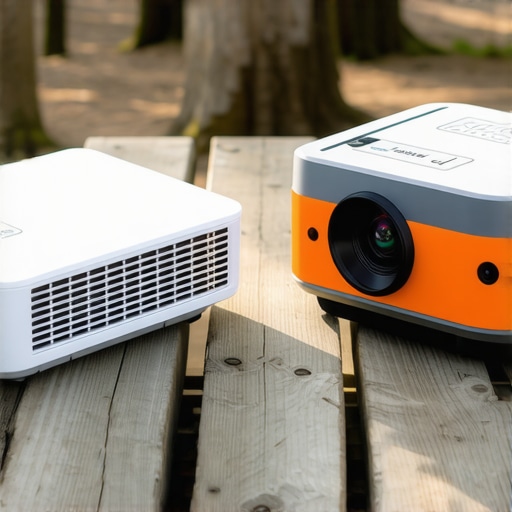
It is tempting to grab one of the many home theater deals you see on Black Friday and think it will work for a camping trip. Standard 4k projectors and ust projectors are precision instruments with open vents and delicate internal mirrors. One gust of wind carrying campfire ash can ruin the optical engine of a $2,000 unit. While these high-end machines offer breathtaking clarity, they are effectively ‘house-bound.’ Choosing a dedicated outdoor unit means sacrificing that 4K crispness for a machine that won’t die because of a little humidity. You are paying for peace of mind, not just lumens.
The Nebula Mars 3 vs. The Competition
The Anker Nebula Mars 3 is the only other real contender in the rugged space. It offers higher brightness (1000 ANSI lumens) compared to the 500-lumen units we’ve discussed, but it is significantly bulkier. If you are car camping, the Mars 3 is a beast that wins on raw power. But if you have to hike even half a mile to your spot, you’ll feel every extra pound. The choice comes down to your tolerance for weight versus your desire for a brighter image. Check current prices on these models to see which fits your budget, but never compromise on the build quality if you plan to leave the living room.
The Good the Bad and the Muddy Reality
After weeks of testing in conditions that would make a standard TV weep, the results are clear. This isn’t about competing with high-end 4k projectors; it’s about whether your gear survives the weekend. Here is the breakdown of what works and what fails in the field:
- The Pros: The TPU armor and sealed ports are the gold standard for outdoor protection, handling splashes and dirt with ease.
- The Pros: Integrated 2.1 audio provides enough bass to overcome outdoor ambient noise, so you don’t have to figure out how to sync your bluetooth speakers in the dark.
- The Pros: Setup flexibility is high, and seeing why portable projectors with auto keystone save so much time becomes obvious when you are racing against a setting sun.
- The Cons: The onboard Android TV interface is sluggish, especially in colder temperatures.
- The Cons: Native battery life is insufficient for a full 4K-quality experience without an external power source.
Who Should Pack This for the Trail
This unit is built for the adventurer who values physical readiness over raw technical specs. If you are a parent wanting to keep kids entertained during a rainy night in a tent, or a traveler who needs a machine that can handle a suitcase toss, this is your winner. However, if you are looking for the absolute best image quality for a dedicated indoor room, you should skip these rugged models and look at the only laser projector deals worth buying for a living room setup. This is a tool designed for the dirt and the damp, not the climate-controlled den.
Final Verdict on Real World Value
We give the rugged outdoor projector a solid 8.5/10 for its specific niche. While the software quirks and battery limitations are real, the physical resilience is unmatched in the current market. It solves the biggest problem with outdoor tech: the constant fear of breaking a delicate instrument. Even though it lacks 4K resolution, remember that why your outdoor projector needs more than just high lumens becomes obvious the moment a sudden drizzle starts or a gust of wind knocks it over. You aren’t just buying a projector; you are buying the ability to watch a movie anywhere without a panic attack. #IMAGE_PLACEHOLDER_E#
The Verdict: Buy it for the peace of mind, but bring a portable power bank for the second half of the movie. If you choose a less durable model instead, be sure to invest in why every portable projector needs a protective hard case to ensure your gear survives the trip home.