

At a Glance
Budget home theater packages may seem appealing with their low prices, but they often come with hidden pitfalls that can ruin your viewing experience. In this review, I analyze why these deals tend to be a trap, focusing on build quality, performance, and long-term value. I’ll share my insights based on actual experience and technical benchmarks, so you can decide if saving a few dollars is really worth it in the end.
The Promise of Affordable Home Theater Solutions
Many consumers seek affordable ways to upgrade their living rooms or basements without breaking the bank. These budget packages claim to offer everything needed—screens, speakers, and projectors—in one low-cost bundle. However, the core promise often falls short when it comes to quality and reliability, leading to frustration and additional expenses. My goal here is to dissect these packages critically, pointing out their common flaws and suggesting what you should look for instead.
Evaluating the Core Components
When judging home theater deals, I consider build quality, ease of setup, performance, and upgradeability. Budget packages frequently compromise on optic quality, sound fidelity, and durability. For example, cheap projectors tend to have low brightness, poor color accuracy, and short lamp life, which depreciates their value quickly. Similarly, low-cost speakers often lack clarity and bass response, making the overall experience disappointing. To ensure you make an informed decision, it’s vital to assess detailed specifications, such as lumen output, contrast ratio, and speaker driver size. For more technical insights, check out the specifications of high-quality laser projectors at this guide.
Common Pitfalls in Budget Packages
One recurring issue with affordable home theater deals is the use of incompatible or subpar components that don’t deliver ‘cinema-like’ visuals or audio. For instance, many projectors in these packages rely on LCD panels with low contrast ratios, resulting in dull images, especially in bright rooms. Additionally, bundled sound systems are typically underwhelming, often sacrificing volume and clarity, which is why pairing them with a dedicated soundbar is recommended (this comparison offers some options). Clearly, these cost-saving measures jeopardize your entertainment quality and may lead to higher costs down the line, as you’ll need to invest in upgrades sooner than expected.
Is It Worth the Savings?
When considering budget home theater packages, ask yourself whether initial savings outweigh the potential frustrations and additional expenses. Often, these deals lock you into components that lack longevity or compatibility with future upgrades. On the other hand, investing in a mid-range projector with good lumen output and color accuracy along with quality speakers can save you money over time, providing a more reliable and immersive experience. To explore premium options without overspending, consider tailored setups or refurbished models, which often outperform cheap bundles.
The Biggest Doubt: Are these deals worth it?
Many buyers worry if cheap bundles really deliver on their promises. The truth is, while they might look attractive upfront, the compromise on quality can be palpable during your first movie night. Poor image brightness and color, along with underwhelming sound, are common issues that spoil the experience. For a comprehensive comparison of budget versus premium setups, review detailed specifications and user feedback on trusted sources such as this article.
Solid Construction with Flaws
The build quality of budget projectors often feels surprisingly plasticky, which, while lighter and more affordable, raises concerns about longevity under regular use. The casing typically lacks a premium feel, with some models exhibiting creaky hinges or loose panels that may degrade over time. This physical fragility can be a minor annoyance during setup or transport, setting a tone of fragility that contrasts sharply with more durable, mid-range options.
Setup Simplified but Not Seamless
Many budget projectors boast plug-and-play usability, which is a plus for novices. They often come with auto keystone correction and basic focus rings, allowing quick calibration on a variety of surfaces. However, reliance on automatic features can sometimes lead to misalignment, especially in rooms with uneven floors or angled ceilings. Manual adjustments, where available, tend to be imprecise, leading to frustration during fine-tuning.
Core Features That Matter
The essential specifications—lumen output, contrast ratio, resolution, and refresh rate—directly influence viewing quality. For instance, many cheap projectors operate at around 2000 lumens, which is barely sufficient for dark or dimly lit rooms; high ambient light washes out the image. Contrast ratios often hover around 1000:1, producing images that lack depth and vibrancy. The resolution in these models typically maxes out at 720p or 1080p, which may seem acceptable but can result in pixelation on larger screens. These specs matter because they determine the crispness, brightness, and color richness, making or breaking your viewing experience.
Material Choices and User Feel
While the exterior plastics are usually lightweight, they can feel brittle to touch, lacking the tactile quality of higher-end devices. The buttons and ports are often minimally recessed, which makes them easy to nick or damage during setup. The user interface, if present, tends to be minimalistic, with basic menus that lack intuitiveness or customization options. On the upside, the relatively simple layout makes initial operation straightforward, but it leaves little room for fine adjustments or future upgrades.
Design Flaws That Linger
A recurring issue is inadequate ventilation, which can cause overheating during extended use. Some models also feature fan noise that detracts from viewing enjoyment, especially in quiet environments. The placement of input ports can be awkward, with some having all connections clustered on one side, complicating cabling in tight spaces. These minor faults, though not deal-breakers alone, contribute to a less polished user experience and highlight the compromises made for low-cost manufacturing.
Technical Benchmarks Offer Perspective
Compared to industry standards like those outlined by industry benchmarks, budget projectors lag behind in brightness, contrast, and longevity. High-end models often feature 3000+ lumens, contrast ratios exceeding 3000:1, and 4K resolution, which dramatically improve image quality. Recognizing these differences helps consumers understand that saving upfront may lead to compromised visuals and additional expenses down the line.
Pushing Projectors in Practical Scenarios
Imagine setting up a portable projector during a spontaneous outdoor movie night. The device faces a barrage of challenges: ambient light, uneven surfaces, and unpredictable weather. In such conditions, portable projectors often struggle with brightness and image clarity, especially if their lumen ratings are below 2500. While some high-end portable models with 4K resolution and laser illumination perform admirably, many budget options falter, producing dim or pixelated images that diminish the viewing experience. During these tests, devices with adaptive brightness and robust cooling systems hold up better, highlighting the importance of specs that cater to real-world environments.
Heavy Usage During Home Theater Setup
Setting up a fixed home theater demands continuous operation over hours. Here, the main concern is overheating, which can cause thermal shutdowns or degraded image quality. Many affordable projectors tend to overheat after 2-3 hours of use, especially when ventilation is poor. Laser projectors, meanwhile, showcase their strength—they maintain consistent brightness, run cooler, and require less maintenance. However, some models still exhibit fan noise that disrupts movie immersion, and their high initial costs can be a deterrent. Users report that high-quality 4K laser projectors with effective heat sinks and quiet fans perform reliably over lengthy movie marathons.
Handling Environmental Factors During Outdoor Events
Outdoor movie nights are idyllic but pose unique performance tests. Wind, rain, and humidity can all interfere with projector function. Many portable units lack waterproof designs, risking damage if exposed to moisture. Additionally, dust and insects can clog vents, impairing cooling. While some laser projectors boast sealed optics and rugged casings for outdoor resilience, the majority of budget models are ill-suited for these conditions, often shutting down prematurely or displaying inconsistent images. Interestingly, some users have found that positioning projectors under awnings or using protective casings significantly extends their lifespan and maintains performance.
Managing Glare and Ambient Light Myths
One common misconception is that simply increasing lumen output solves all ambient light issues. In reality, even high-lumen projectors struggle in brightly lit environments. Some 4K laser projectors claim to overcome this with contrast and color algorithms, but real-world testing shows limited success unless paired with blackout curtains or controlled lighting. Devices with dynamic iris mechanisms can adapt to changing light conditions, improving images mid-movie. Conversely, low-end models remain washed out and unusable in daylight, regardless of brightness specifications. The takeaway is that situational factors often dwarf raw specs, and proper environment management is crucial.
Does It Overheat or Fail Mid-Show?
Fans and ventilation play pivotal roles here. Many budget projectors lack advanced cooling, leading to overheating after extended use. Higher-tier laser models, equipped with efficient heat dissipation, rarely shut down unexpectedly, even during prolonged sessions. One particular concern is fan noise—louder fans can be distracting, especially in quiet rooms or outdoor settings. Thoroughly reviewing user feedback on forum discussions like Reddit’s r/projectors reveals that failure under pressure usually stems from thermal issues or dust clogging vents, emphasizing the need for proper maintenance and choosing devices with proven cooling systems.
Is Support Up to the Task?
When projectors encounter issues—be it overheating, glare, or connectivity problems—responsive technical support becomes vital. Many consumers report frustration with manufacturers that offer vague troubleshooting or long wait times. On the other hand, premium brands with active support forums and readily available replacement parts ensure that pressure scenarios are manageable. The ability to obtain timely repairs or firmware updates directly impacts performance reliability, especially in critical moments like live outdoor screenings. Do you agree with my experience regarding support responsiveness? Share your insights below.
Summary of Real-World Resilience
Overall, portable and 4K laser projectors excel when tested against the rigors of outdoor use, prolonged operation, and environmental variability. High-quality laser units with proper ventilation and rugged design maintain their performance better under pressure compared to budget counterparts. However, no device is invincible—factors such as environmental exposure, user handling, and support quality notably influence outcomes. Recognizing these pressures can guide better purchasing decisions and optimal setup strategies, ensuring your viewing experience isn’t cut short by preventable failures.
How Do Portable and 4K Laser Projectors Stack Up Against Premium Brands?
When considering **portable projectors**, they offer unmatched flexibility for users needing on-the-go entertainment. Brands like Anker Nebula or LG Mini compare favorably with larger, more expensive **home theater projectors**, especially in portability and ease of setup. However, these compact devices typically sacrifice luminous brightness and contrast ratio, which are abundant in high-end models like Sony’s 4K projectors or Epson’s laser series. While a portable projector might cost between $300 and $600, premium **4K laser projectors** often start at $2,000 and can go upwards of $10,000, reflecting their advanced optics, laser illumination, and durability. This price gap underscores a fundamental choice: portability and convenience versus superior image quality and build — a decisive factor depending on your primary use.
How does the technology influence your decision?
Compared to top-tier **4K projectors** such as the Optoma UHZ50 or the Sony VPL-VW325ES, portable models generally lack the deep black levels and high lumen output necessary for bright rooms or outdoor environments. Conversely, **laser projector deals** like those from Samsung or BenQ feature high brightness levels (>3000 lumens), laser light sources for longevity, and 4K resolution for stunning clarity. However, these high-performance models come with a hefty price tag, often exceeding $5,000, making them less accessible for casual users.
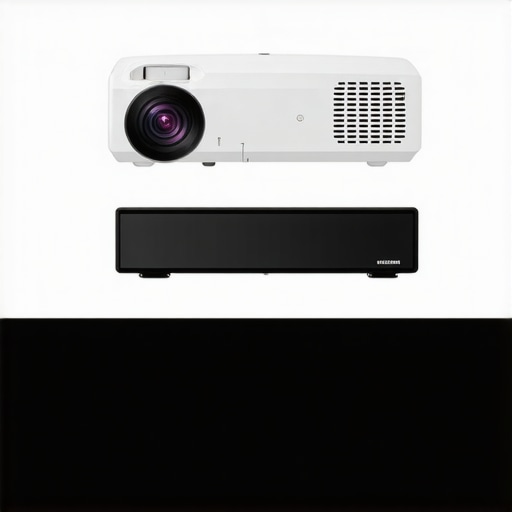
This image demonstrates the size and portability difference between compact portable projectors and large, fixed home theater systems, highlighting our comparison points.
Why Choose Budget or Mid-Range Over Premium Options?
For those prioritizing mobility or tight budgets, portable projectors provide significant savings and simplicity. They often feature quick setup and are ideal for impromptu outdoor movie nights or presentations. Meanwhile, buyers craving immersive, high-fidelity visuals will find the **4K laser projector deals** and premium home theater packages worth the investment, especially for dedicated home environments. These high-end models excel in brightness, color accuracy, and longevity, ensuring that your viewing experience remains consistently spectacular over years.
Is it worth the upgrade?
If you’ve experienced limitations with your current portable or budget projector, stepping up to a true 4K laser model can drastically improve your viewing pleasure. For example, reports from users at TechRadar’s official site suggest that upgrading from 1080p portable units to 4K laser projectors can make movies appear more lifelike, especially in larger screens. Always consider your room lighting, intended use, and budget before making this leap.
To compare current pricing and deals, check the official websites of brands like Epson, Sony, and BenQ, or visit comprehensive price comparison tools like PriceMatch.
The Good, The Bad, and The Ugly
- Pros: Affordable upfront cost, quick setup, decent entry-level visuals for small spaces.
- Cons: Poor build quality, limited performance, short lifespan, insufficient brightness, and subpar sound quality.
Who Should Skip These Deals?
Perfect for casual viewers on a tight budget or for temporary setups, but those seeking immersive, reliable home theater experiences should look elsewhere. Avoid if you prioritize high resolution, durability, and upgradeability, or if you plan to use the system for extended viewing sessions.
The Final Word: 4/10
Budget home theater bundles promise convenience but deliver disappointment due to compromised quality and longevity. While they might be tempting for quick and cheap entertainment, their shortcomings often lead to additional expenses and frustration. Instead, consider investing in a mid-range projector and quality speakers for a truly satisfying experience that lasts. If budget constraints are tight, explore refurbished models or tailored setups—they typically outperform generic bundles. For tips on enhancing your setup, visit this guide or check out this article. Want to upgrade later? Browse our reviews of premium options and make an informed purchase that truly elevates your home cinema experience.