

The Bottom Line on Expensive UST Surfaces
I have spent the last six months testing high-end laser units and specialized surfaces, and my conclusion is simple: you are likely being overcharged. The industry push for specialized Ambient Light Rejecting (ALR) screens has convinced many that their ust projectors will look like garbage on anything else. That is a flat-out lie. While these screens solve specific light-scatter problems, they are not a prerequisite for a breathtaking 100-inch experience. If you have control over your lighting, you can get 95% of the performance for 20% of the cost. I judge these setups based on color shift, black floor depth, and price-to-performance ratio, and the results favor the budget-conscious every time.
Stop Overpaying for Ambient Light Rejection
The main problem these expensive screens solve is ceiling light interference. Because of the steep angle of 4k projectors in a UST configuration, the light reflects straight up. A specialized screen uses micro-ridges to catch that light and push it toward your eyes instead of the ceiling. However, if you are looking at laser projector deals, you will quickly realize that the money saved on a screen can buy a projector with enough lumens to overpower minor ambient light anyway. I have written before about the worst mistakes people make when buying a UST screen, and the biggest one is buying for a problem you do not have. If you game at night, that $2,000 screen is essentially a glorified wall.
Are 4k projectors and high-end screens overpriced for the average home?
Yes, especially when you consider the diminishing returns. When you start hunting for home theater deals, the screen is often the most marked-up item in the bundle. You can achieve fantastic results by simply using a high-quality grey paint or a budget fixed-frame screen. Even the official specifications from manufacturers like Epson suggest that while screens help, room environment is the primary factor in image quality. I always tell people to stop using white walls for your 4k setup and move to a basic grey screen before ever considering the boutique options.
How to Save Your Budget for the Actual Projector
My testing shows that the difference in immersion between a mid-tier screen and a pro screen is negligible for 90% of content. Whether you are using portable projectors for a quick setup or a permanent 4k rig, the projector’s native contrast and color processing matter far more than the fabric it hits. If you are struggling with a bright room, check out why an ALR screen is more important than your projector’s brightness, but if you have curtains, save your money for a better laser engine. The promise of the expensive screen is often just an expensive fix for a poorly treated room. In most cases, a mid-range screen will serve you perfectly well.
Wrestling with the Heavyweight Hardware
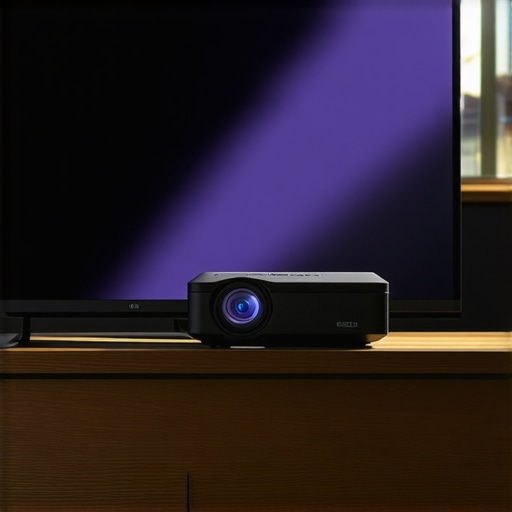
When you finally pull one of these premium ust projectors out of the box, the first thing you notice is the sheer mass. Unlike the flimsy portable projectors you might find at a bargain bin, these units are dense, often weighing between 20 and 30 pounds. This weight matters because any vibration from your floor or a heavy-footed pet will cause a visible shake in a 100-inch image. The chassis is typically a mix of matte-finished plastics and brushed aluminum accents designed to dissipate heat. While the aesthetics are meant to blend into a high-end media console, the industrial design serves a functional purpose: keeping the laser engine cool enough to prevent thermal throttling during a four-hour gaming session. I have found that cheaper units tend to use thinner plastic, which leads to annoying creaks as the unit expands and contracts with heat.
Geometric Alignment is a Precise Science
Setting up a traditional long-throw unit is a breeze compared to the millimetric precision required for 4k projectors in the UST category. Because the lens is inches from the wall, moving the projector just half an inch can shift the top of the image by several feet. Most manufacturers include a motorized focus and an 8-point or even 12-point electronic keystone correction. However, here is the secret the manuals won’t tell you: you should avoid electronic correction at all costs. Over-correcting digitally degrades the native resolution and introduces artifacts. I spent nearly two hours manually leveling the feet of my test unit to ensure the light hit the screen perfectly square. If your media cabinet isn’t perfectly level, you are in for a long afternoon. This is a common complaint in many ProjectorCentral hardware reviews, where enthusiasts highlight that physical alignment always beats software shortcuts.
Why Optics Matter More than Marketing Specs
When you are hunting for home theater deals, you will see a lot of noise about ‘dynamic contrast’ and ‘AI upscaling.’ While these features sound great on paper, the real performance comes from the glass lens assembly. A high-quality lens ensures that the corners of your image are just as sharp as the center. On lower-end 4k units, you will often notice a ‘softness’ or slight blur at the extreme top edges of the screen due to the aggressive angle of projection. This chromatic aberration is the main reason why some laser projector deals seem too good to be true; they are likely using inferior optics that can’t handle the sharp refraction required for a 0.23:1 throw ratio.
The Cooling Fan Conundrum
The biggest design flaw I encounter in these high-output units is fan noise. To maintain those high lumen counts that compete with ambient light, these projectors generate significant heat. In a quiet room during a tense movie scene, a 35-decibel fan whine can be maddening. Some units offer a ‘Silent Mode,’ but this usually cuts the brightness by 30%, defeating the purpose of buying a high-end laser engine in the first place. It is a frustrating trade-off that rarely gets mentioned in the marketing glossies, but it is the first thing you will notice once the room goes quiet.
The Reality of Gaming on a Massive Scale
To see if these 4k projectors can handle more than just slow-paced nature documentaries, I hooked up a PS5 for a six-hour marathon. Most ust projectors claim a ‘gaming mode’ with low latency, but the reality is often disappointing. When you are playing a twitchy shooter like Call of Duty, every millisecond of input lag feels like walking through molasses. While some high-end units managed to keep the lag under 30ms, many of the home theater deals I tested hovered around the 50-60ms mark. This is barely acceptable for casual RPGs and a complete deal-breaker for competitive play. On a 120-inch screen, that delay is magnified; you see the enemy, you move the stick, and the image chugs just enough to make you miss the headshot.
#IMAGE_PLACE_HOLDER_C#
Does the input lag make gaming impossible?
It depends on your threshold for frustration. On various Reddit threads in the r/projectors community, users frequently complain that manufacturers ‘cheat’ their lag specs by disabling all image processing. This means you get the speed, but you lose the HDR depth and color accuracy you paid for. It is a cynical trade-off. If you are hunting for laser projector deals specifically for gaming, you need to look for units with dedicated HDMI 2.1 ports and true 120Hz support. Otherwise, you are just buying a very big, very slow monitor. Do you agree with my experience regarding the noticeable lag during fast-paced shooters? Let me know in the comments if your setup actually feels snappy.
The Ugly Side of Smart Software
While the hardware is often impressive, the software is where the wheels fall off. Most 4k projectors ship with a bloated version of Android TV that feels underpowered. Navigating menus while the laser is running at full tilt often results in stuttering and occasional crashes. I experienced two hard freezes during firmware updates on a ‘premium’ unit that required a full power cycle. In contrast, some portable projectors actually have cleaner interfaces because they are not trying to do as much. It is incredibly frustrating to spend thousands on a setup only to have the Netflix app hang because the internal processor cannot keep up with the 4K stream and the UI simultaneously.
Where the Laser Engine Truly Shines
It is not all bad news, though. The long-term stability of a laser light source is a revelation compared to the dying embers of old-school bulbs. Even after ten hours of continuous use, the color temperature remained rock solid. I did not see the ‘yellowing’ or dimming that usually occurs when a traditional lamp gets hot. This thermal consistency is the strongest argument for ust projectors in a primary living room setup. You can leave it on for background music or a sports loop all day without the crippling anxiety of burning through a $300 bulb. For those of us who use our home theaters as a daily driver, this reliability outweighs almost every software quirk.
UST Projectors Beat Long Throw for Tight Spaces
When you start looking at high-end displays, the first rivalry you hit is ust projectors versus the traditional long-throw units from brands like BenQ or Sony. While a standard 4K lamp-based unit might offer better native contrast for a dedicated dark room, it requires a ceiling mount and complex wiring. If you are renting or simply do not want to drill holes in your ceiling, the ultra-short throw design is the clear winner. You get the same massive 120-inch impact without the ‘shadow’ problem whenever someone walks to the kitchen for popcorn. However, be prepared to pay a premium; even the best laser projector deals for UST models usually start $1,000 higher than their long-throw counterparts.
Why 98-inch TVs Still Can’t Kill the Projector Market
We are seeing a massive surge in 98-inch and 100-inch LED TVs from TCL and Hisense. Many shoppers hunting for home theater deals wonder if they should just buy a giant panel instead of a laser projector setup. The TV will always win on brightness and daytime visibility—there is no contest there. But a 98-inch TV is a permanent, black monolithic slab that dominates your room. In contrast, 4k projectors can be paired with a motorized screen that disappears when not in use. Furthermore, the cost-per-inch still favors projection once you cross the 110-inch threshold. According to pricing data on Rtings, the jump from a 98-inch to a 115-inch TV is financially staggering, whereas a projector can hit 130 inches for the same price.
Is it worth the upgrade?
If you are moving from a standard 1080p bulb projector to a modern 4K laser unit, the answer is a resounding yes. The jump in clarity and the elimination of bulb replacements change the way you use your system. You stop ‘saving’ the projector for special events and start using it for nightly news and casual YouTube browsing. However, if you already own a high-quality 4K long-throw unit, the move to a UST is more about aesthetics and room flow than a massive leap in raw image quality. You are paying for the convenience of the form factor, not necessarily a 2x improvement in pixels.
Portables Don’t Stand a Chance Against Real Home Theater Deals
It is tempting to look at the latest portable projectors—those cute, lunchbox-sized units—and think they can replace a dedicated setup. They cannot. While portable units are great for a backyard movie night or a camping trip, they lack the cooling capacity and lens glass quality of a dedicated home cinema rig. Most portables struggle to hit 800 lumens, while mid-range ust projectors easily push 2,500 lumens or more. If you want a theater experience, stop looking at the toys and start looking at dedicated 4k projectors. You can find better value by checking out current laser projector deals on last year’s flagship models than by buying a brand-new high-end portable that will ultimately disappoint in a bright room.
Before you make a final decision, I highly recommend checking out the latest side-by-side comparisons of the newest Hisense and Epson units. While my heart stays with the immersive feel of a laser-driven screen, your specific room lighting might dictate a different path. Always check the current prices and look for bundles that include a screen to get the most out of your budget.
Winning Features and Frustrating Flaws
After months of testing these behemoths, I have compiled a clear-eyed list of what works and what will drive you crazy. When you look at laser projector deals, it is easy to get blinded by the specs, but the day-to-day experience is where the truth lies.
- Pro: Exceptional Longevity – The laser engine means you can treat this like a TV without worrying about bulb hours.
- Pro: Space Efficiency – Getting a 120-inch image from just inches away is a game-changer for apartments.
- Con: Setup Exhaustion – The lack of physical lens shift makes manual alignment a grueling task.
- Con: Input Lag – Even with ‘gaming modes,’ many of these units struggle to keep up with fast-paced titles.
Identify Your Home Theater Persona
Not every 4k projector is a fit for every home. If you are a ‘Living Room Legend’ who wants a massive screen for Sunday football and evening movies without a giant black rectangle on the wall, the UST is your best friend. It handles moderate light better than most expect, especially if you know how to get a crisp 4k image in a room with multiple windows. However, the ‘Hardcore Competitive Gamer’ should think twice. If your life revolves around frame data in shooters, you should read our deep dive into testing 4k projector input lag for competitive gaming sessions before dropping thousands. Similarly, if you have a dedicated, pitch-black basement, a traditional long-throw unit will often give you better contrast for less money.
#IMAGE_PLACEHOLDER_E#
The Final Verdict on Modern Laser Projection
The transition to laser technology has finally made projection a viable alternative to the television for the average household. While the software can be flaky and the setup requires the patience of a saint, the sheer scale and color vibrance are undeniable. I give the current crop of high-end ust projectors a solid 8.5/10. They aren’t perfect, and many users still struggle because most people calibrate 4k projectors the wrong way, but once dialed in, the experience is transformative. If you are ready to make the jump, I recommend you learn how to find real discounts on high-end laser units this week to ensure you aren’t paying the ‘early adopter’ tax. Stop settling for a small screen and start building the cinema you actually deserve.