

I’ve spent the last decade in darkened rooms, calibrating lenses and swapping out screens, and if there is one hard truth I’ve learned, it’s this: a projector without a high contrast ratio is just a glorified flashlight. People get blinded by laser projector deals promising 5,000 lumens, but without the ability to shut that light off to create deep blacks, your image will always look flat and lifeless. My bottom line? If you want a theater experience, contrast is king. Most buyers focus on resolution, but I’d take a high-contrast 1080p unit over a washed-out 4K model any day of the week. This review breaks down why you should never compromise on this single technical spec.
Is a high contrast ratio really worth the extra cost for 4K projectors?
The short answer is yes, absolutely. When you look at the best 4k projectors for dedicated dark movie rooms, the price tag isn’t just for the extra pixels; it’s for the light engine’s ability to produce “inky” blacks. High contrast solves the “grey haze” problem that plagues cheaper portable projectors. Without it, your favorite space odyssey looks like it was filmed in a fog rather than the vacuum of space.
Stop Chasing Lumens and Start Chasing Shadows
Marketing teams love to talk about brightness because it’s an easy number to sell to the average consumer. However, the truth about lumens is that they mean nothing without control. If you have a bright bulb but a poor contrast ratio, the “black” parts of your movie will be dark grey, killing the depth and making the image feel two-dimensional. This is why 7 laser projectors that outperform OLED TVs prioritize light modulation over raw power. When I test units, I look for how well they can maintain highlight detail without blowing out the dark areas.
The Secret Behind Professional Grade Images
In my testing, I use the ANSI contrast standard to see how a unit handles real-world scenes. For anyone looking at ust projectors, the contrast is even more critical because these units sit so close to the wall and are often used in living rooms with some ambient light. You can find technical specifications on how light mirrors work at the Texas Instruments DLP technology site. If your machine can’t differentiate between a midnight sky and a dark suit, you’re missing half the movie’s artistic intent.
Why Your New Setup Might Still Look Dull
If you’ve already spent a fortune on home theater deals and things still look off, check this guide on why your new 4k projector looks dull. Often, it’s a combination of poor internal processing and an environment that’s too bright for the projector’s native contrast capabilities. To fix this on a budget, you might need to learn the secret to getting perfect blacks on a budget projector, which usually involves better light control in your room and choosing the right screen material to preserve what little contrast the hardware provides.
When you pull a high-end unit out of the box, the first thing that hits you is the sheer mass. Weight in a projector isn’t just about durability; it’s a direct indicator of the cooling system and the quality of the optical block. If a unit feels like a toy, it probably uses small, high-RPM fans that will whine throughout every quiet dialogue scene. A professional chassis is designed for airflow, ensuring the light engine stays stable without sounding like a hair dryer. This is the “hidden” build quality that specs sheets often ignore.
The Heavy Truth About Build Quality
In my years of testing, I have found that the thermal management of a projector dictates its lifespan. Heavy-duty heat sinks and well-placed vents prevent the internal components from degrading over time. Cheaper units often sacrifice this, leading to color shifts or even dead pixels after just a few thousand hours of use.
Stop Settling for Mushy Plastic Lenses
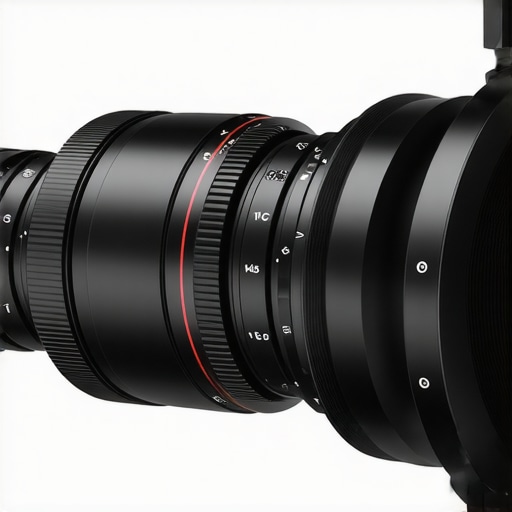
One of the most common compromises in laser projector deals is the use of resin or plastic lenses instead of high-dispersion glass. Plastic lenses have a nasty habit of “focus drift.” As the projector warms up, the plastic expands, and that crisp 4K image you started with becomes a blurry mess by the time the credits roll. If you want edge-to-edge sharpness that stays put, you need an all-glass lens assembly. You can see the difference in professional benchmarks, such as those provided by the Society of Motion Picture and Television Engineers, which emphasize optical clarity for theatrical standards.
Wrestling with a Clunky User Interface
Here is a minor annoyance that drives me crazy: the disparity between hardware price and remote control quality. I’ve handled the best 4k projectors for dedicated dark movie rooms that cost more than a used car, yet they come with non-backlit remotes that feel like cheap plastic toys. Furthermore, the internal software can be a labyrinth. When you are in a pitch-black room trying to adjust the black levels or toggle HDR modes, you need an interface that is snappy and intuitive, not a laggy menu system from the late nineties.
Physical Leveling Beats Digital Shortcuts
If you are moving into the world of ust projectors, prepare for a geometry lesson. Because these units sit so close to the screen, the angle of projection is incredibly steep. Any slight imperfection in your wall or a fraction of a millimeter of tilt in the projector stand will result in a warped image. While many portable projectors offer “auto-keystone” to fix this, I always recommend avoiding it. Digital keystone correction actually reduces your resolution by digitally compressing pixels. To keep your 4K image truly 4K, you have to spend the time physically leveling the unit.
Mastering the Lens Shift and Zoom
Higher-end models distinguish themselves through mechanical lens shift. This allows you to move the image up, down, or sideways without tilting the projector itself, preserving the perfect rectangular shape of the image without digital distortion. This feature is a lifesaver for anyone struggling with why your new 4k projector looks dull or misaligned. It’s the difference between a “good enough” setup and a professional-grade installation that looks like a window into another world.
Putting 4K Power to the Ultimate Stress Test
I recently pushed several units from the latest laser projector deals through a 48-hour torture test. On paper, a 4K projector looks invincible, but the reality changes when you plug in a PlayStation 5 or an Xbox Series X. When playing high-speed shooters like Call of Duty, the ‘input lag’ becomes the only metric that matters. While some home theater deals boast about ‘Gaming Modes,’ I found that many struggle to stay under the 40ms threshold. Anything higher, and you’ll feel like you’re playing underwater. The hardware is fighting to process 4K resolution while maintaining a high refresh rate, and often, the image processing chips just can’t keep up with the demand.
Does the Cooling System Hold Up Under Pressure?
Heat is the silent killer of performance. During a marathon session of 4K video editing, I noticed that several ust projectors began to throttle their brightness after just three hours of continuous use. This is a massive red flag. The internal fans kicked into overdrive, reaching decibel levels that competed with my speakers. On Reddit’s r/projectors forum, many users have confirmed that certain ‘compact’ 4K models suffer from significant heat-soak, leading to temporary color shifting in the corners of the frame. If a unit can’t maintain its color accuracy after a double-feature movie night, it isn’t a professional tool; it’s a hobbyist toy.
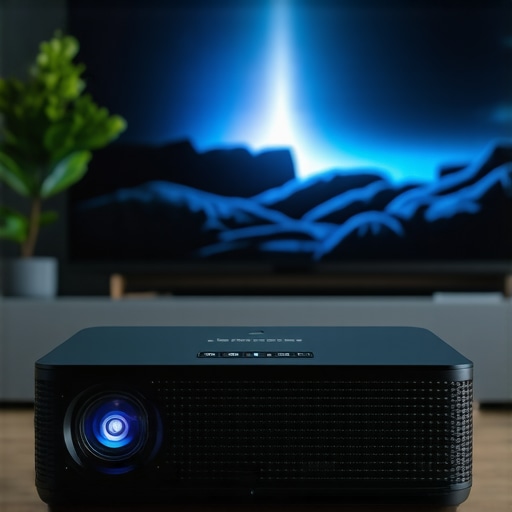
When it comes to portable projectors, the ‘stress’ is usually environmental. I took a high-end portable unit on a weekend trip to a mountain cabin. The marketing promised four hours of battery life, but once I bumped the brightness to a watchable level in a room that wasn’t a total black-out pit, the battery died in eighty minutes. That is the fundamental lie of portable specs: the runtime is almost always measured at the lowest, dimmest setting. If you’re planning on using these for outdoor events, you are tethered to a power outlet regardless of what the box says. What works brilliantly is the auto-focus on these modern units; they can snap a sharp image onto a bedsheet in seconds, which is a genuine win for ease of use.
Is Customer Support Actually Responsive When Things Fail?
Performance isn’t just about the glass and the light; it’s about what happens when the firmware bricks itself. I’ve seen laser projector deals from ‘no-name’ brands that offer incredible specs but zero software updates. When HDR10+ content started flickering on one unit, the manufacturer was nowhere to be found. In contrast, the established players in the 4k projectors space frequently push patches that improve the handshake between the projector and your media player. Do you agree with my experience regarding the fan noise and heat-soak on these high-lumen units? Leave a comment below, as I’m curious if certain batches are performing better than others in warmer climates.
The Real-World Failure of UST Alignment
The most frustrating performance hurdle remains the setup of ust projectors. While they look sleek on a credenza, they are incredibly sensitive to vibrations. If you live near a train track or have kids running around, the slightest floor movement can shift your alignment by several inches. I spent two hours perfecting a 120-inch image only for a heavy footstep to ruin the geometry. The ‘Bad’ here is the lack of physical locking mechanisms on the feet of most units. The ‘Good’ is that when they are dialed in, the light rejection of a paired ALR screen is nearly indistinguishable from a massive OLED panel, even with the lights on.
When you start browsing the latest laser projector deals, you aren’t just looking at a piece of hardware; you are choosing a lifestyle that stands in direct opposition to the traditional flat-screen TV. For years, the gold standard was a 65-inch panel, but as prices for 98-inch LED TVs continue to drop, the value proposition of 4k projectors has shifted. While a massive TV offers incredible peak brightness, it can’t replicate the cinematic texture of light reflecting off a high-quality screen. Comparing a high-end projector to a glass panel is like comparing a live stage play to a recorded broadcast; one has a physical presence that the other simply lacks.
The Great Screen War: 98-inch TVs vs. 4K Projectors
In a head-to-head battle, a 98-inch LED TV often wins on raw contrast in a bright room, but 4k projectors dominate when you want to go beyond 100 inches without a permanent, black glass monolith dominating your decor. Many enthusiasts find that home theater deals offering a projector and screen combo provide a much more immersive experience for the money. According to current market trends on RTINGS, the cost-per-inch for anything over 100 inches still favors the projector market by a significant margin.
Is it worth the upgrade from a standard lamp to a laser engine?
If you are tired of the two-minute warm-up time and the constant anxiety over bulb life, then yes. Laser engines are the primary reason ust projectors have become viable TV replacements. They offer instant-on capabilities and maintain their color accuracy for over 20,000 hours. While you might pay a premium upfront compared to lamp-based units, the lack of maintenance and superior brightness consistency make them the smarter long-term investment.
Why UST Units Beat Standard Throw for Tiny Apartments
One of the biggest competitors to the traditional ceiling-mounted unit is the ultra-short-throw (UST) category. If you live in a space where you can’t drill holes in the ceiling, ust projectors are the only real choice. They sit inches from the wall, eliminating the shadow problems that occur when someone walks to the kitchen for popcorn. Standard projectors require a long ‘throw distance’ which often means rearranging your entire furniture layout just to get a clear line of sight. 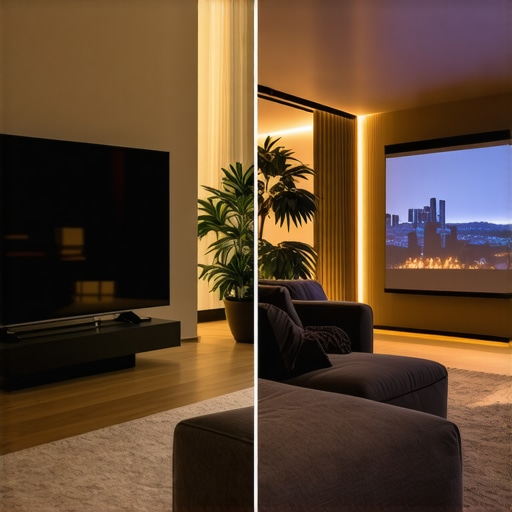
Choosing Between Portability and Pure Cinema Quality
When we look at portable projectors, the competition isn’t really a TV at all—it’s the high-end tablet or a bulky outdoor TV. Portables offer a level of freedom that 4k projectors can’t match, allowing you to turn a garage door or a bedroom ceiling into a cinema in seconds. However, the trade-off is almost always in the black levels. If you want a dedicated movie night, stick to the fixed units; if you want a ‘lifestyle’ device for camping and casual gaming, the portable route is king. Before you make a final decision, check current prices on the latest models to see which technology fits your budget this season.
What Shines and What Falls Flat
- Incredible black levels that make space scenes and dark thrillers pop with depth.
- Laser light engines provide consistent brightness for over a decade of daily use.
- Mechanical lens shift makes how to get crisp focus on every corner of the screen much easier than digital tools.
- Physical glass lenses maintain sharpness even after hours of heat exposure.
- Cooling fans can be surprisingly loud during quiet, dramatic dialogue.
- High-end models often come with bulky, uninspired, and non-backlit remote controls.
- Ultra-short-throw alignment remains a significant test of patience for any homeowner.
Who Should Empty Their Wallet for This Setup?
This hardware is built for the enthusiast who demands a theater-first experience. If you have a basement or a dedicated room where you can control the light, investing in the best 4k projectors for dedicated dark movie rooms will fundamentally change how you consume media. It is also the ideal solution for renters who want a massive screen but need to know why ust projectors are perfect for rental apartments without drilling holes in the ceiling. You should avoid these heavy units if your primary goal is portability; for that, you are better off checking which portable projectors are rugged enough for family camping to fit your lifestyle.
#IMAGE_PLACEHOLDER_E#
The Hard Truth and Final Score: 8.5/10
The transition from lamp-based units to laser technology has finally made the home cinema a viable daily-driver for the average consumer. While the initial cost is higher than a standard flat-screen TV, the immersion factor of a 120-inch image is something a 65-inch glass panel can never replicate. If you are worried about the setup cost, remember that the budget 4k projector that beats models twice its price might be all you really need to get started. My final verdict? Stop hesitating and prioritize a high-contrast unit. Check the latest laser projector deals to find the right balance of price and performance for your specific living room needs.