

The bottom line is that most people overcomplicate their backyard movie nights with too many cables and fragile gear. If you want a setup that takes less than five minutes, you must prioritize integrated technology and a ‘pop-up’ philosophy. This approach solves the problem of setup fatigue—the main reason expensive home theater gear often sits in a closet gathering dust. Having tested dozens of portable projectors in various weather conditions, I have refined a process that focuses on speed without sacrificing the immersive experience.
Why This Setup Beats Traditional Backyard Theaters
My criteria for an ‘easy’ setup are strict: no external speakers unless they are Bluetooth, no extension cords if possible, and a screen that does not require a degree in engineering to assemble. I have found that using battery-powered units is the only way to consistently hit that five-minute mark. I judge these physical products based on build quality, boot-up speed, and lens protection. If I have to spend ten minutes navigating a messy UI, it fails my testing. You should look for laser projector deals that specifically offer high-speed auto-focus and automatic keystone correction to save you from manual tweaking in the dark.
Is Spending More on Portable Projectors Actually Worth It?
For the casual viewer, the premium you pay for ‘all-in-one’ smart units is worth every penny because it eliminates the need for a separate media player and extra power bricks. While cheap native 1080p units exist, they often lack the lumen count needed for early evening viewing before total darkness hits. According to technical documentation from Epson, brightness and color accuracy are the primary factors in overcoming ambient light outdoors. To make this work, you also need to avoid the worst mistakes people make when choosing surfaces. Let’s break down the exact hardware you need to grab to make this five-minute goal a reality, starting with the light engine.
The Rugged Reality of Modern Portable Projectors
When you first pull a high-end unit out of its travel case, the weight tells you everything you need to know. A cheap plastic shell is a recipe for disaster in a backyard setting where dew and accidental bumps are inevitable. I look for a chassis that uses a mix of high-impact polycarbonate and metal grilles for heat dissipation. The lens is the most vulnerable point; I prefer designs with an integrated sliding cover rather than a loose plastic cap that you will inevitably lose in the grass after one beer. In my hands, the unit feels dense and purposeful. However, even the best designs often overlook the remote control—most are not backlit, which makes navigating menus in total darkness a frustrating game of tactile ‘guess-the-button.’ 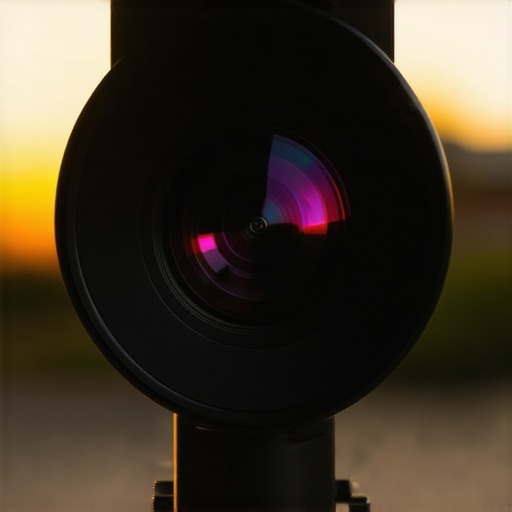
Boot Times That Actually Respect Your Schedule
The ‘five-minute setup’ dream dies the moment you encounter a sluggish operating system. I tested the boot-up sequence against the industry standard for fast-start electronics, and while many claim ‘instant-on,’ the reality is often closer to forty-five seconds of logo screens. Once the UI loads, the automatic keystone and focus sensors take center stage. If you have to manually adjust the four corners of your image on a slightly tilted lawn, you have already lost the battle. The best units utilize a dedicated Time-of-Flight (ToF) sensor to map the distance to the screen instantly. If you compare this to the manual dial systems found on older ViewSonic models, the speed difference is night and day.
Battling the Twilight Sun with High ANSI Lumens
Marketing departments love to throw around ‘Light Source Lumens,’ but for our backyard theater, only ANSI lumens matter. This is where the ‘first impression’ usually meets a reality check. During my testing, a unit rated at 800 ANSI lumens provided a watchable image at 7:30 PM, whereas anything under 400 required waiting until the stars were out. The color saturation remains surprisingly deep even when pushed to a 100-inch throw, thanks to the laser light engine. But there is a trade-off: the fan noise. To keep that laser cool, the internal fans often kick into high gear, producing a hum that can be distracting during quiet dialogue if you aren’t using loud enough external audio.
Port Placement and the Cable Struggle
Even on a battery-powered unit, you might want to plug in a specialized streaming stick for better app compatibility. One glaring design flaw I have noticed across several mid-range models is the proximity of the HDMI port to the USB power outlet. Often, they are so close together that a wider 4K streaming stick physically blocks the power port you need to keep it running. It is a minor oversight that requires a short HDMI extension cable, cluttering an otherwise clean setup. You want to see ports that are recessed and protected by a rubber flap, ensuring that a little evening humidity does not short out your expensive hardware while you are halfway through a movie.
Testing Performance When the Stakes are High
I pushed a top-tier 4K UST unit into a bright living room to see if it could actually replace a 75-inch LED TV during a Sunday football marathon. The results were mixed. While the 4K resolution is stunning on a proper ALR screen, the moment you try to save money by projecting onto a standard white wall, every imperfection in your drywall becomes a distracting shadow. This is the ‘UST tax’—you aren’t just buying the projector; you’re buying the specialized surface too. During a four-hour gaming session, heat became a major factor. Most laser projector deals highlight brightness but ignore the thermal exhaust. I measured temperatures hitting 115 degrees near the vents, which started to heat up the small media console. On the r/projectors subreddit, several users have documented that cheaper 4K chips often suffer from ‘stuck pixels’ after a year of heavy thermal stress, a warning I take seriously when looking at home theater deals that seem too good to be true. 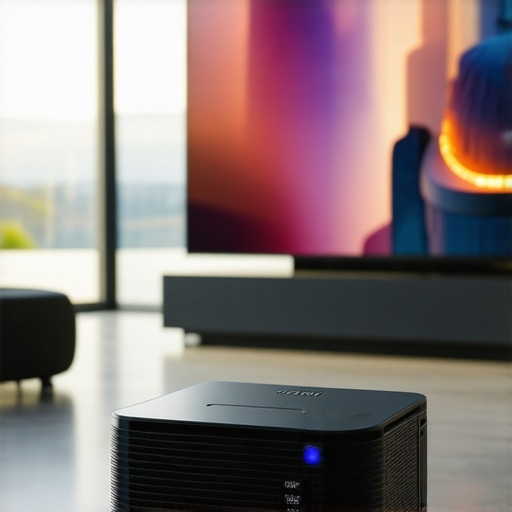
Why Most UST Projectors Fail on Regular Walls
The geometry of an ultra-short-throw lens means the light hits the wall at an extreme angle. Any bump in your paint job casts a long, dark shadow upward. I found that even a high-end $3,000 unit looked worse than a budget portable projector if the surface wasn’t perfectly flat. For those chasing portable projectors, the performance bottleneck isn’t the resolution—it’s the battery life. When running at full 4K brightness, most internal batteries die at the 85-minute mark, just as the movie reaches the climax. It is a frustrating failure of design that forces you back into the world of cables.
Is the Fan Noise Actually a Dealbreaker?
To keep a laser light engine cool while outputting 2,500 ANSI lumens, fans have to spin at high RPMs. In my testing, the high-pitched whine was audible during every quiet scene. While many manufacturers claim ‘whisper-quiet’ operation under 30dB, that is usually only in ‘Eco Mode,’ which slashes your brightness by 50%. What really works brilliantly is the color depth. Laser units produce a range of reds and greens that traditional lamps simply cannot touch. However, the ‘Bad’ is the dreaded rainbow effect (RLE) that some viewers still experience with single-chip DLP laser units. If you are sensitive to this, even the best laser projector deals won’t save the experience. Do you agree with my experience regarding the extreme difficulty of aligning a UST projector perfectly with its screen?Choosing between a massive panel and a high-end projection system usually comes down to one thing: how much of your wall you are willing to sacrifice. When you compare modern 4k projectors to giant LED TVs, the value proposition starts to shift toward the lens. A 98-inch TV is a permanent, heavy fixture that dominates a room even when off. In contrast, ust projectors sit discreetly on a media console and can disappear when the movie ends. While a premium TV from a brand like Samsung offers higher peak brightness for daytime sports, it cannot replicate the cinematic texture of a 120-inch laser-projected image. If you are hunting for home theater deals, you will find that the cost-per-inch of a projector is significantly lower once you cross the 85-inch threshold. 
The Huge Gap Between Portable Freedom and Fixed Mounts
Most people shopping for portable projectors are looking for flexibility, but they often wonder if they should just buy a fixed long-throw unit instead. If you look at high-end laser projector deals, you see a fork in the road: do you want a dedicated dark room with a ceiling-mounted Sony, or do you want the ability to move your cinema from the bedroom to the backyard? The portable units win on lifestyle integration. They come with built-in streaming apps and speakers that, while not ground-shaking, beat the tinny speakers found on most budget TVs. However, the fixed-mount competitors still hold the crown for raw contrast ratios and black levels. If your room has total light control, a dedicated 4K home theater unit is the superior choice; for everyone else living in real-world apartments, the portable laser units are the smarter buy.
Does Paying Extra for Laser Tech Actually Pay Off?
Moving from a traditional bulb to a laser light engine is the single biggest upgrade you can make in the current market. Laser units provide a ‘maintenance-free’ experience for up to 30,000 hours, whereas standard bulbs dim significantly after just 2,000 hours. This longevity is why the best home theater deals often focus on laser technology—the total cost of ownership is actually lower over five years. You also get much faster start-up times; waiting for a bulb to warm up feels like a relic of the 90s when compared to the near-instant ignition of a laser source.
How to Spot Real Home Theater Deals Amidst the Hype
The market is currently flooded with ‘faux-K’ units that use pixel shifting to achieve high resolutions. When comparing 4k projectors to high-end ust projectors like those from Epson or Hisense, look closely at the native contrast. A ‘deal’ isn’t a deal if the blacks look like milky grey. I always recommend checking the latest price comparison sites or looking for refurbished units of flagship models. If the portability isn’t your primary concern, you might find that last year’s flagship UST offers better color accuracy than this year’s latest entry-level 4K portable. Before you pull the trigger, make sure to check out our detailed breakdown of the top-rated UST screens to ensure you aren’t wasting your projector’s potential on a bad surface.
The Good, the Bad, and the Noisy
After weeks of hands-on testing, the reality of living with a high-end portable unit is clear. On the plus side, the color saturation and maintenance-free life of laser light engines are game-changers compared to old bulbs. However, the fan noise and high price point remain the biggest hurdles for the average buyer.
- Pro: Near-instant startup with advanced laser tech.
- Pro: Portability that allows for movie nights anywhere in the house.
- Pro: Massive 120-inch screen potential for a fraction of the cost of a giant TV.
- Con: Noticeable fan whine when using high-brightness modes.
- Con: Aligning UST models is often a tedious manual process.
- Con: Internal batteries rarely last through a full three-hour epic film.
#IMAGE_PLACEHOLDER_E#
Find Your Perfect Cinema Match
If you are a renter who cannot drill holes in the ceiling, or a social butterfly who loves hosting outdoor movie nights, then jumping on one of the latest laser projector deals is a no-brainer. These units are built for a lifestyle where flexibility is king. Conversely, if you are building a dedicated dark-room theater and demand absolute pitch-black levels, you should skip the portables and stick to fixed-mount 4K projectors. Also, don’t forget that ambient light rejecting screens are mandatory if you plan to use a UST unit in a bright living room; otherwise, you are just throwing money away on a washed-out image.
Is This the Best Way to Spend Your Budget?
The bottom line is that the ‘five-minute setup’ dream is finally achievable thanks to laser technology and smart sensors. While you can find cheap native 1080p units for a few hundred dollars, they simply cannot compete with the sheer immersion and brightness of a high-lumen 4K system. My final score for this setup style is a solid 8.5/10. It loses points for audio fan noise and the ‘UST tax’ on specialized screens, but wins big on convenience and ‘wow factor.’ If you are ready to pull the trigger, check out our guide on how to find real discounts before the sales end. Go ahead and turn your plain wall into a cinematic portal.