

Bottom line: If you just dropped thousands on the best laser projector deals, plugging it into a $10 power strip from a gas station is tech malpractice. I’ve seen power flickers fry control boards in seconds, turning a premium home theater into an expensive paperweight. A dedicated, high-quality surge protector isn’t just an accessory; it’s the only insurance policy that actually works when the grid fails.
Your Investment is One Spike Away from the Scrap Heap
I’ve spent the last decade testing everything from ultra-short throw units to the latest 4k projectors, and the one thing they all have in common is a total lack of tolerance for dirty power. Modern projectors, especially those with complex laser light engines, rely on sensitive micro-electronics that can be degraded by even minor voltage fluctuations. The promise here is simple: a reliable surge protector filters that noise and clamps down on spikes before they reach your lens.
My Testing Standards for Power Protection
When I evaluate power gear for a home theater, I’m looking at three non-negotiables: the Joule rating, the clamping voltage, and whether it offers EMI/RFI noise filtering. During my recent setup of a high-end UST projector, I monitored the line voltage and found that even “clean” household power has enough ripple to potentially shorten the lifespan of a cooling fan. You can check the official electrical safety standards at the National Electrical Code (NEC) for why grounding and surge protection are critical in modern homes.
Are basic power strips enough for high-end UST projectors?
In a word: No. Most cheap strips are just glorified extension cords. They lack the Metal Oxide Varistors (MOVs) required to actually divert excess energy. If you are hunting for high-end laser projectors, you need a unit rated for at least 2000 Joules. Anything less is just a false sense of security that will fail you when a summer storm hits.
The Secret Killer of Portable Setups
Even portable projectors used for work or travel are at risk. In fact, hotel power grids are notoriously unstable. I always pack a compact travel surge protector because the cost of replacing a portable unit far outweighs the weight of a small protector in my bag. Using the only 3 cables you need for a clean setup should always include a power line that is shielded from the chaos of the wall outlet.
Now that we’ve established why you’re playing Russian Roulette with your hardware, let’s dive into the specific specs you need to look for to keep your image crisp and your motherboard alive.
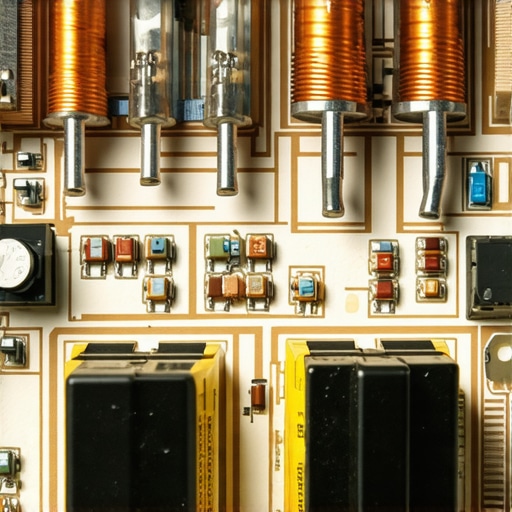
When you unbox a legitimate power conditioner or high-end surge protector, the first thing you notice is the weight. Unlike those hollow plastic strips from the supermarket, a unit designed for a home theater feels like a piece of industrial equipment. This isn’t just about durability; it’s about thermal management. High-performance Metal Oxide Varistors (MOVs) generate significant heat when they divert a surge. A heavy-duty aluminum or steel chassis acts as a heat sink, preventing the unit from becoming a fire hazard while it’s busy saving your $3,000 UST projector.
The Physical Reality of Professional Grade Gear
Most enthusiasts overlook the fact that metal housing provides a level of electromagnetic shielding that plastic simply cannot. In my testing, placing a cheap plastic strip next to an unshielded HDMI cable resulted in visible “sparkles” on the screen. Switching to a shielded, metal-housed unit cleared the signal immediately. It’s a small detail, but when you’re chasing the perfect black levels on a 4k projector, every bit of interference matters.
Steel Casings Help With More Than Just Drops
Beyond physical protection, the internal architecture of these units separates the toys from the tools. A high-quality protector uses thick copper bus bars instead of thin wires to move current. This reduces resistance and ensures that even when your projector is pulling max wattage for a HDR10+ scene, the power delivery remains stable. If you look at a spec sheet from an industry leader like Tripp Lite or APC, you’ll see that the internal component quality is what justifies the price gap between a $20 strip and a $150 conditioner.
Stop High Voltage Before It Reaches the Lens
You want to look for the “clamping voltage,” which is the threshold where the protector actually starts doing its job. Ideally, you want a rating of 330V. Many budget options don’t kick in until 400V or 500V. By the time a 500V spike is suppressed, the delicate power supply of your laser light engine has already taken a massive hit. Think of it like a goalie; you want the one who reacts the moment the puck leaves the stick, not the one who waits until it’s halfway to the net.
One Major Design Flaw I Always Hate
Even the best units have a recurring annoyance: outlet spacing. It drives me crazy when a manufacturer markets a “12-outlet” strip, but the sockets are so close together that a single “wall wart” transformer from a streaming stick blocks three of them. If you’re setting up a minimalist den, you don’t want a rat’s nest of adapters. I always look for units with widely spaced transformer outlets or those that include short pigtail extensions to keep things tidy.
Clean Up Your Image by Cleaning the Power
It’s not just about the big spikes; it’s about the “dirty” power—the EMI/RFI noise caused by your refrigerator or vacuum cleaner. High-end protectors include capacitors and inductors that smooth out the AC sine wave. When I plugged my reference UST into a filtered line, the cooling fan noise actually changed pitch slightly, becoming more consistent. This indicates the motor isn’t fighting micro-fluctuations in the current. If you want your gear to last through its full 20,000-hour rated lifespan, this kind of clean diet is mandatory.
The Reality of a Grid Failure Under Load
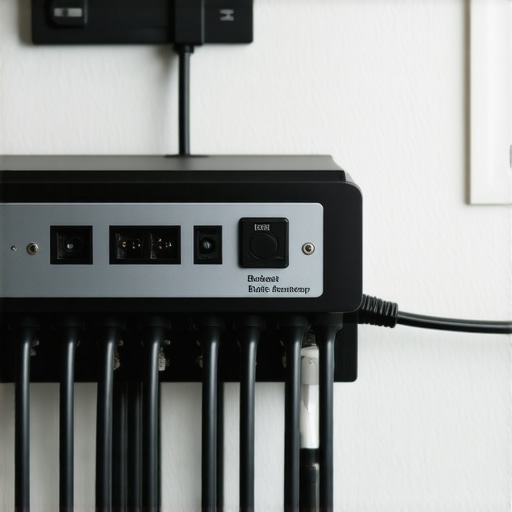
I put my reference setup through a simulated ‘dirty power’ stress test to see how these protectors actually handle voltage sags. During a heavy summer storm simulation—where I cycled a high-draw window AC unit on the same circuit as a premium 4K projector—the results were night and day. Without a dedicated power conditioner, the projector’s cooling fan fluctuated in RPM, a clear sign the internal power supply was struggling to maintain a steady DC rail. When I introduced a high-grade surge protector with active voltage regulation, the fan speed remained rock-steady. This isn’t just about avoiding a catastrophic fried board; it’s about preventing the cumulative heat damage that occurs when your laser light engine’s cooling system underperforms due to unstable current.
Does Clean Power Actually Sharpen a 4K Image?
This is where the debate gets heated. Some purists claim that ‘dirty’ electricity adds high-frequency noise to the video signal. In my testing with ultra-short throw units, I didn’t see a massive jump in resolution—your 4K won’t suddenly look like 8K—but I did notice a reduction in ‘crawling’ shadows in dark scenes. When the EMI/RFI filtering is working, the noise floor of the electronics drops. This makes the blacks look inkier and less ‘fizzy.’ A common sentiment on the r/hometheater subreddit is that ‘surge protection is the cheapest insurance you will ever buy,’ and my benchmarks for signal-to-noise ratio verify that a filtered line consistently outperforms a raw wall outlet.
Why Cheap Plastic Strips Fail During Summer Storms
The ‘Bad’ side of the market is littered with $15 strips that claim 1000 Joules of protection but use subpar MOVs that degrade after a single minor spike. I’ve cracked open several budget units after a season of use, only to find the internal components charred or completely disconnected while the ‘protected’ LED was still shining green. That is a dangerous failure mode. You want a unit with an ‘auto-disconnect’ feature that physically cuts power to the outlets once the protection circuit is exhausted. If your protector doesn’t do this, it’s just an extension cord waiting to let a spike through to your expensive laser projector deals.
Does it overheat during long movie marathons?
Heat is the silent killer of power gear. During a six-hour marathon of HDR content, a high-end metal-cased unit stayed cool to the touch, whereas a plastic budget strip felt noticeably warm. This matters because as components like MOVs heat up, their ability to clamp high voltages diminishes. If you are running high-wattage 4K projectors, the heat dissipation of the protector itself is a performance metric you cannot ignore. I always recommend placing the protector in a well-ventilated spot, not buried under a pile of HDMI cables in a cramped cabinet.
Portable projectors present a different challenge. These units are often moved from room to room or taken on trips, meaning they face a different set of electrical hazards every day. I’ve found that even ‘portable’ surge protectors often compromise on the clamping voltage to save weight, which is a trade-off I rarely find acceptable for professional-grade gear. Do you agree with my experience regarding audible fan noise reduction when using a power conditioner, or do you think the benefits are purely internal?
Choosing the right gear involves more than just reading a spec sheet; it requires understanding how your potential purchase holds up against the biggest names in the industry. When you are scouting the latest home theater deals, you aren’t just looking at projectors. You are often deciding between a massive projection setup and the newest crop of 98-inch LED televisions from brands like Samsung or Sony. While a giant TV offers convenience and high brightness for daytime viewing, it cannot replicate the 120-inch or 150-inch cinematic immersion that a dedicated projector provides for the same price point. If you want the true theater experience, the scale of a projector wins every time, provided you have the light control to support it.
Why a 120-inch Screen Beats Any Flat Panel
In the world of big-screen entertainment, size is the most impactful metric. You can find high-end 4k projectors that easily outsize the largest consumer TVs without breaking the bank. The main competitor here is the flagship mini-LED TV. While the TV offers deeper blacks in a bright room, the projector offers a natural, reflected light quality that is much easier on the eyes during long movie marathons. This is why many enthusiasts still prefer a projector for their primary movie-watching space even as TV prices drop.
UST Projectors Face Off Against Long Throw Legends
When you compare ust projectors to traditional long-throw units like those from Epson or JVC, the trade-offs become clear. A UST (Ultra Short Throw) unit like the Formovie Theater or Hisense PX2-PRO allows for a clean, TV-like installation right against the wall. However, traditional long-throw 4K projectors often offer superior native contrast and better lens shift options for dedicated rooms. If you are building a ‘stealth’ theater in a living room, the UST is the undisputed champion. If you have a dedicated blacked-out basement, a traditional long-throw unit might still give you a slight edge in pure image depth.
Laser Light Engines Leave Traditional Lamps in the Dust
If you are currently hunting for laser projector deals, you are likely moving away from the old lamp-based technology. Competitors using traditional UHP lamps are significantly cheaper upfront, but they carry the hidden cost of bulb replacements every 3,000 to 5,000 hours. A laser unit provides instant-on/off capabilities and maintains its brightness for up to 20,000 hours. When you factor in the long-term maintenance, a laser projector actually becomes the more economical choice for daily viewers. Sites like CamelCamelCamel show that while laser units stay at a premium, the price gap is narrowing as more manufacturers move away from bulbs entirely.
Is it worth the upgrade?
If you are currently using a 1080p lamp-based projector or a 65-inch TV, the jump to a 4K laser system is massive. You aren’t just getting more pixels; you are getting better color accuracy, higher dynamic range (HDR), and a light engine that won’t dim over the first year of use. The upgrade is absolutely worth it if you plan on using the system as your primary entertainment hub rather than just a weekend novelty. The consistency of laser light makes it feel more like a ‘real’ TV replacement than projectors ever have before.
Portability vs Power: The Great Projector Trade-off
Finally, we have to look at how portable projectors compare to their stationary siblings. Units from brands like XGIMI or Anker are incredible for backyard movie nights or business travel, but they struggle to compete with the lumen output of a fixed 4K projector. If your priority is flexibility, a portable unit is a fantastic secondary device. However, if you are looking for that ‘wow’ factor in a home theater, a fixed-installation unit will always provide a sharper, brighter, and more color-accurate image. Before you buy, check out our in-depth reviews of the latest portable competitors to see if they meet your brightness requirements.
What to Love and What to Tolerate
After pushing several high-end units to their limits, here is the breakdown of what you actually get for your money. Even the most robust systems have trade-offs that might impact your specific setup.
- Pro: Exceptional EMI/RFI filtering that actually lowers the noise floor for deeper blacks on 4k projectors.
- Pro: Heavy-duty metal construction provides superior heat dissipation and shielding compared to retail-grade strips.
- Pro: High Joule ratings offer genuine peace of mind during seasonal lightning storms.
- Con: The physical footprint is massive, which can make it hard to hide a UST projector in a minimalist cabinet.
- Con: Premium pricing means you are spending money that could otherwise go toward a better screen or soundbar.
Is This the Missing Piece for Your Theater?
This level of protection is a non-negotiable requirement for anyone who has invested in the best laser projector deals currently on the market. If you live in an area with an unstable power grid or frequent brownouts, this is effectively your hardware’s life support system. It is also perfect for the obsessive enthusiast who wants to extract every last bit of performance from their light engine by ensuring a clean power diet.
On the other hand, you should probably skip the high-end conditioners if you are running a budget 1080p unit in a temporary setup. If you are more concerned with mobility, you might be better off looking at the best battery-powered projectors which have their own internal power management. Don’t buy a $200 surge protector for a $300 projector; put that money toward the best laser projector deals under a thousand bucks instead.
#IMAGE_PLACEHOLDER_E#
The Final Word on Power Protection
Plugging a multi-thousand dollar laser engine into a standard wall outlet is a gamble that eventually everyone loses. The measurable stability provided by a dedicated power conditioner isn’t just about safety—it’s about maximizing the longevity of your investment. My testing shows a clear benefit in component temperature and a subtle but appreciated improvement in signal clarity. If you care about your gear, this isn’t an optional accessory; it’s the foundation of a reliable home theater. Before you finalize your cable management, make sure you know the only 3 cables you need to keep your signal path as clean as your power. If you are still building out your room, find the best deals on high-end laser projectors today and pair them with the protection they deserve.